
Renting a Car for a Utah Winter Day Trip: What to Check Before You Drive
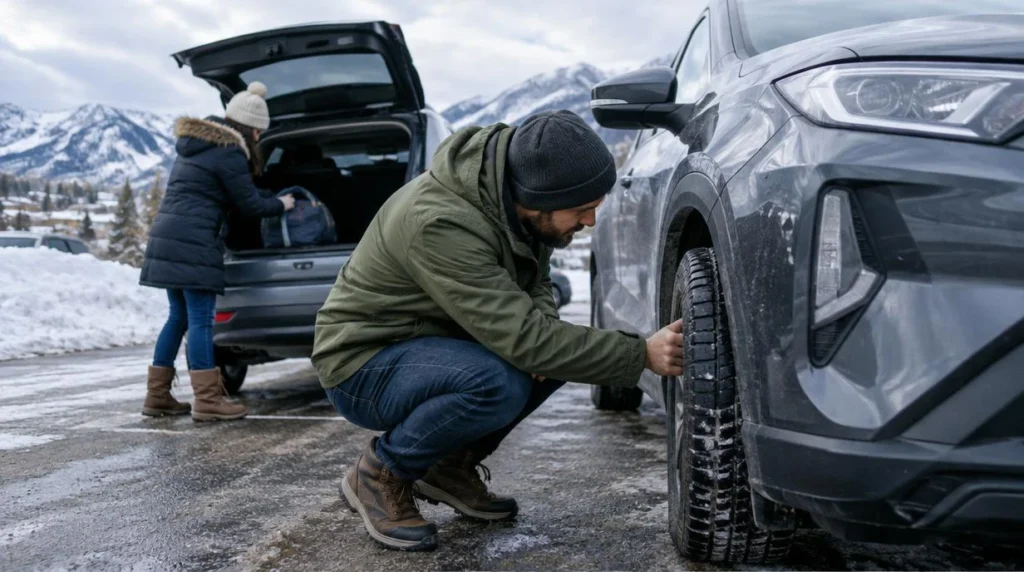
On a winter rental-car day from Salt Lake City, I choose the vehicle around the route’s traction requirements rather than simply booking an SUV. For Big or Little Cottonwood Canyon, that means starting with a rental class defined as AWD or 4WD, then checking the actual tires at pickup. If the car cannot meet an active restriction within the terms of the rental agreement, change the route, the day or the way you get there.
By Dima Mateiko, Founder of Matei Travel LLC
These tire rules apply to Big Cottonwood Canyon (SR-190) and Little Cottonwood Canyon (SR-210) during an active UDOT traction restriction. Other Utah roads have their own notices, so read the one for your route instead of applying these requirements statewide. If Bryce is your destination, our Bryce Canyon winter checklist covers that trip separately.
AWD is only part of the Cottonwood Canyon requirement
Under UDOT’s traction requirements, the drivetrain determines which tires qualify. During an active restriction in either Cottonwood Canyon, every tire must have at least 5/32 inch of tread, and the accepted sidewall markings differ for AWD or 4WD and two-wheel drive.
| Passenger vehicle | Tire option during an active restriction | Traction-device alternative | Minimum tread on every tire |
|---|---|---|---|
| AWD or 4WD | M+S or 3PMSF-rated tires on all wheels | Approved traction devices on the drive wheels | 5/32 inch |
| Two-wheel drive | 3PMSF-rated tires on all four wheels. M+S alone does not qualify. | Approved traction devices, such as chains or snow socks, on the drive wheels | 5/32 inch |
The traction-device alternative counts only if your rental agreement permits it. Checkpoints at the canyon entrances can turn away or fine vehicles that do not comply, as Alta’s winter driving tips explain, so the equipment question has to be settled before you reach the canyon.
Before booking, resolve the rental company’s equipment rules
Enterprise’s snow-chain policy prohibits snow chains and traction devices because of the risk of damage, and its Salt Lake City airport terms make the renter responsible for traction compliance. With an Enterprise rental, the tires and drivetrain have to meet the canyon rule on their own, and chains are not a fallback.
Hertz’s chain policy prohibits chains on US passenger cars unless the renting location specifically offers them, so chains are an option only when your location provides them and your agreement includes them. Its US equipment guidance lists all-weather or all-season tires as standard, which does not tell you the sidewall marking on the car you are given. Read that at pickup.
Avis’s US equipment FAQ says snow tires are not offered across its standard US rental network. Before booking for a restricted canyon route, ask the location what tires its cars carry and whether chains or snow socks are permitted. If they are, get that permission written into the rental agreement.
Whichever company you use, reserve a class explicitly defined as AWD or 4WD, a step Enterprise’s winter road-trip guide also covers. A generic Intermediate or Midsize SUV reservation can produce a front-wheel-drive vehicle, and class names vary, so look for the drivetrain in the class description instead of trusting the SUV label.
At pickup, check the car you will actually drive
- Confirm the drivetrain before leaving the lot, especially if you reserved an AWD- or 4WD-defined class.
- Read every tire sidewall. For the Cottonwood Canyon tire option, AWD or 4WD needs M+S or 3PMSF markings on all wheels. Two-wheel drive needs 3PMSF on all four.
- Check that every tire has at least 5/32 inch of tread, the minimum during an active Cottonwood Canyon restriction.
- If you plan to rely on an approved traction device, confirm that the rental agreement permits it.
For a canyon day when restrictions are possible, I prefer AWD or 4WD with qualifying tires, because that combination meets the rule without depending on chains or socks the rental company may not allow. It is also easier to line up. You can guarantee the drivetrain by reserving a class defined by AWD or 4WD, and that car qualifies with either M+S or 3PMSF tires on all wheels. A two-wheel-drive car with 3PMSF tires on all four wheels also meets the tire requirement, but M+S alone does not qualify it. No reservation settles tire type. Avis does not offer snow tires on its standard US network, and Hertz US rentals come with all-weather or all-season tires as standard. A 2WD car without those tires, and without an approved device the contract permits, should stay off the restricted road.
Check the road the evening before and again in the morning
UDOT can post Cottonwood Canyon traction restrictions up to 24 hours before a winter storm. Check the UDOT Traffic app and the official Cottonwood Canyons travel channels the evening before and again before you leave, then follow the variable message signs on the approach. UDOT’s snow-tire guidance sets out the equipment rule, and the current notices show whether a restriction or closure affects your day.
Leave margin for fuel, delays and a daylight descent
Fill the tank before you enter either Cottonwood Canyon. There are no fuel stations inside the canyons, and storm delays, avalanche-mitigation closures and traffic can leave you idling for long stretches. Alta’s driving guidance treats fuel as part of preparing for the trip, so fill up on the way in rather than planning to stop on the way back.
Set a daytime turnaround time instead of letting the rental return deadline tell you when to leave. Snowbird’s driving tips point to the problems on the drive down: heavy evening ski traffic, falling temperatures and refreezing around dusk. Aim to descend before those conditions build and before any announced closures or downhill checkpoints take effect, with time to spare between the planned descent and any fixed return commitment.
A canyon road can close with no immediate place to turn around, so I treat legal equipment as the first decision rather than the last. If the prospect of a closure, a long wait with the engine idling or a descent on refreezing pavement makes you uneasy, pick another destination, another day or other transport even when the tires qualify. A route without an active restriction is an alternative only once you have checked its own road conditions.
 Utah Dark-Sky Etiquette: How to Visit Responsibly After Sunset
 Before a Utah Day Trip: How to Check Weather, Roads, Park Alerts and Air Quality
 What Are the Rock-Like Microbialites on Antelope Island?
 Should You Cancel a Utah Outdoor Day Because of Wildfire Smoke?
 When Should a Utah Park Day Trip From Salt Lake City Become an Overnight?
 Your First Evening in Salt Lake City: A Low-Pressure Orientation Plan

Totally recommend booking this trip. It’s a family business and like many other reviewers have said,...
Read more →Did the Antelope Island tour. This is run by a Ukrainian guy, perhaps as a one-person...
Read more →Guide was Great! The salt flats had alot of water due to recent rain which limited...
Read more →I booked the Bonneville Salt Flats tour w Matei bc the owners are Ukrainian. I’m so...
Read more → Bonneville Salt Flats – Sunset Adventure of the White Desert
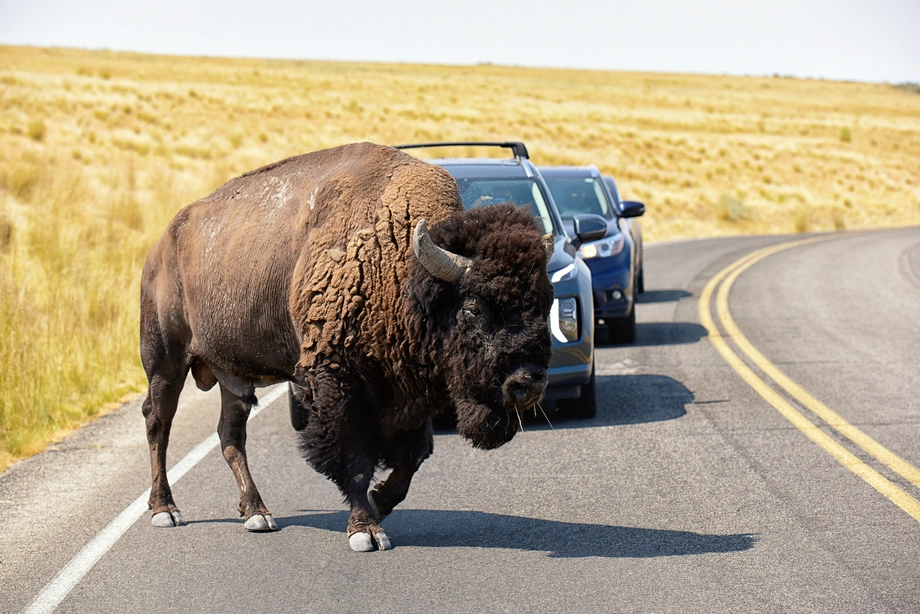 Antelope Island – Wild Heart of the Great Salt Lake Adventure
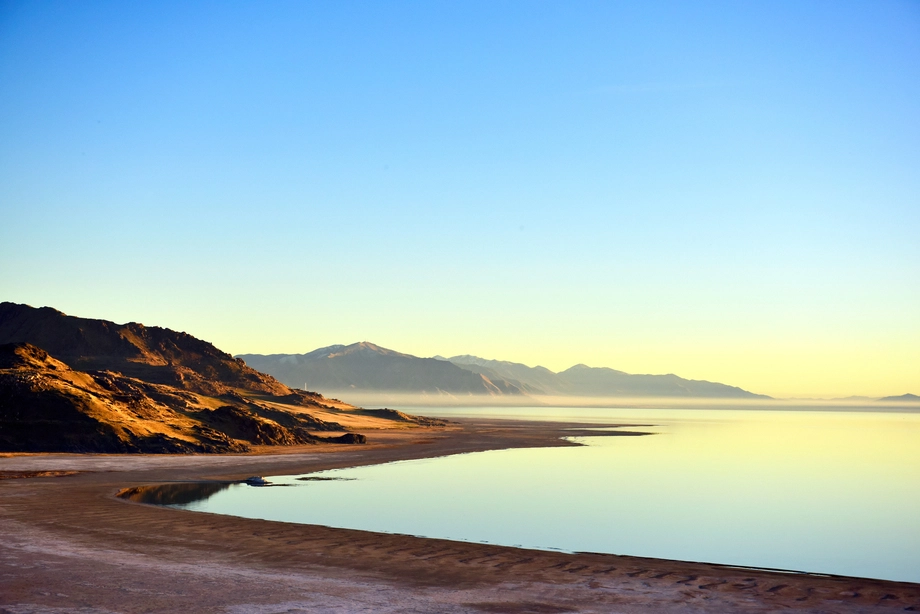 Antelope Island Sunset Wildlife Expedition – Great Salt Lake Odyssey
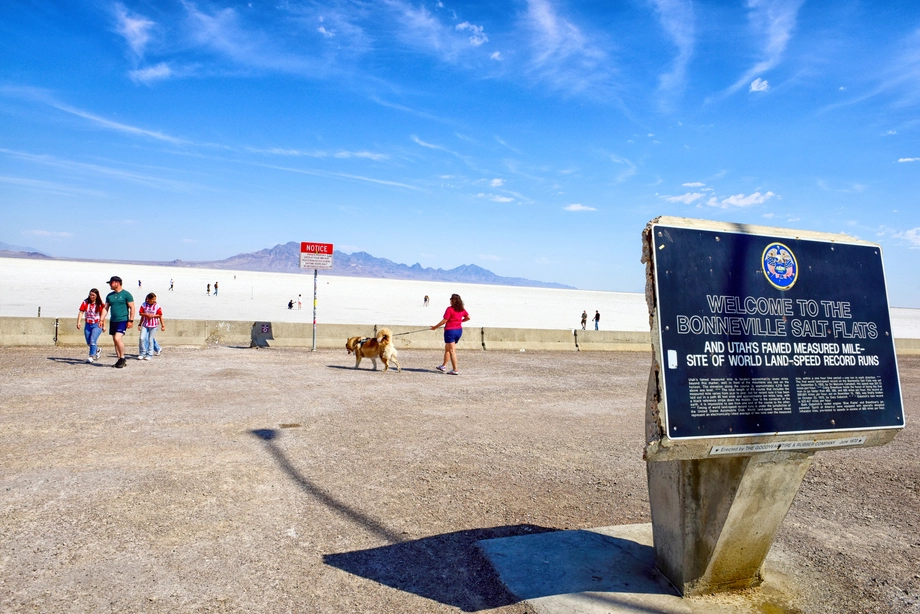 Bonneville Salt Flats – Journey to the Edge of the World