
When Should a Utah Park Day Trip From Salt Lake City Become an…

I would turn a Utah park day trip from Salt Lake City into an overnight when the drive starts dictating the visit: you rush the one place you came to see, depend on an uninterrupted journey or leave yourself a return drive you no longer want to make. The useful test is the time left at your chosen destination after access, meals and the journey home have been accounted for.
A short visit can still be worthwhile if one overlook is the whole purpose. A day that technically reaches Bryce, Zion or Moab can also be a poor fit for someone hoping to hike, linger or see two parks. At Matei Travel, I would settle that expectation before choosing the departure time.
Build the day backwards from your return
Start with the latest comfortable arrival back at your hotel. Deduct the journey home, a proper break and the time needed to leave the park. That gives you a park departure time. Now work forward from your hotel departure, allowing for the outbound drive, entry, parking and any internal transfer. The gap between those two times is your actual visit.
Here is an illustrative budget, not a forecast for a named route: a 12-hour day with eight hours of driving, one hour for meals and breaks and one hour for access leaves two hours in the park. Adding another hour of driving removes half that visit. If your main activity needs three hours, moving the hotel departure earlier by a few minutes will not solve the mismatch.
| Part of the illustrative day | Time |
|---|---|
| Driving in both directions | 8 hours |
| Meals and breaks | 1 hour |
| Entry, parking and internal transfers | 1 hour |
| Time left for the intended visit | 2 hours |
| Total door to door | 12 hours |
Calculate both directions in a current mapping service using the actual hotel and the actual trailhead or viewpoint. A park entrance, a visitor centre and a distant trailhead are different destinations. Keep a separate allowance for the things a driving estimate does not settle, such as parking or a shuttle queue.
Four parks, four different access problems
Bryce makes the scale clear: NPS places Salt Lake City airport about 270 miles from the park, roughly 540 miles for the return journey before local sightseeing. Its northern directions use I-15, UT-20, US-89, UT-12 and UT-63. That distance gives you a reason to compare an overnight before designing a full hiking day. Use the NPS directions for the approach rather than treating a scenic detour as interchangeable with the direct route.
At Bryce, the park shuttle is recommended, not mandatory. That differs from Zion Canyon. Choose between it and driving for the particular visit you want, allowing for parking or waiting rather than inventing a universal shuttle requirement.
Zion has an additional clock inside the park. During shuttle season, personal vehicles cannot use Zion Canyon Scenic Drive, including before the buses start and after they stop. NPS gives about 45 minutes for the shuttle journey between the visitor centre and Temple of Sinawava, roughly 90 minutes return before time at a stop. The shuttle schedule therefore matters even when the highway drive looks manageable.
For Arches, the 2026 NPS announcement removes the advance timed-entry reservation requirement. It does not promise an empty entrance or a space at your preferred trailhead. If one hike is the point of the journey, leave enough room for access delays and the hike itself. A late arrival with a rigid turnaround time can leave little flexibility.
For Canyonlands, choose the district first. Island in the Sky and The Needles use different approaches, and the districts are not joined by roads inside the park. The NPS district directions identify Island in the Sky as the easiest district to visit in a short time. A plan that simply says “Canyonlands” has not yet supplied a destination precise enough to calculate.
| Representative visit | Constraint to put into the calculation | What an overnight changes |
|---|---|---|
| Bryce Amphitheater | Long return distance plus the chosen hike or viewpoints | You can arrive nearer the start of the visit |
| Zion Canyon | Parking, shuttle transfers and the last useful return bus | You can separate the highway transfer from the canyon day |
| Arches | Entry and trailhead parking, even without timed entry in 2026 | You gain another arrival window |
| Canyonlands | The exact district and its access route | You can give one district a proper visit |
Choose one day, one night or a longer route
Keep the day trip when the single activity you care about fits comfortably, your driver is willing to make the return journey and the day retains some room for disruption. Do not judge it by how many park names you can put in the itinerary. One complete experience can be more satisfying than several stops made only to say you reached them.
Choose one night when splitting the road journey meaningfully improves the visit. Compare travelling to a nearby base the afternoon before with visiting first and sleeping nearby afterwards. The first option protects an early start. The second removes the immediate long return drive after the activity. Check where the hotel actually sits relative to your chosen park access.
Choose several days if you want a second substantial park visit, more than one Canyonlands district or a combination of hiking and unhurried sightseeing. Adding nights also adds accommodation, check-in and moving luggage. It earns its place when that cost buys time you will actually use.
Check conditions before making the final call
A route that works on paper can change with roadworks or weather. UDOT road conditions cover the highways, while NPS alerts and access pages cover the park visit. Recheck both close to departure, then decide whether the same-day plan still has room for the journey and the activity. A shorter daylight window or a late arrival should change the plan rather than be absorbed by rushing.
I would also give the driver a real veto. If the return depends on someone pushing through fatigue, the itinerary needs a different overnight structure or a closer destination. Sharing the wheel may change the driving burden, but it does not create additional daylight or park time.
For the door-to-door question, our guide to how long is too long for a Utah day tour looks at the driving commitment. If you decide to stay based in Salt Lake City, the short-stay planning guide helps you choose a more realistic day. Neither requires forcing a southern-Utah park into a day that no longer serves your trip.
 Your First Evening in Salt Lake City: A Low-Pressure Orientation Plan
 Bonneville Salt Flats Photography Etiquette: How to Protect the Surface and Share the View
 How to Plan an Antelope Island Birdwatching Visit
 Why Are There So Many Brine Flies on Antelope Island?
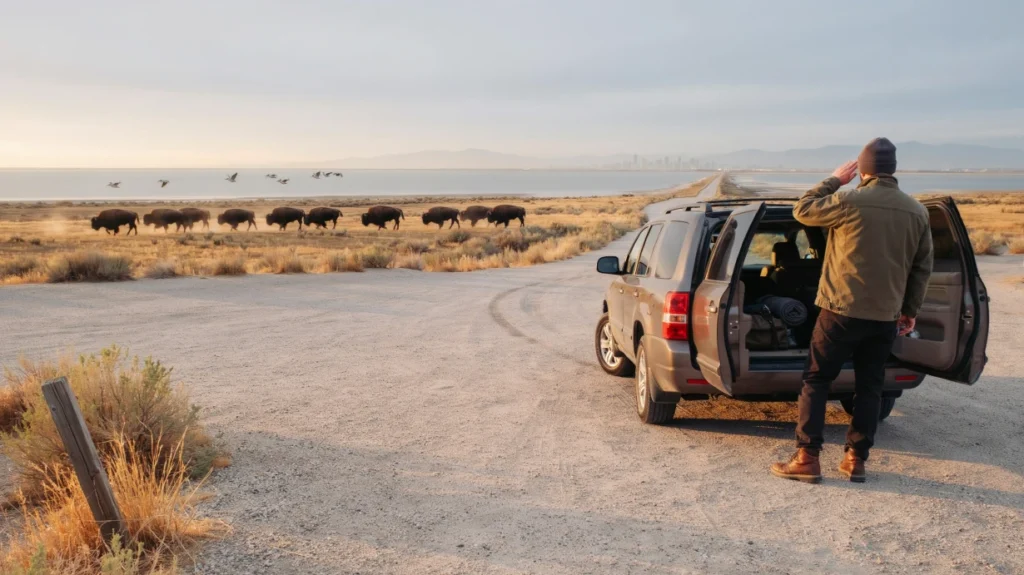 Antelope Island Day Tour or Sunset Wildlife Tour: Which Fits Your Salt Lake City Schedule?
 How to Dress for Changing Weather on Antelope Island

This experience is a must-do! Dima explains the history of the area as well as the...
Read more →I had never been on a guided tour before, but Dima made it the best experience...
Read more →This was a great tour, it was nice to get picked up from our hotel. It...
Read more →Great guide great information and great deal for the money.
Read more → Bonneville Salt Flats – Sunset Adventure of the White Desert
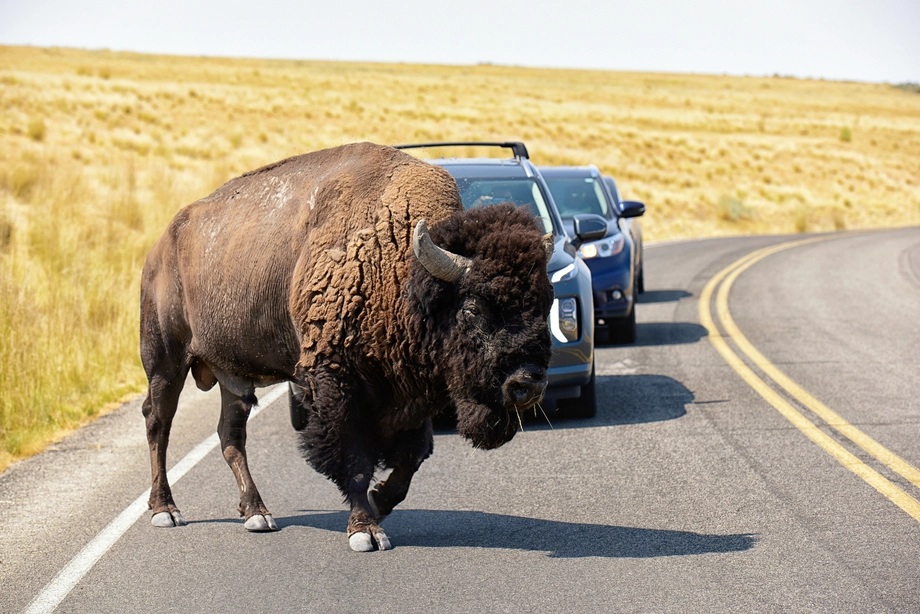 Antelope Island – Wild Heart of the Great Salt Lake Adventure
 Antelope Island Sunset Wildlife Expedition – Great Salt Lake Odyssey
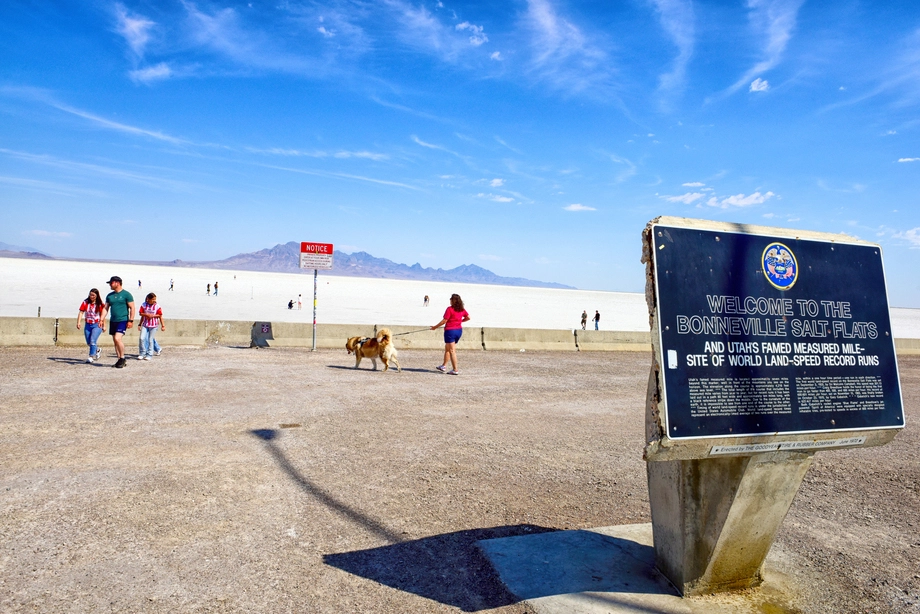 Bonneville Salt Flats – Journey to the Edge of the World