
Utah Ski Resort Day Trips From Salt Lake City: A Smooth Plan

A ski day from Salt Lake City can be relaxed and worthwhile when you choose timing carefully, plan for altitude, and use transport that fits your group. Weekdays and organized transfers reduce common parking and traffic stress.
The hardest part of a one-day ski outing from Salt Lake City is rarely the skiing itself. Traffic in the canyons, changing parking rules, crowded arrival periods, and the jump in elevation can turn a simple mountain day into a rushed one if nobody has taken ownership of the logistics.
A Utah ski resort day trip is a practical travel format for visitors who want time on the slopes without changing hotels. Unlike the best scenic drives near Salt Lake City, this is a day where the route, arrival window, energy level, and return plan directly affect how much of the experience feels enjoyable.
Is a ski day trip from Salt Lake City right for your stay?
A day trip works well when you have one available day, want to keep a Salt Lake City hotel base, and are willing to plan around travel and altitude. Staying slopeside may be the better choice if your priority is multiple consecutive ski days or an unhurried early-morning mountain routine.
We recommend the day-trip format most often for travelers who want a satisfying mountain experience within a broader Utah visit. It is especially useful when changing lodging would add cost, packing, and coordination that do not fit the rest of the itinerary.
- It is a strong fit for short stays: Visitors on a weekend break, business trip, or city-based vacation can ski without giving up an additional day to hotel transfers.
- It suits mixed-interest groups: A group can keep Salt Lake City as its base while reserving one day for the mountain rather than building the entire trip around skiing.
- It works for families and friends: Shared transport avoids appointing one person as the driver, navigator, parking researcher, and last person to relax.
- It may be less suitable for a ski-focused week: Several consecutive days on snow can be easier when you stay closer to the slopes and reduce daily transfers.
- It requires realistic expectations: A good day is not necessarily the longest possible day. It is one with enough slope time left after travel, gear arrangements, meals, and breaks.
If altitude is a concern, spend your first day in Salt Lake City before planning your ski outing. Our small-group downtown walking tours are a useful first-day option because they help visitors get oriented through the city’s history, layout, historic buildings, and lesser-known places while they adjust to the local elevation.
The four decisions that make or break your ski day from Salt Lake City
The four decisions are when to go, which resort area fits your group, how to travel, and how much skiing you can comfortably handle at elevation. Make these choices before you buy or arrange the rest of the day, because each one affects the others.
1. Choose the day and arrival window
Weekdays generally bring fewer visitors and shorter lift lines than weekends, which makes them the simplest choice for a limited-time visitor. If a weekend is your only option, skiing after 1 p.m. can be quieter than the busiest morning period, though it also leaves fewer daylight hours and less time to recover from travel delays.
An early start is best for travelers who want a fuller day on snow and can comfortably leave Salt Lake City before congestion builds. A later weekend approach can suit travelers who prefer a slower morning, accept a shorter ski session, and want to avoid chasing the same arrival window as everyone else.
2. Pick a resort area by logistics and group needs
Choose broadly based on travel time, your group’s confidence level, and the kind of day you want, rather than trying to rank resorts on paper. Newer skiers often benefit from a simple plan with time to settle in, while experienced skiers may place more value on local orientation and maximizing their independent time on the mountain.
Before committing, ask three useful questions: Can everyone in the group manage the travel day comfortably? Does anyone need extra time for rentals or lift-ticket arrangements? Will the group be happier with a full ski day or a shorter, less pressured outing?
3. Decide who owns transportation and parking
Driving gives you maximum independence, but it also assigns one person responsibility for winter canyon roads, traffic conditions, parking policies, and the return drive. Public transit can reduce parking pressure, while an organized transfer gives the group a single transport plan without asking anyone to master the local system.
4. Set an altitude-aware pace
Utah ski areas sit at much higher elevations than Salt Lake City, so hydration and pacing matter as much as an early departure. Build in a real meal break, take rests before fatigue accumulates, and avoid treating your first high-elevation ski day as a dawn-to-dusk endurance test.
You found a hidden promo code!
Use code WOWBLOG at checkout and get 10% OFF any tour!
Limited time offer. Book now and save!
Browse ToursHow our organized ski day trip process divides the work
An organized day trip is most useful when you want the structure of a planned transfer while keeping your own rhythm on the slopes. We handle the overall travel framework and local orientation, while guests retain responsibility for their personal equipment, skiing choices, and mountain purchases.
At Matei Travel, the purpose of the service is not to turn skiing into a rigid group program. Our one-day resort outings include round-trip transfer from Salt Lake City and allow flexible independent time on the slopes, so couples, families, and friends can use the mountain day at their own pace.
| Stage | What we organize | What guests should decide or prepare |
|---|---|---|
| Before booking | Current tour description, departure structure, and resort-area context | Date, group size, ability mix, and whether a full or shorter ski day suits the group |
| Before departure | Included transfer and practical guidance for the day | Appropriate clothing, hydration, and any needed ski-related arrangements |
| At the resort | Orientation that helps guests begin their day with less uncertainty | Rentals, lift tickets, meals, lessons if desired, and independent skiing decisions |
| Return to the city | A planned return time that supports an organized single-day outing | Being ready at the agreed meeting point and time |
The deliverable is a coherent day structure: transportation from Salt Lake City, clear expectations for the return, and room for guests to ski, rest, eat, or regroup without being marched through a minute-by-minute itinerary. Lift tickets, rentals, lessons, and meals should always be checked in the specific tour description rather than assumed to be included.
What does a realistic Salt Lake City ski day schedule look like?
A smooth ski day allows time for travel, gear needs, food, breaks, and the return to Salt Lake City rather than treating every hour as slope time. Exact timing depends on the resort area, conditions, and your chosen transport, but a clock-based plan prevents the most common mistake: leaving too late without adjusting expectations.
Weekday full-day example
- 6:30 to 7:00 a.m.: Eat, fill water bottles, confirm clothing and gear, and leave central Salt Lake City or meet your planned transfer.
- 7:30 to 8:30 a.m.: Travel toward the resort area. Keep this window flexible for winter road conditions and traffic.
- 8:30 to 9:30 a.m.: Arrive, complete any rental or ticket tasks, use restrooms, and agree on a regrouping plan if the party has different abilities.
- 9:30 a.m. to noon: Ski at an easy opening pace. The first runs are a good time to assess energy, altitude, and equipment comfort.
- Noon to 1:00 p.m.: Take a proper food and hydration break instead of eating hurriedly between runs.
- 1:00 to 3:30 p.m.: Continue skiing, split into ability-appropriate groups if needed, and leave enough margin to return gear or prepare for departure.
- Late afternoon: Meet at the planned location, travel back to Salt Lake City, and keep the evening light rather than scheduling another demanding activity.
Weekend later-start example
A weekend skier who prefers to avoid the busiest arrival period can build a shorter day around afternoon skiing. Start the morning slowly in Salt Lake City, travel with enough time for resort arrival tasks, ski after 1 p.m., then return according to the transport plan.
This version is a better fit for travelers who value fewer lift-line pressures over maximum hours on snow. It is not a shortcut around every weekend constraint, and it should not be paired with unrealistic expectations about fitting in a full day’s worth of runs.
Which transportation option creates the least stress?
The least stressful option depends on whether your group values independence, low-cost public transport, or having the canyon journey organized for you. Driving, the UTA Ski Bus, and a guided day-trip transfer can all work, but they place very different responsibilities on the traveler.
| Option | Best for | Advantages | Tradeoffs to plan for |
|---|---|---|---|
| Self-drive | Travelers who want total control of their timing | Independent departure, ability to carry personal gear, flexible return | Winter driving, resort parking rules, fees, lot capacity, and one person driving home after a full day |
| UTA Ski Bus | Visitors comfortable following a fixed public-transit schedule | Can reduce parking challenges and help limit traffic congestion | Schedule coordination, boarding location, capacity considerations, and managing gear around transit timing |
| Rideshare | Short-distance or backup needs, not a primary canyon plan | May appear convenient from the city | Return availability and coordination in canyon areas can be uncertain, especially when demand is high |
| Organized day trip | Couples, families, and friends who want an arranged transfer | Round-trip transport, local logistical context, and flexible time on the slopes | Guests follow the day’s overall departure and return structure |
Self-driving is a reasonable choice if you are comfortable with winter mountain conditions and have checked the current parking policy for your chosen resort. The hidden friction is not simply the drive. It is the research and decision-making that begins before departure, plus the possibility that a late arrival leaves you dealing with restrictions or a less convenient parking situation.
The UTA Ski Bus is a practical public option for travelers willing to build their ski day around the route and timetable. It can ease the parking question, but it does not eliminate the need to plan gear, timing, and how your group will get to and from the bus.
For visitors who would rather keep their attention on the ski day itself, our Utah Ski Resort Day Trips provide organized round-trip transportation from Salt Lake City. We also provide practical resort orientation and guidance that can help both newer and experienced skiers start their independent time on the mountain with a clearer plan.
How can you reduce crowd, parking, and timing problems?
You cannot guarantee an empty road, open parking lot, or short lift line, but you can reduce exposure to the worst pressure points by choosing the day and arrival strategy deliberately. Weekdays are generally the cleanest option, while post-1 p.m. skiing is a useful weekend alternative for travelers who accept a shorter session.
Parking is often the problem travelers discover too late. Some Utah ski resorts use parking fees or restrictions to manage congestion, so check the latest policy before departure if you are driving. Do not assume that last season’s advice, a hotel front-desk suggestion, or an old online post applies to the day you travel.
- Prioritize a weekday: It normally gives you a better chance of a calmer travel and lift-line experience.
- Match the start time to the day: Go early for a fuller weekday session; consider a later weekend ski window if lower crowd pressure matters more than maximum skiing hours.
- Make parking a pre-departure task: Confirm whether reservations, fees, restrictions, or arrival expectations affect your plan.
- Do not rely on rideshare for the return: Treat it as uncertain in canyon settings rather than building your full day around it.
- Give the group one meeting rule: Agree on a return meeting point and time before everyone separates for different runs or breaks.
Organized transport does not promise traffic-free travel, but it removes the need for your group to interpret parking policies and canyon-driving decisions while trying to begin a ski day. That matters most on a short visit, when a single logistical mistake can consume a large share of the available time.
How should you prepare for altitude and different energy levels?
Prepare by spending some time in Salt Lake City first, drinking water consistently, and planning a ski day with room for breaks. Different abilities and energy levels are manageable when each person has independent slope time and the group agrees on when and where to reconnect.
Altitude discomfort can make an ambitious itinerary feel much harder than it looked on a map. A modest first session, regular hydration, food, and a willingness to stop early are practical choices, especially for visitors arriving from lower elevations or traveling with children.
A simple preparation checklist
- One city-based day first: If your itinerary allows, arrive in Salt Lake City before the ski day and keep the first day active but moderate.
- Water and food: Carry water, eat before skiing, and plan for a real meal rather than treating hydration as an afterthought.
- Clothing readiness: Check your layers, gloves, eye protection, and spare dry items before leaving the city.
- Ability plan: Decide whether the group will ski together, split up, or meet for lunch and at the end of the day.
- Personal arrangements: Confirm any rentals, lift access, and lessons you need through the relevant provider before the day begins.
- Return expectations: Avoid booking an evening activity that depends on an exact arrival time after a winter mountain day.
A city day also makes the trip feel more balanced. Visitors who want culture alongside the mountain can use a non-ski day for a locally guided downtown walk, then dedicate their higher-energy day to skiing rather than trying to force both experiences into one schedule.
What should you check before booking an organized ski day?
Check the tour description for the current date, departure structure, resort-area plan, inclusions, and return expectations before booking. A good fit is one where the transport framework matches your preferred ski day without making assumptions about tickets, rentals, meals, or lessons.
Our service descriptions are designed to make the boundaries clear, just as our downtown walking-tour routes state their duration, distance, and terrain. Review the details with the same practical mindset you would use for a ski day: understand what is organized for you and what you will arrange personally.
- Confirm your date: Choose a weekday if possible, or decide whether a later weekend ski session better suits your group.
- Read the current tour details: Check the meeting information, transfer structure, planned return, and suitability for your travel party.
- Match the day to your ability mix: Consider whether newer skiers need more setup time or experienced skiers want guidance on where to begin.
- Arrange personal ski needs: Verify the status of lift tickets, rentals, food, and lessons rather than presuming they are part of the transfer.
- Prepare for a flexible mountain day: Bring water, dress for changing conditions, and leave evening plans open enough to accommodate the return journey.
If skiing is only one part of your Utah itinerary, our broader Utah day tours from Salt Lake City can help you use a separate day for landscapes and sightseeing while keeping the ski day focused on the slopes.
Plan the day around the friction, not just the snow
A Salt Lake City ski day is fully worthwhile when its schedule respects the realities of crowds, parking, transport, and elevation. Pick a weekday when you can, use a later ski window thoughtfully on weekends, and choose a transport method that fits the responsibility your group actually wants to carry.
Driving works for prepared travelers, public transit can reduce parking pressure, and an organized transfer is a practical choice when you want the logistics handled without giving up independent slope time. Pairing the mountain with a city-focused day gives many visitors a more comfortable and complete Utah stay.
Review the current Matei Travel ski day trip options to choose a date and resort-area plan that fits your schedule.
Can I ski Utah resorts from Salt Lake City in one day?
Yes. A single-day outing can work well when you allow for travel, resort setup, breaks, and a planned return rather than expecting uninterrupted skiing.
Are weekdays better for a ski day trip?
Weekdays generally have fewer visitors and shorter lift lines. They are often the easiest choice for travelers with flexible schedules.
Is afternoon skiing a sensible weekend strategy?
It can be. Starting after 1 p.m. may mean a quieter experience, but you should expect fewer total hours on snow than with an early start.
Should I drive myself to a Utah ski resort?
Drive if you are comfortable taking responsibility for winter canyon roads, parking policies, and the return journey. Check current parking requirements before you leave.
Does the UTA Ski Bus solve every transportation issue?
No. It can reduce parking stress, but you still need to coordinate its schedule, boarding location, gear, and your group’s timing.
What does an organized ski day trip handle?
It provides a planned transfer from Salt Lake City and an overall day structure. Guests should still confirm their own ski-related purchases and personal needs.
How can a mixed-ability group ski together?
Agree on meeting times and places, then let each person ski or rest at a comfortable pace. A shared lunch or end-of-day meeting keeps the group coordinated.
Should I spend time in Salt Lake City before skiing?
Yes, if your schedule permits. A city-based first day and consistent hydration can make the transition to a higher-elevation ski day more comfortable.
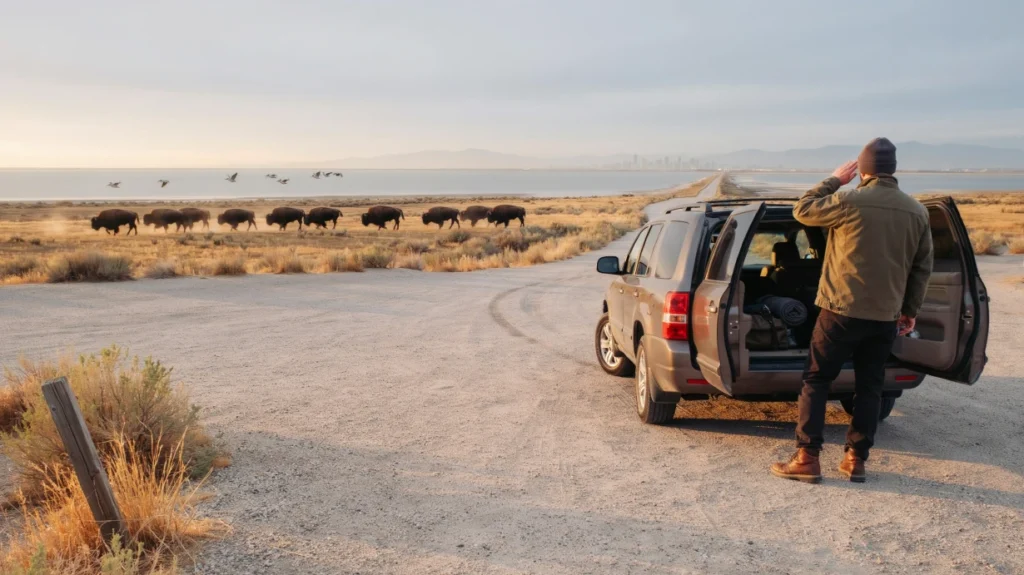 Antelope Island Day Tour or Sunset Wildlife Tour: Which Fits Your Salt Lake City Schedule?
 How to Dress for Changing Weather on Antelope Island
 How to Photograph People at Bonneville Salt Flats at Sunset
 How to Dress for Wind and Glare at Bonneville Salt Flats
 What a Guide-Led Utah Day Tour Handles for You
 Why Wildlife Sightings Cannot Be Guaranteed on Antelope Island

The tour was great and beautiful. Dima, the tour guide, explained everything clearly and had some...
Read more →What a beautiful experience! The drive is about 2 hours one way with interesting scenery the...
Read more →(From North Carolina on a business trip) '+ 'HANDS DOWN the best tour/guide I’ve ever had. And...
Read more →Went to Antelope Island. Terrible. Tour guide didn\'t do what he said he was going to...
Read more → Bonneville Salt Flats – Sunset Adventure of the White Desert
 Antelope Island – Wild Heart of the Great Salt Lake Adventure
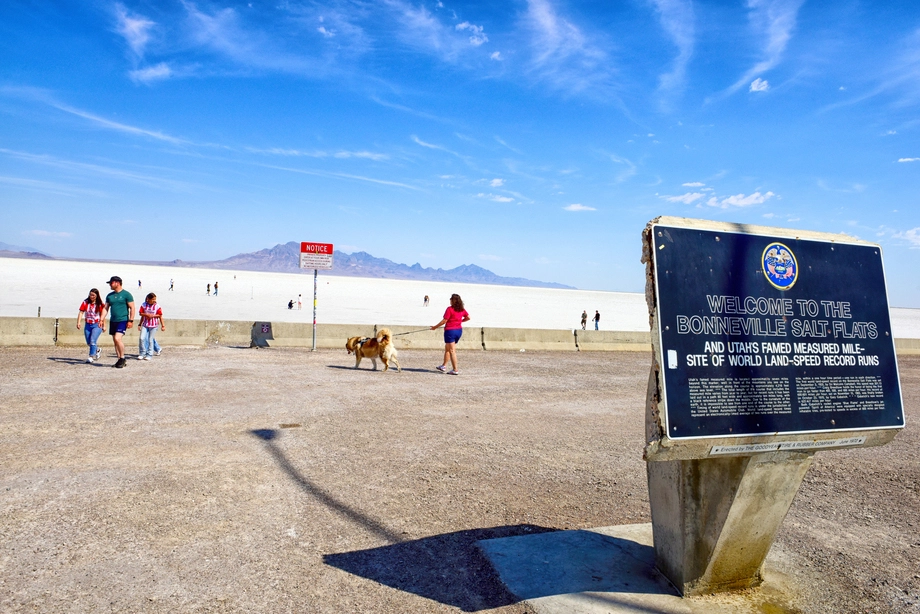 Bonneville Salt Flats – Journey to the Edge of the World
 Antelope Island Sunset Wildlife Expedition – Great Salt Lake Odyssey