
How to Choose a Moab Tour With Limited Hiking Experience
Aug 14, 2026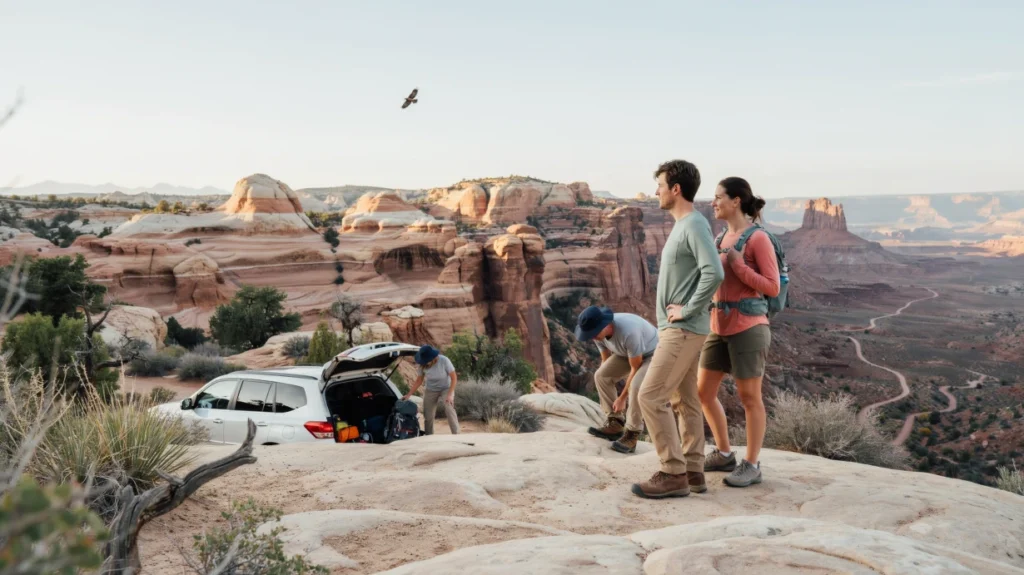
Choose a vehicle-based or half-day Moab tour with clearly stated walking distances, terrain, heat planning, and fitness requirements. Avoid vague “easy” labels without asking what the route actually involves.
The most common mistake we see in Utah trip planning is treating a famous destination as a fitness level. Moab is a canyon-country destination with dramatic arches, overlooks, and desert terrain, but the right guided experience depends far more on walking demands, route access, heat exposure, and pace than on whether the itinerary says “Arches,” “Canyonlands,” or “canyoneering.”
At Matei Travel, we organize one-day Utah tours from Salt Lake City to places including Antelope Island and the Bonneville Salt Flats, and we plan for travelers who want major scenery without taking on long, continuous hikes. We provide hotel pickup, a planned route, transportation, and guide commentary because removing logistical pressure leaves guests more energy to enjoy the landscape and the short walking sections that matter most.
Who should choose a low-hiking Moab tour?
A low-hiking Moab tour is a strong fit for travelers who can manage short walks but do not regularly hike, are uncertain on uneven ground, or want to conserve energy for sightseeing. It is less suitable for anyone seeking remote backcountry routes, long mileage, or technical terrain without the required confidence and preparation.
You do not need to be an experienced hiker to see memorable desert scenery. Many viewpoints and landmark areas can be approached by vehicle and reached with a brief walk, provided the itinerary is honest about surface conditions and time spent outside.
We deliberately use this same design logic on our Utah day tours. Our routes balance time in transit with time at the destination instead of cramming a day with demanding walks and too many stops, because an itinerary can be full without becoming exhausting.
Start with an honest hiking and fitness baseline
Your baseline is the amount of walking, standing, climbing, and heat exposure you can handle comfortably, not the level you hope to achieve on vacation. Answering a few specific questions before booking is more useful than calling yourself “fit” or “not fit.”
- Walking comfort: How long can you walk at an unhurried pace on a hard or uneven surface before you need a meaningful break?
- Stairs and slopes: Can you climb several flights of stairs or walk uphill without becoming overly breathless, dizzy, or unsteady?
- Footing: Are loose sand, slickrock, steps, ledges, or uneven ground likely to make you nervous?
- Heat tolerance: Have you spent time outdoors in dry summer conditions, and do heat or dehydration affect you quickly?
- Group reality: Are children, older relatives, a person with limited mobility, or travelers with very different confidence levels joining you?
For medical concerns, recent injuries, balance issues, or questions about strenuous activity, seek advice from a qualified health professional before booking. A tour operator can describe the route, but only you and your clinician can decide whether the physical demand is appropriate.
You found a hidden promo code!
Use code WOWBLOG at checkout and get 10% OFF any tour!
Limited time offer. Book now and save!
Browse ToursWhich Moab tour formats work best for limited hikers?
Vehicle-based sightseeing, short-walk park visits, sunset outings, and some half-day beginner activities can work for limited hikers when their physical requirements are clearly stated. The best format matches your comfort with walking, uneven terrain, and time outdoors rather than promising the most stops.
| Tour format | What it usually involves | Best fit | What to verify |
|---|---|---|---|
| Scenic drive with viewpoints | Frequent vehicle access and brief walks from parking areas | Travelers prioritizing views with the lowest physical load | Walking distance at each stop, restroom access, and time outside |
| Short-walk Arches or canyon sightseeing | Several short approaches on rock, sand, or maintained paths | People comfortable walking but not hiking for hours | Total distance across the day and whether terrain is uneven |
| Sunset or photography-focused tour | Timed stops at overlooks and landscape locations | Visitors who prefer cooler parts of the day and a slower pace | How long guests stand or walk after sunset |
| Half-day beginner canyoneering | Short approaches plus guided rappelling and scrambling | First-timers who meet stated age, fitness, and comfort requirements | Rappel count, scrambling, ladders, water exposure, and minimum age |
| Private scenic itinerary | A guide-led day shaped around the group’s priorities and pace | Mixed-ability families, anxious travelers, and groups needing breaks | Whether the operator can alter stops and walking segments on the day |
Half-day canyoneering experiences in the Moab area are often designed for first-timers and families, with professional instruction for hiking, rappelling, and scrambling. “Beginner” does not mean passive sightseeing, though. It still means being on your feet, following safety instructions, and being comfortable with the specific technical elements named by the operator.
A search result for small-group e-bike canyon tours around Moab with local trail permits included may sound low effort, but e-biking still requires confidence controlling a bicycle on the stated surface and managing outdoor exposure. Treat bike skills and route terrain as separate requirements from hiking ability.
How should you read a Moab tour difficulty description?
Read difficulty descriptions as a list of physical tasks, not as a single label. Distance, elevation change, surface type, balance demands, and time in desert conditions tell you far more than an “easy” or “moderate” rating alone.
Translate the words into real movements
- Short walk: Ask for the actual distance, surface, and whether the walk is optional. A short distance on uneven slickrock can feel harder than a longer paved path.
- Elevation gain: This means uphill effort. Even a brief climb can be tiring in heat or at the end of a long sightseeing day.
- Scramble: Expect to use hands for balance or upward movement on rock. This is not the same as ordinary walking.
- Ladder: Confirm its height, stability, and whether there is an alternative route. A ladder can be a deciding factor for guests uncomfortable with heights.
- Rappel: This is a technical descent using ropes and guide instruction. A first-time format may be appropriate for some people, but it is not a substitute for a scenic drive.
- Primitive trail: Expect less formal footing, possible sand or rock obstacles, and fewer built features than a developed path.
Also look for what the description leaves out. If a page says “easy hike” but gives no total mileage, elevation, terrain, or expected time on foot, send a direct question before paying. A clear operator should be able to explain the longest individual walk, the cumulative walking, and the point at which participants cannot easily return to the vehicle.
What selection filters matter most for a beginner?
The most useful filters are total time, vehicle access, desert timing, group pace, and explicit eligibility rules. A shorter itinerary with clear support is often a better choice than a longer one that leaves your energy level to chance.
- Choose duration deliberately: A half-day format limits cumulative fatigue and is often the more realistic first choice for a non-hiker. A full day can work when most stops are vehicle-accessible and the operator schedules breaks.
- Check the longest walk: Total mileage matters, but the longest uninterrupted segment often determines whether the experience feels manageable.
- Prioritize vehicle access: Ask how close the vehicle can get to each major viewpoint and whether a guest can remain near the vehicle if a walk is too much.
- Plan around heat: Early morning and sunset departures can reduce the toughest exposure. Confirm whether water, shade opportunities, rest stops, and time indoors or in the vehicle are part of the day.
- Read age and fitness rules literally: Some beginner canyoneering tours set minimum ages, sometimes beginning at age 8, and require basic fitness. Do not assume a family-oriented label overrides the written requirements.
- Ask about group size and pace: In a shared group, the guide must keep the itinerary moving. Smaller groups can feel more manageable, but only a private format can offer true control over pacing.
For broader trip planning, our guide to choosing guided Moab and Canyonlands experiences helps place physical difficulty alongside timing, interests, and the wider Utah itinerary.
When is a private Moab tour worth considering?
A private tour is worth considering when the group needs a slower pace, more breaks, fewer walking stops, or flexibility to change the plan around comfort and conditions. It is especially practical for families with children, multigenerational groups, and travelers who feel anxious about holding up strangers.
Private does not automatically mean easy. The important question is whether the operator can replace a strenuous stop with a vehicle-accessible viewpoint, shorten an approach, or spend longer at the locations your group can enjoy comfortably.
Shared and private formats have different tradeoffs, which we address in more detail in our guide to private or shared Moab scenic tours for mixed-ability groups. If one person needs frequent rests while others want more time outside, discussing that difference before booking prevents disappointment on the day.
What common booking mistakes make a tour feel harder than expected?
The most avoidable mistakes are relying on vague labels, underestimating desert heat, and booking a technical activity because it is marketed to beginners. A few direct questions can prevent a mismatch between the tour’s actual demands and your group’s comfort.
- Booking by destination name: “Arches” does not identify the physical effort. Two tours in the same park can have completely different walking requirements.
- Counting only miles: A short route over sand or uneven rock, in direct sun, may require more energy than the number suggests.
- Assuming guided means effortless: Guides provide instruction and structure, but participants still need to meet the stated physical and technical requirements.
- Choosing a full day to get more value: More hours are not better if fatigue makes the final stops less enjoyable. A focused half-day can be the better value for a first visit.
- Ignoring the return plan: Ask whether a person can opt out of a stop, wait near the vehicle, or turn back if their comfort changes.
Heat deserves its own planning step. Our related advice on planning for heat and distance in Moab and Canyon Country is useful when comparing departure times and deciding whether a desert activity belongs early, late, or on another day.
How does Matei Travel apply the low-stress tour principles?
We apply low-stress touring by building day trips around transport, a realistic route, guided context, and manageable walking rather than long treks. Our current Salt Lake City experiences are an honest option for travelers who want an accessible introduction to Utah landscapes before or after time in Moab.
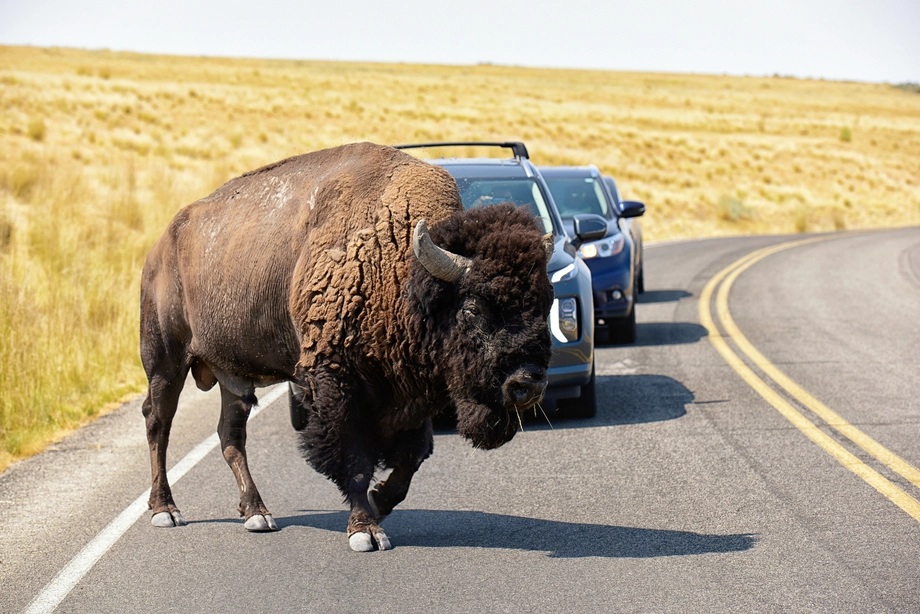
We currently operate the Antelope Island Tour from Salt Lake City — From $120 | Matei Travel as an approximately seven-hour trip in a modern Mercedes Sprinter, limited to 13 guests. We chose a small group format and comfortable vehicle rather than a large bus because the day includes changing landscapes, bison viewing, Fielding Garr Ranch, brine shrimp industry information, a souvenir stop, Buffalo Point Trail, and a relaxed walk at Bridger Bay Beach.
On that tour, we include hotel pickup, transportation, park entrance, bottled water, hot drinks including tea, coffee, and hot chocolate, plus granola bars. We include these practical basics because guests can underestimate hydration and energy needs in outdoor environments, especially when desert and lake conditions are unfamiliar.
We also structure our itineraries around short, guided walking sections at places such as Buffalo Point Trail and Bridger Bay Beach rather than long, continuous hikes. That is a deliberate choice for travelers who want scenery, wildlife, and context while keeping the physical load within a more approachable range.
If you are beginning your Utah trip in Salt Lake City, browse our Utah Day Tours to compare low-stress landscape and wildlife experiences built around the same practical pacing principles. For travelers considering a half-day canyon outing elsewhere in Utah, our overview of canyon sightseeing tours with easy walks can help clarify what “easy” should mean before you book.
What should you ask before booking a Moab tour?
Ask for concrete route details and make your decision from the answers, not from marketing labels. A suitable operator should be able to explain the day in plain language before you commit.
- What is the longest single walk, and what is the total walking distance?
- How much uphill or downhill terrain is involved?
- Is the surface paved, packed dirt, sand, slickrock, or uneven trail?
- Will I need to scramble, climb a ladder, cross water, rappel, or use my hands for balance?
- How much of the day is in direct sun, and what breaks are planned?
- Can I skip a walking stop or wait near the vehicle if needed?
- What are the minimum age, fitness, and footwear requirements?
- How many guests are in the group, and can the pace be adjusted?
A detailed answer is a positive sign because it lets you choose with realistic expectations. If the response remains general, select a simpler format with stronger vehicle access or consider a private option.
Moab can be rewarding without a long hike when the route matches your actual comfort level. We design our Utah day tours around that same balance of transport, time on site, short guided walks, and practical comfort. Browse our beginner-friendly Utah day tours, or contact our team to describe your fitness level, interests, and travel dates.
Can someone who rarely hikes enjoy Moab?
Yes, if they choose a scenic, vehicle-accessible itinerary with short walks and clearly described terrain. The destination has many viewpoints that do not require a long trail day.
Does “beginner canyoneering” mean no experience is needed?
It often means prior canyoneering experience is not required, but participants may still need basic fitness and comfort with rappelling or scrambling. Read the operator’s age and physical requirements carefully.
Is a half-day tour better than a full-day tour for non-hikers?
A half-day trip is often easier to manage because it reduces total time on your feet and in the heat. A full day can still fit if the stops are mostly vehicle-accessible and breaks are built in.
What does a scramble mean on a tour description?
A scramble usually involves using your hands for stability or upward movement on rock. Travelers with balance concerns or discomfort on uneven surfaces should ask for a precise description.
Should families with children choose a private tour?
A private format can be useful when children need extra breaks or the group has different confidence levels. Confirm whether the route can be shortened or adjusted before booking.
What should I bring on a low-hiking desert tour?
Bring suitable footwear for the stated surface, water as requested by the operator, sun protection, and layers for changing temperatures. Follow the operator’s specific packing and footwear guidance for technical activities.
What makes the Antelope Island Tour from Salt Lake City manageable?
The approximately seven-hour tour uses a small group of up to 13 guests, hotel pickup, a modern Mercedes Sprinter, and a planned mix of wildlife viewing, landmarks, and short walking sections. Park entrance, bottled water, hot beverages, and granola bars are included.

Exceptionally knowledgeable guide who knew his facts and figures and history. He did everything to make...
Read more →We really enjoyed our trip!! Our guide was awesome and he took lots of pictures of...
Read more →Take this tour! My tourguide was TOP KNOTCH!- a lovely Ukrainian gentleman. He was able to...
Read more →Great experience, for to see Bison and Pronghorns for the first time in my life.
Read more → Bonneville Salt Flats – Sunset Adventure of the White Desert
 Bonneville Salt Flats – Journey to the Edge of the World
 Antelope Island – Wild Heart of the Great Salt Lake Adventure
 Antelope Island Sunset Wildlife Expedition – Great Salt Lake Odyssey