
Canyonlands Sunset Photography Stops With Short Walks From the Road
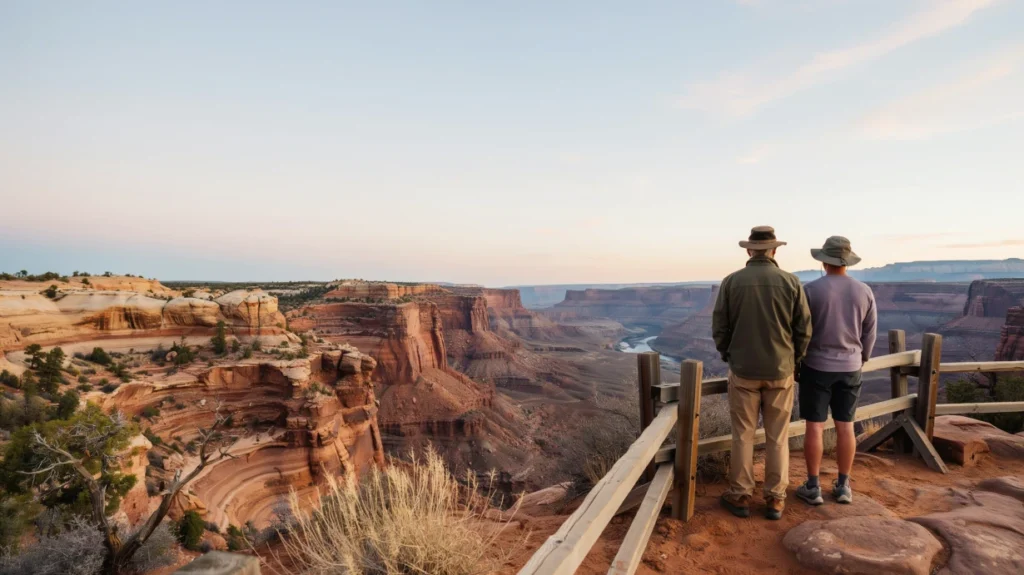
For a low-effort Canyonlands sunset, focus on Island in the Sky: White Rim Overlook for late light, Grand View Point for a broad horizon, and Green River Overlook for a near-road option.
Trying to fit every famous Canyonlands viewpoint into one evening usually creates the exact problem sunset photographers want to avoid: rushed walks, missed light, and a long unfamiliar drive after dark. We organize excursions and tours in Utah, and our practical approach is to build an Island in the Sky evening around a few major views that reward short, clear walks rather than an ambitious hiking list.
This is a route-planning guide for photographers, families, and low-effort travelers who want big canyon compositions without committing to a long trail. Island in the Sky is the right Canyonlands district for this purpose because its paved scenic road connects rim overlooks and established short trails.
Which Canyonlands sunset plan should you choose?
Choose one primary sunset stop and no more than one earlier overlook if you have a single evening. The best plan depends on whether your priority is the shortest walk, a longer canyon-edge composition, or Mesa Arch as an optional add-on.
| Plan | Stops | Walking load | Best fit |
|---|---|---|---|
| Plan A: Lowest effort | Green River Overlook, then Grand View Point | Very short roadside stop plus up to 1.8 miles round trip | Families, mixed-energy groups, and travelers who want one main sunset location |
| Plan B: East-facing late light | White Rim Overlook, then Grand View Point or Green River Overlook | 1.8 miles round trip at White Rim, plus an optional short stop | Photographers who want Colorado River, Monument Basin, and La Sal Mountains in the frame |
| Plan C: Famous arch plus sunset rim | Mesa Arch earlier, then Grand View Point | 0.6-mile Mesa Arch loop plus up to 1.8 miles round trip | Visitors who want to see Mesa Arch but do not want to rely on it as their sunset finale |
For most visitors, we would select Plan A or Plan B. The point is not to collect overlooks. It is to arrive at the final rim with enough time to walk safely, choose a composition, and leave without treating the drive out as an afterthought.
What counts as a short walk from the road in Island in the Sky?
In this guide, a short walk means a clearly defined route of roughly 0.6 to 1.8 miles round trip, plus roadside viewpoints where the view begins near the parking area. These routes are modest in distance, but canyon rims still involve uneven rock, exposure to weather, and cliff edges.
The National Park Service describes Mesa Arch as a 0.6-mile loop and both White Rim Overlook and Grand View Point as 1.8-mile routes. Those distances make them realistic for travelers who are not serious hikers, provided the group is comfortable walking on natural surfaces and stays well back from drop-offs.
- Good fit: Travelers carrying a camera, families with supervised children, and visitors who prefer a deliberate pace over a strenuous trail.
- What to expect: Mostly straightforward walking, open terrain, and limited protection from wind or changing temperatures.
- Important limit: Short mileage does not make a rim overlook appropriate for every mobility level. Review current National Park Service conditions and choose the least demanding stop for your group.
You found a hidden promo code!
Use code WOWBLOG at checkout and get 10% OFF any tour!
Limited time offer. Book now and save!
Browse ToursHow do we build a realistic Canyonlands sunset route?
We organize Utah park days around iconic places that can be reached without making the schedule fragile. Our selection method is simple: short distance, a trail that is easy to follow, dependable parking, a view with a clear late-day purpose, and enough margin to return from the park without rushing in darkness.
When we run Utah national parks tours from Salt Lake City, Canyonlands is part of the same larger park geography as Zion, Bryce Canyon, Arches, and Capitol Reef. That is why we treat a Canyonlands sunset as one well-timed part of a broader itinerary, not as an excuse to promise an unrealistic Salt Lake City to Moab day.
Our local guides lead Salt Lake City walking tours, where the groups are kept small so guests can ask questions along the way. We also publish walking-route details such as duration, distance, and terrain before guests book online, and that same habit informs how we think about a Canyonlands evening: the walking load and timing should be clear before the vehicle leaves.
We also operate Utah ski-resort day tours with transfers to the resorts and flexible time on the slopes. That transfer-first structure is relevant to travelers who dislike managing an unfamiliar return drive, although it should not be read as a claim that every Canyonlands sunset request is a named photography tour.
When should you stop at White Rim Overlook?
White Rim Overlook is the strongest choice for an earlier golden-hour stop when you want an east-facing canyon composition rather than a simple sunset horizon. Its 1.8-mile round-trip trail leads to views of the Colorado River, Monument Basin, and the La Sal Mountains.
Because the overlook faces east, it is best treated as a late-afternoon light stop rather than the one place to wait for the sun to disappear. Build time for the full walk out and back, then decide whether to remain only if the sky and your preferred composition still justify it.
- Photo subject: River curves, layered basin forms, distant mountains, and side-lit desert texture.
- Walking plan: Allow enough daylight to complete the 1.8-mile return walk without relying on sunset light for footing.
- Practical choice: Use White Rim as your main stop if the eastward view matters more than seeing the sun near the horizon.
Where should you make the final sunset stop?
Grand View Point is the best dedicated finale for a broad canyon-edge panorama, while Green River Overlook is the simpler alternative when you want minimal walking. Grand View Point has a 1.8-mile out-and-back route along the canyon edge; Green River Overlook is a roadside rim viewpoint with no supplied trail-distance figure.
Grand View Point Trail
The Grand View Point Trail follows the rim and opens expansive panoramic views, giving photographers room to work with receding canyons and a wide horizon. It is a better sunset commitment than Mesa Arch when the goal is an open landscape rather than an arch silhouette.
Walk only as far as your available light and group pace allow. You do not need to turn a sunset session into a full-distance obligation if a safe, satisfying composition is available near the beginning of the route.
Green River Overlook
Green River Overlook is the efficient choice when a longer trail would make the evening feel rushed. Its value is logistical as much as photographic: a rim view close to the road gives you time to assess the light, make a few compositions, and begin the drive out sooner.
Use Green River Overlook as the final stop in Plan A, or as a fallback after White Rim Overlook if the earlier walk takes longer than expected. Check the current park map for the exact viewing orientation and any day-of access changes before deciding where to place the camera.
Is Mesa Arch worth visiting at sunset?
Mesa Arch is worth a short visit if it is personally important, but it is usually not the best dedicated Canyonlands sunset location. The 0.6-mile loop is famous for sunrise, when light is associated with the view through the cliff-edge arch.
At sunset, the arch can still be an interesting foreground, but it does not offer the same broad late-day payoff as a major rim panorama. The practical compromise is to visit Mesa Arch earlier in the day, then reserve the final light for Grand View Point or Green River Overlook.
- Visit Mesa Arch first: Keep the 0.6-mile loop separate from the final sunset decision.
- Do not wait too long: Leave enough margin to reach the selected rim viewpoint before the light becomes difficult for walking.
- Skip it when time is tight: A rushed Mesa Arch stop can cost the calmer sunset session that Grand View Point or Green River Overlook provides.
What is the simplest evening timeline from Moab?
A simple Moab-based plan is to enter Island in the Sky well before late afternoon, make one optional earlier stop, and commit to a single final overlook. Exact drive times vary with conditions, seasonal daylight, road work, and the starting point, so use the sunset time as the fixed anchor rather than treating a published drive estimate as guaranteed.
- Several hours before sunset: Leave Moab with water, food, layers, charged devices, and a downloaded or paper park map.
- Late afternoon: Complete White Rim Overlook if you chose Plan B, or use the time for a relaxed roadside stop.
- About 60 to 90 minutes before sunset: Arrive at Grand View Point or Green River Overlook, park, and decide whether the full 1.8-mile trail is realistic.
- After sunset: Pack up deliberately, confirm the route out before driving, and avoid trying to add Mesa Arch or another distant overlook.
Travelers starting in Salt Lake City should think in terms of a staged multi-day route rather than a quick evening detour. Our Utah National Parks Tours start from Salt Lake City and combine transport, scenic drives, key viewpoints, optional short walks, and a stated daily walking level, which is a more realistic framework for connecting Canyonlands with Utah’s other major parks.
What buffers and fallbacks make the plan safer?
The essential buffer is time: leave room for parking, a slower walker, changing weather, and the walk back after the best color has passed. If any part of the evening slips, reduce the number of stops instead of shortening safety decisions at cliff edges or on the drive out.
- If White Rim runs late: Make Green River Overlook the final stop rather than beginning another 1.8-mile walk close to dusk.
- If wind or weather reduces comfort: Choose the closest roadside viewpoint and keep the session brief.
- If the group is tired: Skip Mesa Arch and preserve energy for one horizon view.
- If sunset color is muted: Photograph canyon layers, river bends, and changing side light rather than waiting for a dramatic sky that may not develop.
- If driving in the dark worries you: Set your exit route before sunset, carry light for the walk to the vehicle, and avoid detours after leaving the overlook.
What should you check before leaving for Canyonlands?
A short pre-start check prevents most avoidable timing problems. Confirm current park alerts, daylight timing, route access, and your group’s willingness to complete the chosen walk before you commit to the longer overlook.
- Park information: Review the current National Park Service map, alerts, and trail conditions.
- Route choice: Select Plan A, B, or C before leaving Moab, with one named fallback stop.
- Light and footing: Bring a light for the return to the vehicle and wear footwear suitable for uneven natural surfaces.
- Water and layers: Carry both, even for a short outing on an exposed mesa.
- Vehicle plan: Fuel up, download navigation in advance, and tell everyone when the final stop ends.
When is a guided Utah park trip the better choice?
A guided trip is worth considering when the group has limited time, mixed walking abilities, or little confidence navigating long desert roads after dark. Self-driving can work well, but a structured itinerary removes the need to coordinate scenic stops, trail length, return timing, and a larger multi-park route alone.
We design our Utah trips around the practical details that matter on a park day: transfers, scenic-road stops, time at key viewpoints, and optional short walks. For a Canyonlands-focused request, ask us to prioritize easy-access overlooks and a pace that leaves room for the evening light rather than assuming every famous stop belongs on the schedule.
The most effective low-effort Canyonlands sunset plan is selective: use White Rim Overlook for an east-facing late-afternoon view, then choose Grand View Point or Green River Overlook as the final stop. Mesa Arch remains a worthwhile 0.6-mile loop, but it is usually better placed earlier because its strongest photographic reputation is tied to sunrise.
We organize Utah travel with the same clear expectations we use for our small-group, local-guide walking tours in Salt Lake City: explain the distance, terrain, and practical commitment before the day begins. Explore our Utah National Parks Tours or contact Matei Travel to ask for a route that gives Canyonlands sunset views priority without building the day around long hikes or dark-road stress.
Which Canyonlands district is best for short sunset walks?
Island in the Sky is the most practical district because a paved scenic road connects major rim overlooks and several established short trails.
How long is the walk to White Rim Overlook?
White Rim Overlook is a 1.8-mile round-trip hike. It leads to an east-facing view toward the Colorado River, Monument Basin, and the La Sal Mountains.
How long is Grand View Point Trail?
Grand View Point Trail is a 1.8-mile out-and-back route. Its canyon-edge setting makes it a strong choice for a wide landscape composition.
Can I photograph Mesa Arch without doing a long hike?
Yes. Mesa Arch is reached by a 0.6-mile loop, although it is generally better known for sunrise than for a dedicated sunset session.
What should I skip if I have only one evening?
Skip extra stops rather than rushing between them. Pick one final overlook and treat every other location as optional.
Is Green River Overlook suitable when someone cannot manage a longer trail?
It is a useful near-road rim option, making it a sensible choice when a 1.8-mile walk would be too demanding or too late in the evening.
What is the safest way to plan the drive out after sunset?
Confirm the exit route before sunset, carry a light for the walk back to the vehicle, and avoid adding unplanned stops once darkness arrives.
 When Should a Utah Park Day Trip From Salt Lake City Become an Overnight?
 Your First Evening in Salt Lake City: A Low-Pressure Orientation Plan
 Bonneville Salt Flats Photography Etiquette: How to Protect the Surface and Share the View
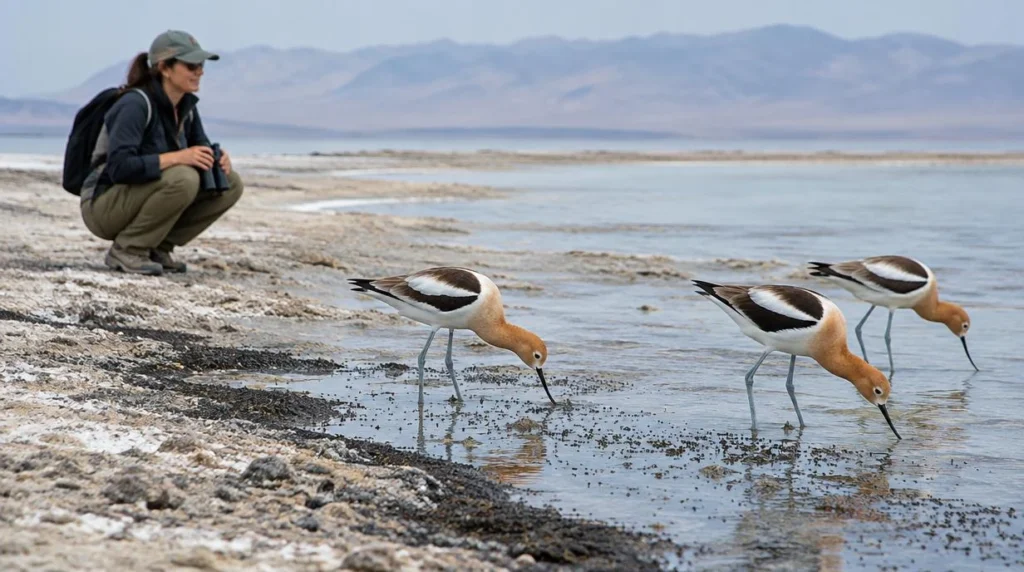 How to Plan an Antelope Island Birdwatching Visit
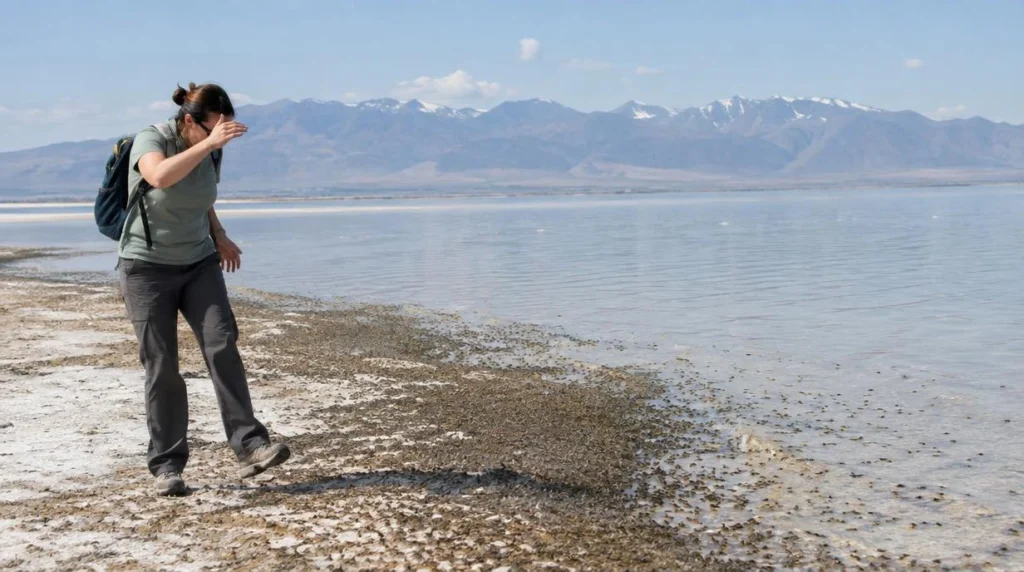 Why Are There So Many Brine Flies on Antelope Island?
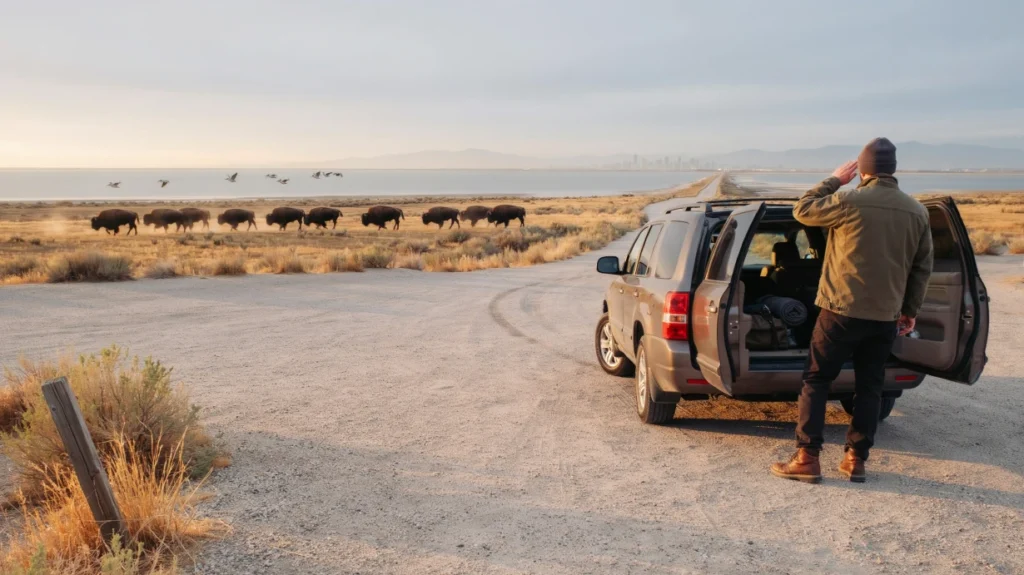 Antelope Island Day Tour or Sunset Wildlife Tour: Which Fits Your Salt Lake City Schedule?

This experience is a must-do! Dima explains the history of the area as well as the...
Read more →I had never been on a guided tour before, but Dima made it the best experience...
Read more →This was a great tour, it was nice to get picked up from our hotel. It...
Read more →Great guide great information and great deal for the money.
Read more →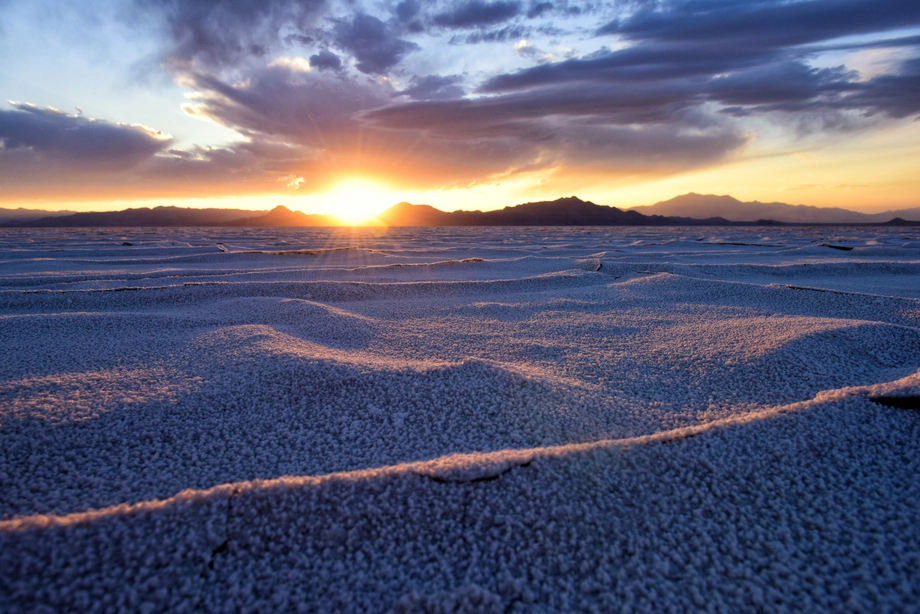 Bonneville Salt Flats – Sunset Adventure of the White Desert
 Antelope Island – Wild Heart of the Great Salt Lake Adventure
 Antelope Island Sunset Wildlife Expedition – Great Salt Lake Odyssey
 Bonneville Salt Flats – Journey to the Edge of the World