September 2026

Select date

What the Bonneville Salt Flats Surface Feels Like Underfoot

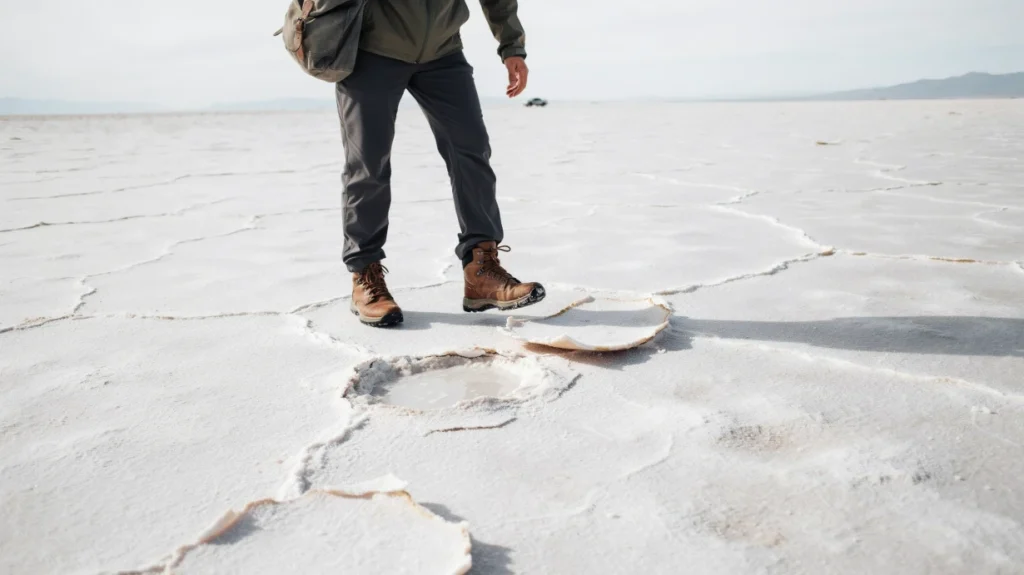
In dry central areas, the Bonneville Salt Flats usually feel hard, crisp, and lightly rough, similar to textured concrete. Wet periods and thin edge crust can feel slick, flexible, or muddy.

The white expanse can look smooth enough to resemble a giant frozen lake, yet the surface beneath a shoe can range from pavement-hard to soft and muddy within the same visit. We organize natural-landscape excursions in Utah, including trips to the Bonneville Salt Flats, so practical comfort starts with recognizing that the salt is not one uniform walking surface.

For visitors deciding whether to go barefoot, wear sandals, or stay in closed shoes, the important variables are moisture, location, and the thickness of the crust. We run one-day tours from Salt Lake City that include places such as Bonneville Salt Flats and Antelope Island, balancing road time with meaningful time on site rather than treating a stop at the flats as a quick photo from the parking area.

What does the Bonneville Salt Flats surface feel like in dry conditions?

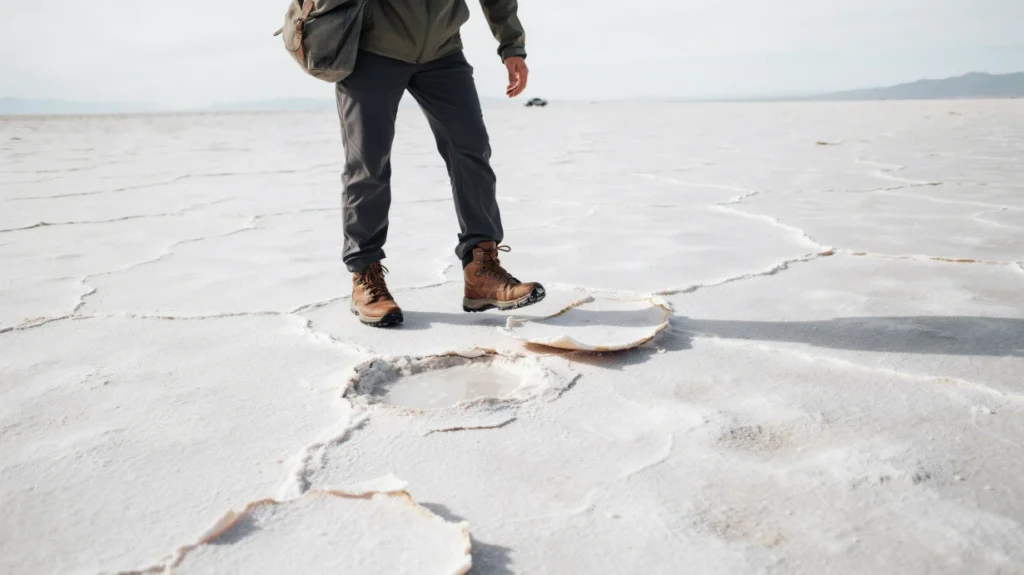
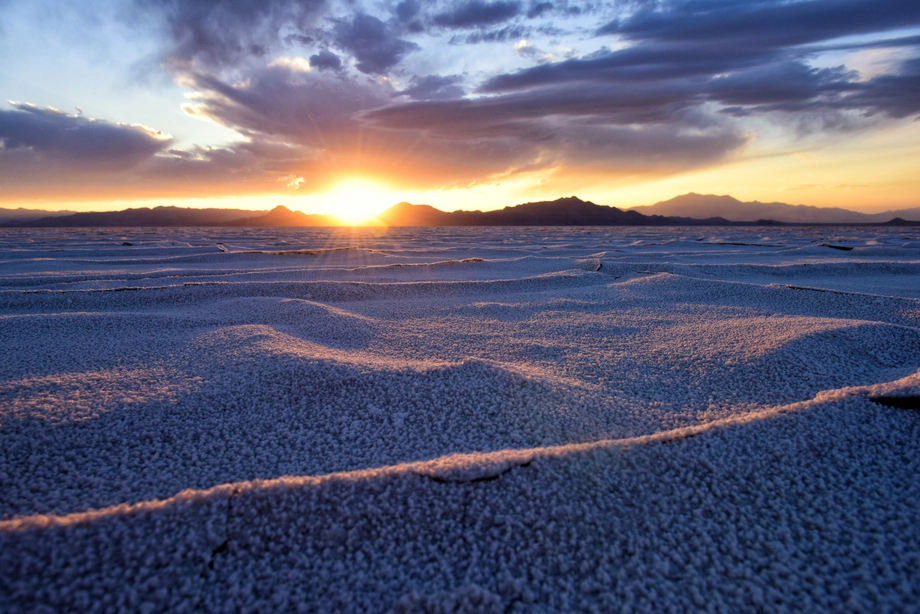
In a dry central area with a substantial salt crust, it generally feels firm underfoot, lightly crunchy, and faintly textured, much closer to rough concrete than to beach sand. Shoes make a quiet crisp sound on salt crystals, while bare feet may notice small granular points and shallow polygon-shaped ridges.

The satisfying version many visitors picture is not soft or powdery. A dry crust can support normal walking without a sinking sensation, and the broad flatness makes each step feel unusually level. The texture is usually subtle enough for a short barefoot walk for some people, but it is not polished flooring: crystals, cracks, heat, and salt residue can make shoes the more comfortable choice.

According to the Bureau of Land Management’s Bonneville Salt Flats information, the flats are composed mostly of sodium chloride, the same compound known as table salt. That composition explains the dry crunch and white crystalline grain visitors can see and feel at ground level.

Useful sensory comparisons

  • Under sneakers: Like walking across dry, slightly rough pavement with a thin scattering of coarse crystals.
  • Under sturdy sandals: Firm and flat, with enough texture that soles provide welcome separation from crystals and hot salt.
  • Under bare feet: More like compacted granular snow that has melted and refrozen than like soft sand. It can feel cool early in the day and hot later, depending on conditions.
  • Across visible cracks: A shallow, uneven pattern that may catch attention but is usually not a deep obstacle on a firm, dry section.

Why can the ground feel solid in one spot and flexible in another?

The difference comes from a sodium chloride crust over sediment, with variable thickness and moisture below it. Thick central salt can feel rigid and dependable, while a thin crust near a margin can bend slightly, crack, or give way into damp sediment.

Geological descriptions of the flats note that the crust can reach about 5 feet thick in central areas and taper to less than an inch around the edges. That change is large enough to transform the walking experience. A thick, dry layer behaves like a hard slab, whereas a thin layer over moist ground can feel faintly springy before it breaks.

Visitors sometimes mistake the bright white color for a guarantee of firmness. Color alone cannot confirm what lies beneath the surface, especially where moisture remains under a thin salt layer. A visibly damp patch, a glossy sheen, footprints that look deep, or soft sediment at an edge are reasons to avoid stepping farther out.

What a thin or wet crust can feel like

A fragile area may feel like a stiff skin laid over soft mud. The first step can seem stable, then flex beneath body weight or fracture into salty slush. This is not quicksand, but it can leave footwear coated in brine and mud and make walking back uncomfortable.

We do not claim that a particular visit will reach a specific crust thickness or guarantee a dry walking surface. Conditions shift with weather, season, and micro-location, which is why a conservative choice is better than testing uncertain ground with a longer walk.

Bonneville Salt Flats – Sunset Adventure of the White Desert Secret Find! Bonneville Salt Flats – Sunset Adventure of the White Desert from $120 · 6-7 hours · up to 13 persons

Promo code for this tour

10% OFF this tour

You found a hidden promo code! Use it at checkout.

WOWDESERT
Book this tour

Limited time offer. Book now and save!
How does the surface change from summer to winter?

Late summer commonly offers the hardest, driest, most crunchy feel, while winter and other wet periods can leave the crust submerged, slick, or slushy. Spring and fall are transition periods, so firmness can vary sharply across the flats.

Seasonal condition Likely underfoot sensation Comfort and planning implication
Dry summer, especially later in the season Hard, dry, crisp, and lightly rough Usually the most comfortable time for short walks in closed shoes or supportive sandals.
Spring or fall transition Mixed patches of firm crust, damp salt, and occasional flexibility Choose stable footwear and avoid judging the whole area by the first few steps.
Winter or wet periods Water-covered, slippery, soft, or slushy salt over saturated sediment Walking may be unpleasant or inappropriate; avoid wet sections to reduce slipping and surface damage.

The seasonal cycle drives these changes. Water can cover the flats in winter and dissolve salt, while summer evaporation leaves salt behind again as a recrystallized surface. The result is a place that may feel like rigid mineral pavement on one date and a shallow, slippery saltwater layer on another.

Walking and driving on wet salt can displace and compact the fragile surface. For that reason, official guidance against travel on wet flats is practical environmental advice as well as a comfort rule: a wet-looking area is more likely to be slick, soft, and easy to damage.

Should you walk barefoot or wear shoes at the Bonneville Salt Flats?

Closed shoes are the most reliable choice because they reduce contact with rough crystals, heat or cold, and salty residue. Barefoot walking can be appealing for a brief stop on firm, dry crust, but it is a personal comfort choice rather than a condition visitors should expect or force.

Dry central salt is generally granular rather than razor-sharp, yet crystal edges and broken patches can still feel abrasive. Salt residue can also irritate skin for some people, particularly after extended contact. Anyone choosing to remove shoes should stay close to a firm, dry access area, watch each step, and put footwear back on if the surface feels rough or damp.

Option Best fit Tradeoff
Closed walking shoes or sneakers Most visitors and variable ground conditions Salt can dry on uppers, soles, and metal hardware if footwear is not cleaned afterward.
Sport sandals with secure straps Short walks on dry, firm salt in warm weather Feet remain exposed to crystals, heat, and residue.
Bare feet A very short, cautious experience on visibly dry, firm crust Least protection from texture, temperature, and salty moisture.
Open casual sandals or flimsy footwear Not a strong choice for uneven or uncertain areas Can slip, collect salt, and offer limited stability if the surface changes.

For children and visitors with limited mobility, dry conditions can be pleasantly flat and firm, but the ground is not uniformly smooth. Cracks, rough patches, and slick saltwater can change the difficulty quickly. Stable shoes, short distances, and staying near a clear access point are sensible priorities.

What should you wear and bring for a comfortable short walk?

Wear footwear that can tolerate salt, bring a spare pair of socks, and plan to rinse salt from shoes and skin after the visit. Comfortable layers, sun protection, and a hat also matter because the open white surface offers little visual or physical shelter.

Our day tours from Salt Lake City include transfer, a planned route, guide commentary, and escort on short walking sections. That structure helps visitors focus on the surface and landscape instead of managing a long drive, route timing, and uncertainty about how long to stay on exposed ground.

  • Choose closed shoes first: Use a pair you will not worry about getting dusty or salty, particularly if seasonal conditions are variable.
  • Pack extra socks: Dry salt can work into footwear, and a clean pair makes the return journey more comfortable.
  • Bring water and moisturizing cream: Rinsing or wiping off residue when practical and moisturizing afterward can improve general comfort after salt exposure.
  • Use sunglasses and sun protection: White salt reflects strong light, which can make a short walk feel more intense than its distance suggests.
  • Clean gear promptly: Rinse shoes, sandal straps, and exposed metal parts with fresh water after the visit, then allow them to dry. Salt can stiffen materials and contribute to corrosion when left in place.

What mistakes make a Bonneville Salt Flats walk uncomfortable or damaging?

The biggest avoidable mistakes are treating every white patch as equally firm, walking into visibly wet ground, and leaving salt on footwear after the trip. A low-impact visit means choosing dry, suitable areas and keeping walking short and deliberate.

Testing soft ground by continuing farther out

A faint flex, a wet shine, or mud appearing at a crack is useful information, not a challenge to push through. Turn back toward firmer ground rather than trying to cross a questionable patch. The edge of a salt crust can conceal saturated sediment that is far less supportive than it looks.

Assuming bare feet are part of the experience

Photos can make barefoot walking look effortless, but comfort depends on crystal texture, temperature, and individual sensitivity. Shoes do not lessen the visual impact of the flats, and they give a more relaxed option when the crust is rough or conditions are mixed.

Following tracks onto wet surfaces

Existing tracks do not establish that an area is suitable for another person or for current conditions. Concentrated foot traffic and travel on softened salt can worsen damage. Stay in already-used or authorized access areas where possible, and do not drive a private vehicle onto wet flats.

How can a guided day trip make the walking experience simpler?

A guided trip simplifies the logistics of reaching the Bonneville Salt Flats from Salt Lake City and keeps the on-site walk realistic for the day’s timing and conditions. It cannot promise a specific crust texture, but it removes the need to coordinate transport, route planning, and a short walking stop alone.

When we organize a Salt Lake City day itinerary, we account for the practical tradeoff between time in transit and time on the ground. That matters at the flats because the most memorable part may be a measured short walk and time to look closely at the salt pattern, rather than attempting a long crossing.

Our Bonneville Salt Flats Tour from Salt Lake City — From $120 | Matei Travel is a dedicated approximately seven-hour option with hotel pickup, transport, and stops that include the flats and Bonneville Speedway. It is a practical fit for visitors who want a daytime visit and would rather arrive with a route already organized.

For an afternoon departure and evening atmosphere, our Bonneville Salt Flats Sunset Adventure of the White Desert — From $120 | Matei Travel includes the Bonneville Salt Flats as part of an approximately seven-hour route. We also build these excursions around guide commentary and escorted short walking sections, which is useful when a visitor wants to experience the texture without turning the stop into an unplanned trek.

If this is your first visit, our broader guide to planning a comfortable Bonneville Salt Flats tour adds context on making the day manageable from Salt Lake City. Visitors comparing an evening outing can also use our overview of what a Bonneville Salt Flats sunset tour includes to decide whether later light fits their plans.

What is the best low-stress plan for walking on the salt?

Plan for closed shoes, a brief walk on dry-looking firm crust, and a prompt cleanup afterward, while treating wet or flexible areas as places to avoid. This approach gives most visitors the tangible salt-underfoot experience without relying on barefoot comfort or uncertain ground.

  1. Check the visual condition on arrival: Favor dry, matte-looking, firm areas over reflective, glossy, damp, or visibly soft patches.
  2. Start in footwear: Walk a few steps before deciding whether a brief barefoot moment is genuinely comfortable.
  3. Keep the distance modest: The texture and panoramic view are available close to suitable access points; there is no need to walk far onto uncertain crust.
  4. Respect the surface: Avoid wet salt and soft margins, and do not use private vehicles to explore beyond appropriate access areas.
  5. Rinse and reset: Remove salt from feet, shoes, and gear after the stop so residue does not remain against skin or materials.

We approach short walks as part of a wider landscape visit, with enough time to observe the salt, take photographs, and return comfortably. That is the sensible balance for a surface that can feel wonderfully solid one day and unexpectedly fragile the next.

The Bonneville Salt Flats feel most like firm, crisp, lightly rough mineral pavement when the central crust is dry. Thin edge crust and wet-season conditions can be flexible, slick, or muddy, so footwear and restraint matter as much as curiosity. Closed shoes, spare socks, and quick post-walk cleaning are the simplest preparations for most visitors.

We organize Utah day trips from Salt Lake City with transfers, planned routes, guide commentary, and escorted short walks so guests can experience this changing surface without managing the full logistics themselves. Check dates and details for the Bonneville Salt Flats Tour from Salt Lake City when you are ready to plan a comfortable visit.

Does the Bonneville Salt Flats surface feel like sand?

No. Dry salt usually feels compact and rigid rather than loose, although crystals create a grainy texture underfoot.

Can you sink into the Bonneville Salt Flats?

A thick dry crust can feel very solid. Thin crust near margins or wet areas can break over soft sediment, so avoid ground that looks damp or gives under a step.

Are bare feet likely to be cut by salt crystals?

The crystals are not uniformly blade-like, but rough edges and broken crust can be uncomfortable. Brief barefoot contact is a personal choice; protective footwear is more dependable.

What happens if salt gets on shoes?

Salt residue can dry into fabric, straps, soles, and metal components. Rinse footwear with fresh water soon after the visit and let it dry thoroughly.

Why are wet salt flats slippery?

Water can dissolve and saturate the salt surface, creating a slick layer over softer material. The same moisture can make the crust easier to disturb.

Can children walk on the salt flats?

In dry conditions, the broad, level surface can suit a short supervised walk. Keep children in stable shoes and avoid wet patches, cracks with soft material, and long distances from access areas.

Is a sunset visit guaranteed to have reflective water?

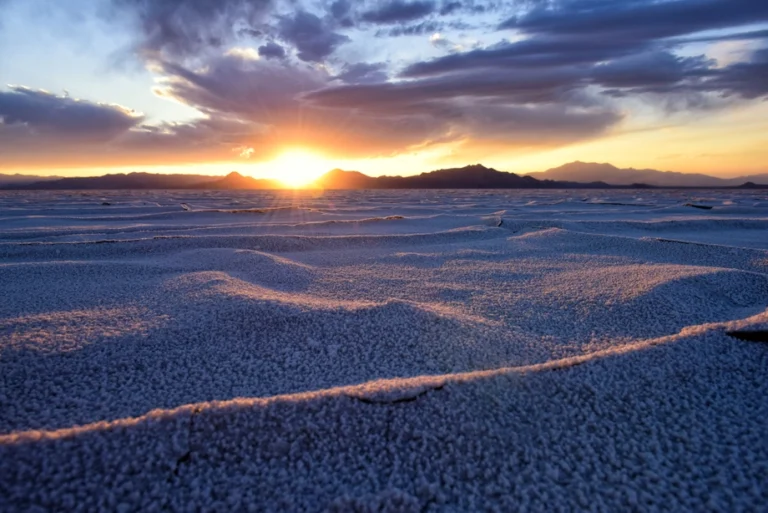
No. Reflective water depends on seasonal and current conditions, so it should not be assumed when choosing a visit.

Upcoming tours across Utah
Antelope Island – Wild Heart of the Great Salt Lake Adventure Antelope Island – Wild Heart of the Great Salt Lake Adventure
6-7 hours up to 13 persons Sep 6, 2026 Walking/Auto
Read more
from $120
Antelope Island Sunset Wildlife Expedition – Great Salt Lake Odyssey Antelope Island Sunset Wildlife Expedition – Great Salt Lake Odyssey
6-7 hours up to 13 persons Sep 6, 2026 Walking/Auto
Read more
from $120
Bonneville Salt Flats – Sunset Adventure of the White Desert Bonneville Salt Flats – Sunset Adventure of the White Desert
6-7 hours up to 13 persons Sep 7, 2026 Walking/Auto
Read more
from $120
Bonneville Salt Flats – Journey to the Edge of the World Bonneville Salt Flats – Journey to the Edge of the World
6-7 hours up to 13 persons Sep 11, 2026 Walking/Auto
Read more
from $120
Thank you!😊
We will contact you soon!