
What to Expect From Short Walks on an Antelope Island Tour
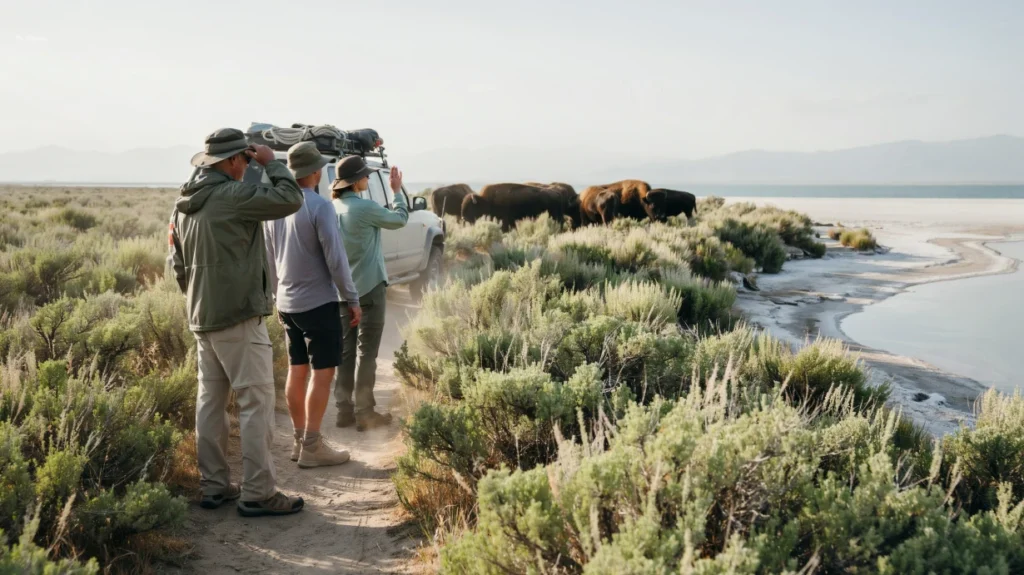
Short walks on an Antelope Island tour are easy-paced stops on uneven natural surfaces, separated by vehicle travel. Expect shoreline views, ranch history, possible wildlife, wind, sun, and seasonal insects.
A “short walk” can sound effortless until you step into open island sun, feel a sudden lake wind, or notice a bison in the distance. On Antelope Island, the challenge is usually exposure and awareness rather than a long hiking distance, which is why we build our Salt Lake City day trips around several guided stops instead of one demanding trek.
As a local Utah day-tour operator, Matei Travel designs these outings for travelers who want meaningful time outside without handling the driving, park entry, route choices, or wildlife decisions alone. We use short walking sections to connect the island’s viewpoints, shoreline, history, and wildlife habitat into a realistic one-day experience.
How much walking is involved on our Antelope Island tours?
Our Antelope Island tours involve several short, guided walks spread across an approximately seven-hour day, with substantial time between them in the vehicle. They are sightseeing-focused outings with on-foot exploration, not strenuous backcountry hiking trips.
We chose a seven-hour format because it creates a workable balance between the drive from Salt Lake City, time on the island, and time to get out at key places. Rather than asking guests to commit to one long route, we structure the day around stops where people can walk at an easy pace, look around, and return to the vehicle before moving to a different landscape.
On our Utah day tours, we explicitly include guide accompaniment on short walking sections. That choice matters on Antelope Island because a quick stroll can still involve uneven ground, changing wind, exposed sun, loose shoreline textures, or a need to alter the plan when wildlife is nearby.
- Overall rhythm: Expect a cycle of driving, getting out for a short walk or viewpoint visit, then riding to the next location.
- Effort level: The experience is generally suited to travelers with average mobility who are comfortable walking on natural, sometimes uneven ground.
- Pace: We keep the group together and allow time to observe rather than treating every stop as a fitness objective.
- Flexibility: Guests who prefer less walking can often remain near the vehicle or skip a particular section, although they should ask us about individual needs before booking.
We limit the Antelope Island Tour from Salt Lake City — From $120 | Matei Travel to 13 guests and use a modern Mercedes Sprinter. In practical terms, that gives us a manageable group for getting in and out at viewpoints and trailheads, while avoiding the pressure of coordinating a large coach group.
What do “short walks” mean in real practice?
Short walks on Antelope Island mean purposeful time on foot at beaches, historic sites, viewpoints, and trail areas rather than a continuous hike. The surfaces and conditions change from stop to stop, so comfortable footwear matters more than athletic hiking experience.
A common misunderstanding is to judge a walk only by its duration. On this island, a brief section can feel demanding if it is windy, hot, buggy, or uneven, while a longer pause at a sheltered historic site may feel easy. Exact distances, elevation gain, and walking times can vary by route and conditions, so they should not be assumed from a general itinerary description.
We deliberately include multiple on-foot experiences in our island planning: bison viewing, Fielding Garr Ranch, a hike toward scenic peaks, a Bridger Bay Beach stroll, and a Buffalo Point Trail visit. That combination gives guests more than a drive-by tour while keeping the day centered on accessible, short segments rather than unsupported trekking.
What a short walk is not
It is not a promise of paved, step-free access or identical conditions at every stop. Travelers with significant mobility limitations, those unable to walk on uneven surfaces, or anyone needing specific accessibility accommodations should contact us before reserving so they can make an informed decision.
It is also not a guaranteed wildlife encounter. Bison, pronghorn antelope, mule deer, coyotes, porcupines, jackrabbits, and birds may be seen on the island, but wildlife moves on its own schedule and sightings cannot be promised on a particular departure.
 Secret Find!
Antelope Island – Wild Heart of the Great Salt Lake Adventure
from $120 · 6-7 hours · up to 13 persons
Secret Find!
Antelope Island – Wild Heart of the Great Salt Lake Adventure
from $120 · 6-7 hours · up to 13 persons
Promo code for this tour
10% OFF this tour
You found a hidden promo code! Use it at checkout.
Limited time offer. Book now and save!
What do the typical walking stops feel like?
The main walking stops offer distinctly different experiences: open views at Buffalo Point, shoreline textures at Bridger Bay Beach, historic ground at Fielding Garr Ranch, and brief pauses at scenic viewpoints. Each stop is designed to add context and variety without turning the day into a long hike.
Buffalo Point area
The Buffalo Point area is about stepping into a broad, exposed island setting where the Great Salt Lake and surrounding landscape become the focus. The ground is natural rather than urban, and wind can be a noticeable part of the experience, so a hat that stays secure and a light outer layer are useful.
At this type of stop, we look beyond the view itself: changing light, island contours, possible distant wildlife, and the relationship between the lake and the surrounding basin all help explain why the location feels so open. Buffalo Point Trail is part of the day’s active component, but it should be approached as a scenic walk, not as a race to cover ground.
Bridger Bay Beach stroll
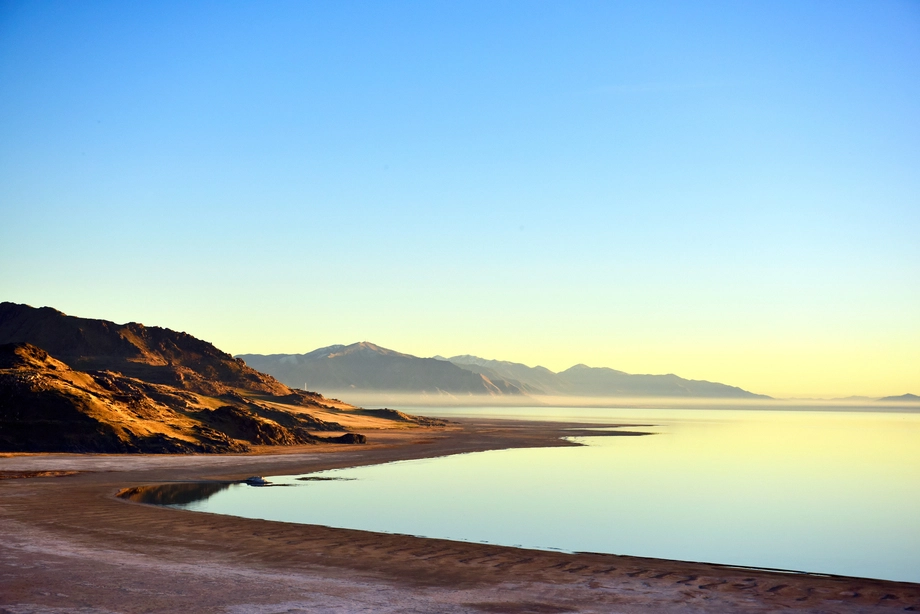
A walk at Bridger Bay Beach is typically flatter in feeling but can involve irregular shoreline surfaces and direct exposure. Guests come away with a closer sense of the lake edge, including its textures, smell, wind, and expansive horizon.
This is one reason shoes should be practical rather than purely fashionable. Sand, gravel, and uneven ground can make sandals or slick-soled shoes less comfortable, even when the walking section is brief.
Fielding Garr Ranch
Fielding Garr Ranch offers a slower, more historical kind of stop, where the focus shifts from open shoreline to the human story of Antelope Island. It is a useful break in the day because guests can look at a historic setting while the guide adds context to what they are seeing.
We include the ranch because it prevents the itinerary from becoming a sequence of scenic overlooks alone. The stop gives the day another layer, especially for travelers who value local history alongside wildlife and landscape.
Scenic viewpoints and peak-oriented sections
Scenic viewpoint stops can include a short uphill or uneven section, depending on the location selected for the day. The reward is perspective: elevated views help visitors see the island’s scale, its relationship to Great Salt Lake, and the wide habitat where wildlife may be present.
The exact effort at these locations should be treated qualitatively, not as a fixed distance or elevation promise. If an incline or rough ground is a concern, ask before booking and let us know whether you prefer to enjoy the view from a closer, less active stopping point.
What are you likely to see during these walks?
Short walks can bring lake panoramas, beach textures, ranch history, brine shrimp context, and possible wildlife viewing, but no sighting is guaranteed. The island experience is strongest when guests treat animals as wild neighbors to observe from a respectful distance rather than attractions to approach.
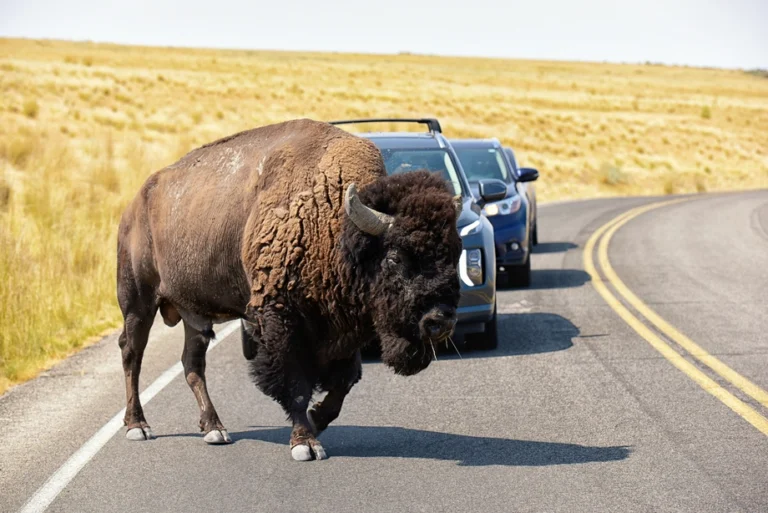
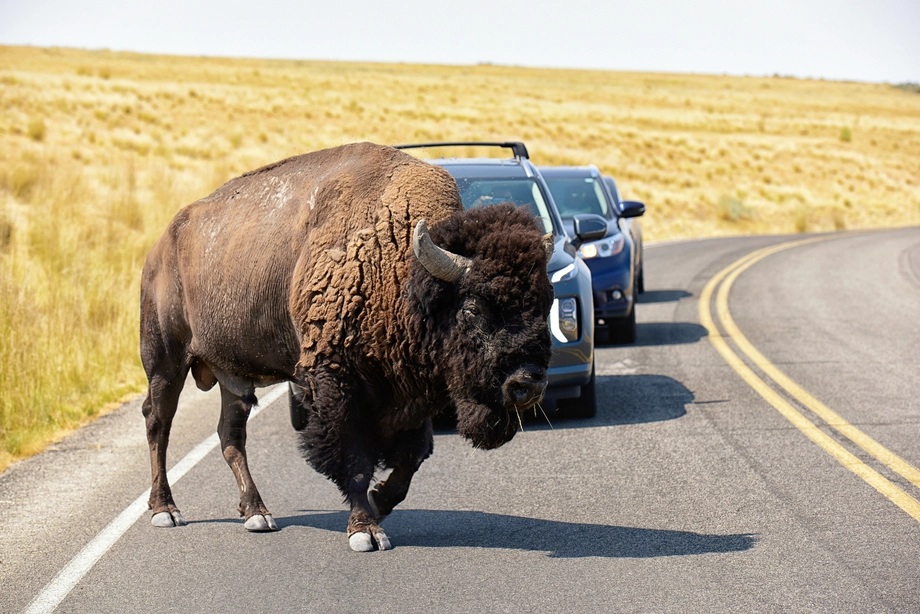
Bison are the animal most visitors hope to see, and they are also the clearest reason to listen carefully before stepping away from the vehicle. A bison may look still or calm, yet it can run roughly 35 to 40 miles per hour. The recommended viewing distance is at least 75 to 100 yards, and anyone who notices that an animal is aware of them should slowly back away rather than trying to get closer.
We plan our tours around bison viewing and other island highlights, but we do not build false certainty into the experience. Conditions, animal movement, traffic at a location, light, and the available space all affect where it makes sense to stop and how long to remain on foot.
- Bison: Watch from far away and let the animal control the distance.
- Other mammals: Pronghorn antelope, mule deer, coyotes, porcupines, and jackrabbits are possible sightings, especially on the wildlife-focused itinerary.
- Birdlife: Antelope Island supports more than 250 bird species, though the species visible on a specific day will vary.
- Great Salt Lake: Beach walks and viewpoints reveal the lake’s shoreline, shifting colors, and the scale of the surrounding landscape.
- Island history: Fielding Garr Ranch adds a human story that cannot be understood from a vehicle window alone.
How do we keep short walks safer around wildlife and sensitive terrain?
Safer walking on Antelope Island depends on distance, trail discipline, and responding calmly to conditions. We guide the short sections so guests can focus on observing the setting while following the practical boundaries that protect both people and wildlife.
We handle the logistics of hotel pickup, transport, and park entrance so the group can arrive ready to pay attention rather than navigate unfamiliar roads or sort out access details. Our guide’s role on the island includes helping guests interpret what they see and choose sensible behavior when wildlife, weather, or trail conditions affect a stop.
- Keep your distance from bison: Stay at least 75 to 100 yards away. Never walk toward an animal for a closer photo.
- Back away slowly if noticed: Do not run, crowd the animal, or make sudden attempts to pass it.
- Stay on designated trails: Antelope Island has more than 45 miles of trails, and remaining on marked routes protects habitat and reduces avoidable risk.
- Respect dog rules: Dogs are permitted on the island only when kept on a leash. Guests should confirm whether bringing a dog fits their chosen tour arrangements before making plans.
- Follow the guide’s stop-by-stop direction: A viewpoint that works well in one moment may be less appropriate when an animal is nearby or the wind changes quickly.
Guests sometimes assume a guided day trip means every outdoor condition is controlled. It does not. It means the route, transport, group pacing, and decisions about where to walk are organized by people who have built the day around those realities.
Will bugs, wind, sun, and weather make the walks uncomfortable?
They can affect comfort, particularly during warm months, but preparation makes short outdoor stops more manageable. Antelope Island weather can shift quickly, with strong winds and temperature drops of up to 20 degrees, while biting gnats are a known concern from April through June.
Biting gnats, often called no-see-ums, are a genuine reason not to underestimate a beach or viewpoint walk. Standard insect repellents may not work well against them, so a fine-mesh head net is the more practical item to consider during periods of insect activity. A head net cannot guarantee a bug-free visit, but it can make exposed stops more tolerable.
We include bottled water, hot beverages such as tea, coffee, and hot chocolate, plus granola bars on our Antelope Island Tour from Salt Lake City. Those details are intentional service choices: a cold wind after a walk or a hot, dry stretch in the open can change how a guest feels between stops.
What to wear and bring
Bring clothing for changing exposure rather than dressing only for Salt Lake City conditions at pickup. The island is open, so sun and wind often matter more than the walk itself.
- Footwear: Comfortable closed-toe shoes with dependable traction for uneven natural surfaces.
- Sun protection: A hat or cap, sunglasses, sunscreen, and moisturizing cream are sensible for exposed stops.
- Layers: Add a light layer that can handle wind or a rapid temperature change.
- Insect preparation: In warm months, pack a fine-mesh head net if gnats are a concern.
- Personal needs: Carry any medication, mobility aid, or comfort item you normally need, and ask in advance about a specific concern.
Is the daytime tour or sunset wildlife expedition the better fit?
Choose the daytime Antelope Island Tour from Salt Lake City if you want a broad introduction to the island’s beaches, viewpoints, ranch history, and short walking stops. Choose the sunset expedition if wildlife observation and a panoramic sunset viewpoint are the priorities and you are comfortable walking later in the day.
| Decision factor | Daytime Antelope Island Tour | Sunset Wildlife Expedition |
|---|---|---|
| Best for | Travelers seeking a balanced island overview | Travelers prioritizing wildlife and sunset conditions |
| On-foot focus | Beach, ranch, Buffalo Point, and scenic walking sections | Wildlife observation, Fielding Garr Ranch, and a panoramic sunset viewpoint |
| Schedule preference | Available departures at 8:30 am and 2:30 pm where offered | Later-day experience built around sunset |
| Shared practical features | Transport, park entrance, small group, and onboard refreshments | Transport, park entrance, small group, and onboard refreshments |
We offer these two formats because daytime and sunset create different walking and viewing conditions. The standard tour emphasizes a fuller spread of island highlights, while the Antelope Island Sunset Wildlife Expedition – Great Salt Lake Odyssey is built for guests who want to end the day at a panoramic viewpoint while watching for the island’s wildlife.
Both options are approximately seven hours and limited to 13 guests, with transport and park entrance included. The sunset format also includes pickup and drop-off within Salt Lake County, which can simplify planning for visitors who do not want to drive after dark.
Who will enjoy these walks, and who should ask before booking?
These walks are a strong fit for visitors who want regular chances to step outside, can handle uneven ground at a relaxed pace, and do not want a strenuous hiking itinerary. Travelers with substantial mobility limitations or medical concerns related to heat, wind, or uneven terrain should ask specific questions before committing.
For older relatives, families, and travelers who do not identify as hikers, the useful question is not “Can I complete a mountain trail?” It is whether each person can comfortably manage short periods on natural surfaces, stand outdoors in variable conditions, and return to the vehicle when needed.
Our planning tradeoff is deliberate: we do not try to turn a limited-time day trip into a long wilderness hike. We use a modern Mercedes Sprinter, hotel pickup, included park entrance, and a small group to make the island’s separated walking opportunities practical for people who want active sightseeing without self-driving logistics.
For wider planning beyond the walk itself, our guide to planning a low-stress Antelope Island day tour helps place timing, transport, and personal comfort needs into the larger decision.
What mistakes should visitors avoid before and during the tour?
The most avoidable mistakes are treating a short walk as if it needs no preparation, dressing only for warm weather, and approaching wildlife for photos. A few practical choices before pickup make the day far more comfortable and reduce pressure once the group reaches the island.
- Do not wear unsuitable shoes: Choose secure footwear even if you expect only easy walking, because beach edges and viewpoint ground are not city sidewalks.
- Do not rely on insect repellent alone: Plan for a fine-mesh head net when warm-season gnats are likely.
- Do not assume wildlife will be close: Bring binoculars or use a phone camera responsibly from a safe distance rather than moving toward animals.
- Do not skip layers: Open lake conditions can feel colder and windier than the city, including after a warm start.
- Do not hide a mobility concern: Share it before booking so expectations can be discussed honestly.
What should you confirm before choosing an Antelope Island tour?
Confirm your comfort with uneven ground, your preferred departure time, and whether you want broad daytime sightseeing or a sunset wildlife emphasis. Once those points are clear, the walking expectations are usually easier to judge than a vague label such as “easy tour.”
- Assess your mobility honestly: Plan for several separate walking sections, not one continuous hike.
- Match timing to your travel day: The standard tour has 8:30 am and 2:30 pm departures where offered, while the sunset format is for later-day light and wildlife viewing.
- Pack for exposure: Prioritize shoes, sun protection, a layer, water needs, and seasonal insect protection.
- Decide how important wildlife is: Treat every possible sighting as a privilege, not an entitlement or a reason to approach.
- Review the detailed itinerary: Confirm that the featured stops and pace suit your group before starting a reservation.
We operate one-day Utah tours from Salt Lake City for travelers with limited time who still want substantial contact with the state’s natural places. If your schedule is especially tight, our advice on planning a Utah day tour during a short Salt Lake City stay can help you decide where Antelope Island fits.
Short walks on Antelope Island are best understood as several easy-paced outdoor stops with real environmental variables, including uneven ground, wind, sun, insects, and wildlife distance. We design our tours around those conditions by combining guided walking sections with a small group, vehicle transfers, hotel pickup, and included park entrance.
Choose the daytime format for a broad island experience, or choose the sunset expedition when later light and wildlife observation are the main draw. Review the Antelope Island Tour from Salt Lake City itinerary and contact us before booking if mobility, weather exposure, or family needs require a closer conversation.
Do I need hiking experience for the Antelope Island Tour from Salt Lake City?
No. The itinerary uses short, guided outdoor sections rather than a sustained hiking route, though guests should be comfortable on uneven natural ground.
Can I stay near the vehicle instead of joining every walk?
Guests may be able to sit out certain sections depending on the stop. Ask before booking if this flexibility is important to your comfort.
How close can visitors get to bison on Antelope Island?
Maintain at least 75 to 100 yards of distance. If a bison appears aware of you, move away slowly and do not attempt to pass close by.
Are biting gnats a concern on the island?
They can be common in warm months, especially from April through June. A fine-mesh head net is more useful than relying solely on standard insect repellent.
What footwear is appropriate for Bridger Bay Beach and viewpoints?
Wear comfortable, secure shoes with traction. Shoreline and viewpoint surfaces can be sandy, gravelly, or uneven.
Does the standard daytime tour include transportation and park entry?
Yes. Transport and Antelope Island park entrance are included, along with hotel pickup for the standard tour.
Which option is better for sunset photography and wildlife viewing?
The Antelope Island Sunset Wildlife Expedition is designed around later-day wildlife observation and a panoramic sunset viewpoint. Sightings and conditions still vary by departure.
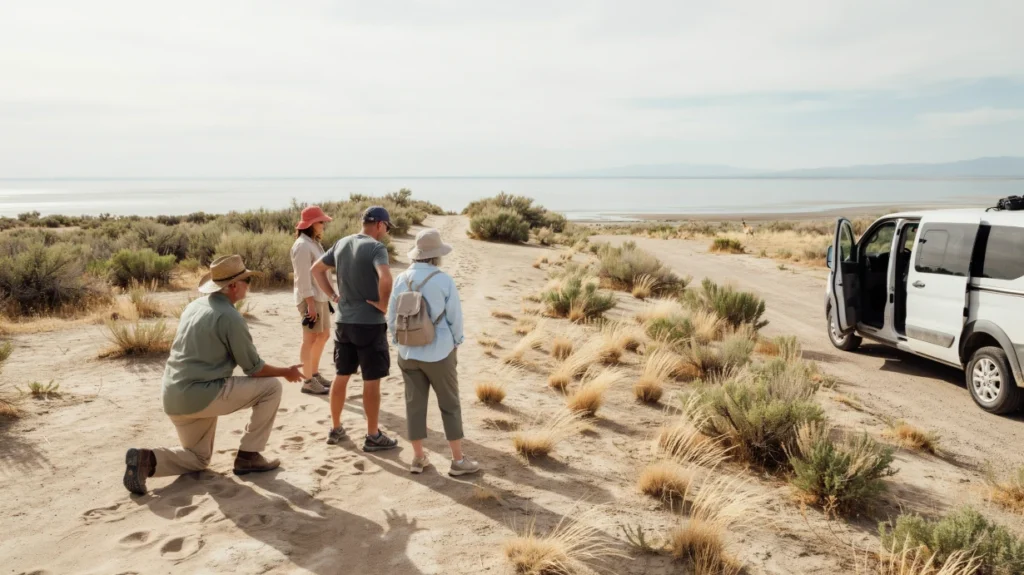 Why Wildlife Sightings Cannot Be Guaranteed on Antelope Island
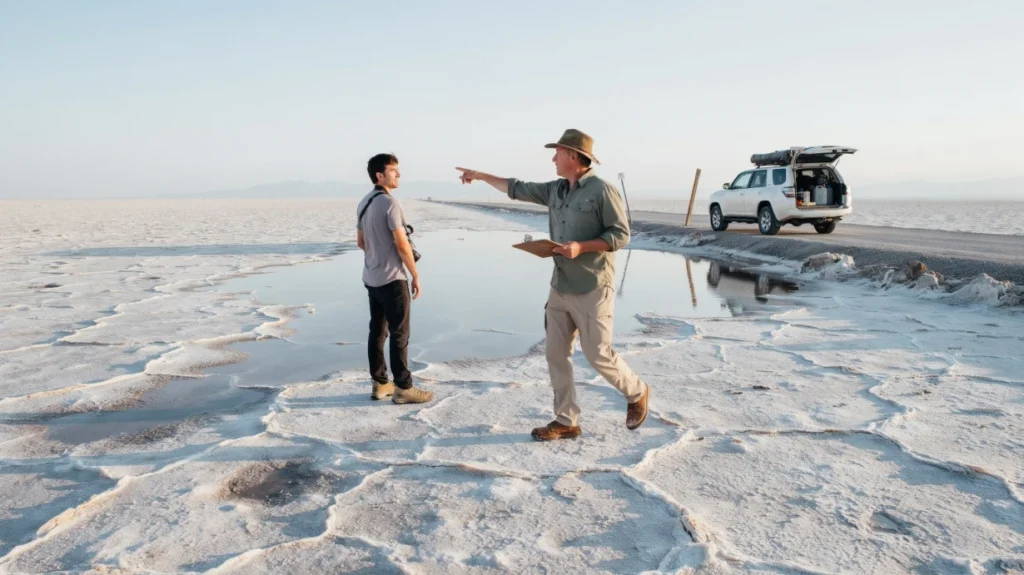 How Guides Choose Safe Stops for Bonneville Salt Flats Evening Photos
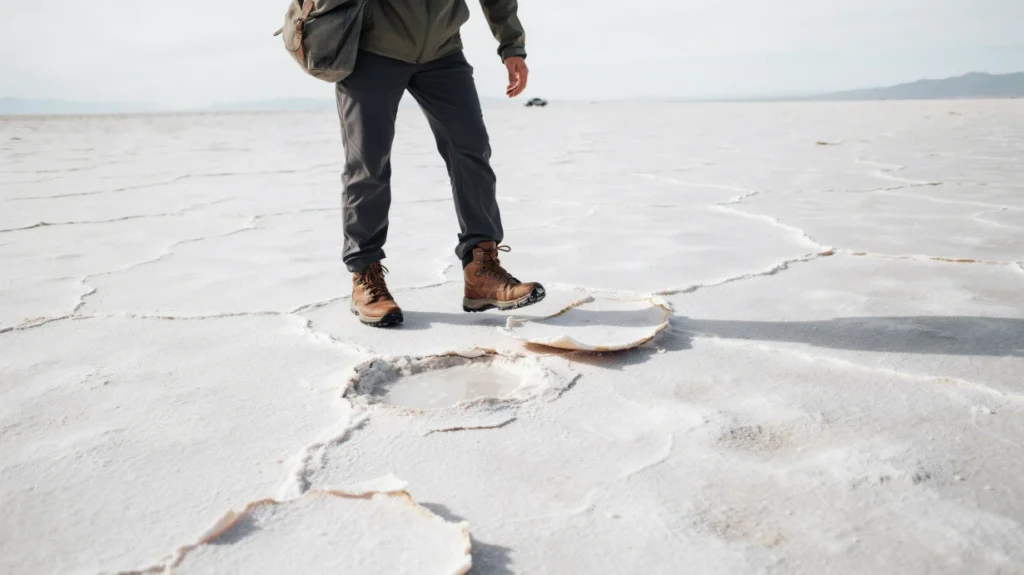 What the Bonneville Salt Flats Surface Feels Like Underfoot
 How to Plan a Day Tour Around Your Salt Lake City Flight
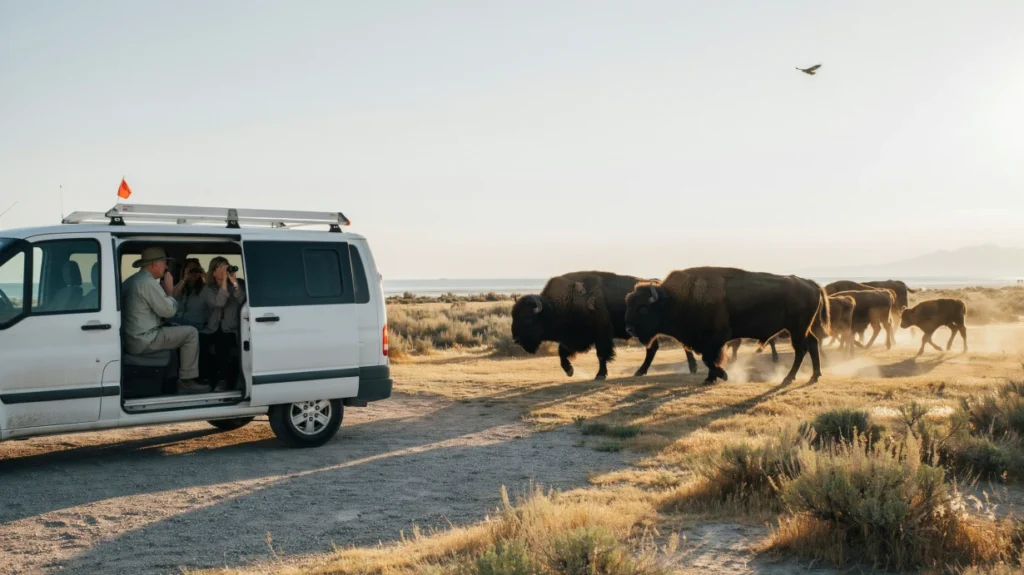 Antelope Island Sunset Tours: How Wildlife Viewing Really Works
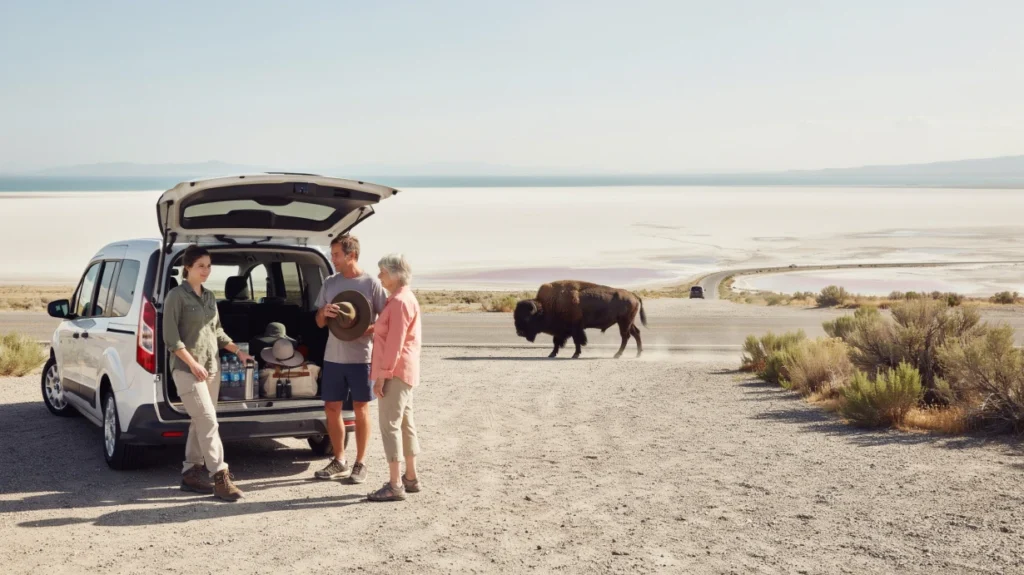 Antelope Island Day Tours: How to Plan a Low-Stress Visit

Fantastic tour. Very friendly and accommodating.
Read more →Where do I even start? Dima was amazing! His knowledge of not just Antelope Island but...
Read more →Dima (from Ukraine), our guide, was amazing. We gave him many thanks and a tip, but...
Read more →Dima was a great guide. He was communicative before the tour started. He\'s a wealth of...
Read more →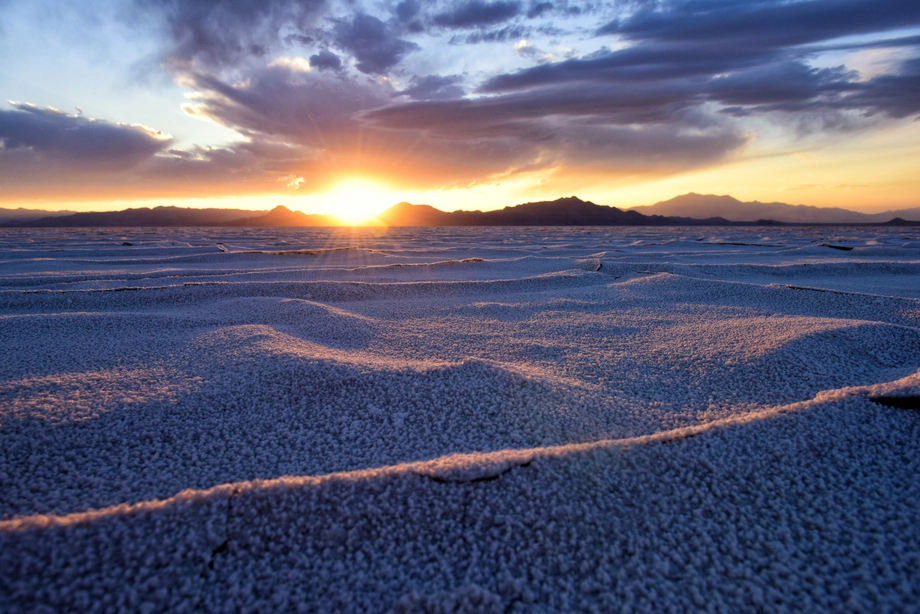 Bonneville Salt Flats – Sunset Adventure of the White Desert
 Antelope Island – Wild Heart of the Great Salt Lake Adventure
 Antelope Island Sunset Wildlife Expedition – Great Salt Lake Odyssey
 Bonneville Salt Flats – Journey to the Edge of the World