
How Guides Choose Safe Stops for Bonneville Salt Flats Evening Photos
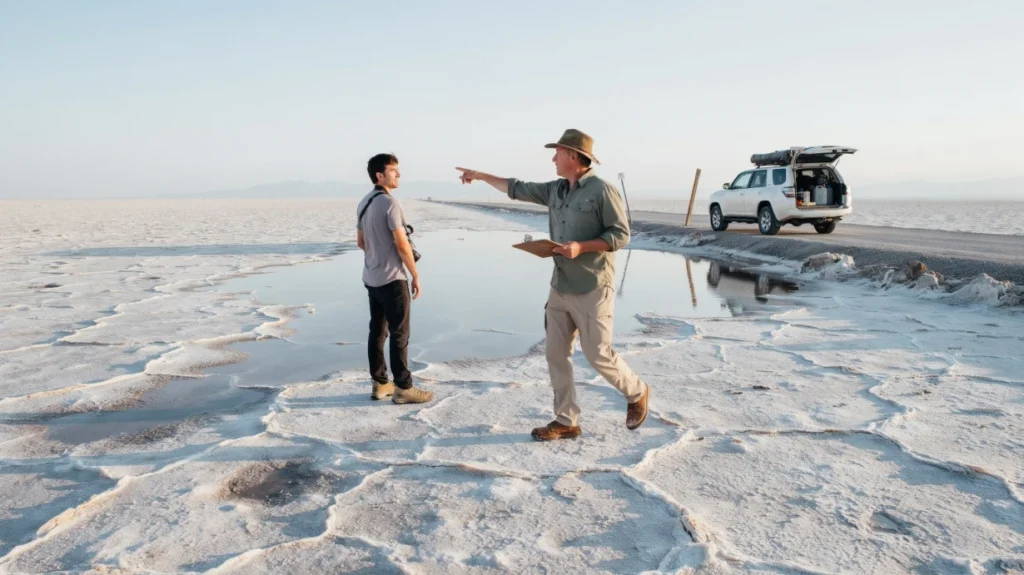
Safe Bonneville Salt Flats evening photo stops depend on dry, firm salt, changing weather, realistic walking routes, and a planned exit before darkness makes navigation harder.
The mistake we see most often is treating the Bonneville Salt Flats like a blank parking lot where any reflective patch is a photo stop. For evening photography, the surface, the last usable light, and the route back to firm ground matter as much as the composition.
At Matei Travel, we run day trips from Salt Lake City that combine planned transport, guide narration, and escort on short walking sections. For a sunset visit, that planning matters because a beautiful mirror effect can also signal water or damp salt that is unsuitable for vehicle access.
What are the Bonneville Salt Flats, and why is sunset such a popular time to photograph them?
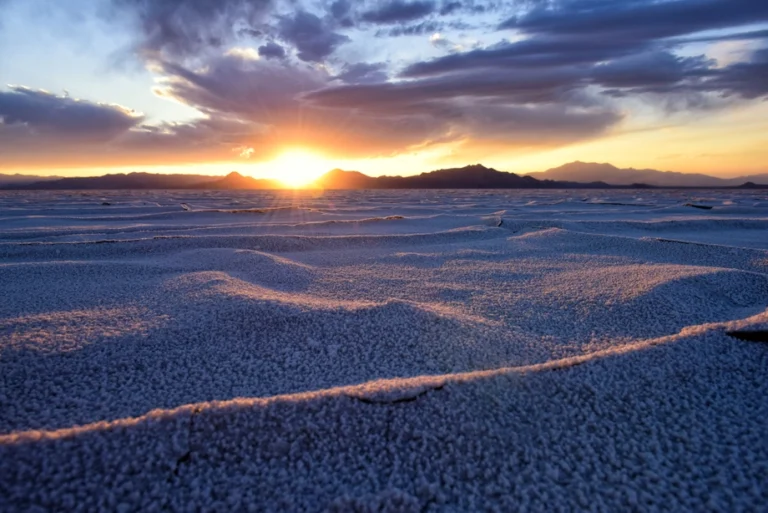
The Bonneville Salt Flats are a broad white salt landscape in northwestern Utah where low-angle evening light can reveal texture, long shadows, wide horizons, and occasional reflections. Sunset is popular because the scene changes quickly from warm golden light to cooler blue-hour tones.
The visual appeal can make the place seem simple, but conditions are not fixed. A dry, crusted surface can support a straightforward stop and short walk, while recent moisture may change the usable area entirely. The best image location on one evening may be a poor vehicle location on another.
Our broader guide to Bonneville Salt Flats sunset tours explains the overall experience. This article focuses on one practical part of that experience: how a responsible guide weighs the light against the ground conditions and the trip back.
When is a guided sunset visit the right fit?
A guided sunset visit is a strong fit for travelers who want evening photos without independently judging an unfamiliar salt surface, managing a long return in fading light, or carrying all of their own logistics. Self-driving can be appropriate when conditions are clearly dry and firm, but it requires a conservative decision when they are not.
We operate the Bonneville Salt Flats Sunset Adventure of the White Desert — From $120 | Matei Travel, a small-group sunset-focused trip from Salt Lake City. Its approximately seven-hour format begins at 2:00 pm and includes hotel pickup, transport, bottled water, hot drinks, and granola bars, which removes several practical pressures from an evening in a location with few services.
Choose a guide when these tradeoffs matter
- Surface uncertainty: You want someone to make a conservative stop decision instead of feeling pressured to drive toward a reflective area.
- Light management: You want to be on location before the key light changes rather than arriving as the sun is already dropping.
- Family or mobility considerations: You prefer a stop with a realistic walking distance on firm ground, rather than an unplanned trek across uneven or wet salt.
- Return logistics: You would rather have transport and navigation organized as the landscape darkens.
- Comfort planning: You value water, snacks, and warm beverages because there are generally no restrooms or water sources on the flats.
A guide does not make weather, reflections, or clear skies guaranteed. What a well-run trip can provide is a structured way to respond to the conditions actually present, rather than chasing a fixed social-media waypoint.
What risks do photographers underestimate on the salt flats in the evening?
The main risks are damp or flooded salt, vehicles getting stuck, corrosion from wet salt, fast-fading light, wind-disturbed reflections, cold after sunset, and the absence of basic amenities. These risks often overlap, because the water that creates a dramatic reflection may be the same condition that makes driving inappropriate.
Surface conditions are the first safety filter
Driving on salt flats is suitable only when the surface is dry and firm. Wet or damp salt can trap a vehicle and can be corrosive, so a cautious visitor should not interpret a glossy surface as an invitation to drive farther.
For photographers, this creates a useful rule: access and appearance are separate decisions. You may be able to photograph a wet-looking section from a safer, firmer parking area, but that does not make the wet section a suitable place to take a vehicle.
Darkness changes the consequences of a small mistake
At sunset, a route that looked obvious on arrival can become harder to read. The wide, low-contrast landscape offers few visual anchors, and a delayed departure can turn a simple walk back into a more difficult orientation problem.
Golden hour also creates a natural temptation to stay for every color change. A responsible plan reserves enough time to return to the vehicle, leave the area, and begin the road journey without feeling stranded after the usable light is gone.
There is little infrastructure to absorb poor planning
The flats generally do not offer restrooms, drinking water, or places to buy a snack. Visitors should bring water, food, sun protection, and sturdy footwear, even on an evening outing when the temperature may drop quickly after sunset.
On our Antelope Island Tour from Salt Lake City and similar day tours, we provide bottled water, tea, coffee, hot chocolate, and granola bars, and our guides accompany guests on short walking sections. That same care around limited amenities and on-foot logistics shapes how we think about a salt flats itinerary, without suggesting that the landscape itself has facilities.
 Secret Find!
Bonneville Salt Flats – Sunset Adventure of the White Desert
from $120 · 6-7 hours · up to 13 persons
Secret Find!
Bonneville Salt Flats – Sunset Adventure of the White Desert
from $120 · 6-7 hours · up to 13 persons
Promo code for this tour
10% OFF this tour
You found a hidden promo code! Use it at checkout.
Limited time offer. Book now and save!
How does a guide assess where to drive, park, and walk?
A responsible guide separates the decision into three parts: whether the approach is appropriate for a vehicle, where the group can park on dependable ground, and how far guests can reasonably walk for photographs. The safest photo stop is usually the one that preserves a clear route back, not the one closest to water or the most dramatic reflection.
Specific internal safety checklists, equipment, training standards, and exact photo waypoints are not publicly described for our salt flats tours, so they should not be assumed. More broadly, a sound guide-led assessment uses visible surface firmness, moisture, recent weather, group mobility, remaining daylight, and the distance to a reliable exit.
| Decision point | What a responsible guide looks for | Practical outcome |
|---|---|---|
| Vehicle approach | Dry, firm-looking salt and no need to cross damp or flooded ground | Drive only where conditions support it, or remain near a safer edge |
| Parking area | A stable place that does not block the return route | Park first, then assess the walking photo options |
| Walking route | Short, understandable distance on ground suitable for the group | Choose compositions within a realistic walk rather than forcing access |
| Photo position | Foreground texture, horizon, light direction, reflections, and wind | Use what is safely reachable that evening |
| Departure | Time needed to regroup, return, and leave in diminishing light | End shooting before darkness compromises the exit |
Parking at the edge and walking is often the better choice
If salt is wet, damp, or uncertain, parking at the edge and walking to an appropriate shooting position is the conservative response. It may mean a different angle or less access to a reflection pool, but it avoids turning a photography stop into a recovery problem.
We build our Utah day tours around the tradeoff between travel time and meaningful time at a location. That same route-planning logic matters here: a brief, well-chosen walk on safe ground is more valuable than spending the evening trying to reach a risky spot.
What guests should expect from the walking portion
A guide can select a route that suits the visible conditions and the group’s practical abilities, but no salt-flat outing should be assumed to be fully accessible in every condition. Travelers with children, limited mobility, or a strong preference for minimal walking should ask about the likely on-foot demands before reserving.
For a better sense of what the ground can be like, read our practical article on what the Bonneville Salt Flats surface feels like underfoot. Comfortable footwear is more useful than footwear chosen only for photos.
How do weather, flooding, and wind determine which areas are usable?
Weather, flooding, and wind can change the available photo areas from day to day, so guides should adapt rather than promise a particular mirror location. Floodwater may improve reflections while reducing safe vehicle access, and even light wind can break up a reflection.
The mirror effect is often strongest after flooding, including in late winter through early spring or following significant moisture. Those same conditions require more caution because standing water and damp salt can make the surface unsuitable for driving.
- Dry and firm: A wider range of parking and walking choices may be available, though guides still need an exit plan before dark.
- Damp or visibly wet: Vehicle access should become more conservative, with emphasis on firm edges and photography from reachable ground.
- Flooded: Reflections may be striking, but access can be limited and a vehicle should not be taken onto questionable terrain.
- Windy: A guide may prioritize sky color, salt texture, silhouettes, and wide landscape compositions instead of promising a glass-like reflection.
- Cloudy: The evening can still offer even light and atmosphere, but the group should not expect the same warm, directional sunset effect as a clear evening.
For independent planning, weather and road-condition information are useful tools for understanding the day’s context. They are not substitutes for an on-site decision, because the surface can vary across the flats and the remaining light determines how much margin a visitor has to change plans.
How do golden hour, sunset, and blue hour shape stop selection?
Timing determines both the visual goal and the safety margin. A thoughtful sunset plan aims to reach the selected area roughly 20 to 30 minutes before sunset, giving guests time to walk, compose, and shoot before the light becomes too limited for an unhurried return.
Golden hour favors preparation, not a last-minute search
Golden hour brings warm, directional light that can emphasize salt patterns and create long shadows. The guide’s priority at this stage is to have the group settled at a safe location with enough time to explore nearby compositions on foot.
Arriving late creates the wrong incentive: people may rush farther across the surface because the light is already good. A planned arrival lets the group use the best light without treating every remaining minute as a reason to take more risk.
Sunset is the moment to simplify the group’s movement
As the sun reaches the horizon, a guide should favor a stop where guests can stay oriented and return easily. This is not the time to add a long walk, relocate across questionable ground, or separate widely in pursuit of individual frames.
Small-group travel helps preserve some photographic freedom. Guests can explore different nearby angles and personal compositions while remaining within the practical limits of the chosen stop, rather than following a rigid pose-by-pose program.
Blue hour needs a departure decision before it begins
Blue hour can add cool color and a quiet, graphic look to the white landscape, but it also reduces visibility. The group needs a clear understanding that the final photographs are part of a planned sequence, followed by regrouping and departure.
Our dedicated sunset trip is designed around that evening rhythm. We also run the Bonneville Salt Flats Tour from Salt Lake City — From $120 | Matei Travel as a daytime alternative, with morning and afternoon departures, for travelers who prefer more daylight or cannot join a sunset departure.
What does a well-run sunset salt flats tour feel like in practice?
A well-run tour feels calm rather than improvised: transport is arranged, arrival is timed for the light, walking expectations are realistic, and the group leaves with enough margin to travel safely after photos. The guide’s value is not a promise of a specific reflection, but the ability to make the evening workable when conditions are different from the idealized image online.
We operate the Bonneville Salt Flats Sunset Adventure of the White Desert as a sunset-focused experience, so the choice of on-site stops and timing is central to the trip rather than an afterthought. The itinerary also includes Great Salt Lake State Park, the Tree of Utah, Blue Canal, Bonneville Speedway, and the Silver Island Mountains, which creates a fuller day while keeping the evening stop as a distinct part of the plan.
Our Salt Lake City day-tour model is built around a thought-out route instead of an exhausting schedule that tries to maximize every possible stop. We use guide narration and accompany guests on short walking sections at viewpoints, which is especially helpful when a wide-open location needs simple, clear group coordination.
Some of our tours, including the Antelope Island Tour from Salt Lake City and the Antelope Island Sunset Wildlife Expedition – Great Salt Lake Odyssey, are limited to a maximum of 13 guests and use a modern Mercedes Sprinter. That small-group, comfort-focused operating style informs the scale of experience we aim to create on our day tours, while exact group details should always be checked on the relevant Bonneville tour page.
What should you prepare before a Bonneville Salt Flats sunset photo outing?
Prepare for a remote outdoor stop first and a photography outing second. The most useful personal items support footing, hydration, comfort, and a prompt return after sunset.
- Wear comfortable, sturdy footwear: Choose shoes suitable for a short walk across variable salt, not only for how they look in photographs.
- Bring sun protection: A hat or cap, sunglasses, sunscreen, and moisturizing cream are sensible for the bright, reflective environment.
- Carry your photo essentials efficiently: Keep equipment manageable enough that you can walk and regroup without delay.
- Plan for the temperature change: Evening conditions can feel noticeably cooler after the sun goes down.
- Use the restroom and refill water beforehand: Do not assume services will be available at the flats.
- Ask about your priorities early: Families, less mobile travelers, and dedicated photographers should contact us in advance with questions about walking, conditions, and the most suitable departure.
Travelers who are new to the area can also use our guide to planning a comfortable first visit to Bonneville Salt Flats to set practical expectations for clothing, hydration, and time outdoors.
How can you decide between self-driving and joining a sunset tour?
Self-driving is most reasonable when you are comfortable making a conservative surface decision, carrying your own supplies, and leaving before darkness tightens your options. A guided tour is the better choice when you want the transport, timing, walking logistics, and changing-condition decisions organized around the evening photo window.
| If this is your priority | Self-driving may suit you if | A guided sunset trip may suit you if |
|---|---|---|
| Photography freedom | You can accept changing conditions and choose only safe, reachable positions | You want time for your own compositions within a planned small-group stop |
| Surface judgment | You will turn back rather than drive onto damp or flooded salt | You prefer a guide-led approach to parking and walking choices |
| Logistics | You have transport, water, snacks, navigation, and a return plan sorted | You want pickup, transport, and included refreshments from Salt Lake City |
| Timing | You can arrive early enough to set up before sunset and leave responsibly | You want an itinerary designed to balance transit and time on location |
| Travel style | You are comfortable adapting alone in a remote landscape | You prefer shared coordination without giving up the chance to photograph on foot |
For travelers with a narrow photography goal, the best question is not whether a guide will produce more images. Ask whether the trip gives you enough on-site time, a sensible walking setup, and a conservative response to wet salt. Those are the conditions that protect both your evening and your vehicle.
What should you look for before reserving a Bonneville Salt Flats sunset experience?
Look for clear information about departure timing, transport, group scale, included comfort items, expected walking, and how the operator handles changing conditions without promising impossible results. A quality sunset experience should make the practical boundaries visible before you book.
- Confirm the departure time: It should allow arrival before the core sunset photography window, not after it.
- Check the route design: A realistic itinerary balances drive time with time on location rather than stacking too many stops.
- Ask about walking expectations: This is particularly important for families, guests with mobility concerns, and travelers carrying camera gear.
- Review inclusions: Water, snacks, and transport address real needs at a site with limited amenities.
- Ask condition-specific questions: Request guidance on likely surface conditions, photography flexibility, and which departure option matches your plans.
Our Utah Day Tours collection is useful for comparing the broader style of our Salt Lake City departures. We plan these routes for travelers with limited time who still want substantial time at Utah’s natural landscapes, rather than an unrealistic rush between viewpoints.
Safe evening photography on the Bonneville Salt Flats starts with a dry, firm surface and a stop that still makes sense once the light fades. Flooding, wind, group mobility, walking distance, and the lack of facilities all change what a responsible guide should choose on a given evening.
We plan sunset travel around practical route timing and short, manageable walking sections, because the best frame is never worth a risky drive across wet salt. If sunset timing is not right for your schedule, a daytime visit can offer a more comfortable alternative with longer daylight.
Explore the Bonneville Salt Flats Sunset Adventure of the White Desert for current availability, then contact Matei Travel with questions about conditions, photography priorities, or the right trip for your group.
Can I drive onto the Bonneville Salt Flats for sunset photos?
Only drive where the salt is clearly dry and firm. Damp, wet, or flooded areas can trap vehicles and expose them to corrosive salt.
Does flooded salt always mean better photographs?
Flooding can create reflections, but it can also reduce safe access. Wind may also disturb the water enough to weaken the mirror effect.
How early should I be at my photo stop before sunset?
A useful target is about 20 to 30 minutes before sunset. That allows time to walk, compose images, and use the changing light without rushing.
Will a guided tour restrict where I can take photos?
A small-group tour still allows guests to seek different nearby compositions on foot. The practical limit is staying within the safe, reachable area selected for that evening.
Are there restrooms or drinking water at the salt flats?
Visitors should not rely on facilities at the flats. Bring water and snacks, and handle restroom needs before reaching the remote photo area.
Is a sunset visit suitable for families or travelers with limited mobility?
Suitability depends on the evening’s surface and the walking distance needed for the selected stop. Ask about expected walking before booking so the plan fits your group.
What should I wear for an evening photography visit?
Wear comfortable, sturdy shoes and bring sun protection for the reflective salt. Add a layer for the cooler conditions that can follow sunset.
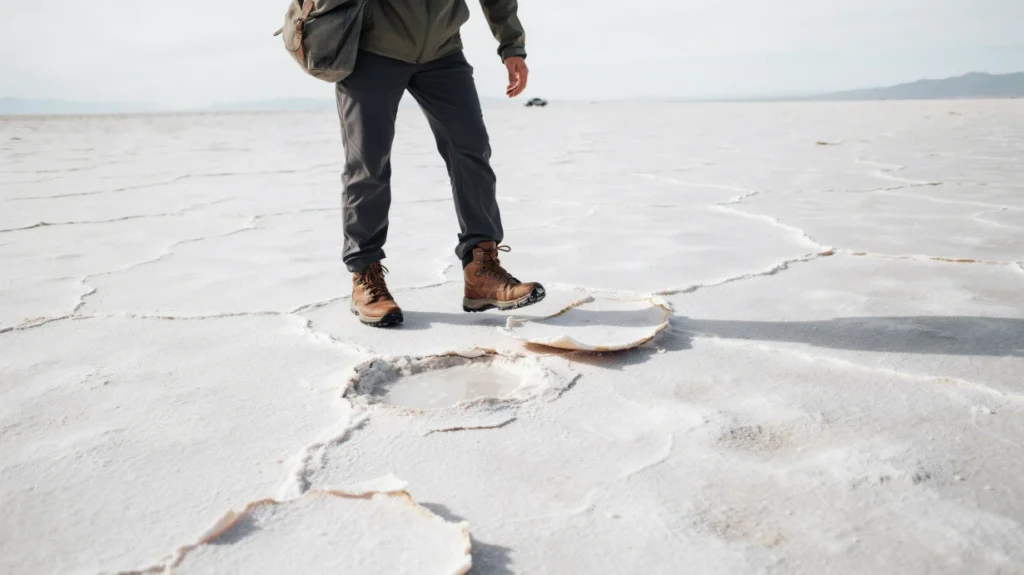 What the Bonneville Salt Flats Surface Feels Like Underfoot
 How to Plan a Day Tour Around Your Salt Lake City Flight
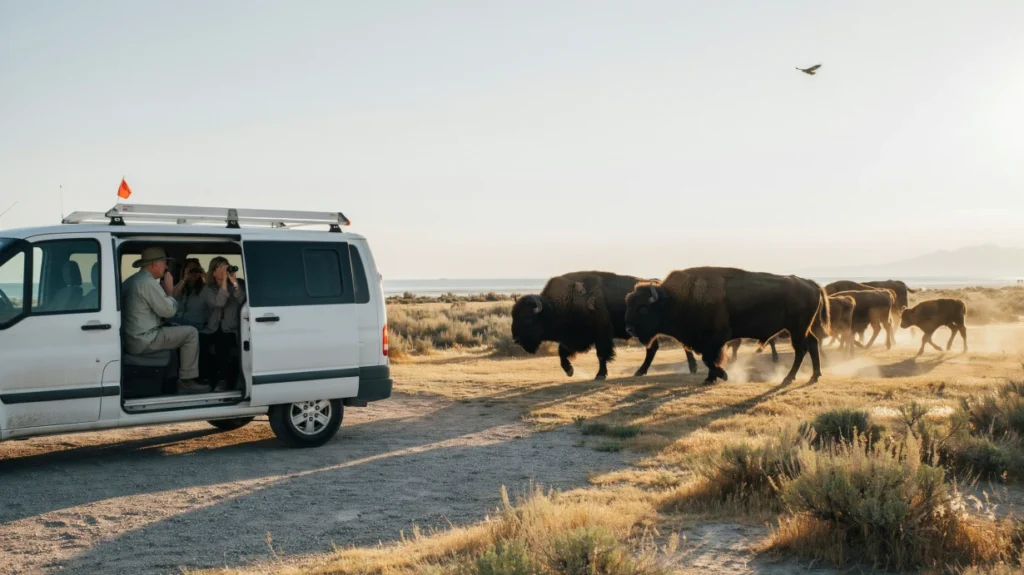 Antelope Island Sunset Tours: How Wildlife Viewing Really Works
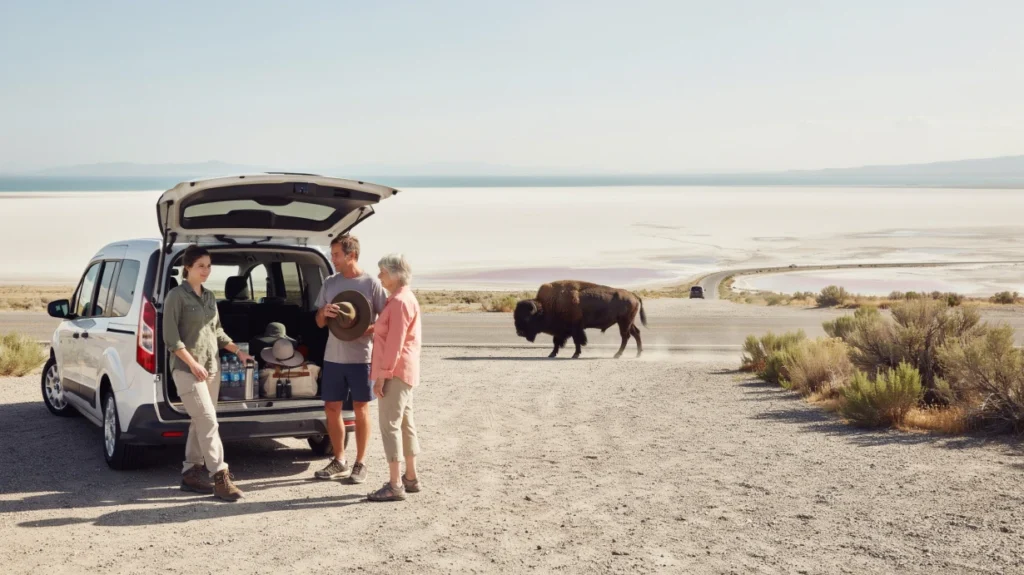 Antelope Island Day Tours: How to Plan a Low-Stress Visit
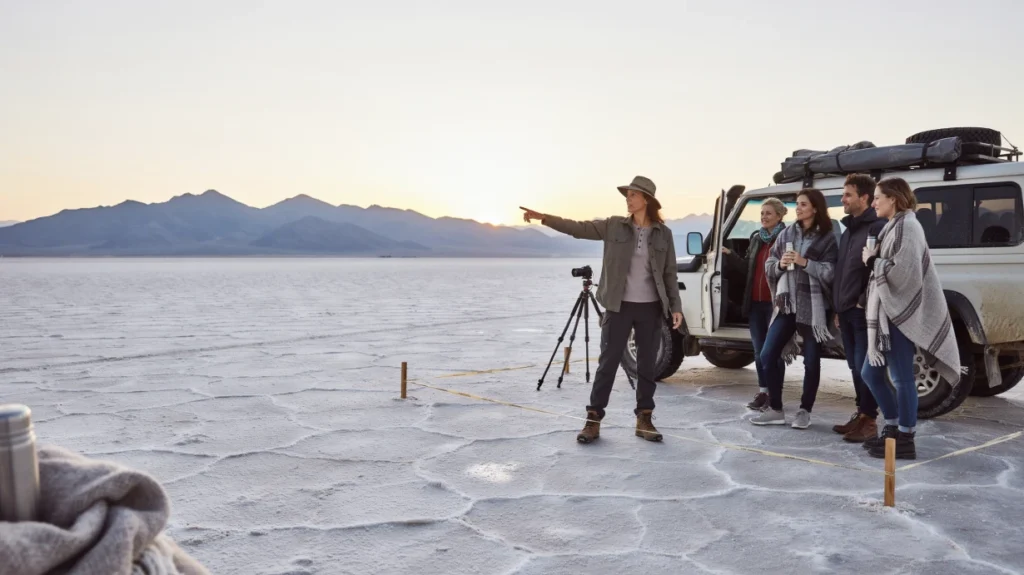 Bonneville Salt Flats Sunset Tours: What the Experience Includes
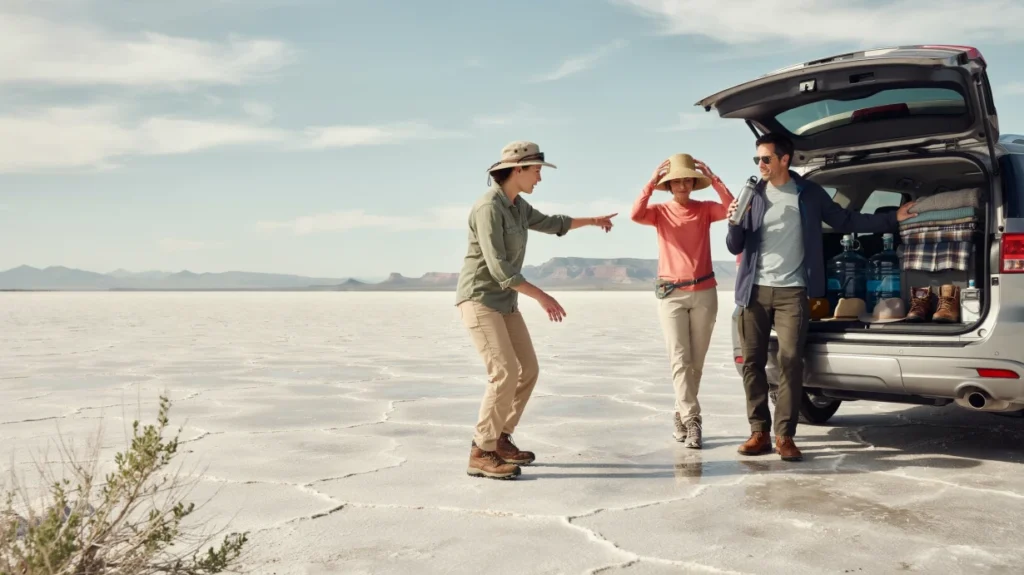 Bonneville Salt Flats Tours: Plan a Comfortable First Visit

Dima (from Ukraine), our guide, was amazing. We gave him many thanks and a tip, but...
Read more →Dima was a great guide. He was communicative before the tour started. He\'s a wealth of...
Read more →Very happy with the whole experience, Dmitro was an excellent tour guide, very knowledgeable about area...
Read more →Matei Travel was the vendor for the trip. Don\'t use them. The tour was not as...
Read more →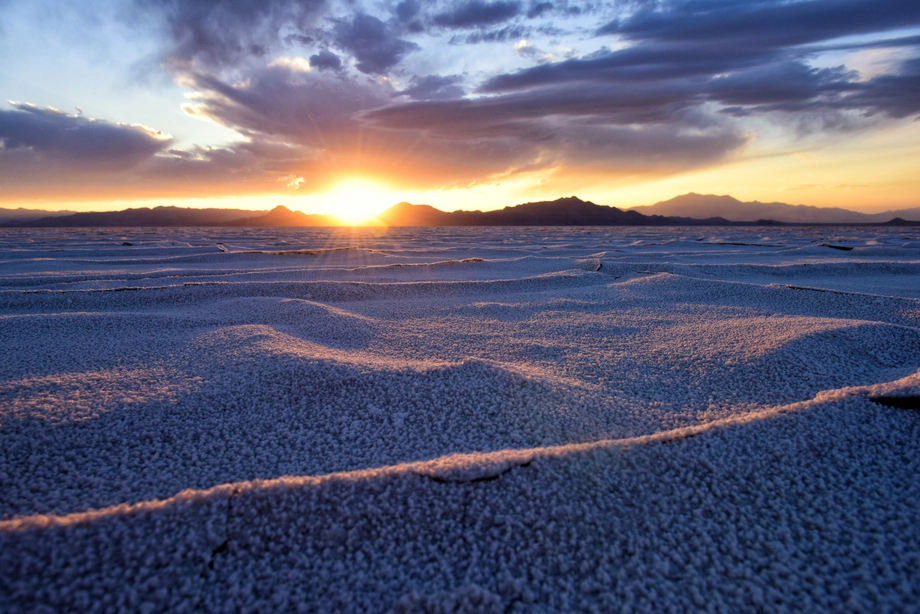 Bonneville Salt Flats – Sunset Adventure of the White Desert
 Antelope Island – Wild Heart of the Great Salt Lake Adventure
 Antelope Island Sunset Wildlife Expedition – Great Salt Lake Odyssey
 Bonneville Salt Flats – Journey to the Edge of the World