
Zion Scenic Flight Plus Ground Guide: What the Short Walk Really Adds
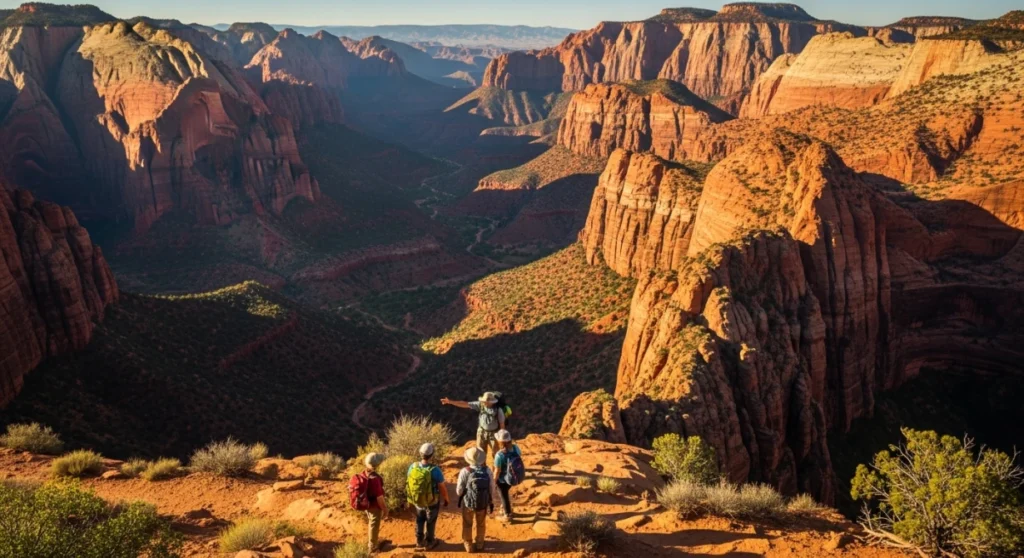
Yes, the short guided walk is usually worth adding because it turns a scenic flight into a fuller Zion experience with scale, texture, and context. It is best for travelers who want depth without a long hike.
People often overpay for the aerial part of Zion and then leave with great photos but a thin understanding of what they actually saw. That matters because a flight can reveal the canyon’s full shape in minutes, while the part that makes it feel real usually happens once you step onto the ground and connect those big views to rock surfaces, plants, light, and scale.
A private helicopter scenic flight over Zion with ground guide and short canyon walk is a premium half day style experience for travelers who want a fast, layered look at the park without committing to a long hike. The decision is less about whether the flight is impressive, because it is, and more about whether adding an easy guided walk turns that impression into a fuller experience that is worth the extra planning.
From our side as a Utah trip planner, this is usually the right add-on for visitors who want Zion to feel vivid and understandable in a limited time window. We do not operate helicopters, but we can build the day around local flight operators and handle the on-the-ground guiding, pacing, and broader itinerary logic.
Is the short canyon walk worth adding to the flight?
Yes, for most travelers considering this combo, the short walk is what turns a beautiful flyover into a complete Zion experience. It adds scale, texture, and explanation that the air portion cannot provide on its own.
The flight gives you the macro picture. You can see the canyon layout, the Virgin River’s path through the landscape, and the relationship between cliffs, mesas, and surrounding terrain in a way that is impossible from the road. That broad view is the core strength of flying.
The walk changes the experience from passive sightseeing to active understanding. On foot, a guide can connect what you saw from above to the rock layers in front of you, the plant life at the canyon floor, the way the light shifts against stone, and the felt atmosphere of being inside the landscape rather than above it.
The people who usually get the most value are time-limited visitors, families who want something easy, photo-focused travelers, and anyone who is curious about geology but does not want a strenuous hike. If your main goal is a long backcountry day or you have no interest in guided interpretation, the flight alone may be enough.
What do you actually see from the helicopter over Zion?
From the air, you get the big-picture geography that makes Zion make sense. The helicopter portion is strongest at showing the canyon system as a whole, the river’s path, and remote surrounding areas that are difficult or impossible to appreciate fully from ground level.
A scenic flight typically delivers what road-based viewpoints cannot. Instead of isolated overlooks, you see how the formations relate to one another across a wider area. That includes the sweep of canyon walls, the broader structure of the terrain, and parts of the region that are inaccessible on foot.
This macro perspective is especially useful if Zion is only one stop in a broader Utah trip. In a short amount of time, you can grasp why the park looks the way it does and how water, erosion, and rock layers shaped the landscape.
For many travelers, the most memorable part of the air segment is not a single formation but the sudden clarity of the layout. Features that feel disconnected from the road often click into place once seen from above, which is why the flight works so well as the first half of a paired experience.
You found a hidden promo code!
Use code WOWBLOG at checkout and get 10% OFF any tour!
Limited time offer. Book now and save!
Browse ToursWhat does the short guided walk add that the flight cannot?
The walk adds the sensory and educational detail that makes Zion feel tangible. It gives you access to textures, sound, temperature shifts, close rock detail, and live interpretation that simply do not exist from a helicopter seat.
From the ground, scale changes completely. Walls that looked elegant and abstract from above start to feel massive. Stone surfaces show grain, fracture lines, color variation, and weathering patterns. Even a gentle canyon-floor route can reveal how much geological information disappears at aerial distance.
The ecological side becomes visible too. Plant life near the trail, shaded versus sunlit sections, and small transitions in microclimate all help explain why Zion feels different from one part of the canyon to another. A guide can tie those observations back to the broader landscape you already saw from the air.
This is also where questions get answered in context. Instead of hearing a general overview, you can stop at a feature, ask what created it, compare layers or surfaces directly, and understand how the canyon environment functions at human scale.
- What the flight gives best: Layout, remote terrain, canyon relationships, and the Virgin River’s path through the landscape.
- What the walk gives best: Rock texture, plant life, canyon atmosphere, scale, and the chance to pause for explanation.
- What the guide adds: A bridge between the two, so the aerial overview and the ground details reinforce each other instead of feeling like separate activities.
How does a typical Zion flight plus short walk run from start to finish?
In practice, this combo usually works as a tightly organized half-day or partial-day experience. The exact sequence varies by operator and itinerary, but the usual pattern is briefing, short scenic flight, transfer, easy guided walk, and return.
The timing below reflects common planning ranges rather than guaranteed fixed durations. Weather, flight schedules, traffic between points, and your larger Utah itinerary can all shift the exact order and pace.
- Arrival and pre-flight briefing: Expect a check-in and safety briefing before takeoff. This is where the flight operator covers the air portion, while we focus on the larger day plan, meeting points, and what happens once you are back on the ground.
- Scenic air segment: Many Zion-area scenic flights are short by design, often in the brief-to-moderate range rather than an extended air tour. The goal is concentrated sightseeing, not hours in the air.
- Transition after landing: After the flight, there is usually a short reset period and then a transfer to a suitable walking area. Depending on the day plan, this can be streamlined so you are not wasting time between components.
- Guided short walk: The ground portion is intentionally manageable. Think of an easy canyon-floor style walk or simple out-and-back rather than a demanding hike, with time to stop, look closely, take photos, and ask questions.
- Return or onward itinerary: From there, the day either wraps up or continues to additional viewpoints, scenic driving, or onward travel if Zion is part of a bigger Utah route.
For most travelers, the walking section is valuable because it is not rushed but also does not consume the entire day. When designed well, the combo still leaves room for a scenic drive, a meal stop, or travel onward to another park area.
Who is responsible for what during the day?
Clear ownership matters in a premium experience like this. The flight operator handles aircraft operations, pre-flight procedures, and the aerial component, while we handle the itinerary design, timing logic, and guided ground experience within the broader trip.
| Stage | Primary responsibility | What you should expect |
|---|---|---|
| Trip planning | Our team | A realistic Zion day built around your dates, starting point, and walking comfort |
| Flight operations | Local air operator | Check-in, briefing, routing as offered, and air safety procedures |
| Ground pacing and interpretation | Our guide | An easy walk, stops for photos and questions, and context that connects air views to ground features |
| Day-of logistics | Shared, coordinated | Smooth sequencing between flight time, transfers, and the rest of the itinerary |
| Fit check | You and our team | Confirmation that the walk length, pace, and total day feel realistic for your group |
How is the educational value different from air versus ground?
The aerial and ground portions teach different things, and that difference is exactly why the combo works. From the air you understand structure and scale; on foot you understand material, ecology, and lived canyon experience.
This is not duplication. It is a layered format. The helicopter portion gives the macro geology and the broader shape of the landscape, while the short walk focuses on micro geology and ecology, where the details become visible and discussable.
If you are the kind of traveler who likes to remember a place rather than simply photograph it, this pairing is strong. Seeing the park from above first often makes the later walk more meaningful, because every wall, bend, and layer already sits inside a mental map.
| Question | Best answered from the air | Best answered on foot |
|---|---|---|
| How is the canyon laid out? | Yes | Only partially |
| How does the river relate to the larger landscape? | Yes | Limited view |
| What do the rock surfaces actually look like? | No | Yes |
| How do plants and canyon conditions change at human scale? | No | Yes |
| Where can I stop and ask focused questions? | Limited | Yes |
Who is this combo best for, and who should skip it?
This pairing is best for travelers who want maximum insight with moderate effort and controlled timing. It is less useful for people who only want a long hike, dislike guided experiences, or want the cheapest possible way to see Zion.
It is a strong fit for several specific traveler types:
- Time-poor visitors: If you only have part of a day, the air segment gives a fast overview and the walk supplies the grounded feel that a drive-by visit often lacks.
- Families and mixed-ability groups: A short, gentle walk is easier to share across generations than a demanding trail.
- Photo enthusiasts: The flight provides the broad composition, while the walk gives texture, depth, and changing light close to the rock.
- Geology-curious travelers: This is one of the most efficient ways to understand both the region’s large forms and its small details.
- Visitors building a multi-park route: If Zion is one piece of a longer plan, the combo is an efficient way to make the stop feel substantial without giving it a full hiking day.
You may want to skip it if your ideal Zion day is a long self-directed hike with no schedule constraints. The same goes if flying makes you so uncomfortable that the air segment would overshadow the rest of the day, though some travelers still benefit by keeping the flight short and letting the walk carry more of the experience.

Will adding the walk make the day too long, too hard, or too complicated?
Usually no, because the walk is meant to be short and manageable rather than a second major excursion. When planned properly, the combo can still fit into a half day and remain realistic for travelers who do not want a strenuous outing.
The biggest misconception is that “guided walk” means a full hike. In this format, the point is not mileage. The point is interpretation, atmosphere, and a little time at canyon level. That makes the ground section more adaptable than many people expect.
If you are concerned about exertion, the key planning questions are simple: how comfortable are you with uneven ground, how long do you want to be out, and do you prefer frequent stops. A guide can tailor pace and discussion, which matters a lot for older family members or travelers who want a calm day.
If you are wondering whether you could just walk on your own after the flight, you can, but you lose the connective value. The guide’s role is not just navigation. It is choosing a sensible route, matching the timing to the rest of the day, and translating what you saw from above into specific features in front of you.
How does this fit into a Zion or wider Utah itinerary from Salt Lake City?
Yes, adding a flight and short walk can be realistic even if your trip starts in northern Utah, but it works best when the day is designed around real distances and priorities. The combo is often easiest to justify as part of a broader Zion-focused plan or a multi-day park itinerary rather than a last-minute add-on.
If you are exploring Utah National Parks Tours, this is the right place to judge whether Zion is being treated as a quick stop or as a feature of the trip that deserves a premium experience layered into the day. Those itineraries are built around the practical realities of Utah travel, including transport from Salt Lake City, time at major viewpoints, short walks, and guide-led context instead of leaving you to solve the logistics on your own.
For travelers who only have one available day for a nature-focused outing, our Utah day tours are a useful benchmark for what a realistic single-day structure looks like. Even when Zion requires more planning than a nearby excursion, the same principle applies: a good day works because transit, stops, walking time, and energy level are balanced from the start.
If your trip begins in the city and you want a low-effort first day before heading south, our Salt Lake City walking tours show how we work on the ground: small groups, local guides, room for questions, and clear expectations about route length and terrain. That same practical approach is what makes a short guided canyon walk worth adding to a scenic flight.
What should you check before you ask us to build this day?
The best booking inquiries are specific about comfort, timing, and priorities. If you tell us what kind of Zion day you actually want, we can quickly tell you whether the flight-plus-walk format is a strong fit or whether a simpler park day would serve you better.
- Your travel dates: Give a firm date range and note whether Zion is a dedicated stop or one piece of a larger Utah trip.
- Your starting point: Say whether you are beginning in Salt Lake City or elsewhere, because that affects how much same-day activity is realistic.
- Your preferred pace: Tell us if you want a very easy walk, frequent photo stops, or a more interpretation-heavy outing.
- Group needs: Mention older travelers, children, mobility concerns, or anyone nervous about flying.
- Your main goal: Pick the priority: overview, photography, geology, family-friendly sightseeing, or efficient park sampling.
A good acceptance check for this kind of day is simple. By the end of planning, you should know who operates the flight, who leads the ground portion, the likely total time block, the expected walking effort, and how the experience fits into the rest of your route. If any of those points is vague, the day is not planned tightly enough yet.
Adding the short walk is usually worth it because it makes Zion understandable, not just impressive. The helicopter gives you the park’s big shape and remote context, while the guided ground portion gives you the sensory detail, scale, and explanation that make those views stick. For travelers short on time but still wanting depth, the pairing is one of the smartest ways to make a Zion stop feel complete. Review our Utah national parks tour options and send an inquiry with your dates, starting point, and interest in a Zion flight plus easy guided walk so we can propose a realistic itinerary.
How long does this kind of Zion combo usually take?
It often fits into a half-day or partial-day block, depending on flight timing, transfers, and whether Zion is part of a bigger route.
Is the walk meant to be a real hike?
No. In this format, the ground portion is usually an easy, relatively short walk focused on scenery and explanation rather than distance.
What is the main advantage of seeing Zion from the air first?
You understand the canyon’s overall layout much faster, especially how the river and major landforms fit together across the landscape.
Will older travelers still get value if they want a gentle pace?
Yes. This works well for many mixed-ability groups because the walking segment can emphasize stops, observation, and discussion over exertion.
Can I still benefit if I am nervous about flying?
Often yes, especially if the air portion is kept concise and the walk becomes the more immersive half of the day.
Why not just do a self-guided walk after the flight?
A self-guided walk can still be enjoyable, but it does not provide the same link between what you saw from above and the details around you on the trail.
Is this realistic if my broader trip starts in Salt Lake City?
It can be, but only if the day is planned around real travel time and the rest of your Utah itinerary rather than added casually at the last minute.
 How to Plan a Day Tour Around Your Salt Lake City Flight
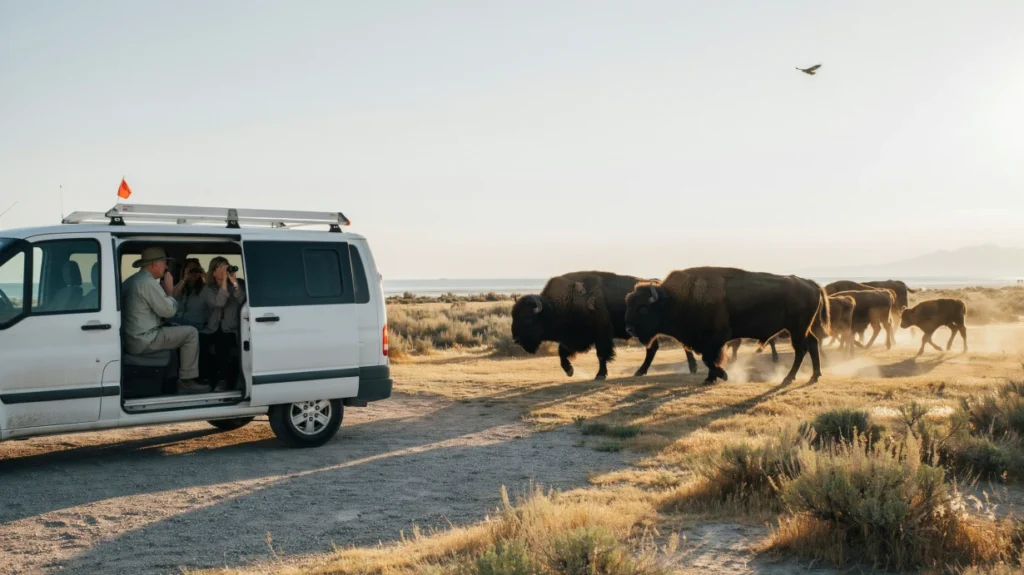 Antelope Island Sunset Tours: How Wildlife Viewing Really Works
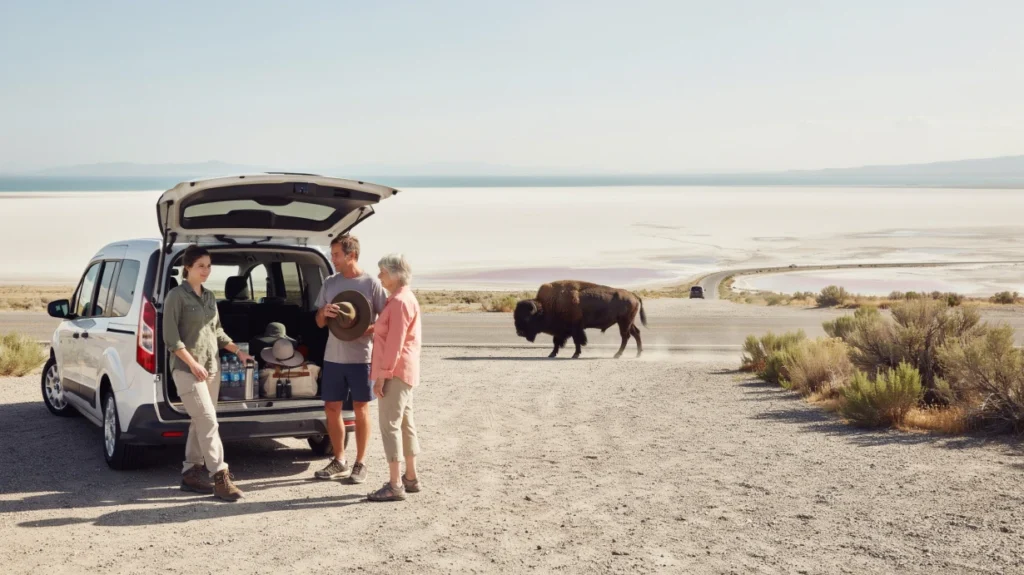 Antelope Island Day Tours: How to Plan a Low-Stress Visit
 Bonneville Salt Flats Sunset Tours: What the Experience Includes
 Bonneville Salt Flats Tours: Plan a Comfortable First Visit
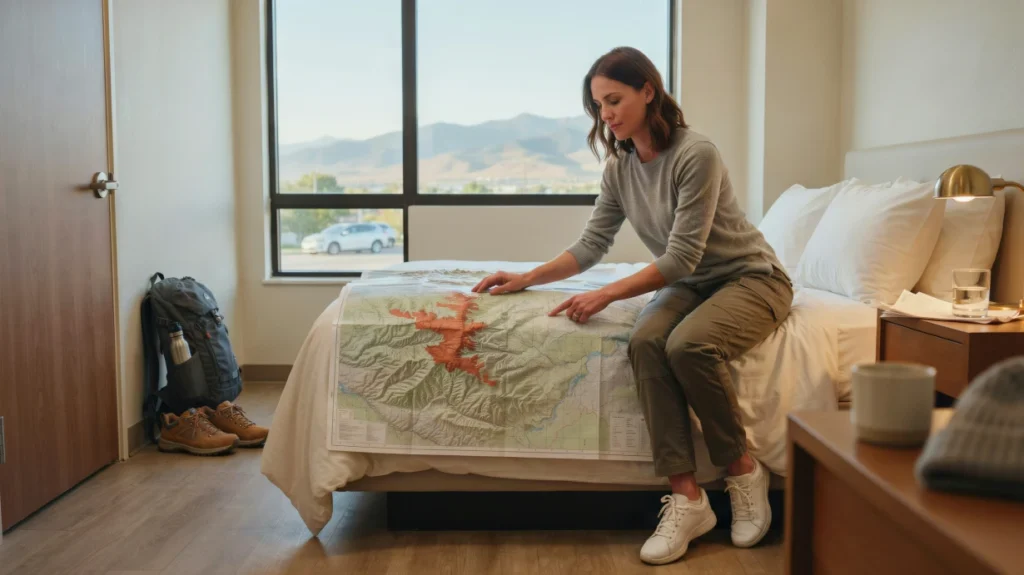 How to Plan a Utah Day Tour During a Short Salt Lake City Stay

Very happy with the whole experience, Dmitro was an excellent tour guide, very knowledgeable about area...
Read more →Matei Travel was the vendor for the trip. Don\'t use them. The tour was not as...
Read more →I would highly recommend touring with Dima! He was so knowledgeable and personable, and very open...
Read more →Experience was fabulous!!! We saw spectacular views of the flats, bison and prong horn. Mateo travel...
Read more →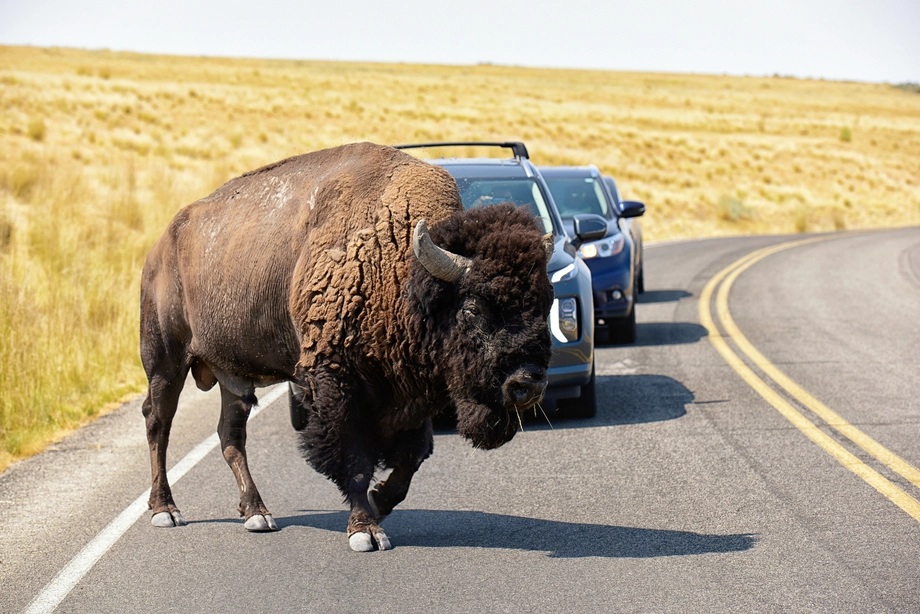 Antelope Island – Wild Heart of the Great Salt Lake Adventure
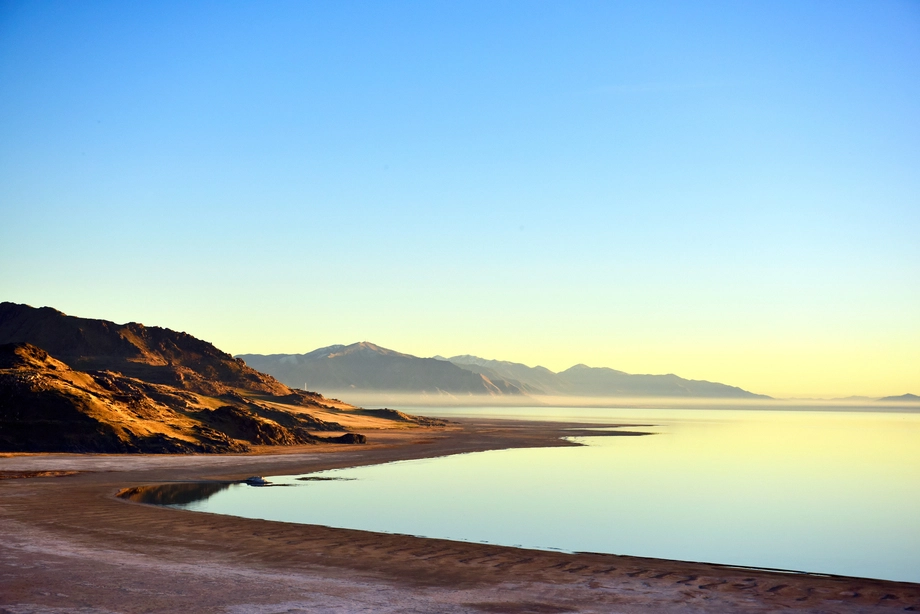 Antelope Island Sunset Wildlife Expedition – Great Salt Lake Odyssey
 Bonneville Salt Flats – Sunset Adventure of the White Desert
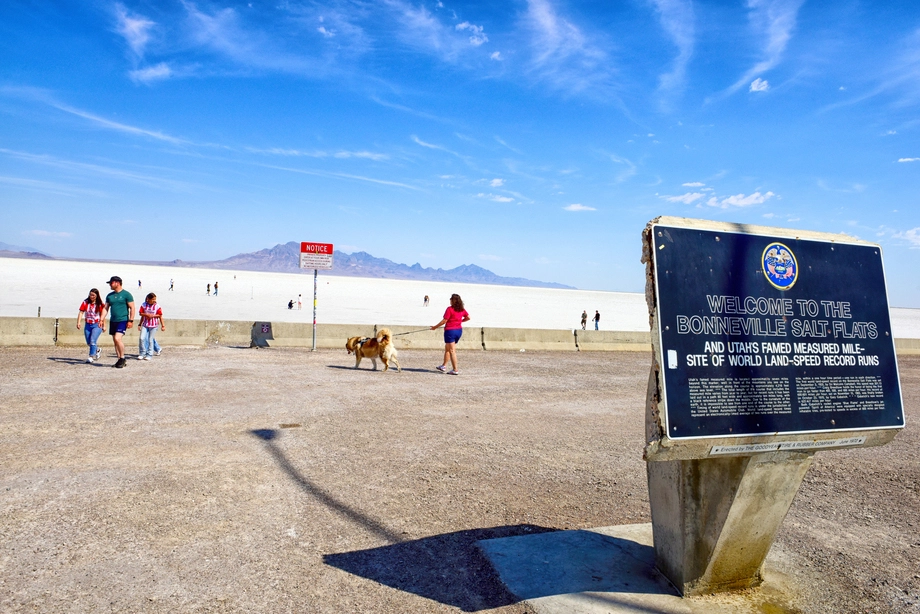 Bonneville Salt Flats – Journey to the Edge of the World