
Things to Do Near Salt Lake City When Rain Disrupts a Walking Tour
Aug 25, 2026
A Salt Lake City walking tour can work in light drizzle, but steady rain, snow, or thunderstorms call for indoor attractions and transit. Save long outdoor sightseeing for a clearer day.
A three-mile downtown loop can turn from a pleasant introduction to Salt Lake City into a wet, slow exercise in finding awnings. For visitors with limited time, rainy-day planning is less about finding an “indoor walking tour” and more about deciding whether a short outdoor segment is still worthwhile, then protecting the rest of the day with indoor anchors.
We organize full-day Utah outings for travelers who do not want to spend their only free day managing logistics. From that perspective, forcing a long, exposed route in heavy rain is rarely the smart tradeoff. A compact city visit now and a well-timed landscape day later usually gives you more of Salt Lake City and Utah, not less.
Can you still do a Salt Lake City walking tour in the rain?
Yes, in light drizzle with suitable clothing and a shortened route, but a traditional downtown walking tour is a poor choice in steady rain, snow, or thunderstorms. The practical substitute is an indoor-focused city day connected by short walks or TRAX, not an attempt to recreate the entire outdoor loop indoors.
Published downtown walking-tour formats commonly center on roughly three miles of outdoor landmarks. That structure is useful when conditions are dry because it joins major sights in one continuous walk, but it leaves few places to linger when rain is persistent. For the broader question of choosing a route before weather becomes a problem, our guide to choosing a Salt Lake City walking tour explains why route length matters on a short visit.
Self-guided audio apps provide control over pace and stopping points, yet their flexibility does not change the basic exposure issue: most stops remain outside. It is reasonable to use an audio route for one or two nearby landmarks between indoor visits, but it is not an appealing all-day plan during adverse weather.
How should you diagnose whether rain is a minor inconvenience or a reason to change plans?
Check the intensity, duration, lightning risk, temperature, and the amount of uncovered walking in your original plan before leaving. These five signals separate a manageable drizzle from a day that should be redesigned around indoor venues.
Use the forecast close to departure and look beyond the rain icon. A brief shower is different from rain expected through your planned walking window, and cold rain has a much larger comfort cost than a warm, intermittent sprinkle. If your itinerary requires several long blocks between sites, treat that exposure as a major factor rather than assuming umbrellas solve it.
- Rain intensity: Light, occasional rain can support a short exterior route; steady rain makes map reading, photography, and listening to an audio guide harder.
- Duration: A passing shower may justify a delayed start or a museum break. Rain that occupies most of the day favors a full indoor swap.
- Lightning or storm alerts: Stop outdoor sightseeing and use sheltered transportation or an indoor venue.
- Temperature and wind: Wet clothing becomes more uncomfortable when conditions are cold or windy, even without a severe storm.
- Group needs: Toddlers, children, visitors with limited mobility, and anyone without waterproof layers benefit from minimizing transfers and uncovered blocks.
Before committing, isolate the real constraint. Ask whether you are trying to preserve the history and architecture of the city walk, keep children engaged, avoid getting soaked without a car, or still fit in Utah scenery. Each goal has a different fix, so one generic “rain plan” does not serve every traveler.
You found a hidden promo code!
Use code WOWBLOG at checkout and get 10% OFF any tour!
Limited time offer. Book now and save!
Browse ToursWhat should you do in light drizzle, steady rain, or thunderstorms and snow?
Light drizzle supports a reduced outdoor route, steady rain calls for an indoor itinerary, and thunderstorms or snowy conditions require abandoning exposed walking altogether. Make the decision by severity early so the day does not disappear into repeated weather checks and improvised detours.
| Condition | Best decision | Practical plan |
|---|---|---|
| Light drizzle or brief showers | Modify the walk | Choose two or three close landmarks, keep the route short, and schedule indoor breaks between them. |
| Steady rain for much of the day | Swap the outdoor loop | Use one or two indoor anchors, travel between them by TRAX where practical, and skip the continuous downtown circuit. |
| Thunderstorms, lightning, or difficult snow conditions | Cancel outdoor walking | Remain indoors, use sheltered transport options, and postpone exterior sites until conditions improve. |
Light drizzle: preserve only the highest-value outdoor stops
Pick a compact section of downtown rather than following a complete loop. Wear waterproof outer layers, protect your phone and paper map, and set a firm turnaround point such as the start of heavier rain or the end of a single neighborhood. This approach preserves some sense of place without turning the day into endurance walking.
Steady rain: replace miles with indoor depth
Choose a museum, planetarium, or children’s museum as the center of the day. The goal is to spend most of your time learning, resting, and exploring under cover, with only the short transfer distances you are willing to accept. For self-guided visitors, our comparison of audio tours and guided walks is useful context: flexibility helps, but it does not remove weather exposure.
Thunderstorms or snow: use a clear stop rule
Do not keep a sightseeing walk alive simply because it was on the original schedule. Lightning, slippery surfaces, poor visibility, or accumulating snow are escalation triggers, not inconveniences to outlast. Shift immediately to indoor activities or a rest period, then reassess only when official local updates indicate conditions have improved.
Which indoor rainy-day itineraries work best around downtown Salt Lake City?
A family itinerary should concentrate on Discovery Gateway Children’s Museum and Clark Planetarium, while an adult-focused option can pair the Natural History Museum of Utah with a smaller downtown indoor stop. Both approaches reduce outdoor exposure by treating attractions as anchors rather than trying to walk continuously between every landmark.
Family route: hands-on exhibits and space-focused activities
Start at Discovery Gateway Children’s Museum, then consider Clark Planetarium at The Gateway for a second indoor stop. Discovery Gateway is especially useful when rain interrupts plans with young children because its activities are designed around active participation rather than quiet observation.
According to Visit Salt Lake’s Discovery Gateway listing, the museum has more than 60,000 square feet of interactive, hands-on exhibits created for children of all ages. That makes it a strong rainy-day choice for families looking for an alternative to half-day family-friendly activities near Salt Lake City with toddlers, without relying on outdoor play or a nature walk.
Clark Planetarium is located at The Gateway and is accessible by TRAX light rail. Parts of downtown are within the TRAX Free Fare Zone, so visitors without a car can use public transit to reduce the amount of rain-exposed walking; check current official transit information before travel because service details can change.
Adult and culture route: museum time first, downtown second
Build the day around the Natural History Museum of Utah, then return downtown for a brief indoor meal or café break before deciding whether conditions support a short architectural walk. The museum offers educational exhibits that can replace the learning component of a history-focused walking route, while the later downtown segment remains optional rather than mandatory.
If rain weakens to a drizzle, use that final window for a small area rather than a full circuit. Travelers interested in façades and streetscapes can keep the outdoor portion focused by referring to our downtown architecture walking guide, then return indoors before conditions worsen.
How can you adapt an existing walking-tour plan without abandoning it completely?
Keep the theme of your planned walk, but cut its distance, add reliable indoor pauses, and time any exterior segment around the clearest weather window. This is a quick recovery plan, not a substitute for a dry-day downtown tour.
- Choose one walking zone: Select the part of downtown that matters most to you instead of connecting every planned landmark.
- Set indoor anchors: Put an attraction, café, or hotel break before and after the outdoor portion so you have a place to dry off and reset.
- Use transit for the long transfer: Where it fits your route, use TRAX rather than walking several wet blocks between districts.
- Move exterior sightseeing later: If the forecast suggests a lighter period, reserve that time for photos, architecture, or a short self-guided segment.
- Protect the essentials: Carry water-resistant layers and a protected phone battery, since navigation and weather updates matter more when plans change.
The common mistake is treating every listed stop as essential. In bad weather, one meaningful neighborhood plus two indoor experiences is often more memorable than a rushed attempt to complete a route designed for dry conditions.
When should you cancel the city walk and hand the day over to an indoor plan?
Cancel the outdoor route when weather creates a safety concern, when rain will dominate most of the walking window, or when your group cannot comfortably manage repeated exposed transfers. A full indoor plan is the right handoff when the weather problem is bigger than a short delay or a shorter route can solve.
Use clear escalation criteria rather than debating each block as you go. Thunderstorm alerts, lightning, slick conditions, sustained downpour, children becoming cold or frustrated, or inadequate rain gear all justify ending the walking plan. You can still have a useful city day through indoor attractions and public transit, then preserve the outdoor route for a later dry window.
We do not operate traditional downtown walking tours or indoor museum tours, so venue suggestions here are general planning options rather than itineraries we run. For admission details, current hours, transit service, and weather alerts, consult the relevant official venue, transit, and local safety sources before setting out.
If rain ruins your city walk, how can you plan a clear-weather day tour from Salt Lake City?
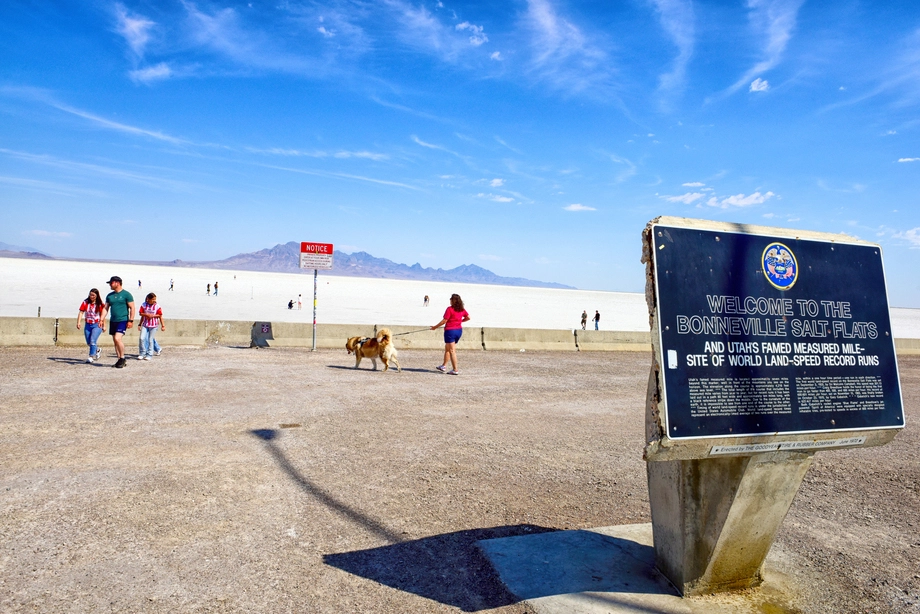
Use the rainy day for Salt Lake City’s indoor experiences and reserve a clearer day for a guided trip to Antelope Island or Bonneville Salt Flats. This division protects limited vacation time because the city’s museums work under cover while Utah’s open landscapes benefit far more from favorable conditions and visibility.
We created the Antelope Island Tour from Salt Lake City — From $120 | Matei Travel as an approximately seven-hour trip with set 8:30 a.m. and 2:30 p.m. departures, including hotel pickup, transport, and park entrance in one package. We limited the group to 13 guests and use a modern Mercedes Sprinter because a small, manageable group and a comfortable ride matter when a traveler has only a short window in Utah.
When designing this Antelope Island itinerary, we built the day around chances for bison viewing, Fielding Garr Ranch, short hikes to scenic peaks, information about the brine shrimp industry, a Bridger Bay Beach stroll, and Buffalo Point Trail. We also decided to include bottled water, tea, coffee, hot chocolate, and granola bars so guests have refreshments without adding another planning task to the day.
Our day-tour planning deliberately balances time in transit with time outside the vehicle, rather than treating the destination as a quick photo stop after hours of driving. We organized our broader Utah day tours into wildlife-focused, open-space-focused, and mixed experiences so travelers can choose the type of outing that fits their interests, including Bonneville Salt Flats options for those drawn to wide-open desert scenery.
These are outdoor experiences, so weather can still affect comfort and safety, and no tour should be treated as weather-proof. The advantage of a guided format is concentrated logistics: hotel pickup, transport, park entry on the Antelope Island itinerary, and guide support on short walking portions rather than an all-day, unstructured walk. Check current dates, inclusions, and your forecast before submitting a booking or inquiry.
What should you do before your next planned walking day?
Prepare a two-track plan: one compact outdoor route for dry or lightly wet conditions and one indoor cluster for sustained rain. A backup does not need to be elaborate; it only needs to eliminate the decision-making scramble when the forecast changes.
- Save two attraction options: Keep one family-oriented choice and one adult-oriented choice in your phone.
- Mark a transit fallback: Identify whether TRAX can reduce the longest uncovered transfer in your downtown plan.
- Separate city and landscape days: Avoid making a single day carry both a long downtown loop and an outdoor Utah destination.
- Keep outdoor priorities flexible: Put architecture photos, extended self-guided audio, and long plaza stops on the day with the better weather window.
- Review conditions again before departure: Use current official forecasts and alerts, not only the forecast you saw the night before.
Rain does not have to waste a Salt Lake City day
We recommend matching the plan to the weather rather than trying to force a three-mile outdoor route through a sustained downpour. Use indoor attractions and transit for the wet day, preserve only short exterior stops in light drizzle, and stop outdoor walking when storms or difficult snow conditions create a real safety or comfort problem.
Separating city exploration from a clearer-weather landscape day also makes limited time easier to use well. Our approach to one-day trips is to provide a realistic balance of driving and on-site time, with short supported walks instead of continuous exposure.
For a clear-weather outing beyond downtown, explore our Antelope Island Sunset Wildlife Expedition or the wider Utah day-tour options and check the current dates that fit your stay.
Is a Salt Lake City walking tour worth doing in steady rain?
Usually not as a full downtown loop. Replace it with indoor attractions and keep only a very short exterior segment if conditions become manageable.
Can I reach Clark Planetarium without a car?
Clark Planetarium at The Gateway is accessible by TRAX light rail. The downtown Free Fare Zone may reduce paid travel and outdoor walking, depending on your route.
What is the best rainy-day stop for children?
Discovery Gateway Children’s Museum is a practical family option because it offers more than 60,000 square feet of hands-on exhibits for children of all ages.
What should I do if lightning begins during my walk?
End the outdoor portion immediately and move to a sheltered indoor location. Resume sightseeing only after checking current official safety and weather information.
Are Antelope Island tours only for hikers?
No. The itinerary combines scenic driving and short walking segments, although travelers should review the current tour details and choose an activity level that suits them.
What is included on the Antelope Island Tour from Salt Lake City?
The tour includes hotel pickup, transport, park entrance, bottled water, hot drinks, and granola bars. It is designed as an approximately seven-hour small-group outing with up to 13 guests.
Should I book an outdoor day tour if the forecast might change?
Consider your flexibility and check the forecast before booking. A guided day trip can simplify transport and timing, but changing weather can still affect outdoor comfort and conditions.

Experience was fabulous!!! We saw spectacular views of the flats, bison and prong horn. Mateo travel...
Read more →I truly recommend this experience. Dima was the best guide! He’s Full of energy and great...
Read more →We booked a trip having read the wonderful reviews and it did not disappoint. Dima our...
Read more →Had a great tour with Dima. Very knowledgeable, fun and courteous. Highly recommend this tour guide....
Read more → Antelope Island – Wild Heart of the Great Salt Lake Adventure
 Bonneville Salt Flats – Sunset Adventure of the White Desert
 Bonneville Salt Flats – Journey to the Edge of the World
 Antelope Island Sunset Wildlife Expedition – Great Salt Lake Odyssey