
Self-Guided Audio Tour App for Salt Lake City Public Art and…

Choose an audio tour for low-cost, independent wandering at any hour. Choose a small-group guided walk first if you want city context, easy navigation, and answers tailored to your questions.
Visitors often underestimate how much time downtown Salt Lake City takes to understand without context. A map can lead you to a building or mural, but it cannot readily explain why a street is unusually wide, how districts connect, or which details are worth pausing for. Choosing between a self-guided audio experience and a live walk is really a decision about how you want to use your limited time, attention, and budget.
A self-guided audio tour app for Salt Lake City public art and historic neighborhoods gives you commentary through your phone while you choose the route, pace, and stops. A small-group walking tour replaces that independent structure with a local guide who can connect places, respond to questions, and help you get oriented early in your stay.
Who should choose an audio tour, and who benefits more from a guided walk?
Audio tours suit independent visitors with flexible schedules, tight budgets, or a desire to explore quietly at their own pace. A guided walk is usually the stronger choice for first-time visitors who want a useful downtown orientation, richer context, and help finding less-obvious places efficiently.
- Choose self-guided audio first if: you want to start early, late, or between other plans; you are comfortable navigating with your phone; and you would rather make frequent stops, detours, or long breaks.
- Choose a guided walk first if: this is your first full day in the city; you are curious about history and urban development; or you want to ask a local guide questions as you encounter places.
- Use both if: you have more than one day and want an efficient introduction before returning independently to public art, architecture, or neighborhoods that interest you most.
From our perspective at Matei Travel, the most practical split is often guided first, independent later. A live walk can give your later wandering a framework, while audio remains useful for revisiting an area when no scheduled tour fits your plans.
What does each kind of downtown experience actually feel like?
An audio tour is a phone-based, self-paced outing: you download or access the route, follow map or GPS prompts, listen at designated stops, and decide when to continue. A guided walk is a shared, scheduled experience in which a local guide leads a small group through downtown and shapes the conversation around what the group is seeing.
A typical self-guided audio outing
You can generally begin whenever you are ready, pause for coffee or a gallery stop, skip a location, or take a detour. That freedom is its main advantage, especially when your arrival time is uncertain or you enjoy exploring alone.
The tradeoff is that you manage the logistics. Your phone needs power, your GPS needs to cooperate, and you must decide whether a stop is worth your time when the route or commentary does not answer your particular question.
A small-group downtown walking tour
Our Salt Lake City walking tours begin at the meeting point identified in the route details and move through downtown with a local guide. The groups are intentionally small, so participants can ask questions without the feeling of being carried along in a large crowd.
We build routes around historic buildings, public spaces, and hidden places that are easy to miss when you are focused only on reaching major landmarks. The stories connect individual sites to Salt Lake City’s planning and development, helping visitors understand the city’s layout rather than collecting isolated dates and names.
You found a hidden promo code!
Use code WOWBLOG at checkout and get 10% OFF any tour!
Limited time offer. Book now and save!
Browse ToursHow do self-guided audio tours and guided walks compare on the practical details?
Audio tours win on scheduling control and upfront price, while guided walks add live interpretation, navigation, and conversation. The right option depends on which of those benefits matters most for this specific portion of your trip.
| Decision criterion | Self-guided audio tour | Small-group guided walk |
|---|---|---|
| Scheduling | Start whenever you want and pause freely. | Requires committing to a listed date and start time. |
| Typical cost | Generally lower, often about $10 to $20. | Higher because a live guide and hosted experience are included. |
| Information depth | Usually fixed commentary designed for a broad audience. | Live historical context, follow-up answers, and connected themes. |
| Personalization | You choose what to skip or linger over, but content does not change. | The guide can respond to participant interests within the route and available time. |
| Navigation | You follow the app, map, and GPS prompts. | The guide handles route-finding and transitions between stops. |
| Technology dependence | Requires a charged phone and reliable app and location functions. | Low-tech during the walk, apart from any personal needs you bring. |
| Social experience | Fully private unless you explore with companions. | Small-group setting with opportunities for conversation, without a bus-tour atmosphere. |
| Pace and accessibility planning | Complete individual control of pace and breaks. | Check the published duration, distance, and terrain before reserving. |
| Support when something goes wrong | You troubleshoot navigation, battery, or app issues yourself. | A guide can keep the group moving and provide on-the-ground context. |
Price deserves a more careful comparison than “cheap” versus “expensive.” A $10 to $20 audio option can be enough for light commentary, but a guided walk can be worth the higher per-person cost when it saves the first few hours of trial-and-error navigation and gives you a clearer plan for the rest of your visit.
When is a self-guided audio tour the better fit?
A self-guided option is better when independence is the priority and you do not need real-time interpretation. It works especially well for repeat visitors, highly introverted travelers, and anyone whose schedule cannot accommodate a fixed meeting time.
- Odd-hour exploring: Start before breakfast, after dinner, or in a spare hour when scheduled walks are not available.
- A very tight budget: Choose audio when preserving funds matters more than live Q&A and guided navigation.
- Complete pace control: It is the easier choice if you expect frequent rests, long photo stops, or an unpredictable companion’s needs.
- Repeat visits: If you already understand the central layout and only want light commentary while revisiting public art or familiar streets, an app can be enough.
- Strong preference for solitude: Travelers who find group interaction draining may enjoy a private, headphone-based experience more.
Be realistic about the technical side before you begin. Download content in advance when possible, bring a charged phone or backup battery, and treat GPS prompts as a guide rather than a guarantee. App malfunctions, inaccurate location signals, and battery drain can interrupt an otherwise easy outing.
When does a guided walk offer more value in Salt Lake City?
A guided walk provides the most value when you need orientation, context, and efficient discovery rather than just directions to points on a map. It is particularly useful on a first day downtown, when questions about the city’s streets, buildings, and development are likely to shape your later plans.
Your first full day in town
Starting with a locally guided walk can compress a lot of self-orientation into one structured outing. Once you understand how downtown fits together, you can return to areas that caught your attention with more confidence and spend independent time more selectively.
You want the story behind the layout
Salt Lake City is more rewarding when historic buildings and public spaces are understood as part of a larger urban story. Our guides explain how the city was planned and how it developed over time, which adds meaning that fixed stop-by-stop audio often cannot connect in response to what you notice.
You want to find hidden places quickly
Major landmarks are easy to locate with a map. The harder part is recognizing the less-obvious details and places that deserve attention between them. Our routes deliberately include historic buildings and hidden spots, so the walk is not limited to the most visible stops.
You have questions that do not fit a script
Tech-savvy travelers can navigate an app perfectly and still miss the advantage of live conversation. A guide can respond when you ask why a feature matters, want more context on a theme, or react to something happening around you that day.
How are Matei Travel walking tours designed for practical trip planning?
Matei Travel runs small-group, locally guided walking tours in downtown Salt Lake City that combine historic buildings, public spaces, and less-obvious locations. We publish the route’s duration, walking distance, and general terrain in advance so you can judge whether it fits your energy level, footwear, and available time.
Small groups make the experience more conversational than a large, fixed-format tour. While a guide cannot promise every pace or interest can be accommodated, a smaller group makes it easier to ask questions comfortably and gives the guide a clearer sense of what participants are engaging with.
Before choosing a date, use the Salt Lake City Walking Tours page to read the individual route description and confirm its duration, distance, terrain, meeting details, and online availability. If you can reserve one reliable time window, place the walk early in your itinerary and leave later hours open for independent exploration.
Which option fits your trip scenario?
Your itinerary should decide the format, not a general preference for apps or tours. Use the scenarios below to choose the role that a live walk should play during your Salt Lake City stay.
- One afternoon only: Book a guided walk if the timing works and you want the fastest meaningful introduction. Choose audio if your arrival or departure time is too uncertain for a reservation.
- Conference trip with limited free time: Reserve one scheduled walk during your clearest opening, ideally early in the visit. Use audio for any spare early-morning or evening time that appears later.
- Family trip: Compare the listed distance, duration, and terrain with your group’s real walking tolerance. An audio route gives maximum flexibility for breaks; a small guided group adds easier navigation and questions for adults who want context.
- Art-focused traveler: Begin with a guide if you want broader city structure and historical connections, then revisit public art independently at a slower pace.
- Returning visitor: Use audio when you only need light background and control over the route. Choose a guided walk if you want to move beyond familiar landmarks and ask deeper questions.
- Solo traveler who dislikes crowds: A small group can be a comfortable middle ground if you want local insight without a large-tour feel. If even light social interaction is not appealing, audio is the honest better fit.
What should you check before making the final choice?
Make the decision by checking your actual constraints, especially the time you can commit and the level of support you want while exploring. A simple five-minute review can prevent booking a format that does not match your day.
- Identify your reliable time window: If you cannot commit to a start time, choose audio or wait until your schedule is firmer.
- Set your purpose: Pick guided if your goal is orientation and deeper understanding; pick audio for casual wandering and basic commentary.
- Compare your budget with the value needed: Decide whether lower cost matters more than live answers, route handling, and contextual storytelling.
- Check your comfort with technology: Bring power and be ready to troubleshoot if you rely on an app.
- Review walking fit: For a guided option, read the published distance, duration, and terrain rather than assuming every downtown route feels the same.
- Plan the sequence: If you have more than a day, use a guide early and reserve independent time for the places you want to revisit.
What is the best final choice for most first-time visitors?
For a first visit with one dependable opening in the schedule, a small-group guided walk is usually the more useful primary city experience because it combines orientation, local context, questions, and navigation. A self-guided audio tour remains a strong budget-friendly companion for flexible hours, repeat visits, or quiet solo exploration.
Choose audio alone when freedom and low cost clearly outweigh conversation and depth. Choose a live walk when you want to understand downtown rather than simply move through it, then use your remaining time to follow the interests the walk helped uncover.
Review the route details and reserve a date through the Salt Lake City Walking Tours page if a guided first-day orientation fits your trip.
Can I take a self-guided audio tour after a guided walk?
Yes. It can be a useful way to revisit streets, public art, or neighborhoods that you want to explore more slowly on your own.
Are guided walks only for people who know little about Salt Lake City?
No. Returning visitors may value a guide when they want connected context about planning, development, and less-obvious downtown places.
What should I bring for a self-guided audio experience?
Bring a fully charged phone and consider a backup battery. You should also be prepared for occasional GPS or app issues.
How do I know whether I can manage the walking route?
Check the route’s stated duration, walking distance, and general terrain before booking. Use those details to compare the outing with your own comfort level.
Will a small-group tour feel like a large sightseeing bus tour?
No. The downtown walks are designed for small groups, which makes it easier to hear the guide and ask questions along the way.
Is an audio tour enough for basic history?
It can provide introductory commentary. A live guide is more useful when you want to ask follow-up questions or connect individual sites to broader city themes.
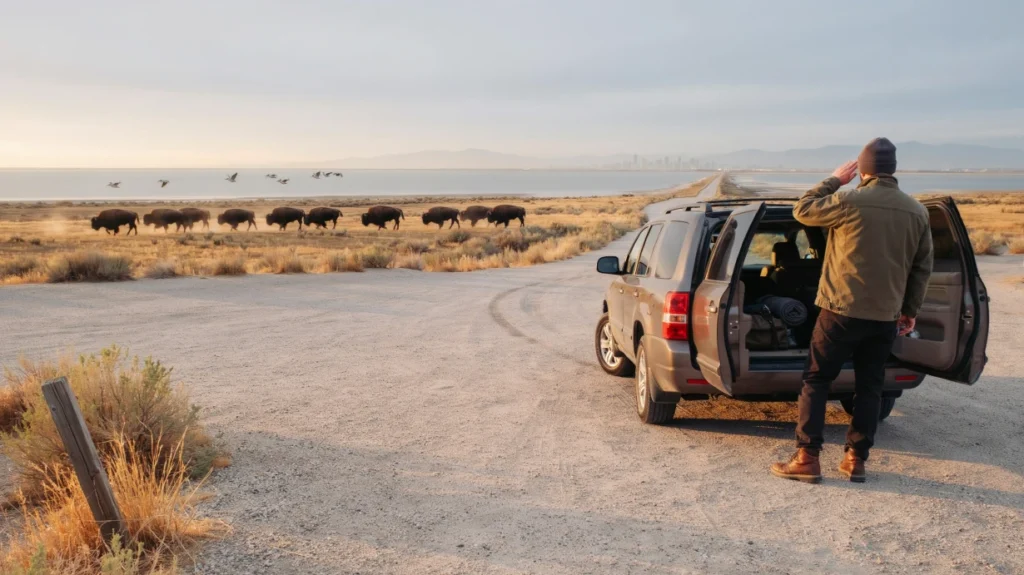 Antelope Island Day Tour or Sunset Wildlife Tour: Which Fits Your Salt Lake City Schedule?
 How to Dress for Changing Weather on Antelope Island
 How to Photograph People at Bonneville Salt Flats at Sunset
 How to Dress for Wind and Glare at Bonneville Salt Flats
 What a Guide-Led Utah Day Tour Handles for You
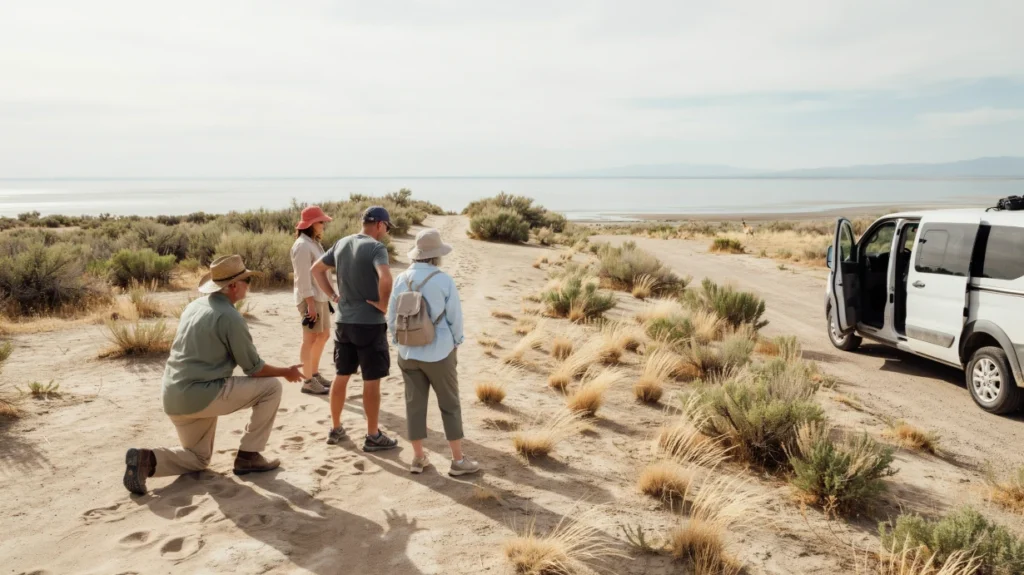 Why Wildlife Sightings Cannot Be Guaranteed on Antelope Island

Dima was a fun and informative guide on the trail of bison and pronghorns on Antelope...
Read more →The tour was great and beautiful. Dima, the tour guide, explained everything clearly and had some...
Read more →What a beautiful experience! The drive is about 2 hours one way with interesting scenery the...
Read more →(From North Carolina on a business trip) '+ 'HANDS DOWN the best tour/guide I’ve ever had. And...
Read more → Antelope Island – Wild Heart of the Great Salt Lake Adventure
 Bonneville Salt Flats – Sunset Adventure of the White Desert
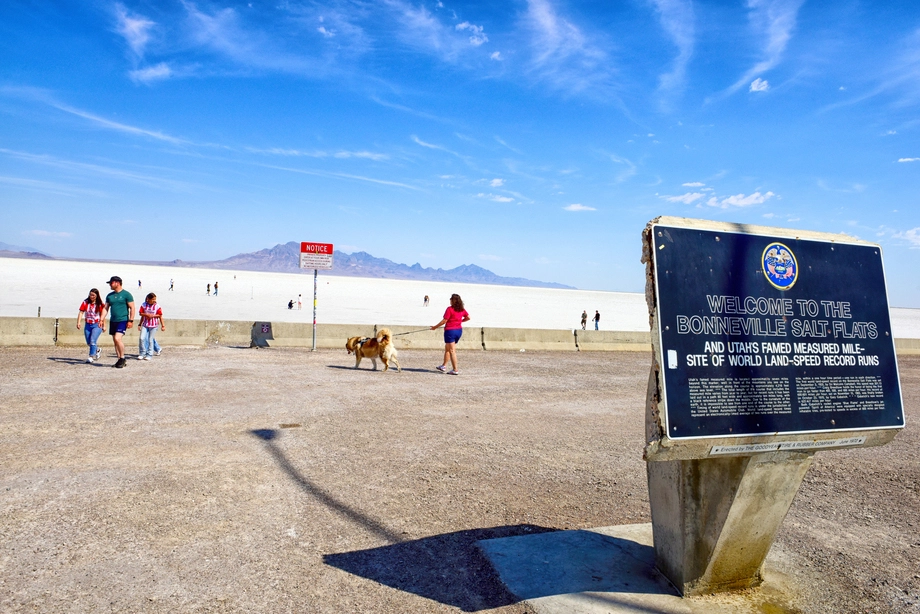 Bonneville Salt Flats – Journey to the Edge of the World
 Antelope Island Sunset Wildlife Expedition – Great Salt Lake Odyssey