
RV-Friendly 7-Day Utah Mighty 5 Loop From Salt Lake City
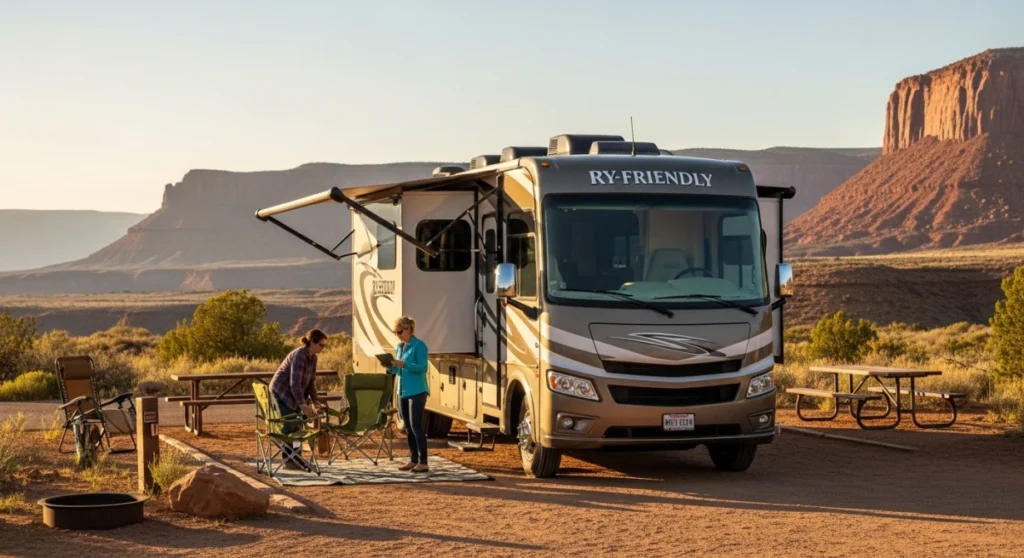
For a seven-day Utah RV loop, reserve Zion first, then Moab-area nights, and treat Bryce and Capitol Reef based on season and RV size. The route works best as a fast highlights trip with one planned backup for each busy stop.
The biggest planning mistake we see is treating Utah’s Mighty 5 like a loose road trip and assuming an RV site will work itself out each night. In a seven-day loop, one missed campground reservation can force a long evening drive, a poor parking setup, or a rushed park day the next morning.
This is a route-planning article for travelers doing a fast, realistic self-drive circuit from the Salt Lake City area in a motorhome or camper. It helps if you want a clear sequence, need to know which nights should be locked in first, and want to avoid the common RV trap of booking a scenic campground before checking whether your rig actually fits.
Our advice for this kind of trip is simple. Reserve the bottleneck nights first, keep one or two nights flexible only where the risk is manageable, and consider dropping the keys for one park day so you can enjoy the scenery without worrying about parking, shuttle timing, or route decisions.
What does a 7-day Mighty 5 RV loop from Salt Lake City really look like?
A seven-day loop is doable, but it is a highlights trip, not a slow travel version of Utah. It suits RV travelers who are comfortable with steady driving days, early starts, and focusing on the top viewpoints and one or two short walks in each park.
The route that makes the most sense for most travelers is Salt Lake City to Zion, then Bryce Canyon, Capitol Reef, Moab for Arches and Canyonlands, and back to Salt Lake City. That order reduces backtracking and keeps your highest-demand campground nights at the front of the planning process, where booking discipline matters most.
If your group dislikes frequent setup and breakdown, seven days will feel tight. If you are organized, pack light, and accept that this is a scenic sampler rather than a deep hiking trip, it works well.
- Good fit: Couples, families, or friends who want all five parks in one week and are comfortable with daily relocation.
- Less ideal: Travelers with a very large rig, late risers, or anyone hoping for long hikes in every park.
- Best mindset: Think in terms of one memorable park experience per day, not trying to “complete” each park.
Which plan variant should you choose before you book anything?
The right version depends on your RV size, your travel season, and how much certainty you want. Most travelers should choose the balanced plan that reserves Zion, Bryce or Capitol Reef depending on season, and the Moab area early, then leaves only one lower-risk night flexible.
Plan A: Balanced and most practical
This is the best default for a first Utah loop in an RV. Reserve Zion, reserve your Bryce or nearby backup if traveling in peak season, reserve Capitol Reef if possible, and reserve your Moab-area nights early.
Plan B: Large-rig version
If your RV is on the bigger side, plan on more gateway-town stays instead of insisting on national park campgrounds. The main reason is fit, not scenery. A site labeled for RVs still may not work comfortably for a long unit, especially where many spaces are under 40 feet.
Plan C: Lower-commitment shoulder-season version
If you are traveling outside the busiest months and want fewer fixed bookings, keep Zion and Moab as your first priorities, then take more risk at Bryce North Campground or a gateway stop near Capitol Reef. This works best only if you are fine with backup plans and earlier arrival times.
| Variant | Who it suits | Nights to reserve first | Where to stay flexible |
|---|---|---|---|
| Balanced | Most first-time RV travelers | Zion, Moab area, then Bryce/Capitol Reef | One shoulder-season night near Bryce or Capitol Reef |
| Large-rig | Travelers worried about fit and maneuvering | Gateway RV parks near Zion, Bryce, Capitol Reef, and Moab | Only if you have a same-day backup park nearby |
| Lower-commitment | Shoulder-season travelers okay with some uncertainty | Zion and Moab area | Bryce North or a less-busy intermediate stop |
You found a hidden promo code!
Use code WOWBLOG at checkout and get 10% OFF any tour!
Limited time offer. Book now and save!
Browse ToursWhat is the best quick-glance day-by-day loop for seven days?
The most practical seven-day circuit is one night near Zion, one near Bryce, one near Capitol Reef, two in the Moab area, then the return to Salt Lake City. The reservation pressure is highest at Zion first, then the Moab area, with Bryce and Capitol Reef depending more on season and rig size.
| Day | Route | Approximate drive time | Park focus | Night base | Reservation criticality |
|---|---|---|---|---|---|
| 1 | Salt Lake City to Zion area | About 4.5 to 5.5 hours | Arrive, settle in, short evening viewpoint time if possible | Zion / Springdale area | High |
| 2 | Zion National Park | Minimal driving if already parked | Main Zion day | Zion / Springdale area | High |
| 3 | Zion to Bryce Canyon | About 2 to 3 hours | Bryce viewpoints and a short rim walk | Bryce area | Medium to High |
| 4 | Bryce to Capitol Reef | About 2.5 to 3.5 hours | Scenic drive, Fruita area, orchard district feel | Capitol Reef / Torrey area | Medium |
| 5 | Capitol Reef to Moab | About 2.5 to 3.5 hours | Settle in, Arches sunset viewpoints if timing works | Moab area | High |
| 6 | Arches and Canyonlands from Moab | Local park access driving | One park deeply, second park selectively | Moab area | High |
| 7 | Moab to Salt Lake City | About 4 to 5 hours | Return day | Salt Lake City area or departure | Low |
If you want less stress on Day 1 or Day 7, this is also the natural place to add a Salt Lake City walking tour. It works especially well when your RV pickup or drop-off timing leaves you with a free afternoon and you want a local-guided introduction to the city’s history, layout, and hidden corners before or after the long driving segment.
Which park nights matter most for reservations, and why?
Zion and the Moab area are the nights to book first because demand is both predictable and punishing if you miss it. Bryce and Capitol Reef are the next tier, where season, arrival time, and RV length determine whether you can afford to be flexible.
Watchman Campground is the clearest “reserve now” campground on this loop. Reservations can be made up to six months ahead, and it is full almost every night from mid-March through late November, so waiting for a last-minute opening is not a sound plan for an RV trip.
Bryce Canyon
Bryce gives you a split system. North Campground is first come, first served all year, while Sunset Campground takes reservations from May through October, so travelers who want certainty in peak months should target Sunset first and treat North as a risk-tolerant option rather than the plan.
Capitol Reef
Fruita Campground can also be reserved up to six months ahead, and the detail RV travelers miss is site size. Most sites in Loops A and B are under 40 feet, so the booking question is not just “Is anything left?” but “Will my rig actually fit the site I can reserve?”
Arches
Devils Garden Campground requires reservations from March 1 to October 31, can be booked up to six months ahead, and is often fully booked during that window. For a seven-day loop, that makes Moab-area overnights too important to leave to chance if your dates fall in that period.
Canyonlands
On a short itinerary, Canyonlands is usually managed from a Moab base rather than as its own campground gamble. The practical reservation issue is shared demand around Moab because your Arches day and your Canyonlands day are fighting for the same overnight inventory.
How should you handle Days 1 and 2 from Salt Lake City to Zion in an RV?
Drive to Zion on Day 1, park, and protect Day 2 for your main park experience. The key decision is to reserve Zion early so you are not forced into a long same-day detour that drains the best park day of the trip.
From the Salt Lake City area, this is one of the longer transfer legs of the week, so build it as a travel day with only a light evening plan. If you reach your campground efficiently, you keep the next morning calm instead of starting Day 2 with a scramble for parking and orientation.
Watchman Campground matters so much because its reservation window opens up to six months ahead and it is full almost every night from mid-March through late November. That combination makes it the first night we would tell an RV traveler to lock in before working on the rest of the loop.
- Must-reserve level: Very high for spring through fall.
- Best use of the night: Stay close enough that Day 2 starts inside the Zion rhythm, not on the highway.
- Large-rig caution: Even when a campground is in the park, you still need to confirm site fit before paying for certainty that does not actually work for your RV.
- Best backup: A private RV park in the gateway town, booked for the same night range as your Zion visit.
If your group wants a break from logistics, this is also one of the strongest places to park the RV and switch to a guided day. Our Utah National Parks Tours are built for travelers who want the viewpoints, local context, and practical routing handled for them for at least one park day while they keep the rest of the trip self-driven.
How should you approach Day 3 at Bryce Canyon with an RV?
Bryce is the one park on this loop where some travelers can still choose between certainty and flexibility. In peak season, reserve Sunset Campground first if you want confidence; in shoulder season, North Campground can be a calculated first-come option if you arrive early and accept the risk.
The drive from Zion is manageable enough that you can still have real park time after arriving. That makes Bryce a good transition day, especially if you focus on the rim viewpoints and one short walk instead of trying to turn it into a full hiking day after a relocation morning.
The campground choice is straightforward. Sunset Campground is the better target from May through October because it takes reservations, while North Campground stays first come, first served year-round.
- When to reserve: If your dates fall in the May through October peak period and you want to sleep in the park or nearby with confidence.
- When first-come can work: Shoulder seasons, smaller rigs, and travelers who can arrive earlier in the day.
- Best backup: A Bryce-area private RV park, especially if your Zion departure runs late or weather slows the move.
If seven days already feels too compressed, Bryce is also where some travelers decide to simplify. Keep the scenic overlooks, skip the longer walk, and preserve your energy for Capitol Reef and Moab.
What matters most on Day 4 at Capitol Reef for RV travelers?
At Capitol Reef, the critical question is not demand alone but fit. Fruita Campground is appealing and reservable up to six months ahead, yet many RV travelers should treat site length as the first filter because most sites in Loops A and B are under 40 feet.
This is one of the most pleasant middle days on the loop because the transfer from Bryce is shorter than the Zion and Moab legs. That breathing room can be deceptive, though. If you assume “RV campground” means a big-rig-friendly layout, you can end up with a reservation that creates more stress than a gateway stay would have.
There is also a 14-day stay limit from March 1 to November 30, which matters less for this itinerary than for long trips, but it signals that the campground operates on a formal reservation framework during the main travel period. In practice, that means you should book it deliberately, not treat it as a casual stopover.
- What to check first: Your exact RV length against the specific site you want.
- Who should avoid forcing it: Oversized rigs or travelers who do not want a tight fit after a driving day.
- Best backup: Stay in Torrey or another nearby gateway option and day-trip into the park.
How should you handle Days 5 and 6 for Arches and Canyonlands from Moab?
Book the Moab area early and use it as a two-night base for both parks. This is the second major reservation bottleneck of the loop because Arches camping demand is strong in the same months when RV travelers are most likely to be doing this itinerary.
The Day 5 drive from Capitol Reef to Moab is reasonable, but this is not the night to improvise in high season. Devils Garden Campground requires reservations from March 1 through October 31, can be booked up to six months ahead, and is often fully booked during that span.
Even if you do not stay inside Arches, the message is the same. Moab-area nights should be reserved early because they serve both Arches and Canyonlands, and losing this base creates a domino effect on the final third of the trip.
Day 6 works best when you choose one park as the main event and treat the second as selective. In a short loop, trying to “do” Arches and Canyonlands equally in one day usually turns into more parking, more driving, and less time actually enjoying the landscape.
- Reserve first: Any Moab-area night that falls between March and October should be treated as high priority.
- Smart structure: Use one full day for Arches or Canyonlands, then add only a limited second-park stop if energy and daylight allow.
- Best backup: Gateway RV parks in the Moab area, booked as soon as your dates are fixed.
If this part of the loop feels like the point where logistics become tiring, consider making it your no-driving day. A guided park day can be the difference between managing a crowded, timed itinerary and simply enjoying the geology, viewpoints, and stories behind the landscape.
What should you do if key park campgrounds are already booked?
If the signature campgrounds are gone, do not scrap the trip. The practical fix is to keep the route order, move the overnight to a gateway town, and protect the daytime park sequence you wanted.
This is especially important for Zion and the Moab area, where trying to “wing it” can add major stress to a short itinerary. A sold-out in-park campground does not mean the park is off the table. It means your sleep location changes, and your day plan should become more deliberate.
- Keep the park day, change the bed. Swap to a private RV park near the same entrance or gateway town.
- Protect the high-value mornings. Try to stay close enough that you are not adding a long commute to your main sightseeing hours.
- Do not force oversized rigs into marginal sites. A roomy gateway site is often the better choice than a technically possible but uncomfortable in-park fit.
- Use one guided day strategically. When parking and routing feel like the weak point, let that be the day you stop self-managing everything.
Where should you build buffers and fallback options into this loop?
The safest buffer points are Bryce, Capitol Reef, and the Salt Lake City ends of the trip. Zion and Moab are not good places to rely on improvisation during busy periods because those are the nights most likely to punish a late decision.
Think of your loop in three risk zones. Zone one is fixed and high demand, which is Zion and Moab. Zone two is conditional, which is Bryce and Capitol Reef, where season and RV size decide your flexibility. Zone three is your arrival or departure in Salt Lake City, where you can absorb timing issues much more easily.
| Trip phase | Risk level | Main problem | Best buffer move |
|---|---|---|---|
| Arrival to Zion | High | Sold-out core campground | Book a gateway RV park as your backup, not a last-minute hope |
| Zion to Bryce | Medium | Late arrival reduces first-come odds | Use a reservation in peak months or arrive early if relying on North |
| Bryce to Capitol Reef | Medium | Site length mismatch at Fruita | Check exact fit first, then hold a gateway alternative |
| Capitol Reef to Moab | High | Moab-area sellouts affect two park days | Reserve two nights together as soon as dates are firm |
| Return to Salt Lake City | Low | Timing fatigue | Keep this end lighter and use it for city time or recovery |
How much time and effort should you expect by phase?
The real load is front-loaded in the first half of the trip, with the longest transfer day at the start and the most reservation pressure at Zion and Moab. Bryce and Capitol Reef are where you regain a little breathing room, provided your overnight plan is already settled.
- High effort: Day 1 to Day 2, because you combine a long transfer with the tightest campground pressure.
- Moderate effort: Day 3 and Day 4, which have shorter moves and more forgiving sightseeing pacing.
- High effort again: Day 5 and Day 6, because the Moab base supports two major parks and needs stronger coordination.
- Lower effort: Day 7, if you treat it as the return rather than trying to squeeze in one more major park stop.
For travelers who do not want every day to feel operational, this is why one guided day is worth considering. It is not a replacement for the freedom of an RV trip. It is a way to preserve that freedom by preventing fatigue from taking over the trip’s best landscapes.
What should be on your pre-start booking checklist?
Before you reserve anything, decide your travel window, confirm your RV length, and mark the nights where uncertainty is most expensive. That simple order prevents the classic mistake of buying the wrong kind of certainty.
- Choose your exact week first. Reservation pressure changes sharply with season.
- Write down your RV’s total length. You need it before comparing site limits, especially at Capitol Reef.
- Reserve Zion first. This is the least flexible core night in the loop.
- Reserve your Moab-area nights next. These support both Arches and Canyonlands days.
- Decide whether Bryce is a certainty night or a risk-tolerant night. In peak months, book. In shoulder periods, you may accept first-come risk.
- Check Fruita only after matching site length. Do not assume all available spaces will fit your unit.
- Pick one low-stress day. Use it for a Salt Lake City walking tour at the start or end, or for a guided park day while the RV stays parked.
If you have a free day in the city before pickup or after drop-off, our Utah Day Tours can also make sense for travelers who want to see more of the state without adding another RV move. That is often the cleanest way to end a fast loop without turning the final day into one more logistical puzzle.
When does it make sense to add a guided day instead of self-driving every park?
A guided day makes the most sense when parking, route timing, or decision fatigue is starting to reduce the quality of the trip. On a seven-day loop, the best candidates are Zion or the Moab-based Arches and Canyonlands segment, plus a city walking tour at the beginning or end in Salt Lake City.
We see this work especially well for travelers who enjoy the independence of an RV trip but do not want every single day to depend on their own routing and parking choices. Parking the vehicle for one day and joining a local guide gives you interpretation, smoother pacing, and a real break from operating the trip.
The same logic applies in Salt Lake City. A small-group walking tour led by a local guide is an easy first-day or last-day add-on when your RV schedule leaves you with half a day in town and you want context about the city’s history, planning, and hidden spots without another round of driving.
What is the smartest final decision path for this itinerary?
The smartest approach is to lock in the nights where failure hurts the itinerary most, then build flexibility only where the downside is manageable. For most RV travelers, that means Zion first, Moab second, then deciding whether Bryce and Capitol Reef should be fixed or flexible based on season and RV size.
A seven-day loop through all five parks is fast but realistic if you accept it as a scenic highlights circuit, not a deep stay in each park. The difference between a smooth trip and a stressful one usually comes down to two things: reserving the right nights early and not forcing a large RV into campground plans that do not fit. Check the dates for the park or city day you want to simplify, then match your draft route with the available guided options on our Utah tours pages.
Is seven days enough for all five Utah national parks in an RV?
Yes, if you treat it as a highlights loop with steady driving and selective sightseeing. It is not enough for long hikes and slow stays in every park.
Which campground night should I book first?
Start with Zion because Watchman is the clearest high-risk night in the loop during the main season. After that, secure the Moab-area nights that support Arches and Canyonlands.
Can I rely on first-come camping at Bryce Canyon?
You can take that approach more safely in shoulder season and with an early arrival. In peak months, reserving Sunset is the better choice if you want certainty.
Why is Capitol Reef tricky for bigger RVs?
The main issue is site length, not just availability. Many Fruita sites in Loops A and B are under 40 feet, so a reservation only helps if the space matches your rig.
Do I need to reserve Moab if I am not staying inside Arches?
Yes, in busy months that is the safer move because your overnight base supports both Arches and Canyonlands days. Leaving Moab open can disrupt the final two park visits.
What should I do if the park campgrounds are already full?
Keep the same park order and move your overnight to a gateway RV park. That preserves the sightseeing plan without forcing risky same-day searching.
Where does a guided day help most on this route?
Zion and the Moab segment are the strongest candidates because those days combine the most logistics with the most visitor demand. A guided city walk also fits well before RV pickup or after drop-off in Salt Lake City.
 Should You Cancel a Utah Outdoor Day Because of Wildfire Smoke?
 When Should a Utah Park Day Trip From Salt Lake City Become an Overnight?
 Your First Evening in Salt Lake City: A Low-Pressure Orientation Plan
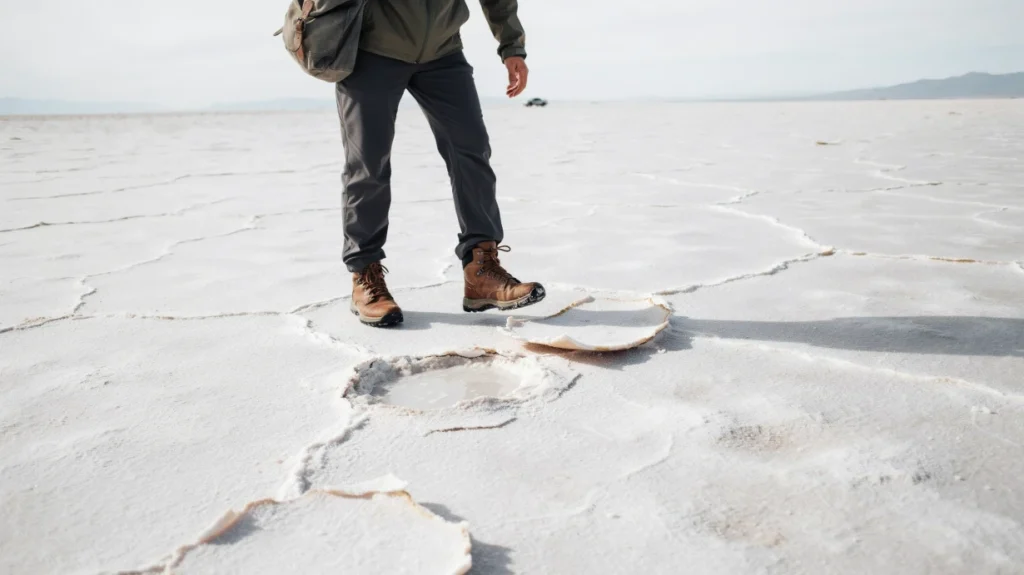 Bonneville Salt Flats Photography Etiquette: How to Protect the Surface and Share the View
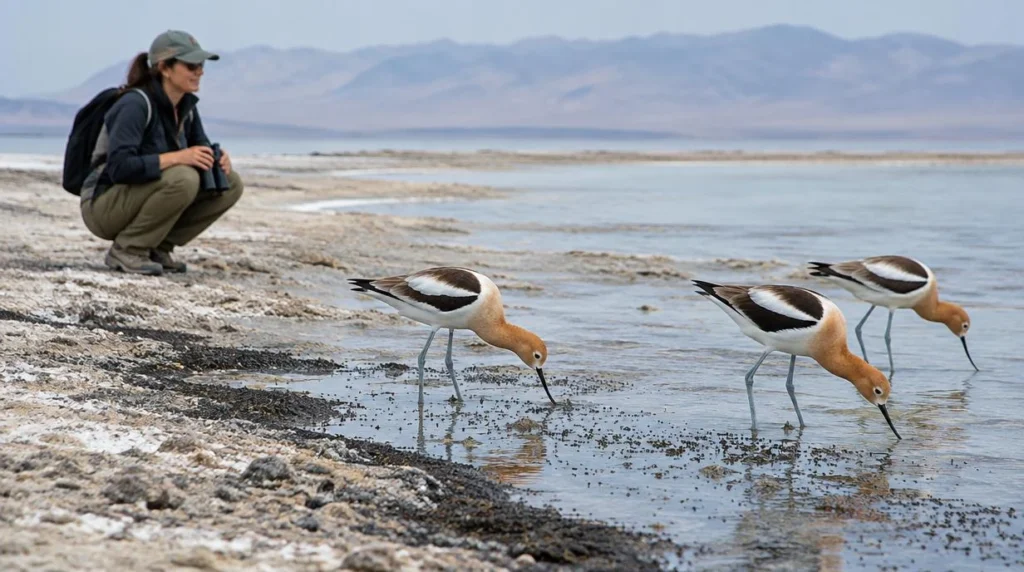 How to Plan an Antelope Island Birdwatching Visit
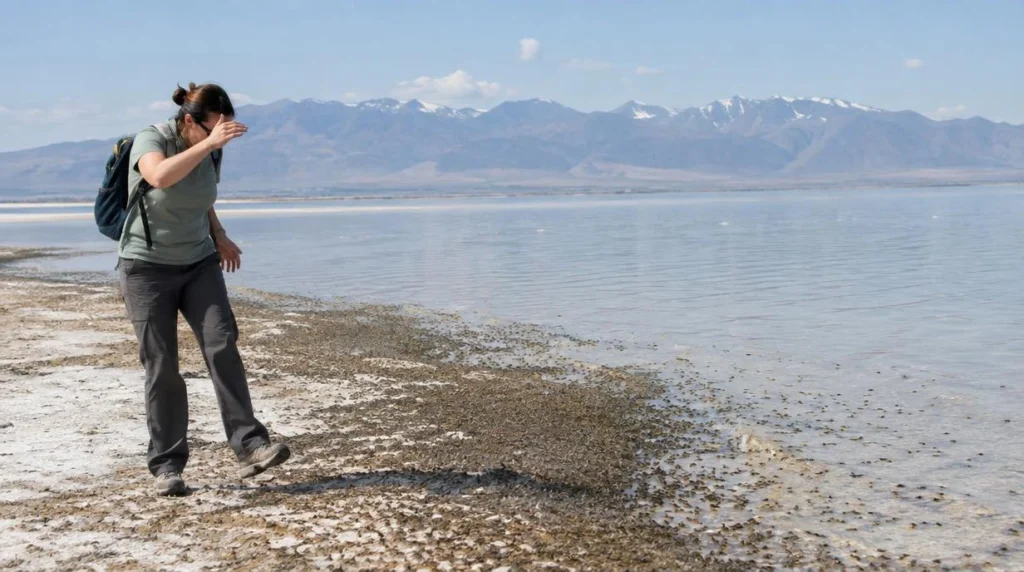 Why Are There So Many Brine Flies on Antelope Island?

Guide was Great! The salt flats had alot of water due to recent rain which limited...
Read more →I booked the Bonneville Salt Flats tour w Matei bc the owners are Ukrainian. I’m so...
Read more →This experience is a must-do! Dima explains the history of the area as well as the...
Read more →I had never been on a guided tour before, but Dima made it the best experience...
Read more →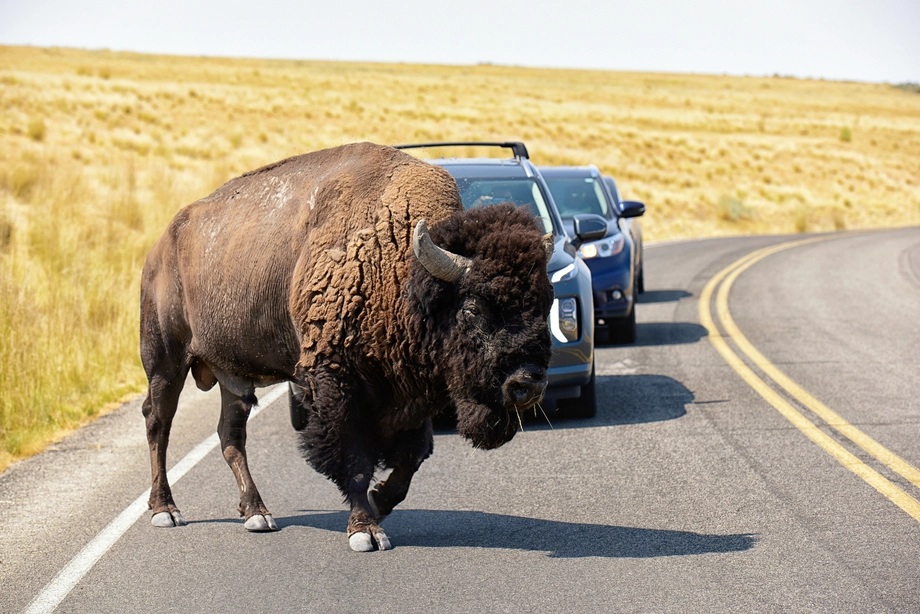 Antelope Island – Wild Heart of the Great Salt Lake Adventure
 Antelope Island Sunset Wildlife Expedition – Great Salt Lake Odyssey
 Bonneville Salt Flats – Journey to the Edge of the World
 Bonneville Salt Flats – Sunset Adventure of the White Desert