
Mesa Arch Sunrise Shuttles From Moab With Tripod-Friendly Seating
May 4, 2026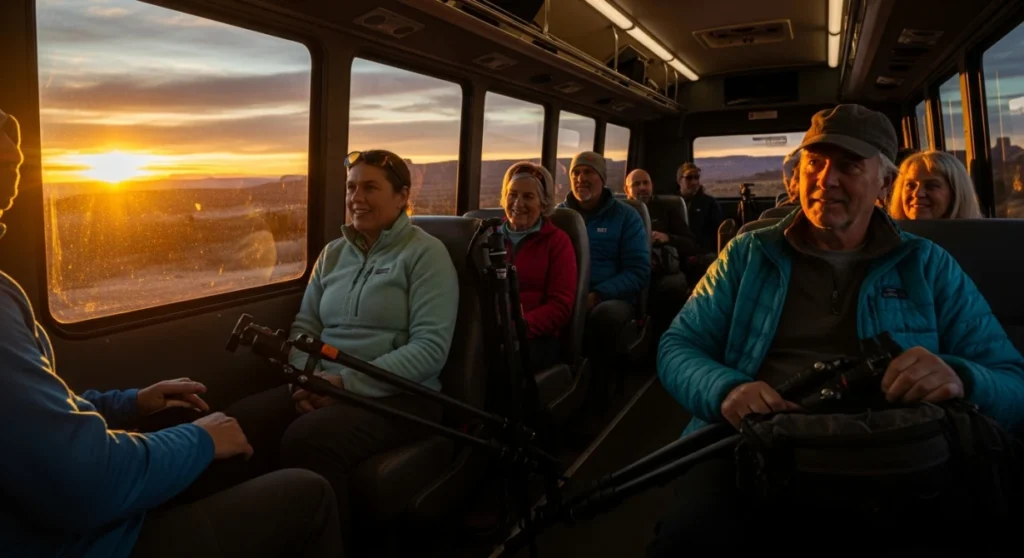
Choose a sunrise shuttle that clearly shows round-trip timing, walking level, and how tripods are stored and accessed. For Mesa Arch, fast unload and organized seating matter more than generic transport.
Most sunrise transport problems at Mesa Arch start before anyone sees the sky change. People book a ride, then realize too late that a cramped seat, loose gear at their feet, or a rushed unload can ruin the only blue-hour window they came for.
That matters even more now because many Utah park visitors want iconic viewpoints without handling pre-dawn driving, parking stress, and trailhead timing on their own. If your priority is getting to the overlook ready to shoot, not just arriving there, the service details around seating, loading, timing, and guide responsibility matter more than glossy tour wording.
When a sunrise shuttle is the right fit for Mesa Arch
A pre-dawn shuttle makes sense when you want round-trip transport and a planned approach to a major viewpoint instead of guessing parking, route timing, and arrival flow in the dark. It is especially useful for travelers building a short Utah trip and trying to fit a signature sunrise into a bigger park itinerary.
This type of service is a strong fit for photographers carrying a tripod, visitors who do not want to drive unfamiliar roads before dawn, and couples or small groups who would rather focus on setup than logistics. It also works well if you are comparing Canyonlands tours from Moab and want one outing centered on access, timing, and photo readiness rather than a long general sightseeing day.
- Best fit: You want transport handled for you and need enough order in the vehicle to keep camera gear accessible.
- Good fit: You have limited time in Utah and want a realistic sunrise plan instead of improvising on-site.
- Less ideal: You prefer fully independent pacing, your own vehicle, and no shared departure or return structure.
- Useful signal: The service clearly lists duration, approximate schedule, walking level, and what is included.
Not every park outing is built for the same job. A general national-park day tour may be great for viewpoints, short walks, and commentary, but a sunrise-focused run needs better gear handling, tighter departure discipline, and enough seat space to avoid your tripod becoming everyone else’s problem.
How the service should work, stage by stage
1. Booking and fit check
The provider should make the basic trip structure obvious before you pay. At minimum, you want to see a clear meeting point, whether transport is round-trip, approximate outing length, expected walking level, and whether the group is kept small enough for orderly loading and questions.
For a photo-first outing, the client is responsible for declaring real gear needs instead of assuming any shuttle can absorb a full camera setup. The operator is responsible for saying whether tripod-friendly seating means spare floor space, limited passenger count, or a loading plan that avoids stacking equipment in a way that delays exit.
2. Pre-departure communication
A solid operator confirms pickup or meeting instructions and sets expectations on timing before the trip day. That communication should tell you when to arrive, how tightly departure is run, and whether extra setup time at the viewpoint is part of the plan.
Your job here is simple. Be early, pack in one controlled kit, and know what has to stay immediately reachable during the ride.
3. Transit to the trailhead or viewpoint access point
During the drive, a guide or driver should provide the practical information that reduces friction once you arrive. On other Utah park and resort transfers, travelers are briefed en route on conditions, orientation, and what to expect; for a sunrise photo run, the same logic should apply to arrival sequence, walking pace, and return timing.
This is where seating design matters. If the vehicle forces every tripod into the aisle or under multiple bags, you lose time on arrival and create unnecessary stress for everyone sharing the ride.
4. Arrival, unload, and shooting window
The operator controls the unload order and keeps the group moving without chaos. The client controls readiness by having only essential items in hand, not repacking at the curb while the sky is changing.
A photographer-friendly run should preserve the first minutes on site for walking and setup, not for sorting straps, chasing a dropped plate, or negotiating around luggage. That is the real meaning of a practical sunrise transfer, whether the listing uses the exact phrase sunrise Mesa Arch photography shuttle from Moab with tripod-friendly seating or simpler wording.
5. Return and handoff
After the shoot, the service should have a defined return point and timing. On broader Utah day trips, a scheduled return is part of the appeal because it lets travelers build the rest of the day realistically, and the same principle is valuable here.
The client should know whether the outing ends back in town, at a central pickup point, or as part of a larger park day. If that handoff is vague, the service is not fully photo-ready no matter how good the vehicle sounds.
| Stage | Operator responsibility | Client responsibility | What to verify |
|---|---|---|---|
| Booking | Show schedule, walking level, inclusion details | Declare gear needs honestly | Round-trip transport, group size guidance, meeting point |
| Pre-departure | Send instructions and timing expectations | Arrive early and pack efficiently | Exact meet time and late-arrival policy |
| Transit | Provide orientation during drive | Keep essential gear accessible | How gear is stored during the ride |
| Arrival | Manage unload order | Exit ready to walk and shoot | Whether setup time is protected |
| Return | Run a defined return plan | Be back at the agreed time | Return location and approximate end time |
You found a hidden promo code!
Use code WOWBLOG at checkout and get 10% OFF any tour!
Limited time offer. Book now and save!
Browse ToursTimeline and deliverables you should expect before booking
Good transport services remove uncertainty by publishing the practical basics. Across Utah park tours, the clearest listings specify duration, approximate daily schedule, walking level, and what is included in the price. For a sunrise run, those are not nice extras. They are the minimum deliverables that let you judge whether the plan fits a photo morning.
What you should receive before departure is less about marketing language and more about operating clarity. If the listing or confirmation cannot answer these points, you are buying hope instead of a usable plan.
- Trip structure: Round-trip transport and the planned start and finish flow.
- Meeting details: A specific pickup spot or central meeting point.
- Effort level: Walking level or terrain description that tells you whether carrying a tripod is realistic.
- On-trip guidance: Confirmation that a guide or driver provides orientation, timing, or local context during transit.
- Group expectation: Whether the outing is run in a small group, which improves loading speed and question handling.
A service does not need fancy packaging to be trustworthy. It needs to tell you what happens, when it happens, and who is responsible if the group must move quickly at the trailhead.
For Utah day tours, the most useful listings are the ones that make duration, approximate schedule, walking level, and included elements easy to see before booking.
Operational tour research summary
Quality control and acceptance criteria for tripod-friendly seating
The phrase sounds simple, but it should be testable. A seat is tripod-friendly only if it supports fast boarding, safe storage, and clean exit without forcing a photographer to unpack half the vehicle on arrival.
Use acceptance criteria instead of vague promises. That makes it easier to compare one operator with another and prevents the common mistake of treating any shuttle as a photo shuttle.
| Criterion | Acceptable | Warning sign |
|---|---|---|
| Gear access | Tripod and camera kit can be reached without moving multiple other bags | Equipment is buried under shared luggage or placed in the aisle |
| Boarding flow | Passengers load in an organized order with clear storage guidance | No loading plan and everyone improvises |
| Arrival readiness | Most riders can exit with essential gear in one motion | Several minutes lost to repacking at the drop-off |
| Group management | Small-group format or controlled handling allows questions and smooth unloading | Crowded loading with no guide direction |
| Trip clarity | Schedule, walking level, and inclusions are clear in advance | Key details remain vague until the last minute |
For this topic, acceptance is practical, not theoretical. If you arrive calm, get out quickly, and start walking with what you need in hand, the service did its job. If the first light is spent untangling legs, straps, and bags, it did not.
Practical recommendations that make the biggest difference
Most travelers improve this experience with a few small decisions made before pickup. These are the details that separate a smooth sunrise from a rushed one.
- Ask one direct seating question: Instead of asking whether tripods are allowed, ask how they are stored and how quickly you can access yours on arrival.
- Choose one bag, one tripod strategy: Keep everything needed for the first 20 minutes in a single carry setup so you do not reorganize at the stop.
- Favor clearly described outings: If one listing gives duration, walking level, and meeting logistics while another stays vague, pick the transparent one.
- Use small-group services when available: Smaller groups make it easier to ask questions and reduce unload friction.
- Build the return into your day: A scheduled ride back helps if you want to pair sunrise with a later Utah park activity without overcommitting.
If you are comparing the best tours of Utah national parks, keep this in mind. A great all-day park tour and a well-run sunrise shuttle solve different problems, so evaluate each against the job you actually need done.

Two realistic booking scenarios
Scenario 1. The photographer with one morning in Moab
A traveler has only one free morning between larger Utah plans and does not want to drive before dawn. The right choice is a round-trip outing with a central meeting point, a clear schedule, and a small-group format that makes tripod handling manageable.
The realistic outcome is not luxury. It is control. They arrive knowing when they return, can ask questions during transit, and spend the key minutes at the viewpoint setting up instead of sorting gear on the ground.
Scenario 2. The couple adding one iconic overlook to a broader park trip
They are comfortable with light walking but do not want the stress of self-managing a dark start. A guided transport option works because the operator handles the route and timing while they keep their load simple and follow the arrival plan.
The likely result is a cleaner morning with less decision fatigue. That is why this kind of outing often complements, rather than replaces, broader canyonlands trips departing from Moab.
Common mistakes that turn a good shuttle into a frustrating one
- Confusing transport with photo readiness: A vehicle going to a viewpoint is not automatically set up for tripods and fast unloads.
- Bringing a scattered kit: Loose accessories create delays at the worst possible moment.
- Ignoring walking level: Even a short carry feels longer when you are balancing a tripod and camera bag in low light.
- Choosing the vaguest listing: Missing schedule and inclusion details usually mean more uncertainty on trip day.
- Arriving exactly on time: Pre-dawn group departures reward people who are early and organized.
Client preparation checklist before the pickup
Your side of the job is straightforward. Pack to move, not to browse. If a driver-guide handles the route and on-the-way orientation, your best contribution is being ready when the doors open.
- Confirm the meeting point: Screenshot or save the exact location.
- Know the trip format: Verify whether it is a standalone sunrise outing or part of a larger day.
- Pack one controlled kit: Keep essentials immediately reachable.
- Review the walking expectation: Match your carry weight to the listed effort level.
- Plan your return: Leave room in the rest of your day for the scheduled drop-off.
That checklist sounds basic, but it is where smooth mornings are won. For travelers booking with MateiTravel, the strongest value comes when the operator handles logistics and the client does not create new ones in the parking area.
A useful Mesa Arch sunrise shuttle is not defined by the word shuttle alone. It is defined by clear timing, round-trip structure, orderly gear handling, and seating that lets you reach your tripod without a scramble. When the service shows responsibilities, deliverables, and real acceptance criteria in advance, you can judge whether it is built for photography or just basic transport. Choose clarity over vague promises, pack for a fast exit, and your morning is far more likely to start with setup instead of stress. If you want a Utah operator that values organized logistics, MateiTravel is worth considering.
What makes seating truly tripod-friendly on a sunrise shuttle?
Your tripod should stay accessible without blocking the aisle or being buried under shared bags. Fast exit matters more than extra seat padding.
Is a general park tour the same as a Mesa Arch sunrise photo shuttle?
No. A broad sightseeing trip may include viewpoints and photo stops, but a sunrise-focused run needs tighter timing and better gear handling.
Why should I care about walking level for a shuttle booking?
Walking level tells you whether carrying a tripod and camera kit is realistic for the route. It also helps you pack only what you can move comfortably in low light.
What booking details should be visible before I pay?
Look for round-trip transport, meeting point, approximate schedule, walking level, and what is included. Those details show whether the operator is organized.
Do small groups help on sunrise outings?
Yes. Smaller groups usually mean easier loading, more room for questions, and less delay when everyone unloads at once.
Should I bring multiple bags for a short sunrise outing?
Usually no. A single controlled kit is easier to board with, easier to unload, and less likely to cost you the first minutes of usable light.
Can a sunrise shuttle fit into a larger Utah park trip?
Yes, if the return plan is clearly scheduled. Defined end timing makes it easier to pair sunrise with later sightseeing or another tour segment.

 Bonneville Salt Flats – Sunset Adventure of the White Desert
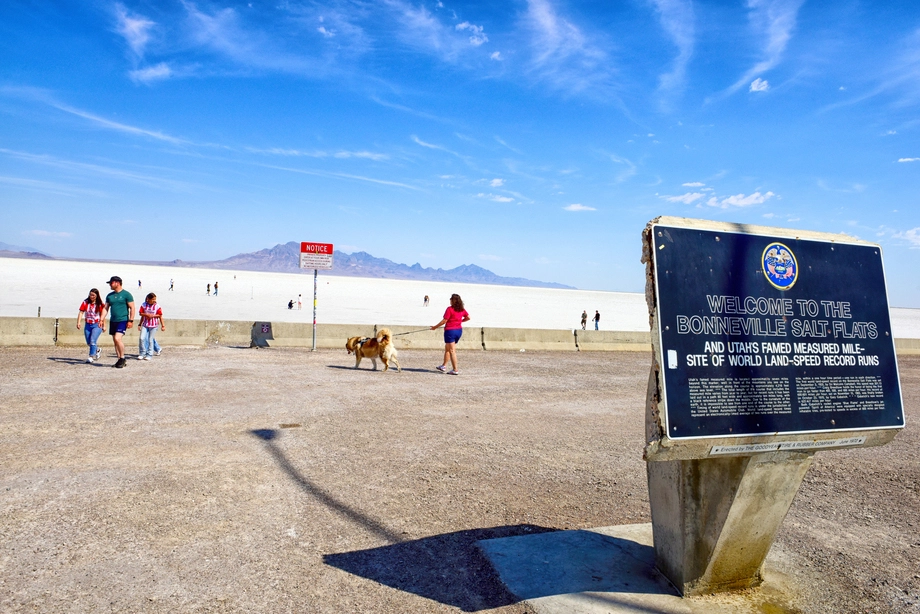 Bonneville Salt Flats – Journey to the Edge of the World
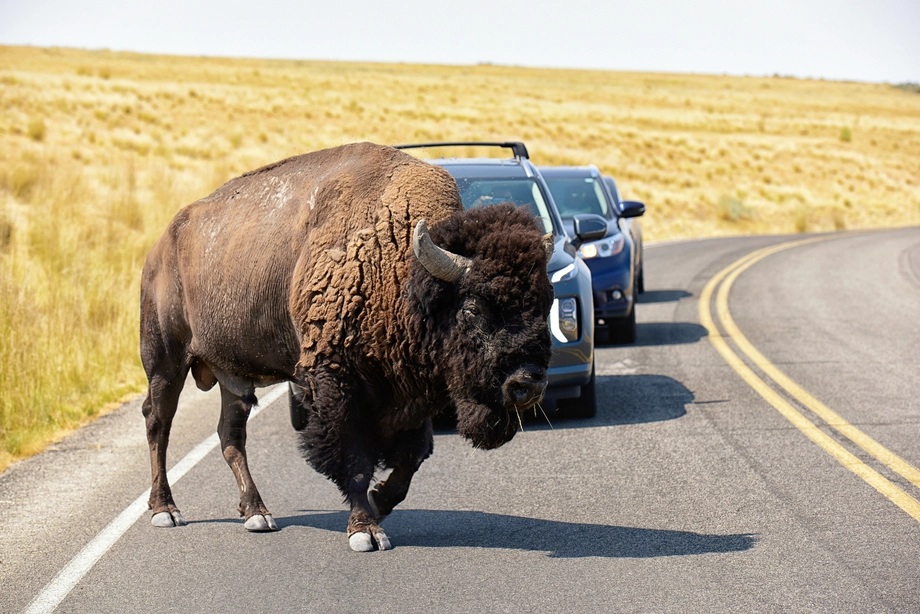 Antelope Island – Wild Heart of the Great Salt Lake Adventure
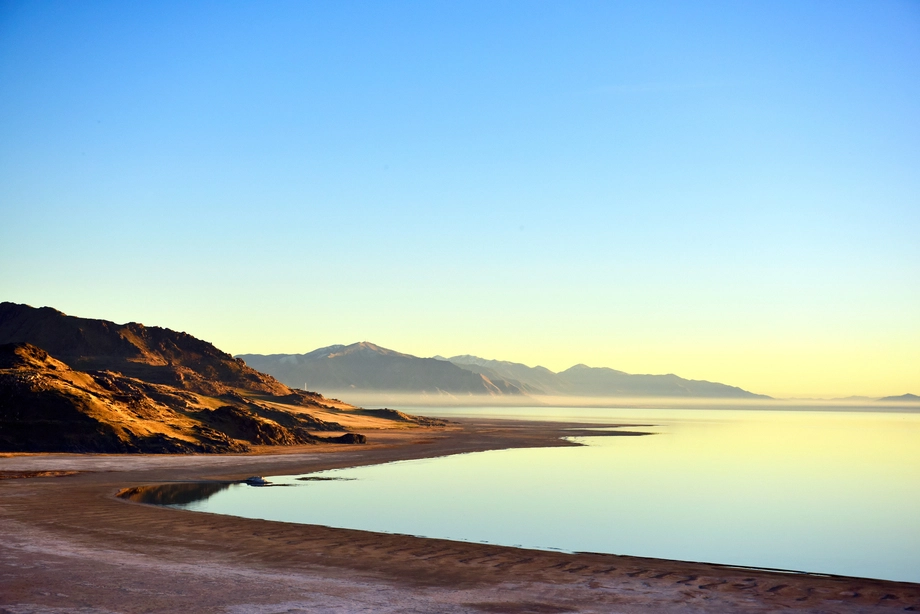 Antelope Island Sunset Wildlife Expedition – Great Salt Lake Odyssey
 Salt Lake City – The City of Zion. Historical Interactive Walking Tour