
Is a Guided Rim-to-Rim Ride in Canyonlands Right for Strong Riders?
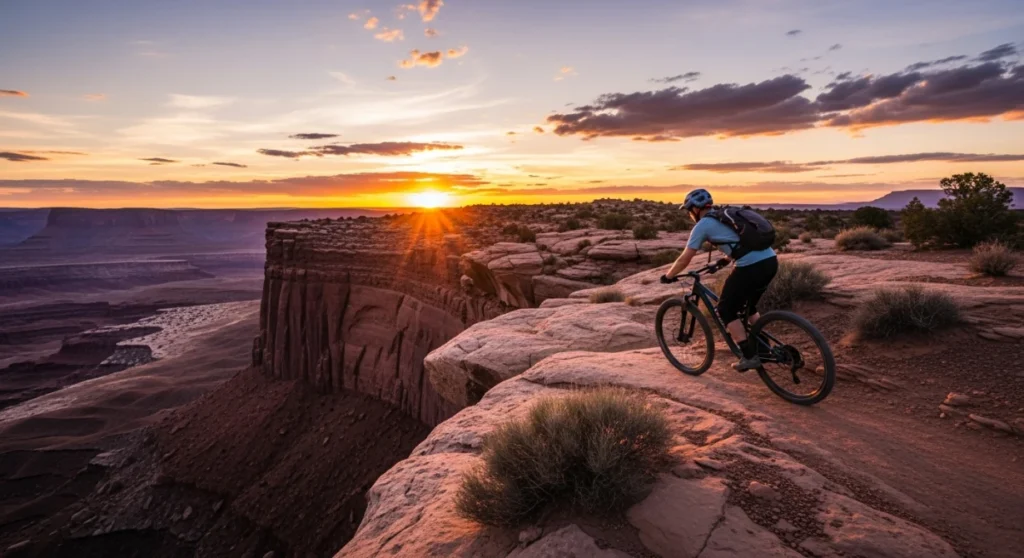
A guided White Rim trip is worth it for strong riders who want the challenge without handling permits, water, support, and timing themselves. If you want full independence and already have the backcountry systems, self-guided can still be the better choice.
Strong riders usually ask a blunt question here: do I really need a guide for White Rim, or am I just paying someone to ride a route I could handle myself? That is the right question, because the real issue is rarely pedaling strength alone. It is whether you want to spend your Utah vacation solving permits, water, shuttle, camp, and contingency problems in one of the park system’s more remote bike-accessible environments.
In practice, this is a buyer’s guide for anyone considering a mountain bike guided rim-to-rim ride in Canyonlands for experienced riders and trying to decide if it belongs in their trip at all. We plan Utah trips around national parks from Salt Lake City, so we see the bigger planning problem clearly: White Rim can be the trip highlight, but it also shapes every day before and after it.
What does a Canyonlands rim-to-rim ride actually involve?
For most riders, “rim-to-rim” in Canyonlands means riding the White Rim Road loop, not a short scenic crossing. It is a remote backcountry route of roughly 100 miles that most mountain bike groups complete over three to four days.
This is not a flow-trail vacation ride. The route includes long rocky stretches, deep sand, steep exposed climbs and descents, and very little shade. Even a fit rider can feel slow there because the terrain and heat punish wasted effort.
The National Park Service describes White Rim Road as a roughly 100-mile loop with steep exposed sections, rocky terrain, deep sand, and little shade, and notes that all trips on the route require permits.
That matters because daily mileage does not tell the whole story. The long hours come from terrain, desert conditions, stops to manage water and food, and the fact that mistakes are harder to fix when you are far from town.
Who is this choice for, and who should skip it?
A guided White Rim trip is right for strong riders who want the challenge of the route without spending months on the backcountry setup. It is not the best choice for riders whose confidence comes mainly from short, hard efforts at home or for travelers who want a relaxed park visit.
The strongest candidates usually have three things at once: durable endurance, comfort on rough exposed surfaces, and the temperament for remote travel. A rider who crushes local climbs but has little desert or bikepacking experience may still find this trip more stressful than expected.
- Good fit: You want White Rim to be the centerpiece of a Utah trip, you can handle long consecutive ride days, and you value having logistics managed.
- Also a good fit: You could self-organize the route, but your vacation window is short and you would rather spend energy riding than coordinating permits, water, and camp details.
- Probably not the best fit: You dislike group pacing, want total route freedom, and already have the backcountry systems, support vehicle plan, and permit strategy in place.
- Time to choose another style of visit: You ride often but have limited heat tolerance, little exposure experience, or no interest in committing several hard days to one remote loop.
If your group has mixed abilities, this becomes even more important. One rider’s dream trip can turn into another person’s survival march, which is why some travelers are happier making Canyonlands one stop within broader Utah National Parks Tours rather than forcing the entire vacation around a demanding ride.
You found a hidden promo code!
Use code WOWBLOG at checkout and get 10% OFF any tour!
Limited time offer. Book now and save!
Browse ToursAre you actually a strong rider for White Rim?
For White Rim, “strong” means more than speed or power. It means you can repeat long efforts on consecutive days, stay functional in heat, ride rough surfaces without panic, and solve problems calmly when the terrain is remote.
The park’s own guidance supports that standard. Riders are expected to have the fitness and experience to handle safety issues that can come up during the trip, which is a higher bar than being the fastest person on a weekend group ride.
Use this checklist honestly:
- Back-to-back endurance: You are comfortable doing long rides on consecutive days, not just one big day followed by full recovery.
- Desert tolerance: You have handled hot, dry conditions before and know how your body responds when hydration and pace need active management.
- Bike handling: You stay composed on loose rock, sand, and technical descents with exposure rather than freezing when consequences feel real.
- Remote mindset: A flat tire, navigation delay, or mechanical problem does not instantly spike your stress level.
- Fueling discipline: You eat and drink on schedule even when the ride gets rough or your appetite drops.
- Basic self-sufficiency: You can manage routine field repairs and your own ride kit without relying on someone else for every small issue.
If two or more of those points feel shaky, strength at home may not translate cleanly here. That does not mean you cannot do Canyonlands. It means the White Rim loop may be a project, not just a ride.
What are the non-negotiables on White Rim?
The non-negotiables are permits, water, gear movement, and a realistic safety plan. Every trip on White Rim Road requires a permit, and overnight spots in peak periods can be competitive enough that late planning shuts down otherwise capable riders.
For a self-organized trip, the work starts long before your first pedal stroke. You need the right permit type, a campsite plan for overnight travel if you are not doing it in a day, and a clear method for carrying or transporting enough water, food, repair gear, and overnight equipment.
Support matters because the route is remote and shaded relief is scarce. A licensed guided trip typically solves the heavy logistics through support systems and local route knowledge, while a self-guided plan requires you to build those layers yourself.
The National Park Service also notes that guided trips in Canyonlands are limited to authorized concessioners. That does not mean a guide is mandatory for every strong rider, but it does underline that this is not casual front-country riding.
- Permit timing: If you want overnight dates in popular seasons, waiting too long can remove the option before fitness even becomes relevant.
- Water strategy: In a dry, exposed landscape, poor hydration planning is not a small inconvenience. It can define the whole ride.
- Vehicle and transport: Even skilled riders underestimate the workload of arranging support access, gear placement, and post-ride retrieval.
- Contingency planning: A mechanical issue, a rider having a bad day, or slower-than-expected progress needs a backup plan before the trip starts.
Guided or self-guided: which works better for strong riders?
Both can be good choices for strong riders, but they optimize for different things. Guided trips reduce friction and risk concentration, while self-guided trips maximize independence and control.
The honest answer is that many experienced riders are capable of doing White Rim without a guide. The tougher question is whether they want to spend scarce trip time on the route itself or on all the systems around it.
| Decision factor | Guided trip | Self-guided trip |
|---|---|---|
| Pace control | Shared group rhythm and guide-led schedule | Your own timing, stops, and daily flow |
| Permits and camps | Usually handled as part of the trip structure | You secure and coordinate everything yourself |
| Water and overnight gear | Often simplified through support logistics | You carry it or create your own transport plan |
| Navigation and local route judgment | Local knowledge reduces avoidable errors | You need confidence in route planning and decisions |
| Mechanical and safety backup | Better support if something goes wrong | Your team is fully responsible |
| Group dynamics | Less solo freedom, but shared structure | More autonomy, but more responsibility |
| Cost profile | Higher cash cost, lower personal logistics burden | Potentially cheaper on paper, but more planning workload |
| Best use case | Short vacation window, fly-in trip, or low appetite for admin | Experienced backcountry rider who wants full independence |
Why guided often wins even for advanced riders
Strong riders do not book guided trips because they need hand-holding. They book them because they want to remove the parts of the trip that are boring, failure-prone, or hard to execute from out of state.
- Permits and campsite management: One of the most tedious parts is often the one that decides whether the ride happens at all.
- Support vehicle value: Water, food, and overnight gear transport can preserve energy for the riding that actually matters.
- Local judgment: Route knowledge helps with pacing, safety calls, and day-to-day decision quality in harsh conditions.
- Vacation efficiency: If you are flying into Utah, logistics can consume a surprising amount of limited time.
- Reduced consequence of small mistakes: Minor errors are easier to absorb when there is a support structure around the trip.
Why self-guided still makes sense for some strong riders
Self-guided is the right call if independence is part of the point for you. Riders who enjoy route design, backcountry systems, and full control often find the organizational load worthwhile.
This path usually suits people who already know how they will handle permits, vehicles, water, camps, navigation, and mechanical contingencies. If those answers are not already forming clearly, you may be paying for freedom with a lot of avoidable stress.
What buying mistakes do strong riders make with White Rim trips?
The biggest mistake is assuming this decision is mainly about leg strength. White Rim choices are usually won or lost on logistics, heat management, and honest appetite for backcountry complexity.
We see a few patterns repeatedly when riders build a Utah trip around a big objective:
- Confusing fitness with readiness: High output on home trails does not automatically mean comfort on deep sand, exposure, and multi-day desert fatigue.
- Underestimating permit friction: Riders plan flights and lodging first, then discover the route dates do not line up.
- Treating support as optional fluff: Water transport and backup planning look expensive until something goes wrong far from easy help.
- Ignoring the rest of the vacation: A hard ride can leave you needing recovery time, which affects how many parks or hikes you should schedule after it.
- Choosing the wrong group format: If you hate waiting or being paced, ask direct questions about group size, rider profile, and how the guide handles stronger participants.
This is also where the common objection shows up: “I’m fit and ride hard at home, why would I pay for a guide?” The fair answer is that you may not need one, but fitness does not solve permit competition, vehicle support, water hauling, or the value of getting more usable riding time inside a short Utah trip.

How should you map the right option to your actual trip?
The right choice depends on what role White Rim plays in your vacation. If it is the main event and you want the least friction, guided is often the cleanest fit; if independence is the main event, self-guided is usually the better match.
Use these scenarios instead of generic labels:
- Choose guided: You are flying in, have a tight schedule, want a serious ride but not a planning project, or prefer support for water, camps, and route decisions.
- Choose self-guided: You have strong backcountry competence, value autonomy more than convenience, and are ready to build the permit and transport plan yourself.
- Choose an alternative Canyonlands visit: You want the landscape more than the suffering, are unsure about exposure or desert heat, or are traveling with non-riders who want a shared trip.
If your partner or family does not ride at this level, the ride does not have to dictate their whole vacation. A strong rider can make White Rim the athletic centerpiece while the rest of the group experiences overlooks, short hikes, and other park stops through a broader Utah route rather than waiting around in Moab. That is often a better answer than trying to force everyone into the same intensity level.
That is also why travelers comparing White Rim with canyonlands tours from moab should widen the lens. For many groups, the better move is to anchor the trip from Salt Lake City, place the ride where it fits best, and use the surrounding days for other parks, viewpoints, or easier outings that suit everyone.
When should you skip White Rim and choose another Canyonlands or Utah plan?
You should skip White Rim if the route sounds more stressful than exciting, or if it crowds out the kind of vacation you actually want. Passing on this ride can be the smartest decision for a strong rider who wants a broader park experience, not a single hard objective.
That choice makes sense if you have limited heat experience, if your group wants shared sightseeing, or if your trip window is too short to absorb a multi-day remote ride plus recovery. In those cases, Canyonlands still works beautifully as part of a park-focused road trip with scenic stops and shorter walks.
For travelers who want scenery without the backcountry commitment, our Utah Day Tours are useful before or after a harder objective, especially when you want organized transport and a realistic schedule. For mixed groups trying to decide between a big athletic challenge and the best tours of Utah national parks for broad sightseeing value, a multi-park format often gives everyone more of what they came for.
What questions should you answer before you commit?
If you can answer these questions clearly, your decision is probably mature enough to book. If several answers are vague, you are still in the wish-list phase and should pause before locking in flights or park days.
- Is my confidence based on multi-day durability or just single-day power?
- Am I comfortable riding rough, exposed terrain when progress is slower than expected?
- Do I want independence badly enough to manage permits, camps, water, and transport myself?
- How much of my vacation am I willing to dedicate to one hard backcountry ride plus recovery?
- Will my travel companions enjoy the trip more if the ride is just one piece of a larger Utah itinerary?
- If I go guided, have I asked about rider profile, pace expectations, group size, and how support is handled?
Once those answers are honest, the next planning step becomes obvious. Either you pursue a licensed guided departure, build a self-supported plan, or turn Canyonlands into one stop within a wider national parks trip that better matches your group and schedule.
White Rim is a legitimate challenge, and many strong riders can complete it without a guide. The deciding factor is not pride. It is whether you want to spend your Utah trip riding hard, managing complexity, or sharing the state with people who have different goals. If you want help fitting that choice into a realistic park itinerary from Salt Lake City, start with MateiTravel’s Utah National Parks Tours and use that as the base for planning the days around your Canyonlands ride.
Do all White Rim trips require a permit?
Yes. Day rides need a day-use permit, and overnight trips need an overnight permit tied to campsites.
How long does most White Rim mountain biking take?
Most trips are spread across three to four days, which is the common format for handling the distance and terrain realistically.
If I am very fit, can I still benefit from a guided trip?
Yes. The main benefit is often logistics and support, not easier riding.
Is a guided trip automatically too slow for an advanced rider?
No. Many guided departures are built for experienced riders, but you should ask how pace, regrouping, and rider matching are handled.
What is the hardest part for most out-of-state riders to organize?
Permits, water planning, support transport, and campsite coordination usually create more friction than the riding itself.
What if my partner or family does not ride at this level?
You do not need to build the whole vacation around the bike route. A broader Utah itinerary can let one person do the ride while others enjoy viewpoints, short hikes, and other parks.
 Should You Cancel a Utah Outdoor Day Because of Wildfire Smoke?
 When Should a Utah Park Day Trip From Salt Lake City Become an Overnight?
 Your First Evening in Salt Lake City: A Low-Pressure Orientation Plan
 Bonneville Salt Flats Photography Etiquette: How to Protect the Surface and Share the View
 How to Plan an Antelope Island Birdwatching Visit
 Why Are There So Many Brine Flies on Antelope Island?

Guide was Great! The salt flats had alot of water due to recent rain which limited...
Read more →I booked the Bonneville Salt Flats tour w Matei bc the owners are Ukrainian. I’m so...
Read more →This experience is a must-do! Dima explains the history of the area as well as the...
Read more →I had never been on a guided tour before, but Dima made it the best experience...
Read more → Antelope Island – Wild Heart of the Great Salt Lake Adventure
 Antelope Island Sunset Wildlife Expedition – Great Salt Lake Odyssey
 Bonneville Salt Flats – Journey to the Edge of the World
 Bonneville Salt Flats – Sunset Adventure of the White Desert