
How Facilitator-Led Jeep Challenges Work for Corporate Teams
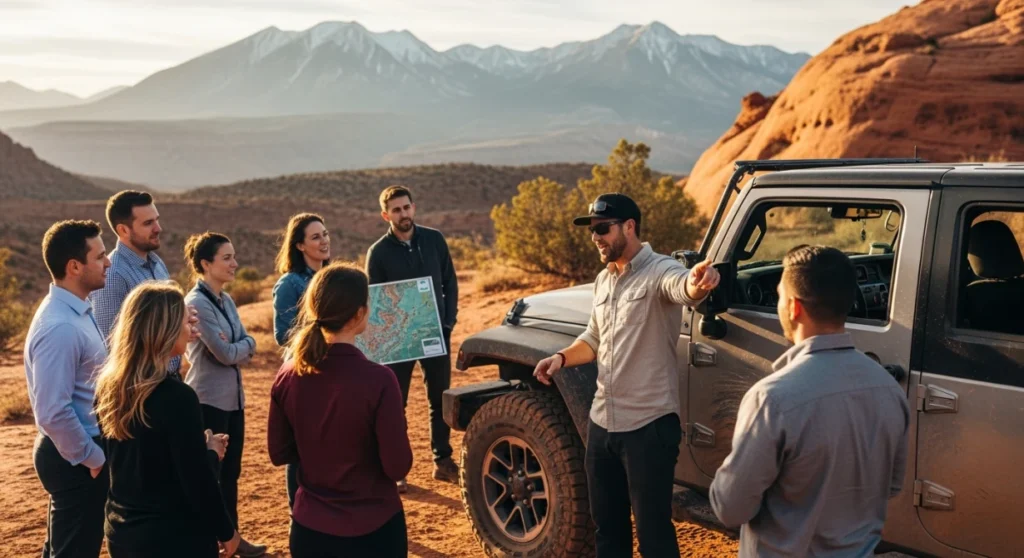
A facilitator-led Jeep challenge works when the day is built around clear team goals, defined roles, managed logistics, and a structured debrief. The scenery sets the stage, but the facilitator turns it into usable insight.
Most corporate outings fail for a simple reason. The schedule looks adventurous, but nobody has translated the day into clear decisions, shared pressure, and useful team behavior. A vehicle-based challenge in Utah can fix that, but only when a facilitator is running the experience instead of letting it turn into a scenic convoy with no real learning.
That matters more now because many groups have less in-person time together and higher expectations for it. If a company is taking people into Canyon Country, the day needs a purpose, visible roles, and a clean handoff from logistics to reflection.
When is a facilitator-led Jeep challenge the right fit for a corporate group?
A facilitator-led Jeep challenge is the right fit when a company wants active collaboration under real constraints, not just transportation to viewpoints. It works best for groups that need communication, decision-making, and role clarity tested in a setting that feels fresh but still structured.
The format suits teams that are tired of conference-room exercises and want observable behavior in motion. Leaders can watch how people prioritize, share information, react to time pressure, and support others when the route, timing, or task sequence becomes less predictable.
It is also a strong choice when the company wants an experience with handled logistics. That is the same reason many travelers choose guided Utah day experiences instead of managing every stop on their own. A professionally organized outing reduces friction around transport, timing, and on-site coordination, which is why curated Utah day tours appeal to people with limited time.
| Good fit signal | Why it matters | Less suitable signal |
|---|---|---|
| Group needs better communication across functions | Route tasks and timed decisions reveal how information moves | Company only wants passive sightseeing |
| Leaders want shared challenge without heavy physical demands | Participants can contribute through planning, observation, and coordination | Group expects a fully unstructured day |
| Time is limited and logistics must be controlled | Facilitated flow keeps the day on schedule | Success depends on deep technical off-road instruction |
| Company values debriefs and behavior feedback | Learning is captured, not left to chance | There is no decision-maker available to approve goals or roles |
How does the engagement process usually work, and who owns each stage?
The process works when ownership is explicit from the first call through the final debrief. The provider owns design, logistics, facilitation, and day-of flow, while the client owns objectives, participant information, internal communication, and timely approvals.
The first stage is discovery. The client explains why the event is happening, who will attend, what interpersonal issues matter most, and what practical limits exist around time, mobility, and schedule. The organizer translates that into a challenge design with checkpoints, role assignments, decision moments, and review points.
Next comes program design. The facilitator defines how teams will be split, what each vehicle crew must accomplish, which tasks are collaborative versus competitive, and where short reflection stops belong so the day does not become all motion and no learning.
Then comes operational planning. Pickup points, expected duration, walking level, and group size need to be matched to the actual group rather than guessed. This mirrors how strong Utah tour descriptions clearly state schedule, walking intensity, inclusions, and approximate timing so guests know what they are committing to.
| Stage | Provider responsibility | Client responsibility | Main output |
|---|---|---|---|
| Discovery | Lead briefing, identify behavioral goals | Share goals, attendee profile, constraints | Event brief |
| Design | Build challenge flow and facilitation points | Approve format and success criteria | Program outline |
| Operations | Coordinate timing, transport logic, meeting details | Confirm headcount and internal messaging | Run sheet |
| Delivery | Facilitate tasks, pace, and debriefs | Ensure attendance and leadership participation | Completed event |
| Wrap-up | Summarize observations and outcomes | Review takeaways and next actions | Debrief notes |
- Provider owns: Challenge architecture, timing control, group movement, and reflection prompts.
- Client owns: Clear business objective, participant readiness, and final sign-off on scope.
- Shared ownership: Behavioral success criteria, weather contingency choices, and event tone.
“We do not need another nice outing. We need a day where managers see how people communicate when the plan changes, and we need a debrief we can use on Monday.”
Typical corporate brief for a facilitated field event
You found a hidden promo code!
Use code WOWBLOG at checkout and get 10% OFF any tour!
Limited time offer. Book now and save!
Browse ToursWhat happens during the challenge itself?
During the event, the facilitator turns movement through the landscape into a sequence of decisions, roles, and short feedback loops. The day typically alternates between transit, problem-solving prompts, checkpoint tasks, and guided debriefs that connect behavior to workplace habits.
A strong host does more than keep time. They clarify the mission, assign or approve role structure inside each vehicle, watch participation patterns, and intervene when one person dominates or the group starts solving everything through hierarchy instead of collaboration.
Teams are often given partial information on purpose. One crew may hold route clues, another may track timing, and another may manage documentation or final presentation duties. That design creates interdependence, which is where the value usually appears.
- Kickoff: The facilitator sets rules, goals, safety boundaries, and success measures.
- Role assignment: Each crew names responsibilities such as navigator, timekeeper, communicator, and recorder.
- Checkpoint sequence: Teams complete timed tasks or solve location-based prompts.
- Mid-course reflection: The group pauses to discuss what is helping and what is slowing progress.
- Final debrief: Observed behavior is translated into practical workplace follow-up.
If a company wants the feel of a customizable corporate team-building Jeep challenge in Canyon Country with facilitator support, this stage is where customization matters most. The location creates energy, but the learning comes from structured decisions and disciplined debriefing.
What timeline and deliverables should a client expect?
Clients should expect a short planning cycle, a clearly scheduled event day, and tangible outputs before and after the outing. Good deliverables are simple but concrete: a brief, a run sheet, participant instructions, and post-event notes tied to the agreed objective.
Because supplied Utah tour examples vary from around three hours to about seven hours, a company should match the event length to the goal. A shorter block works for energizing and observation. A longer day works better when the organizer needs multiple checkpoints, more than one reflection stop, and time for a meaningful wrap-up.
| Phase | What the client receives | What to verify |
|---|---|---|
| Before the day | Objective summary, draft schedule, meeting details, participant notes | Start time, walking level, headcount, pickup plan |
| During the day | Live facilitation, paced route, challenge materials, debrief prompts | Tasks match group ability and available time |
| After the day | Observation summary, strengths, friction points, follow-up suggestions | Takeaways connect to the original business goal |
For groups comparing formats, this is similar to how the best tours of Utah national parks are evaluated. People look for realistic scheduling, handled transport, known walking expectations, and a guide who adds context rather than just driving from one stop to the next.
How do you judge quality and accept the event as successful?
You judge quality by whether the event delivered the agreed learning outcome, stayed operationally smooth, and produced observable behavior that leaders can actually use. Acceptance should be based on predefined criteria, not on whether the scenery was impressive or the group looked busy.
The cleanest way to evaluate success is to agree on three to five signals before the day begins. Those signals might include balanced participation across crews, completion of checkpoint tasks within the planned window, visible adaptation after feedback, and a debrief that surfaces specific workplace patterns.
- Operational quality: Meeting point is clear, timing is realistic, transitions are controlled, and the group is not left guessing.
- Facilitation quality: Instructions are understandable, roles are meaningful, and interventions help rather than interrupt.
- Learning quality: The final discussion identifies concrete examples of communication, leadership, and decision habits.
- Client acceptance: Deliverables match the brief and leaders can name at least a few usable follow-up actions.
Ask for acceptance criteria in writing before approval. That single step prevents the most common mismatch, which is a client expecting leadership insight while the operator delivers a pleasant but generic excursion.

How should a corporate client prepare before the day?
A client should prepare by clarifying purpose, confirming the right participants, and removing avoidable confusion before arrival. The smoother the internal prep, the more time the facilitator can spend on the challenge instead of basic coordination.
Preparation starts with selecting the right group mix. Cross-functional participation often creates better results than keeping every vehicle full of people who already work in the same lane, because information-sharing becomes necessary rather than automatic.
- Name the business goal: Choose one priority such as trust, communication under pressure, manager observation, or cross-team problem solving.
- Confirm constraints: Share headcount, time window, meeting location, and expected walking comfort early.
- Choose leadership role: Decide whether managers participate fully, observe, or join only the debrief.
- Brief participants: Tell them what to bring, when to arrive, and how success will be judged.
- Prepare internal follow-up: Schedule a short post-event meeting so the day influences actual work.
Providers that already run guided experiences in Utah tend to understand why this matters. Small-group formats work well because people can ask questions, stay engaged, and move without the drag that comes with oversized groups, much like small group tours of Utah national parks aim to keep access and interaction manageable.
What practical choices improve results, and what mistakes usually weaken the day?
The best results come from tight design choices, not from making the route harder or the stakes louder. Most weak outcomes trace back to vague goals, overloaded schedules, and a client who waits too long to share basic participant information.
Five practical recommendations make a noticeable difference:
- Limit objectives: Pick one main team behavior to observe and one secondary goal. Three or four goals usually blur the debrief.
- Build interdependence: Give each crew information another crew needs. If every vehicle can win alone, collaboration becomes optional.
- Protect debrief time: Do not spend the whole schedule on motion. Reflection is where the event turns into management insight.
- Match route length to group energy: If the day is too long, people conserve energy instead of engaging openly.
- Confirm logistics in writing: Meeting details, expected duration, and participant responsibilities should be distributed once and clearly.
Common client-side mistakes are predictable. They include inviting people without explaining why they are attending, changing headcount late, treating the facilitator like a driver instead of a learning lead, and skipping post-event follow-up.
Two realistic engagement examples
A sales and operations group uses the day to improve handoffs. Early checkpoints show each crew protecting its own information, which slows the whole group. After the mid-course debrief, they start sharing route clues and timing updates more intentionally, and the final review gives managers specific examples of where bottlenecks mirror their weekly work.
A leadership cohort wants observation rather than competition. The facilitator reduces rivalry, assigns rotating spokespersons, and uses short reflection stops to surface who listens, who redirects, and who makes assumptions. The outcome is not a winner, but a sharper picture of decision style under light pressure.
In Utah, companies often value operators who already understand guided movement, realistic schedules, and how to keep groups coordinated on the ground. That practical discipline is one reason some organizers, including MateiTravel, are well positioned for field-based experiences that need both logistics and context.
How do you evaluate a provider before signing?
Evaluate a provider by looking for clarity, not hype. A credible operator can explain the flow, who owns what, what participants will receive, and how success will be measured.
Ask whether the event brief includes schedule logic, walking expectations, meeting details, facilitation responsibilities, and post-event outputs. Those are basic signs of operational maturity, and they reflect the same strengths that make guided local experiences useful in the first place.
- Ask for scope detail: You should see deliverables, not just a promise of adventure.
- Check group handling: Small-group discipline usually produces better participation than loose, oversized movement.
- Review debrief method: If the provider cannot describe how insights are captured, the learning side is underdeveloped.
- Verify practical fit: Duration, schedule, and movement level must match your actual group, not an assumed one.
A well-run challenge is memorable because the structure is invisible to participants but obvious in the outcome. People feel the day moved naturally, while leaders leave with specific observations they can use.
Facilitator-led Jeep challenges work best when they are designed as a service process, not just a scenic outing with a few prompts. The right provider defines ownership, controls logistics, creates useful deliverables, and builds acceptance criteria before the first vehicle moves. For corporate groups, the real value is not the route alone but the visible team behavior it brings out and the debrief that turns it into action. If you are planning a field-based event in Utah, start with the objective and let the format serve it. MateiTravel can help you shape the day around that goal.
What is the main job of the facilitator during a Jeep challenge?
The facilitator manages role clarity, pacing, and reflection so the event produces useful team observations instead of just motion and scenery.
How long should a corporate vehicle challenge last?
A shorter session works for energy and quick observation, while a longer day is better when you need several checkpoints and a substantial final debrief.
What should the client provide before planning starts?
The client should share the business goal, participant profile, headcount, timing limits, and any walking or scheduling constraints.
How can a company tell whether the event succeeded?
Success is easier to judge when the group agrees in advance on a few behavioral and operational criteria such as balanced participation and usable debrief insights.
Why are smaller groups often better for this format?
Smaller crews make it easier for people to contribute, ask questions, and stay accountable during tasks and discussion stops.
What usually causes a weak outcome?
The most common problems are vague goals, rushed schedules, late participant changes, and too little time reserved for the debrief.
Should managers participate or observe?
Either can work, but the role should be decided before the day so the facilitator can design tasks and feedback points around that choice.
 Your First Evening in Salt Lake City: A Low-Pressure Orientation Plan
 Bonneville Salt Flats Photography Etiquette: How to Protect the Surface and Share the View
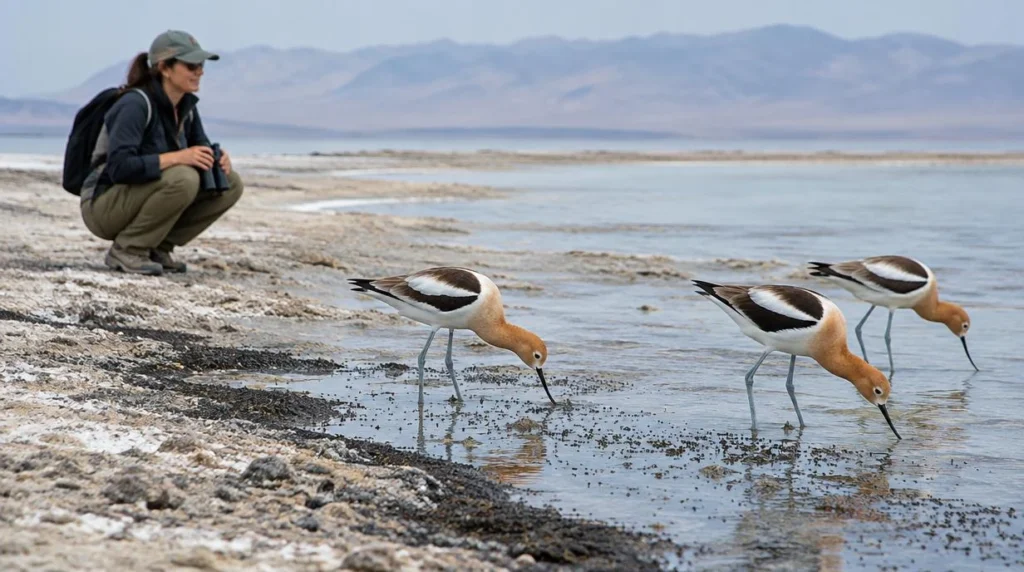 How to Plan an Antelope Island Birdwatching Visit
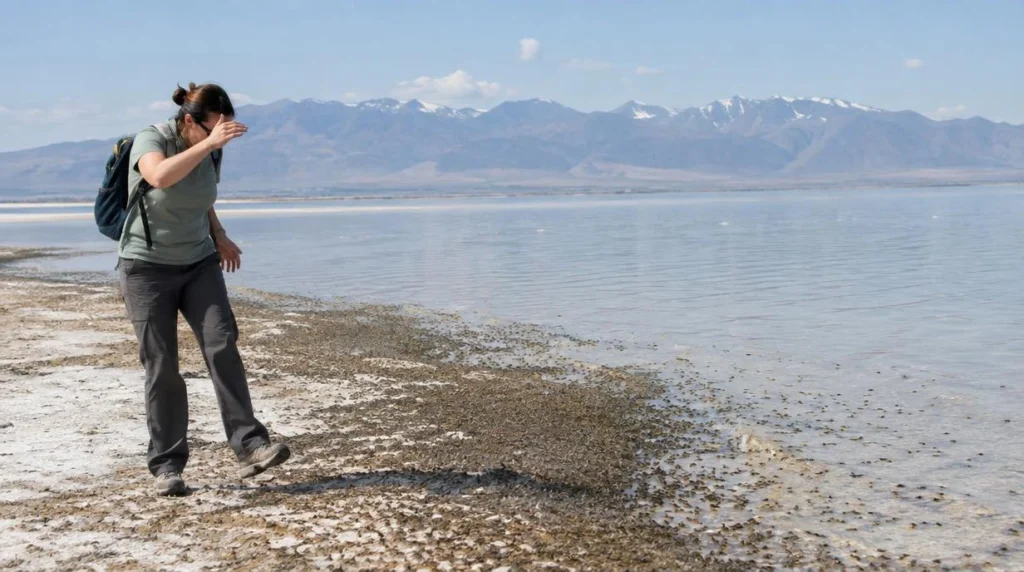 Why Are There So Many Brine Flies on Antelope Island?
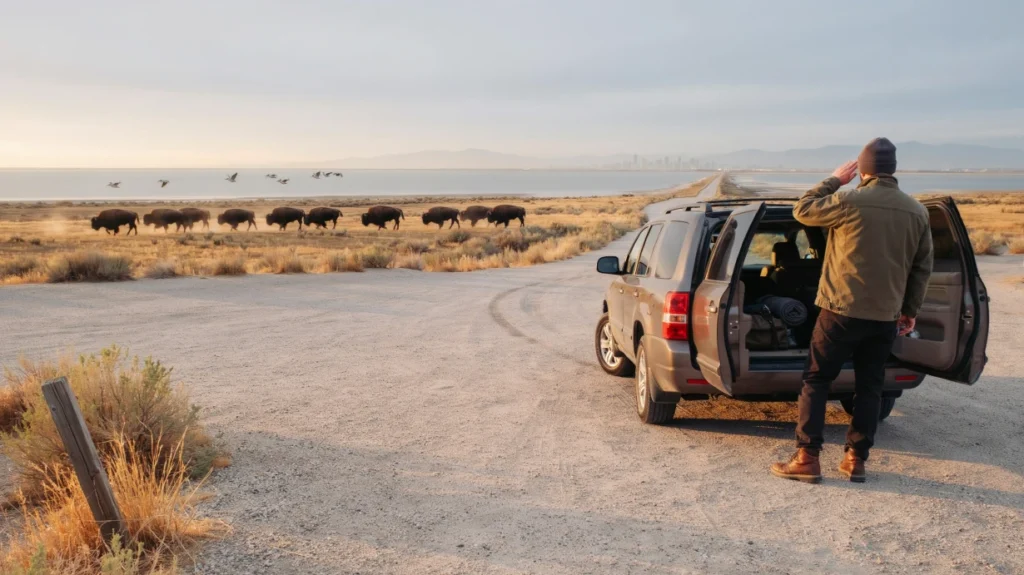 Antelope Island Day Tour or Sunset Wildlife Tour: Which Fits Your Salt Lake City Schedule?
 How to Dress for Changing Weather on Antelope Island

This experience is a must-do! Dima explains the history of the area as well as the...
Read more →I had never been on a guided tour before, but Dima made it the best experience...
Read more →This was a great tour, it was nice to get picked up from our hotel. It...
Read more →Great guide great information and great deal for the money.
Read more → Bonneville Salt Flats – Sunset Adventure of the White Desert
 Antelope Island – Wild Heart of the Great Salt Lake Adventure
 Antelope Island Sunset Wildlife Expedition – Great Salt Lake Odyssey
 Bonneville Salt Flats – Journey to the Edge of the World