
Guided Geology Walks Near Capitol Reef for Homeschool Groups With Curriculum Links
Aug 28, 2026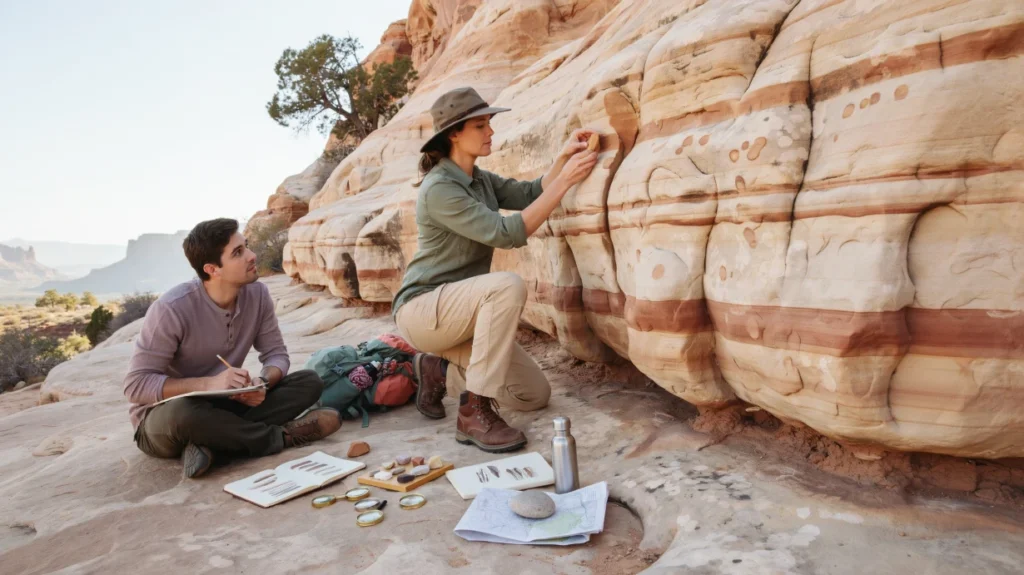
Capitol Reef ranger programs and Ripple Rock Nature Center can anchor a homeschool geology lesson when paired with advance waiver, parking, weather, and curriculum planning.
A Capitol Reef day can become frustrating when a group arrives with a general interest in rocks but no shared learning question, no confirmed ranger schedule, and no plan for heat or vehicle congestion. For homeschool organizers, guided geology walks near Capitol Reef work best as one focused field lesson within a larger Utah geology unit, with adults prepared to connect what children see to erosion, sedimentary layers, fossils, and landform change.
We organize natural-history day tours from Salt Lake City to places including Antelope Island and Bonneville Salt Flats, and we see how much difference a structured route makes for families and small groups with limited time. Our approach is to give learners a clear observation task, allow time outside the vehicle, and avoid treating every scenic stop as an unrelated attraction.
What guided geology experiences are available at Capitol Reef for homeschool groups?
Capitol Reef’s most practical guided geology options are ranger-led talks and walks, supplemented by hands-on learning at Ripple Rock Nature Center. These programs can provide expert interpretation of rock layers, structures, and landforms, but schedules and formats can change, so organizers should confirm current details on the official Capitol Reef National Park website.
Ranger-led geology talks and guided walks are generally offered daily from spring through fall. For a homeschool group, their main value is efficiency: a ranger can give children vocabulary and visual context for features that may otherwise look like simply “red rocks,” helping adults build a more purposeful lesson before and after the program.
Ranger talks and walks
Use a ranger program as the central event of a park day rather than an add-on squeezed between long drives. Plan to arrive early enough to park, use restrooms, fill water containers, and gather the group before the activity starts.
- Best use: Introduce sedimentary rock layers, uplift, erosion, cliffs, domes, and the relationship between rock structure and landscape shape.
- Organizer’s role: Prepare three to five observation questions, help younger learners notice visible evidence, and ask older students to record terms or sketch a cross-section.
- What to confirm: Program time, meeting location, estimated walking demands, weather changes, and whether a group leader should notify park staff in advance.
Ripple Rock Nature Center
Ripple Rock Nature Center offers interactive displays and hands-on educational programs related to geology, paleontology, and natural sciences. It is especially useful for groups with broad age ranges because children can engage with physical materials and exhibits while older students connect those observations to larger geological processes.
For a school-group paleontology field day near Capitol Reef aligned with curriculum standards, the nature center can serve as the evidence station. Students can compare what fossils and rock samples reveal about past environments with their outdoor observations, then distinguish between an observation, an inference, and a question for further research.
How homeschool groups can use self-guided time as a guided lesson
A self-guided stop becomes educational when an adult gives the group a shared task and a way to document evidence. Ranger interpretation can supply the scientific frame, while a notebook, sketch page, or simple field chart keeps the rest of the day from becoming unstructured sightseeing.
- Before stepping out: State one question, such as “What clues show that water shaped this landscape?”
- At the viewpoint or trail: Have learners list colors, layer boundaries, rock textures, slopes, and signs of water movement.
- Before leaving: Ask each learner to make one evidence-based claim and identify one uncertainty.
- After the visit: Compare field notes with ranger explanations and revise claims where needed.
When is a ranger-led program enough, and when should a group arrange additional guiding?
Ranger-led programs plus a strong organizer-led plan are sufficient for many homeschool groups visiting Capitol Reef for one geology-focused day. A separate guided service is more useful when transportation, pacing, route design, or interpretive support outside the park creates a planning burden the leader does not want to carry.
Capitol Reef ranger programs are public programs, not private curriculum sessions. They are often well suited to mixed audiences, but organizers should expect to adapt the educational layer themselves through pre-visit questions, group management, and post-visit assignments.
| Group need | Most practical approach | Organizer responsibility |
|---|---|---|
| One focused Capitol Reef day with students who can walk short distances | Ranger walk or talk plus Ripple Rock Nature Center and a prepared field notebook | Confirm the schedule, supervise learners, and connect observations to curriculum |
| Mixed ages needing simple and advanced tasks at the same stop | Public ranger program with differentiated questions | Give younger children visual scavenger prompts and older students evidence-based analysis tasks |
| Salt Lake City field day before or after the Capitol Reef segment | Structured day tour to Bonneville Salt Flats or Antelope Island | Choose a theme, share ages and dates, and request a geology emphasis where appropriate |
| Leader wants to avoid managing navigation, transfers, and short walking logistics | Guided day experience outside Capitol Reef | Set learning priorities and ensure the group’s expectations fit the day |
We do not operate official guided programs inside Capitol Reef National Park. Our practical role is different: we run day tours from Salt Lake City where transfer, a planned route, guide narration, and support on short walking sections are already built into the day.
We deliberately include those elements because a field day can lose its educational value when the leader is occupied with navigation, timing, and where to stop. On our Salt Lake City day tours, we balance time in the vehicle with time outdoors so the itinerary feels substantial without becoming exhausting.
How should homeschool organizers plan the Capitol Reef visit from first inquiry to field day?
Start planning at least several weeks ahead because the educational fee waiver requires an application at least 21 days before the visit, and large-vehicle arrangements need advance communication. The organizer should own the park paperwork and schedule confirmation, while lodging and any Salt Lake City day tours should be reserved early enough to match the group’s available travel days.
Planning timeline and responsibilities
- Six to eight weeks or more before travel: Select travel dates, estimate group size and vehicle type, begin lodging research, and identify whether the trip will include Salt Lake City field days as well as Capitol Reef.
- At least 21 days before the park visit: Submit the educational fee waiver request with the educational purpose and itinerary. Approval is not guaranteed, so maintain a backup entry-fee plan.
- Several weeks before: Review the current Capitol Reef ranger schedule, identify a preferred program and backup option, and contact the park if arriving in a bus or large van because parking is limited.
- One to two weeks before: Finalize student groups, emergency contacts, water expectations, notebooks, learning prompts, and age-appropriate assignments.
- Two to three days before: Recheck the ranger schedule and weather, then revise clothing, water, and walking plans accordingly.
Limited bus parking is a real constraint at Capitol Reef. Groups using a bus or large van should notify the park in advance so rangers can help set expectations and reduce the chance that congestion disrupts the program day.
What the organizer should produce before departure
A workable homeschool field day needs simple deliverables, not a lengthy packet. Prepare a one-page itinerary, a student field sheet, a leader contact list, and a short statement explaining the educational purpose of the visit.
- Itinerary: Include arrival time, program time, meal plan, bathroom stops, backup activity, and planned departure.
- Field sheet: Include vocabulary, sketch boxes, observation prompts, and room for one claim supported by evidence.
- Student grouping plan: Pair younger children with an adult or older student for walking, water reminders, and note-taking support.
- Acceptance check: The day is ready when every adult knows where the group meets, every learner has a task, and the schedule includes time for heat, restroom, and parking delays.
How can Capitol Reef geology connect to homeschool science curriculum and NGSS-style learning goals?
Capitol Reef can support earth-science learning goals when students observe evidence, make claims, and explain how processes shape landforms. Rather than promising formal standards compliance, organizers can use NGSS-style practices such as analyzing evidence, developing models, and communicating explanations.
The strongest curriculum connection is not memorizing every formation name. It is having students identify visible patterns, propose how those patterns formed, and compare their explanation with information from ranger interpretation and the nature center.
| Age band | Learning goal | Pre-visit activity | Post-visit assignment |
|---|---|---|---|
| Early elementary | Recognize that water, wind, and temperature can change land | Sort pictures into “rock,” “water,” and “landform” observations | Create a labeled drawing showing one way water may change rock |
| Upper elementary | Describe layers and infer that landscapes change over time | Make a layered model with different materials and discuss sequence | Write a short claim using two field observations as evidence |
| Middle school | Explain how erosion and rock structure influence landforms | Practice distinguishing observation from inference using photos | Produce a field-notebook page with a sketch, labels, and process explanation |
| High school | Evaluate evidence for depositional history and later landscape change | Read a brief overview of sedimentary processes and prepare research questions | Compare Capitol Reef observations with Bonneville or Antelope Island evidence in a written analysis |
Three reliable learning goals for a Capitol Reef day
- Evidence and inference: Students can separate what they directly observed, such as a visible layer boundary, from what they infer about the landscape’s history.
- Earth processes: Students can explain in their own words how erosion helps shape cliffs, valleys, and exposed layers.
- Models and comparison: Students can create a sketch or diagram that represents layers, slopes, and water’s role in changing land.
Keep pre-visit work short. A 20-minute lesson on sediment, layers, erosion, and fossils gives students enough vocabulary to listen actively during a ranger program without overwhelming younger learners.
You found a hidden promo code!
Use code WOWBLOG at checkout and get 10% OFF any tour!
Limited time offer. Book now and save!
Browse ToursHow can Bonneville Salt Flats and Antelope Island extend the Capitol Reef lesson?
Bonneville Salt Flats and Antelope Island create useful contrasts with Capitol Reef because they introduce different landforms, water histories, and ecological observations. A sequence that begins near Salt Lake City and ends with Capitol Reef can help students compare basin landscapes, evaporation, shorelines, wildlife, exposed rock, uplift, and erosion.
We run the Utah Day Tours collection from Salt Lake City for travelers who want a planned natural-landscape day without organizing every transfer and stop themselves. Our routes include places such as Bonneville Salt Flats and Antelope Island, with guide narration and escort on short walking or hiking sections.
At Bonneville Salt Flats, a group can focus on broad open terrain, salt, evaporation, and the evidence left by changing water conditions. The Bonneville Salt Flats Tour from Salt Lake City and the Bonneville Salt Flats Sunset Adventure of the White Desert are relevant options for organizers seeking a desert-landscape field day before or after the Capitol Reef portion of a trip.
At Antelope Island, the learning emphasis can include shoreline geology, island biogeography, wildlife observation, and the relationship between land and water. We lead the Antelope Island Tour from Salt Lake City and the Antelope Island Sunset Wildlife Expedition – Great Salt Lake Odyssey as themed day experiences, with some itineraries centered more strongly on wildlife and nature observation.
As Dmytro, a natural-history tour guide, I lead excursions to the Great Salt Lake, Antelope Island, and Bonneville Salt Flats, where I explain natural features and help participants make wildlife observations more meaningful. We chose to design different thematic days because a wildlife-focused outing and a wide-open salt-flat landscape invite different questions, even when both belong in the same Utah earth-science unit.
A realistic Utah geology-unit sequence
- Salt Lake City field day: Choose Bonneville Salt Flats for evaporation and ancient-lake questions, or Antelope Island for shoreline, rock, and wildlife relationships.
- Travel and consolidation day: Have students review field notes and list similarities and differences between the first site and canyon country.
- Capitol Reef capstone day: Attend a ranger program if available, visit Ripple Rock Nature Center, and complete a focused landscape-evidence task.
- Final synthesis: Ask students to explain how Utah’s landscapes show different interactions among rock, water, climate, and time.
For broader trip routing and inter-park transportation considerations, organizers can also use our Utah national parks shuttle planning guide as a companion resource. Capitol Reef is farther from major airports than some Utah park stops, so clustering days and limiting unnecessary backtracking matters.
What logistics make a Capitol Reef geology walk manageable for mixed ages?
A manageable Capitol Reef program day requires conservative pacing, clear adult assignments, water planning, and a backup plan for weather or schedule changes. Mixed-age groups do well when the same stop has different levels of work rather than separate activities that pull the group apart.
Ranger programs are generally designed for a broad public audience. Younger students can focus on colors, textures, and simple cause-and-effect questions, while teens can record vocabulary, identify evidence, and evaluate whether a proposed explanation is supported by what they observed.
Group management checks
- Walking expectations: Confirm the current program’s route and difficulty, then choose a pace that allows the youngest walkers and adults carrying supplies to stay together.
- Accessibility: Ask the park about current accessibility details for the specific program or location rather than assuming a route will meet every learner’s needs.
- Heat and weather: Carry more water than students expect to need, use sun protection, and avoid placing the only educational activity in the hottest part of the day.
- Bathrooms and meals: Build these into the written itinerary before the ranger program begins, not after children are already dispersed.
- Adult roles: Assign one adult to head counts, one to pace the group, and one to manage notebooks, questions, and supplies.
We structure our own one-day itineraries around the same operational tradeoff: travel time must leave enough time on location for observation. Our transfers, route planning, narration, and support on short walks are designed for families, friends, and small groups who want the logistics handled while they focus on the place itself.
What is the best way to judge whether the field day succeeded?
A successful homeschool geology day produces visible evidence of student thinking, not just photographs from scenic overlooks. The simplest acceptance criteria are that students recorded observations, used at least one geological idea accurately, and made a comparison between locations or processes.
Do not grade every child by the same output. A labeled drawing may be a strong result for a young learner, while a teenager can write a short evidence-based explanation or compare the geology of Capitol Reef with the Bonneville Salt Flats or Antelope Island.
- For all ages: Each student can name one feature observed and one process that may have shaped it.
- For upper elementary and middle school: Each student completes a claim, evidence, and reasoning response from their field notes.
- For high school: Each student compares two Utah landscapes and explains how the available evidence supports different geological histories.
- For the organizer: Keep the program schedule, completed notebooks, and a short reflection as documentation of the educational purpose of the trip.
We recommend using guided days selectively when the planning load is highest, then leaving room for self-directed observation where the group is ready for it. That balance gives a homeschool organizer a cohesive unit without turning every hour of a Utah trip into a rigid lesson.
Capitol Reef works best as a focused canyon-country capstone supported by ranger interpretation, Ripple Rock Nature Center, and student fieldwork. Advance waiver paperwork, early notice for buses or large vans, and a flexible weather-aware itinerary make the day more workable for adults and children alike. Pairing it with contrasting Salt Lake City landscape days gives students stronger material for comparison and reflection. Explore our Utah day tours from Salt Lake City, then contact Matei Travel with your group size, ages, dates, and preferred geology focus to discuss a homeschool-friendly field-day approach.
Are ranger-led geology programs at Capitol Reef guaranteed on a specific date?
No. Programs are generally available from spring through fall, but times and formats can change, so verify the current park schedule before finalizing plans.
When should a homeschool group request the educational fee waiver?
Submit the request at least 21 days before the visit and include both an educational purpose and an itinerary. A submitted request does not guarantee approval.
Should a group with a large van or bus contact Capitol Reef in advance?
Yes. Bus parking is limited, and advance notice helps the park prepare for possible congestion and clarify arrival expectations.
What should young children do during a geology walk?
Give them visual tasks such as finding layers, colors, textures, and water-shaped features. A drawing with labels can be more useful than a long written worksheet.
Can Antelope Island support a geology lesson as well as wildlife observation?
Yes. Antelope Island can support discussion of shorelines, island biogeography, land-water relationships, and wildlife observations within one field day.
Why add Bonneville Salt Flats to a Capitol Reef trip?
The salt flats provide a contrasting setting for studying evaporation, salt, open basin landscapes, and changing water conditions. That contrast strengthens students’ final comparisons.

I would highly recommend touring with Dima! He was so knowledgeable and personable, and very open...
Read more →Experience was fabulous!!! We saw spectacular views of the flats, bison and prong horn. Mateo travel...
Read more →I truly recommend this experience. Dima was the best guide! He’s Full of energy and great...
Read more →We booked a trip having read the wonderful reviews and it did not disappoint. Dima our...
Read more → Antelope Island – Wild Heart of the Great Salt Lake Adventure
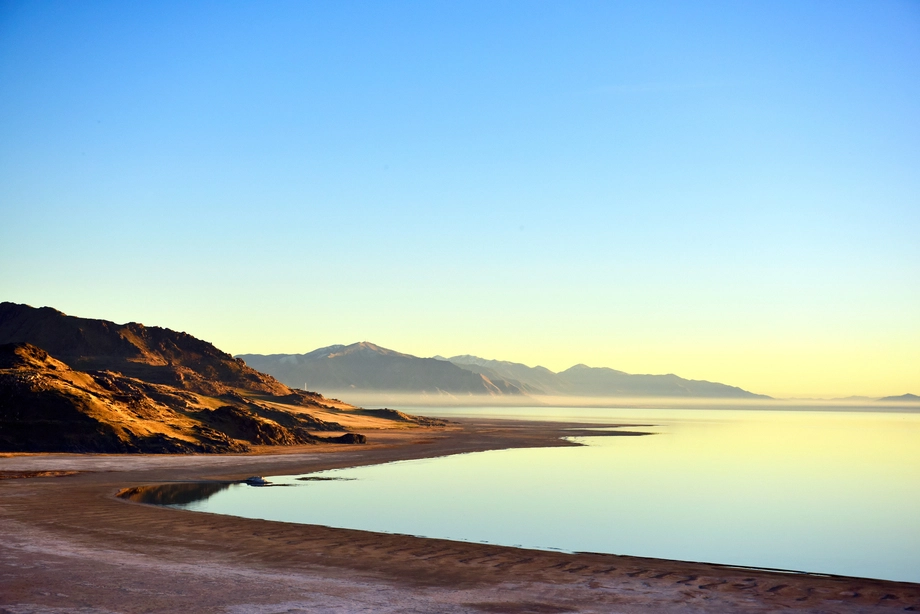 Antelope Island Sunset Wildlife Expedition – Great Salt Lake Odyssey
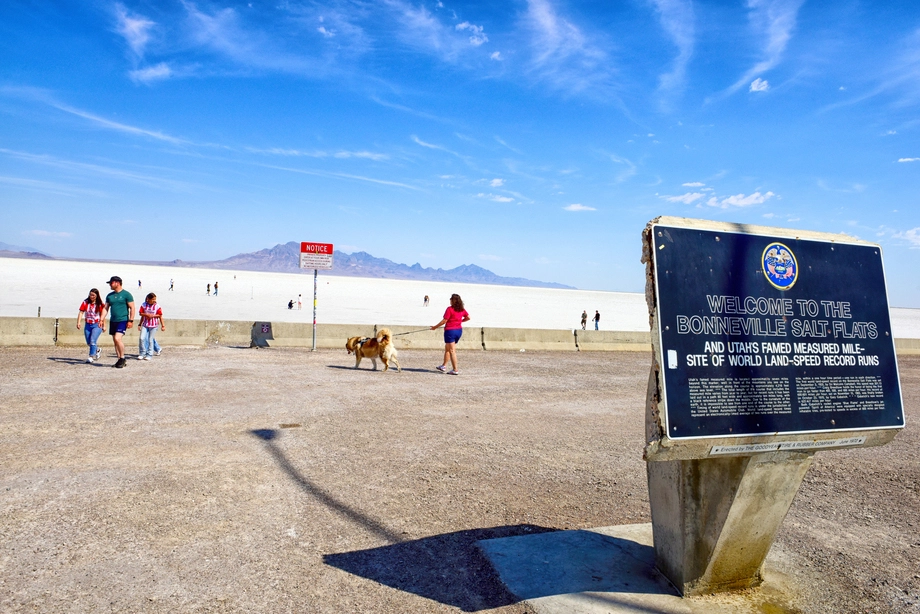 Bonneville Salt Flats – Journey to the Edge of the World
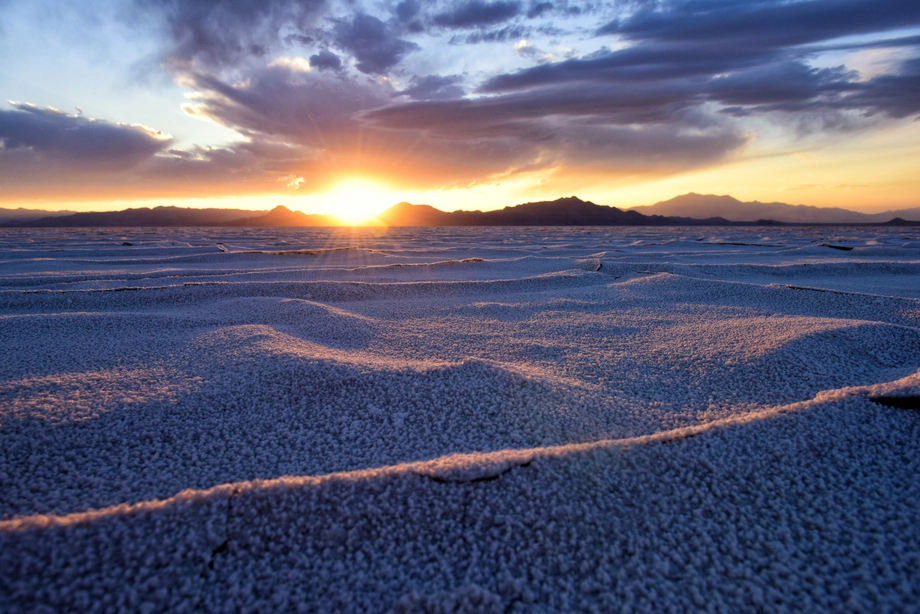 Bonneville Salt Flats – Sunset Adventure of the White Desert