
Canyonlands Bike Shuttles: When Rental and Guide Support Pay Off
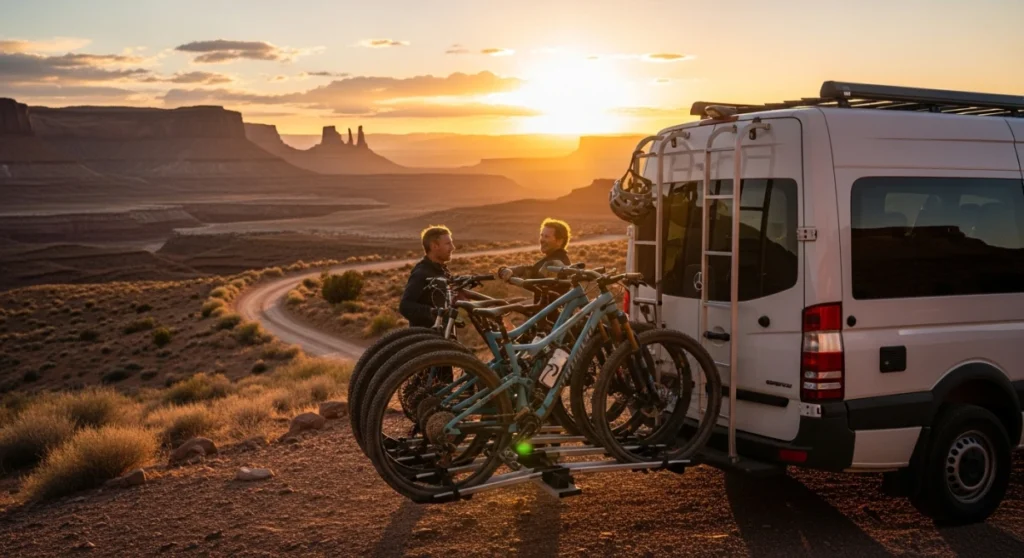
DIY works for groups with the right 4WD, desert experience, permits, and time. For most fly-in visitors or White Rim riders, shuttle support or a full package saves hassle and lowers risk.
The mistake we see most often is not weak riding. It is strong riders underestimating desert logistics. In Canyonlands, the hard part is often not pedaling but getting the right vehicle, enough water, the right permit, and a realistic timing plan for a remote road with little shade and few easy fixes.
This is a practical decision guide for travelers weighing a self-supported ride against paid support in Canyonlands National Park. It is especially useful if you are fitting Moab riding into a wider Utah trip, flying in with limited gear, or trying to decide whether a shuttle, rental bike, and guide will improve the experience enough to justify the extra cost.
Should you do Canyonlands yourself or pay for support?
If your group already has a proper high-clearance 4WD vehicle with low range, desert riding experience, bikes you trust, and time to manage permits and water, DIY can make sense. If any one of those pieces is shaky, paying for support often buys back time, reduces risk, and makes the ride more enjoyable.
That is the real split. Canyonlands is not a park where bike logistics are an afterthought. A shuttle-supported day or multi-day ride removes the biggest friction points, while full support adds route judgment, pacing help, and equipment convenience for travelers who are short on time or new to this terrain.
We usually frame the choice around constraints, not ego. A fit rider can still have a poor day if their vehicle is wrong for the road, their water plan is thin, or their permit timing falls apart. On the other hand, capable self-supported groups do exist, and they do not need to pay for services they will not use well.
What does a Canyonlands mountain bike shuttle actually include?
A shuttle usually means transportation and logistics support, not just a ride to a trailhead. On remote routes around Canyonlands, that often includes moving riders between access points, hauling water and gear, and matching the group to a route that fits both fitness and vehicle realities.
The most common setup is a small group meeting in or near Moab, then transferring by support vehicle to the park access point or a route start. For a one-day outing, riders are dropped at a chosen start and picked up at a planned finish, or they ride with a support vehicle nearby on roads where that is possible. For a multi-day trip such as White Rim, support can also mean carrying extra water, camp gear, and contingency supplies in the vehicle rather than forcing every rider to carry everything on the bike.
If you are comparing a group mountain bike shuttle to remote trails in Canyonlands with guide and bike rental against DIY, the main question is not whether the van moves you from A to B. It is whether the operator is solving the larger access problem: route timing, vehicle positioning, gear transport, and what happens if the day slows down.
- Routes: Usually road-based desert rides and point-to-point or loop logistics around remote access roads, with White Rim as the classic example.
- Vehicles: High-clearance support vehicles suited to rough roads, sometimes with racks, water capacity, and room for extra equipment.
- Water and gear hauling: Often the biggest practical benefit on long exposed rides where reliable water is scarce.
- Group structure: Commonly a small group with a set meeting time, a route plan, and checkpoints or pickup windows.
- Optional add-ons: A bike rental if you did not bring your own, plus guide support if you want route leadership and on-the-ground decision-making.
A guide changes the day more than many riders expect. Instead of spending energy on navigation, pace control, and problem-solving, the group can focus on riding, photo stops, and conserving strength for the hardest sections.
You found a hidden promo code!
Use code WOWBLOG at checkout and get 10% OFF any tour!
Limited time offer. Book now and save!
Browse ToursWhy is Canyonlands one of the places where support matters more?
Support matters here because water is scarce, access roads are demanding, and mistakes are expensive. The park’s biking rules and road conditions mean that even experienced riders need a realistic plan for permits, vehicle suitability, and self-sufficiency.
The White Rim Road is the clearest example, but the logic applies more broadly across remote desert riding in the park. The National Park Service states that overnight backcountry trips require permits, that the White Rim is typically a three to four day ride by bike, and that campsites do not have water. The same NPS biking guidance recommends a support vehicle for all multi-day bike trips because most roads do not have reliable water sources.
Canyonlands National Park requires overnight backcountry permits for overnight biking trips. The park also notes that the 100-mile White Rim loop usually takes three to four days by bicycle, that campsites do not have water, and that support vehicles are recommended for multi-day bike trips because water sources are lacking along most roads.
Biking – Canyonlands National Park (U.S. National Park Service)
Those facts matter because they push this decision beyond simple bike rental. Renting a good bike solves only one layer. You still need legal access, enough water, a workable drop-off and pickup plan, and a contingency for fatigue, mechanical issues, or delayed progress.
- Water scarcity: You cannot count on filling up along the route, so the water plan has to be built before the ride begins.
- Permit pressure: Overnight trips and certain day uses require permits, and peak-season demand can narrow your options.
- Vehicle requirements: Rough roads, rocky stretches, deep sand, and steep exposed sections make the wrong vehicle a costly mistake.
- Fitness demands: Canyonlands rewards steady endurance more than short bursts of speed. The terrain and exposure punish bad pacing.
- Recovery options: When a rider fades or a vehicle has trouble, there are fewer easy bailout choices than visitors assume.
This is why our planning lens is logistics first. On a Utah trip that already includes long driving days between parks, one badly structured Canyonlands ride can absorb a full extra day of recovery, rerouting, or permit troubleshooting.
Which option wins: DIY, shuttle-only, or shuttle plus guide and rental?
DIY wins when your group is already fully equipped and wants maximum independence. Shuttle-only wins when you are confident on the bike but do not want to deal with vehicle positioning, rough-road driving, or pickup timing. Shuttle plus guide and rental wins when the trip is short, the group is mixed, or you want remote access without bringing specialized gear to Utah.
The best choice is less about skill labels and more about what your group can honestly supply on its own. This matrix is the fastest way to decide.
| Option | Best for | What you still manage yourself | Main advantage | Main risk or downside |
|---|---|---|---|---|
| DIY with your own bikes and 4WD | Experienced desert riders with a proper vehicle, strong planning habits, and schedule flexibility | Permits, route planning, vehicle access, water, repairs, contingencies, timing | Maximum freedom and no dependency on outside scheduling | Highest logistical burden and the most exposure to vehicle or planning mistakes |
| Shuttle-only | Confident riders who do not want to drive rough access roads or stage vehicles | Permits, route choice, pacing, riding decisions, your own bike readiness, most on-trail problem solving | Removes the hardest transport problem while preserving independence | Still requires a strong self-supported riding plan |
| Shuttle + guide + rental | Fly-in travelers, first-timers to Canyonlands, mixed-ability groups, and short itineraries | Usually just personal clothing, honest fitness communication, and permit awareness | Lowest friction and the best fit for limited vacation days | Less spontaneity than full DIY and higher upfront cost |
When DIY is the right answer
Do it yourself if all four conditions are true. Your group has a suitable 4WD vehicle with low range, everyone is comfortable with remote desert riding, the permit plan is already handled, and nobody needs to fly in and assemble gear from scratch.
This is the best answer for strong groups who enjoy planning and accept the trade-off. The hidden cost is not just fuel or wear on the vehicle. It is the extra time spent organizing water, staging cars, and preserving enough schedule margin to absorb a bad road day.
When shuttle-only is the sweet spot
This is often the best value for riders who are technically and physically prepared but do not want to risk access-road driving or complicated pickup logistics. It preserves a self-directed feel while removing the most annoying and failure-prone part of the day.
It is also a good fit if your group brought bikes it knows well but would rather not bring a second capable vehicle or leave one parked far from town. You still need to be honest about route choice and pace, because transport support is not the same as active route management.
When full support earns its price
Full support often pays off when vacation time is scarce. A visiting group can land in Utah, reach Moab as part of a larger park trip, ride on appropriate equipment, and avoid spending valuable hours sorting out access, gear transport, and rough-road driving.
This is also the easiest way to protect the overall itinerary. If Canyonlands is one stop among several parks, a support package keeps your biking day from destabilizing the rest of the trip.
Why does White Rim Road often justify the full package?
White Rim is where the case for support becomes the clearest because it combines distance, permit requirements, exposure, and water scarcity in one ride. On this route, support is not a luxury add-on for many visitors. It is the difference between a realistic adventure and a fragile plan.
White Rim is a 100-mile loop, typically ridden over several days by bike, and the park notes there is no water at campsites. The road is remote and physically demanding, with long rough sections, sandy patches, steep exposed areas, and little shade. That means a self-supported group is not just choosing to pedal. It is choosing to manage a mini expedition.
Full support tends to pay off here for five practical reasons:
- Water load: Carrying all required water on the bike is a major burden, while vehicle support makes hydration more manageable.
- Permit competition: Overnight White Rim planning can become date-sensitive, so groups with narrow vacation windows benefit from a more structured trip approach.
- Vehicle exposure: The wrong vehicle can turn into major towing costs, and the risk is not theoretical on rough desert roads.
- Fatigue management: A guide can adjust pace, stops, and daily timing before a small slowdown becomes a major issue.
- Trip protection: If White Rim is one highlight inside a broader Utah vacation, professional support helps keep the rest of the schedule intact.
For many travelers, this is also where bike rental starts making sense. Flying with a bike can be worthwhile for a dedicated riding trip, but for a multi-park itinerary with hotels, transfers, and sightseeing in several regions, rental removes one more complicated piece.
In what situations are guide and rental support especially smart?
Guide and rental support are smartest when your group is not arriving with everything dialed in. That includes first-time Canyonlands visitors, mixed-ability groups, people flying into Utah for a short trip, and travelers riding in shoulder-season conditions where timing and gear choices matter more.
These are the scenarios where the value is usually obvious after the ride, even if it felt optional during planning.
First visit to Canyonlands
If you have never ridden this park, the guide’s value is less about rigid instruction and more about judgment. Route timing, stop frequency, and effort management feel different in exposed desert terrain than they do on familiar home trails.
Mixed fitness or uneven confidence
When one or two riders are clearly stronger, a guide helps keep the day from splitting into incompatible agendas. On the right road-based route, support also makes it easier to build a day with sensible turnaround points or a more conservative pace.
Flying into Utah with limited days
This is one of the strongest cases for adding both rental and support. Bringing your own bike may be worth it on a riding-first vacation, but it is often a poor trade on a trip that also includes several park stops and long transfers from Salt Lake City.
If your plan already includes the Utah National Parks Tours, the cleaner move is often to shape a Moab segment with enough free time for a professionally supported ride, rather than carrying bike logistics across the whole state yourself.
Shoulder season and variable conditions
Spring and fall are attractive because the temperatures are more forgiving than summer, but they also compress demand into popular windows. A support-based approach can make scheduling more efficient when you have limited choice on travel dates and want less improvisation once you arrive.
How do you fit a Canyonlands ride into a bigger Utah itinerary from Salt Lake City?
The cleanest structure is to treat the ride as one focused Moab-based day or multi-day block inside a broader park trip, not as something you improvise between long drives. That keeps travel days, sightseeing days, and physically demanding ride days from competing with each other.
This matters because Canyonlands is often paired with Arches, and many visitors also want Zion, Bryce Canyon, or Capitol Reef in the same vacation. The farther your trip expands, the more valuable it becomes to centralize the state-wide planning and then choose local biking support only for the Moab segment.
That is where we fit best. We organize Utah itineraries from Salt Lake City that connect major park stops, transport, and realistic pacing, so your Canyonlands riding decision sits inside a workable vacation instead of becoming its own separate planning project. If you are still choosing among the best national parks near Salt Lake City, this approach helps you decide whether Moab deserves one extra day for a ride or whether a non-riding park sequence makes more sense.
For travelers with less time, our Utah day tours can also be a better fit than forcing an overpacked Mighty Five schedule. That is often the smarter answer for people searching for things to do near Salt Lake City before or after a longer park trip, especially if the biking day will already demand energy and planning.
What is the fastest final check before you book anything?
Use a decision checklist based on vehicle, water, permits, gear, and time. If you cannot confidently answer all five, move up one support level.
- Vehicle: Do you already have access to a suitable high-clearance 4WD vehicle with low range for the road you plan to use?
- Water: Do you have a concrete carrying plan for the full route, not a vague assumption about finding water later?
- Permits: Do you know which permit applies to your route and dates, and is your schedule flexible if availability is limited?
- Bike setup: Are you bringing a bike you trust for rough desert riding, or would a local rental reduce hassle and transport risk?
- Group match: Is the weakest rider in the group truly matched to the route, pace, and exposure level?
- Trip context: If this ride goes sideways, can the rest of your Utah itinerary absorb the lost time?
If your answers are mostly yes, DIY or shuttle-only is still on the table. If the answers are mixed, especially on vehicle, water, or limited vacation time, support is usually the better buy.
Canyonlands rewards honest planning more than bravado. DIY is absolutely viable for well-prepared groups, but many visitors are better served by shuttle help or a full support package once water, permits, access roads, and trip timing are considered. White Rim is the clearest example because it turns every weak assumption into a real logistical problem. Start by mapping your Utah travel window and park priorities, then use that framework to decide how much bike support you actually need. Explore our Utah National Parks Tours and send a note that you want to include a Canyonlands ride so we can align the broader itinerary around it.
Can strong riders still benefit from a shuttle in Canyonlands?
Yes. Strong riders often use shuttle support to avoid rough-road driving, vehicle staging, and pickup logistics while keeping the ride itself self-directed.
Does renting a bike solve the main planning problem?
No. A rental handles the bike itself, but you still need to sort out permits, water, route choice, and how you will reach and leave remote roads.
Is White Rim usually a single-day ride?
Not for most riders. The park describes it as a 100-mile loop that typically takes three to four days by bicycle.
Why do mixed-ability groups often choose a guide?
A guide helps set realistic pace, stop timing, and route expectations so stronger and slower riders do not turn the day into separate trips.
When is DIY the smartest option?
DIY is strongest when your group already has the right 4WD vehicle, reliable bikes, desert experience, permit awareness, and enough time to handle changes.
How should a Canyonlands bike day fit into a Utah vacation?
It works best as a planned Moab segment with enough recovery and travel buffer, not as an improvised add-on between long park transfer days.
 Should You Cancel a Utah Outdoor Day Because of Wildfire Smoke?
 When Should a Utah Park Day Trip From Salt Lake City Become an Overnight?
 Your First Evening in Salt Lake City: A Low-Pressure Orientation Plan
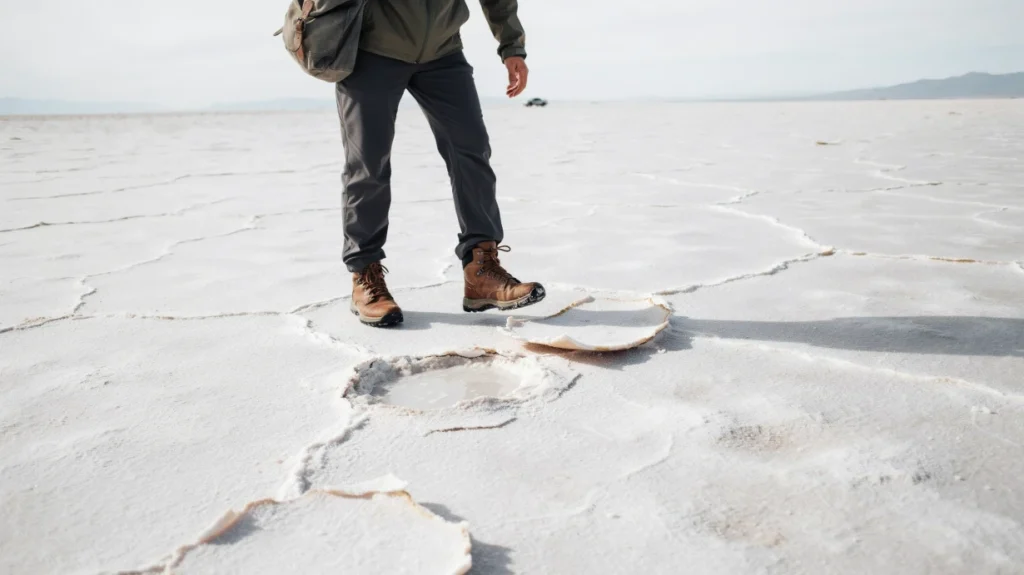 Bonneville Salt Flats Photography Etiquette: How to Protect the Surface and Share the View
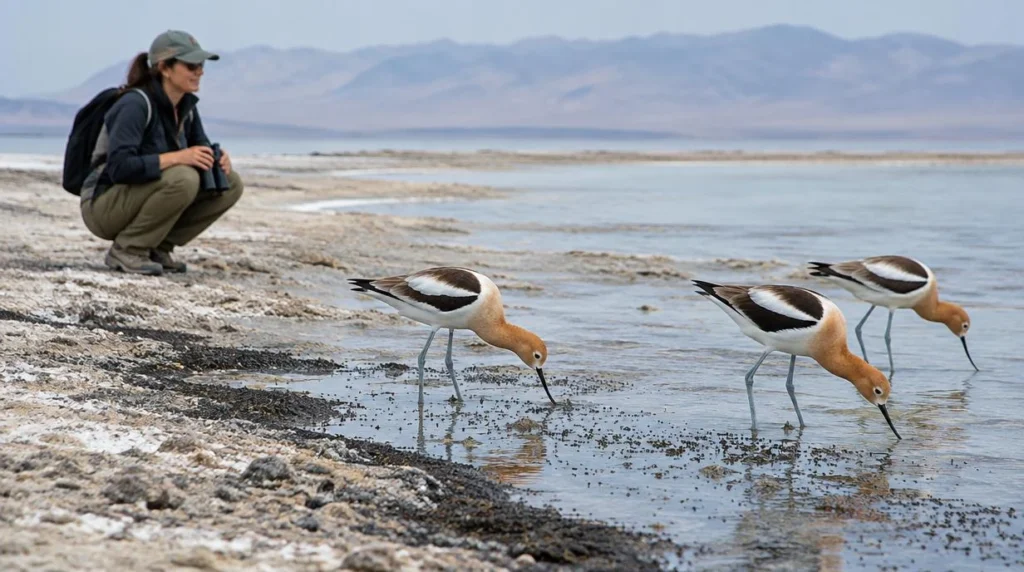 How to Plan an Antelope Island Birdwatching Visit
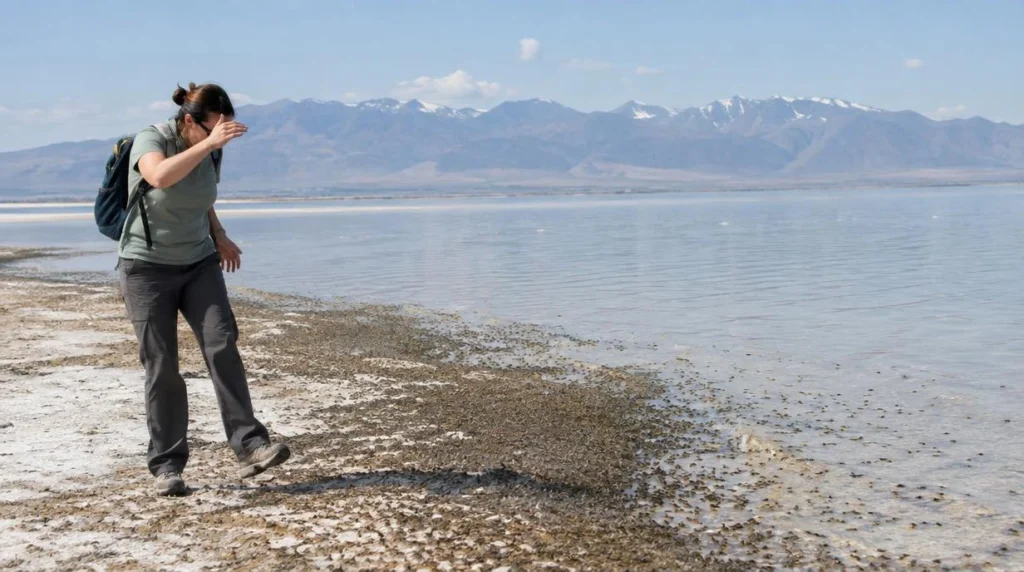 Why Are There So Many Brine Flies on Antelope Island?

Guide was Great! The salt flats had alot of water due to recent rain which limited...
Read more →I booked the Bonneville Salt Flats tour w Matei bc the owners are Ukrainian. I’m so...
Read more →This experience is a must-do! Dima explains the history of the area as well as the...
Read more →I had never been on a guided tour before, but Dima made it the best experience...
Read more →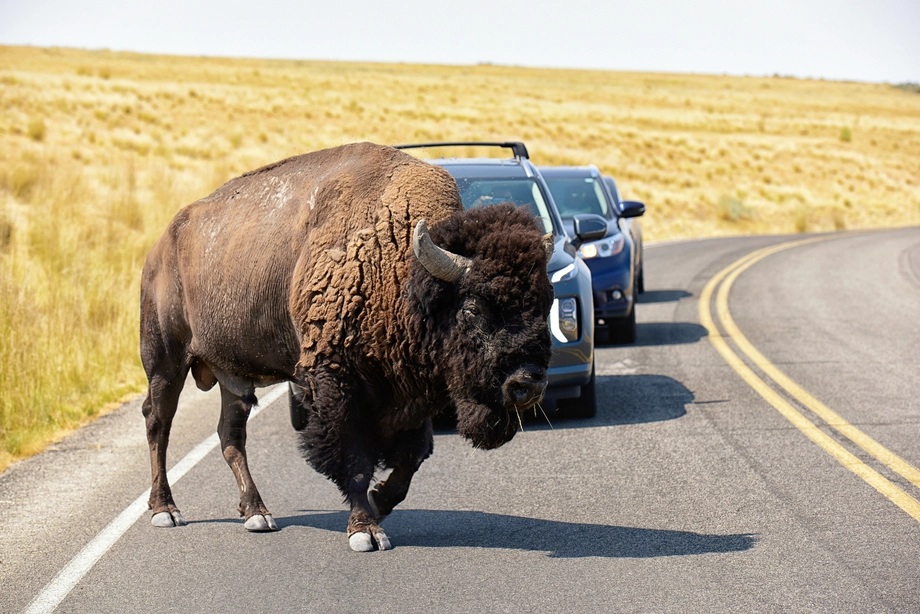 Antelope Island – Wild Heart of the Great Salt Lake Adventure
 Antelope Island Sunset Wildlife Expedition – Great Salt Lake Odyssey
 Bonneville Salt Flats – Journey to the Edge of the World
 Bonneville Salt Flats – Sunset Adventure of the White Desert