
Canyonlands Bike Shuttles: When Rental and Guide Support Pay Off
May 23, 2026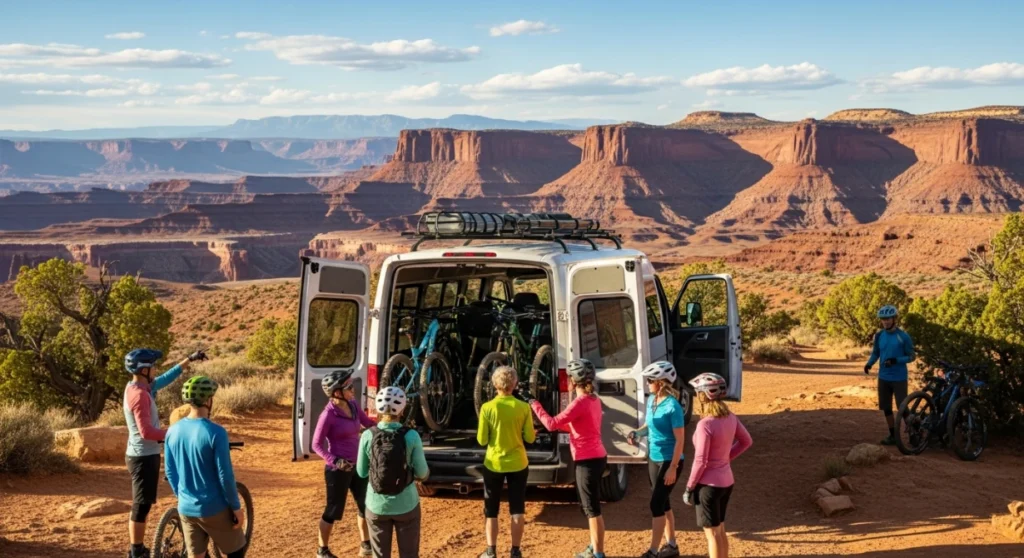
In Canyonlands, basic bike shuttles only make sense for shorter, simpler rides. For remote routes, rental, guide, and support usually pay off because water, permits, and transport rules add real complexity.
The most common planning mistake in Canyonlands is treating a bike shuttle like a cheap taxi to a trailhead. That logic works in some riding destinations, but this park is different because remoteness, dry backcountry roads, permits, and transport rules all turn a “simple drop-off” into a logistics decision.
This question sits at the intersection of trip planning and backcountry recreation. It matters most for visitors building a Utah parks trip from Salt Lake City who want to decide whether Canyonlands should be a self-managed ride day, a locally supported bike experience, or a non-biking park visit folded into a broader itinerary.
We organize Utah trips around realistic travel days, not wishful schedules, so our view is straightforward: in Canyonlands, the real choice is not just shuttle versus no shuttle. It is whether you want to personally carry the burden of water, route timing, permit friction, and backup planning, or pay a specialized local outfitter to absorb those moving parts while we structure the larger park itinerary around it.
How do Canyonlands bike trips actually work, and why does that change the shuttle decision?
Canyonlands bike trips are backcountry logistics problems first and rides second. Once you factor in scarce water, permit requirements, long distances, and remote 4WD roads, the cheapest shuttle is often not the simplest option.
Many visitors start by searching for a group mountain bike shuttle to remote trails in Canyonlands with guide and bike rental, assuming they can choose those pieces separately at the last minute. In practice, the format of the ride determines almost everything else: how much water you need to move, whether a permit is required, whether a support vehicle makes sense, and how much consequence there is if weather, fatigue, or navigation go sideways.
According to Canyonlands National Park, the park recommends support vehicles for all multi-day bike trips because most roads have no water sources. That one fact changes the economics and the risk profile of remote rides, especially for travelers who are flying in, riding unfamiliar terrain, or trying to squeeze Canyonlands into a short Utah trip.
This is also why we separate two questions when helping people shape a park itinerary from Salt Lake City. First, is Canyonlands a biking day at all for your group? Second, if yes, is it a short self-managed outing or a specialist-supported day that should be scheduled with a licensed local outfitter near Moab?
Which trip format fits you best?
Your best format depends less on enthusiasm and more on planning tolerance, desert experience, and how much vacation time you are willing to spend on logistics. Most visitors fall into one of three buckets: minimal self-managed ride, guided ride with rental and support, or a non-biking Canyonlands visit.
A quick self-check usually gets you to the right lane faster than comparing gear lists.
- Choose a minimal shuttle or self-guided day if you already ride confidently in remote desert terrain, know how to carry and ration water, are comfortable researching permits, and only want a shorter objective you can realistically manage without a support vehicle.
- Choose rental, guide, and support if this is your first Canyonlands ride, you are considering a bigger backcountry road, your group has mixed abilities, you are flying in without a bike, or you do not want a vacation day consumed by permit research and transport planning.
- Choose a non-biking park visit if you only have one day, your group is not aligned on riding fitness, or the main goal of the trip is to see several Utah parks efficiently rather than commit one park day to a remote cycling objective.
If you are still unsure, use this rule. The more your day depends on perfect execution across water, access, transport, and timing, the more value support adds. The more your day looks like a straightforward short ride near the front country, the more DIY becomes reasonable.
What Canyonlands-specific constraints make bike shuttles harder than they sound?
Canyonlands adds three practical constraints that complicate simple shuttle thinking: no reliable water on many routes, permits for popular backcountry use, and road and transport rules that limit flexibility. Those constraints are why visitors often underestimate how much planning sits behind a “ride day.”
Water is the first issue. Multi-hour and multi-day rides on remote roads are not just athletic efforts; they are water-hauling problems. If you are used to destinations with regular refill points, Canyonlands can punish that assumption quickly.
Permits are the second issue. According to the National Park Service biking guidance, permits are required for all overnight trips and certain day-use areas in the park. That matters because the routes most people dream about are often the same ones with the most planning friction, and overnight access on classic lines can require booking well ahead.
The third issue is terrain and access. Some backcountry roads are genuinely technical 4WD routes with steep grades, loose rock, and step-like obstacles. Even strong riders can misjudge what is manageable for their full group, especially when a bad call means a long retreat rather than a quick exit.
Commercial shuttle services also do not function like a big front-country park bus network. Canyonlands has rules that affect commercial transport capacity and the movement of bikes or motorized vehicles, so you cannot assume generic park transportation will solve the access piece. Licensed local outfitters who work inside those constraints every day are usually the ones who can tell you which combinations of route, support, and transport are actually workable.
The hidden planning tasks people forget
- Water strategy: carrying enough from the start, arranging vehicle support, or deciding whether the ride is too exposed to do comfortably without either.
- Permit timing: checking whether your chosen route requires advance action instead of treating the ride as a spontaneous add-on.
- Vehicle reality: understanding whether your own rental car is appropriate for access roads and whether you want to be responsible for that decision.
- Failure planning: having a backup if weather shifts, pace is slower than expected, or one rider in the group simply runs out of gas.
When does each option win: bring your own bike with minimal support, or rent locally and book a guided supported ride?
Option A wins when the ride is modest, your skills are proven in desert backcountry conditions, and you are happy to manage details yourself. Option B wins when the route is remote, the group is mixed, the schedule is tight, or the consequences of poor logistics are high.
The table below is the quickest way to compare the two formats honestly.
| Decision factor | Option A: bring your own bike, minimal shuttle/logistics | Option B: local rental, guide, support vehicle |
|---|---|---|
| Best for | Experienced riders targeting shorter, simpler objectives | First-timers, bigger backcountry rides, mixed groups, limited-time travelers |
| What you handle | Bike transport, route research, water planning, permit checks, backup plans | You still choose goals and dates, but the specialist outfitter handles more operational detail |
| Bike setup | Your own fit and familiarity, but you must travel with it | Locally maintained bike suited to local conditions, no airline bike hassle |
| Vehicle needs | You may still need to solve access and pickup logistics yourself | Support vehicle can reduce dependence on your own car choice |
| Time cost before the trip | Higher, because you do the research and coordination | Lower, because planning is bundled with the guided day |
| Main hidden risks | Underestimating water, route commitment, permit friction, or transport limits | Higher upfront spend, and less appeal for riders who want a fully independent day |
| Who should avoid it | Visitors new to desert riding or trying to force a big route into one free day | Highly self-sufficient riders doing a simple short ride they already know how to manage |
Option A: bring your own bike and keep support minimal
This is the leaner format, but only when the objective stays lean too. It suits riders who already understand the difference between being fit and being prepared for a remote desert road with no easy resupply.
- What you gain: control over your own bike, a more independent day, and less need for bundled services you may not use.
- What you take on: permit checks, route selection, water load, transport details, and decision-making if conditions or energy levels change.
- Where it works best: shorter day rides, front-country leaning plans, and riders who do not need route interpretation or group management.
- Main trap: assuming the shuttle is the hard part when the real work is everything around the shuttle.
Option B: rent locally and book a guide with support
This is usually the smarter format for remote objectives because it turns a complicated day into a managed one. You are paying for fewer loose ends as much as for the bike itself.
- What you gain: a bike chosen for local terrain, a guide who can match route choice to conditions and group ability, and operational support for water and transport.
- What you still need to do: pick a realistic date window, communicate your riding level honestly, and decide how the bike day fits your larger Utah route.
- Where it works best: classic backcountry ambitions, first visits, one-day windows, and groups that do not want to spend their trip solving technical details.
- Main tradeoff: less appeal if you are seeking a purely independent experience and your objective is simple enough that support would be overkill.
You found a hidden promo code!
Use code WOWBLOG at checkout and get 10% OFF any tour!
Limited time offer. Book now and save!
Browse ToursWhen does rental and guide support clearly pay off in Canyonlands?
Rental and guide support pay off when logistics, uncertainty, or group complexity would otherwise consume the day. The more your ride depends on local judgment, water movement, or backcountry access, the more support stops being a luxury and starts being the practical choice.
These are the scenarios where we most often recommend treating the ride as a supported specialist activity inside a broader park itinerary.
- It is your first Canyonlands ride. Even strong riders lose time to route interpretation, road-condition assumptions, and conservative decision-making in unfamiliar desert terrain.
- You are considering a multi-day or bigger-commitment route. Once water becomes a moving logistics problem and permits enter the picture, support is usually the cleaner approach.
- Your group has mixed abilities. A guide can keep the day realistic for stronger and less confident riders without turning the ride into a series of avoidable judgment calls.
- You do not have an appropriate 4WD plan. Not owning a suitable vehicle, or not wanting to drive demanding access roads yourself, is a legitimate reason to bundle support.
- You are flying in without a bike. Renting locally avoids airline bike fees, packing hassle, and the possibility of arriving with equipment issues before a remote day.
- Your vacation time is short. If you only have one Canyonlands window inside a larger Utah circuit, it often makes more sense to buy back planning time rather than burn it on research and coordination.
This is where our role is different from that of a bike outfitter. We handle the structure of the wider trip from Salt Lake City, sequence travel days sensibly, and make sure a technical activity does not collide with unrealistic driving, fatigue, or a park-hopping schedule that looks good on paper but fails in real life.
For travelers researching the best national parks near Salt Lake City, Canyonlands is often part of a bigger Zion, Bryce Canyon, Arches, and Capitol Reef plan rather than a stand-alone riding vacation. In that context, a supported bike day works best when it is one well-placed module inside a realistic multi-park route, not an improvisation squeezed between long transfers.
When can a simple shuttle or self-guided ride work just fine?
A simple shuttle or self-guided ride can work when your objective is short, your desert skills are proven, and you are genuinely comfortable owning every planning detail. It is the right answer for a narrower slice of travelers than online forum advice often suggests, but that slice does exist.
If you are a strong and experienced rider, bringing your own bike and keeping support minimal is not unreasonable. The key is staying honest about what “strong” means in this setting. Canyonlands exposes weaknesses in water planning, route commitment, and contingency thinking more than it tests pure fitness.
- Short day rides: better fit than ambitious remote traverses because the margin for error is wider and the support burden is lower.
- Experienced desert riders: especially those who already understand heat management, self-sufficiency, and the difference between a mapped route and an easy route.
- Trip planners who do not mind paperwork: if you are comfortable checking permits, transport restrictions, and day structure yourself, the DIY route becomes more realistic.
- Travelers already carrying their bike for a broader riding trip: the convenience of your own setup can outweigh the benefit of renting if the Canyonlands ride is not the most complex part of the journey.
Where we would not force a bike day is the one-day visitor who mostly wants to see the park. In that case, a scenic Canyonlands visit with overlooks, short walks, and a better-paced Utah loop may deliver more value than a rushed ride that leaves no room for conditions, transfers, or fatigue.
How should you plug this decision into a Utah trip from Salt Lake City?
The cleanest way to plan Canyonlands is to decide the park-day format first, then build the driving and overnight structure around it. Starting with the big Utah itinerary helps you avoid the classic mistake of treating Moab-area riding as if it has no effect on the rest of your schedule.
If you are sorting through things to do near Salt Lake City before committing to a longer road trip, the first planning question is whether you want a short Utah sampler or a multi-park circuit. Canyonlands works very differently inside those two frames.
A practical way to structure the trip
- Long weekend pattern: use a Canyonlands-inclusive Moab stop as the anchor, then decide whether that day should be sightseeing only or include a locally guided ride.
- Four to five day park loop: place Canyonlands on a day where the group is not already carrying the fatigue of long driving, and leave enough flexibility that a specialist bike day does not compress the rest of the trip unrealistically.
- Mixed-interest groups: keep Canyonlands flexible. One segment can ride with a local outfitter while others sightsee, hike short trails, or treat it as a scenic park day.
That is the logic behind our Utah National Parks Tours. We build the transport, park order, and daily pacing so visitors do not have to guess how far apart these parks feel on the ground, and then a Canyonlands bike day can be discussed as an add-on with licensed local specialists when it truly fits the group.
What hidden trade-offs should you factor in before choosing?
The biggest hidden trade-off is not money alone. It is whether you want to spend scarce vacation time buying certainty through support, or conserve budget while accepting more planning work and more personal responsibility.
A guided day with rental can look expensive until you account for the time and friction of flying with a bike, checking route access, organizing water, and solving transport for a remote road. A minimal shuttle can look cheap until you realize you may also need to sort out permits, support strategy, pickup timing, and whether your own vehicle plan is appropriate.
This is also where larger trip design matters. If Canyonlands is only one stop on a multi-park route, overspending energy on DIY bike logistics can create knock-on problems for the rest of the vacation. We would rather see travelers choose a shorter self-managed ride they can execute cleanly, or a properly supported day, than force an in-between plan that is fragile from the start.
What final checklist should you use before deciding?
If you can answer these questions cleanly, your format choice is probably obvious. If two or more answers feel shaky, move toward more support or downgrade the objective.
- Route commitment: Is this a short, realistic day ride, or a remote objective with little margin for mistakes?
- Water plan: Do you know exactly how water will be carried or supported for the conditions and distance involved?
- Permit clarity: Have you confirmed whether your intended ride needs advance permit action?
- Vehicle plan: Are you certain your transport setup matches the access roads and pickup needs?
- Group honesty: Is everyone’s actual ability aligned, not just their ambition?
- Time budget: Do you want to spend pre-trip hours coordinating details, or would you rather spend that energy on the ride itself?
- Trip context: Does this bike day fit smoothly inside the rest of your Utah schedule from Salt Lake City?
The practical answer for most visitors is simple. Keep self-guided plans for shorter, lower-consequence rides, and treat remote Canyonlands bike days as supported specialist experiences when the route, group, or time pressure raises the stakes.
Canyonlands rewards clear-eyed planning more than bargain hunting, and the right format depends on how much complexity you want to own yourself. For many visitors, a guided rental-and-support day is worth it because it removes the failure points that matter most in this park. For others, a shorter self-managed ride or even a non-biking Canyonlands visit will be the smarter call inside a broader Utah loop. Explore Utah National Parks Tours and send an inquiry if you want help fitting Canyonlands, with or without a local bike day, into a realistic trip from Salt Lake City.
Do I need a permit to bike in Canyonlands?
Some rides do require permit planning, especially overnight trips and certain day-use areas. Check that point early, because permit timing can shape your whole schedule.
Is bringing my own mountain bike always the cheaper and better option?
Not always. If you are flying in or targeting a remote route, rental and support can offset airline hassle, transport complexity, and planning time.
Can I count on a regular park shuttle to move me and my bike around Canyonlands?
No. Backcountry bike transport in Canyonlands is not set up like a simple front-country shuttle system, so you need a plan that matches park rules and route access.
Who benefits most from a guide in Canyonlands?
First-time visitors, mixed-ability groups, and riders attempting bigger backcountry objectives usually get the most value. A guide is especially helpful when local route judgment and support logistics matter as much as fitness.
If I only have one day in Canyonlands, should I still try to ride?
Only if the ride is realistic for your skill and the rest of your trip. For some travelers, a scenic park visit with short walks is the better use of a single day.
Can a bike day fit inside a multi-park Utah trip from Salt Lake City?
Yes, but it needs to be placed carefully so it does not collide with long transfer days or a packed loop. The wider itinerary should be designed first, then the ride added where it truly fits.

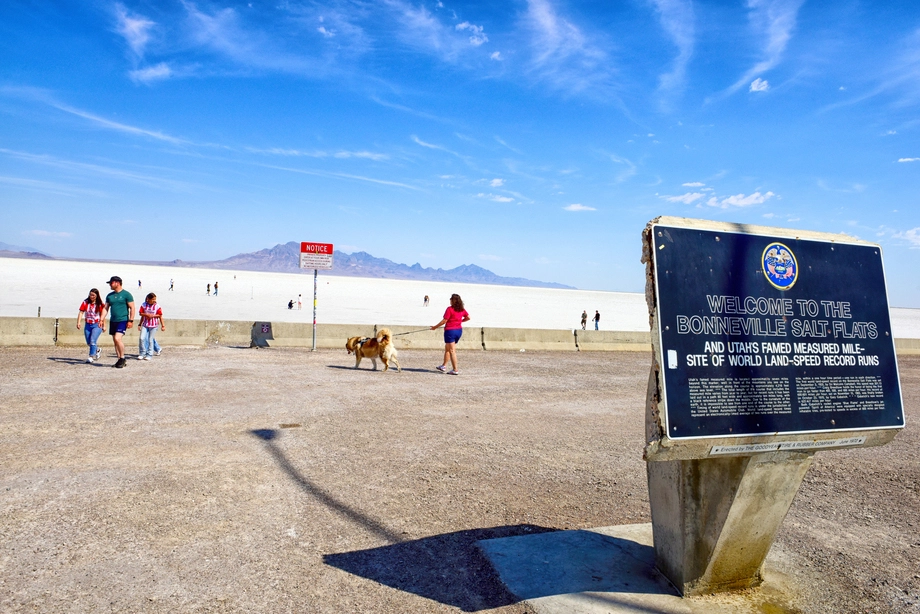 Bonneville Salt Flats – Journey to the Edge of the World
 Bonneville Salt Flats – Sunset Adventure of the White Desert
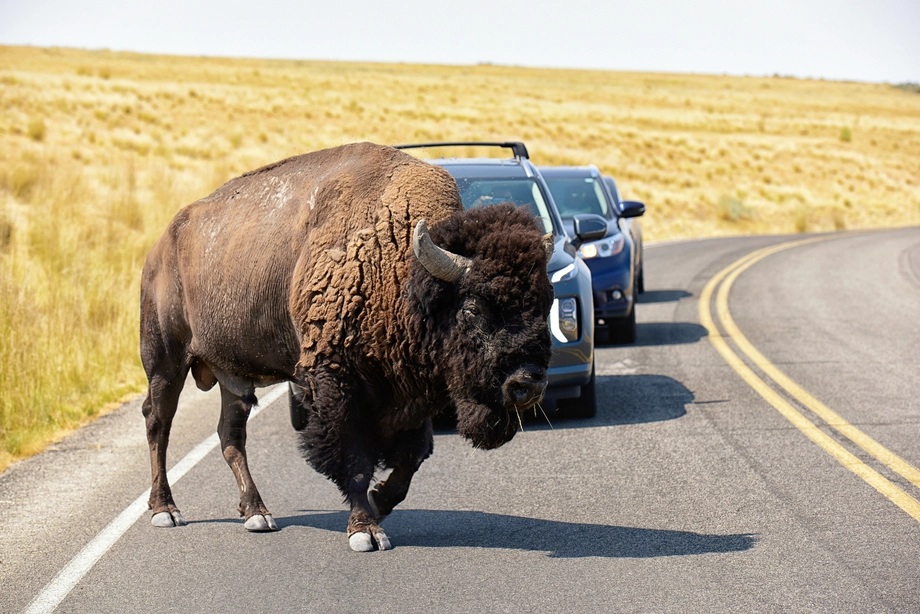 Antelope Island – Wild Heart of the Great Salt Lake Adventure
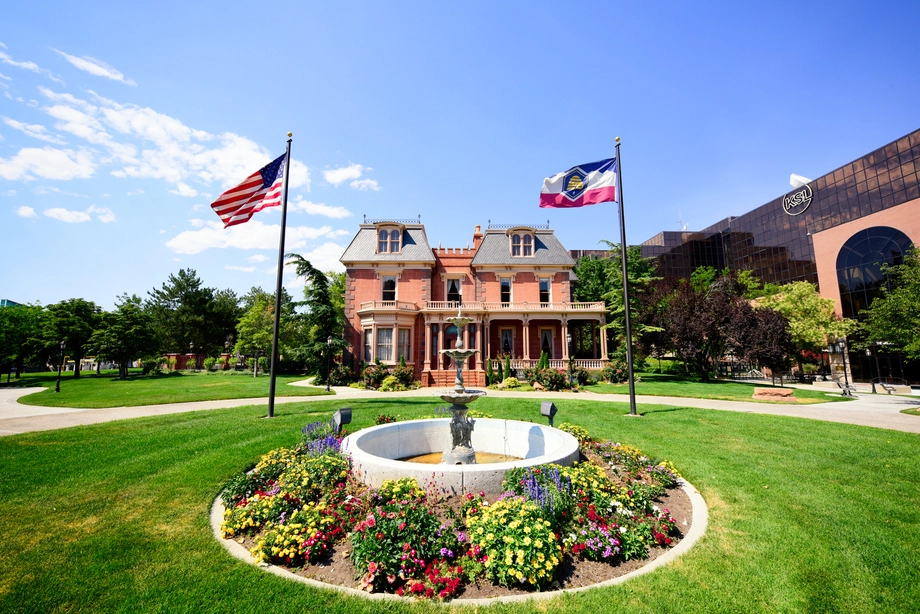 Salt Lake City – The City of Zion. Historical Interactive Walking Tour
 Antelope Island Sunset Wildlife Expedition – Great Salt Lake Odyssey