
Things to Do Near Salt Lake City: A Historic Downtown Walking Route
Aug 20, 2026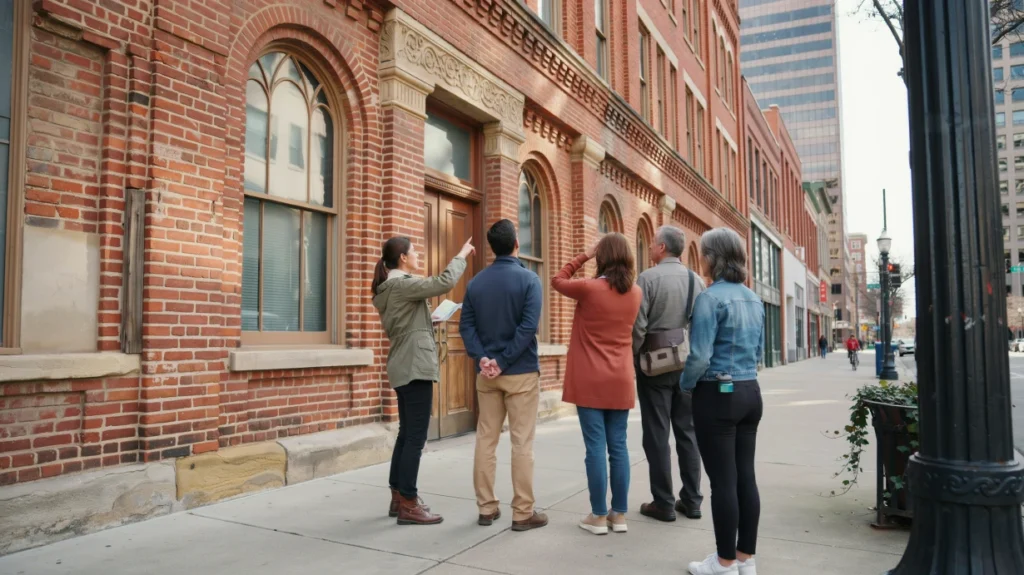
A self-guided downtown Salt Lake City walk can connect Temple Square, Exchange Place, and Central City in roughly 2–3 hours, leaving room in a short stay for a guided Utah landscape day trip.
Visitors who rush straight from the airport toward Utah’s parks can miss a compact downtown where religious, civic, commercial, and residential history sit within walking distance. We organize one-day tours from Salt Lake City to Antelope Island and the Bonneville Salt Flats, so we see why a simple urban loop is useful on an arrival day, a departure day, or the open half of a short visit.
This is a self-guided historic walking route for travelers who want architectural context without giving up the chance to see Utah’s open landscapes. Downtown’s grid makes the route easier to follow than it first appears, and the historic districts reveal a fuller city story than Temple Square alone.
How should you explore downtown Salt Lake City on a short visit?
Walk downtown independently in daylight for two to three hours, then reserve a guided trip beyond the city when you want landscapes without driving or parking logistics. This approach gives a limited stay both a readable urban history and time for the Great Salt Lake region or the Bonneville Salt Flats.
We recommend treating the walk as a focused route rather than a building-by-building mission to cover every landmark. Stop where the streetscape changes character, look up at materials and building massing, and leave margin for cafés, museum visits, construction detours, or weather.
For broader advice on deciding whether a city walk fits your first day, read our guide to choosing a Salt Lake City walking experience. Guided city walks exist, but this route is designed to work well on your own before joining us for destinations outside downtown.
How did we choose the buildings and districts on this route?
We selected stops that create a logical loop and represent Salt Lake City’s religious, civic, commercial, and residential layers without requiring a full day. The route prioritizes places where architecture helps explain how the city grew, rather than trying to rank every old building downtown.
Our route begins in the historic core because it is easy to orient around, moves through Exchange Place for the early-20th-century business story, then reaches Central City for the original block pattern and mixed neighborhood fabric. That sequence makes the shift from monumental buildings to everyday urban life visible on foot.
- Walkability: Each section connects through the central grid, reducing unnecessary backtracking.
- Historical contrast: The stops move from Temple Square’s landmark setting to commercial masonry and steel construction, then to housing and smaller-scale streets.
- Short-stay value: The route can be shortened after Exchange Place or extended into Central City according to your available time.
- Practical pairing: We chose a route that can fit around a seven-hour excursion rather than consume the entire visit.
We developed a mix of wildlife-focused trips, including Antelope Island and its bison herds, and open-landscape trips to the Bonneville Salt Flats because guests told us they wanted distinct kinds of experiences during one short Salt Lake City stay. A downtown walk answers the city-history part of that itinerary; a day tour answers the landscape part.
You found a hidden promo code!
Use code WOWBLOG at checkout and get 10% OFF any tour!
Limited time offer. Book now and save!
Browse ToursWhat is the best route overview for a historic downtown walk?
Start at Temple Square, continue south through the civic and commercial core to Exchange Place, walk east toward Central City, then return west by the street grid. Plan roughly 2–3 hours for the full loop, or about 60–90 minutes if you stop after Exchange Place.
| Route segment | What to notice | Time to allow |
|---|---|---|
| Temple Square historic core | Monumental religious buildings, public space, and formal stone architecture | 30–45 minutes |
| Civic and commercial streets | Transition from landmark-scale buildings to downtown business blocks | 15–25 minutes |
| Exchange Place Historic District | Early-20th-century steel-frame and masonry commercial construction | 20–35 minutes |
| Central City Historic District | Ten-acre blocks and a mixed residential-commercial streetscape | 30–45 minutes |
| Return walk | Grid orientation and optional stops that catch your attention | 20–30 minutes |
Suggested starting point and walking sequence
- Begin at Temple Square: Use the prominent religious buildings and open grounds to get your bearings.
- Walk south into the central business area: Notice how building scale and street activity change away from the square.
- Enter Exchange Place: Slow down here and compare façades, upper stories, and street-level storefront proportions.
- Continue east to Central City: Look for the transition from office and commercial blocks toward a neighborhood with homes, apartments, and local commercial buildings.
- Return west on the grid: Choose a direct route back toward downtown or extend the walk if your schedule allows.
Downtown Salt Lake City’s numbered grid is particularly helpful when you are self-guiding, since it makes it easier to judge direction and distance without constantly checking a map. Our explanation of how the city grid supports walking visitors can help you use that layout confidently.
What should you notice around Temple Square?
The Temple Square area is the route’s monumental historic core, where formal grounds and landmark religious architecture establish the city’s earliest visual identity. Focus on silhouettes, stonework, windows, and the deliberate relationship between buildings and open space.
Salt Lake Temple
The Salt Lake Temple is the visual anchor of the area. From public viewpoints, notice its vertical towers, strong symmetry, and the way its pale stone exterior separates it from the lower, more commercial buildings beyond the square.
Salt Lake Tabernacle
The Salt Lake Tabernacle is worth viewing as an architectural contrast to the temple. Its broad, curved roof form reads differently from the temple’s vertical profile, making the pair a useful lesson in how two historic structures can serve distinct spatial and ceremonial purposes.
Salt Lake Assembly Hall
The Salt Lake Assembly Hall adds another change in form and scale within the same historic setting. Pay attention to its more intimate massing and decorative outline, especially after looking at the larger temple and tabernacle.
Access conditions, construction activity, and interior availability can change, so plan this section around exterior viewing and treat any interior visit as a bonus. If you want more visual cues for reading façades as you walk, our downtown architecture quick guide adds practical detail without turning the walk into a technical exercise.
Why is Exchange Place Historic District worth a stop?
Exchange Place is essential because it captures Salt Lake City’s early-20th-century commercial boom in a concentrated group of buildings. Its ten buildings, constructed from 1903 to 1917, demonstrate the period’s “fireproof” steel-frame and masonry construction methods.
This district broadens the downtown story beyond religious and government landmarks. It shows a city investing in modern commercial premises during a period when steel framing, masonry exteriors, and durable construction signaled ambition and permanence.
Use a simple three-part viewing method
- Look upward: Upper floors often reveal the building’s original rhythm better than ground-level signage or later storefront changes.
- Compare materials: Identify where brick, stone, and metal elements create texture and visual weight.
- Read the block as a group: The district matters because the buildings collectively show a commercial era, not because every façade needs to be studied in isolation.
Give Exchange Place at least 20 minutes if historic commercial architecture interests you. Travelers with only an hour downtown can make Temple Square and Exchange Place their core pairing, then save Central City for a second morning or afternoon.
What makes Central City Historic District different from the downtown core?
Central City Historic District is valuable because it preserves the original ten-acre block pattern and combines homes, apartment buildings, and commercial uses five blocks east of the central business district. It is the best stop for seeing how historic Salt Lake City functioned as a lived-in urban neighborhood, not only as a civic center.
The change is subtle but important. As you walk east, pay attention to the shift from larger business blocks toward mixed-use streets where single-family homes, apartment complexes, and commercial buildings coexist.
What to look for in the neighborhood fabric
Do not approach Central City as a hunt for one famous façade. Its historical value lies in the street pattern and the mix of building types, which together retain evidence of the city’s original planning structure.
Keep your route flexible here. A traveler who enjoys residential streets and urban form may spend 45 minutes or more; someone focused on landmark architecture can walk through more quickly and return toward the downtown core.
When is the best time to do this walk, and how can you stay comfortable?
Daylight hours are the practical choice for reading architectural details and navigating an unfamiliar downtown. Choose a morning or later afternoon in warmer months, allow extra time in snow or icy conditions, and bring water because seasonal heat and dry air can make even a short urban walk feel more demanding.
Stay on established sidewalks, use marked crossings, and make a weather check part of the plan. Downtown is a functioning city center, so construction, street events, and building access can affect the exact path on a given day.
- For a morning walk: Start early enough to finish before a midday tour departure or before the strongest summer heat.
- For an afternoon walk: Begin with Temple Square and keep Central City optional if daylight is limited.
- For winter: Wear shoes with reliable traction and shorten the route if sidewalks are snowy or icy.
- For any season: Keep your phone charged, carry water, and use a map for the return segment.
On our day tours, we include bottled water, tea, coffee, hot chocolate, and granola bars because visitors often underestimate how dry and exposed Utah’s landscapes can be. That preparation matters even more on routes beyond downtown, where a quick stop for supplies may not be convenient.
Which Utah day trip pairs best with this downtown route?
Choose Antelope Island when you want wildlife, Great Salt Lake shoreline, and short walks; choose the Bonneville Salt Flats when wide-open terrain and photography are the priority. Both options remove the need for a rental car, navigation, and parking while you explore beyond the walkable center.
Pair the walk with Antelope Island
Our Antelope Island Tour from Salt Lake City — From $120 | Matei Travel is an approximately seven-hour small-group trip with hotel pickup, transportation in a modern Mercedes Sprinter, and park entrance included. It has departures at 8:30 a.m. and 2:30 p.m., with groups capped at 13 guests.
We deliberately cap this tour at 13 guests and use modern Mercedes Sprinter vehicles because we want a comfortable small-group experience rather than a crowded bus tour. We structure the itinerary to allow time for short hikes, bison-viewing opportunities, Fielding Garr Ranch, scenic viewpoints, the Great Salt Lake shoreline, and context on the brine shrimp industry instead of rushing from one viewpoint to the next.
The 2:30 p.m. departure can be a practical fit after a condensed morning downtown route, while an 8:30 a.m. departure may suit travelers who prefer their historic walk later in the day. Wildlife is never guaranteed, but the itinerary is designed around the island’s natural and cultural highlights.
Pair the walk with the Bonneville Salt Flats
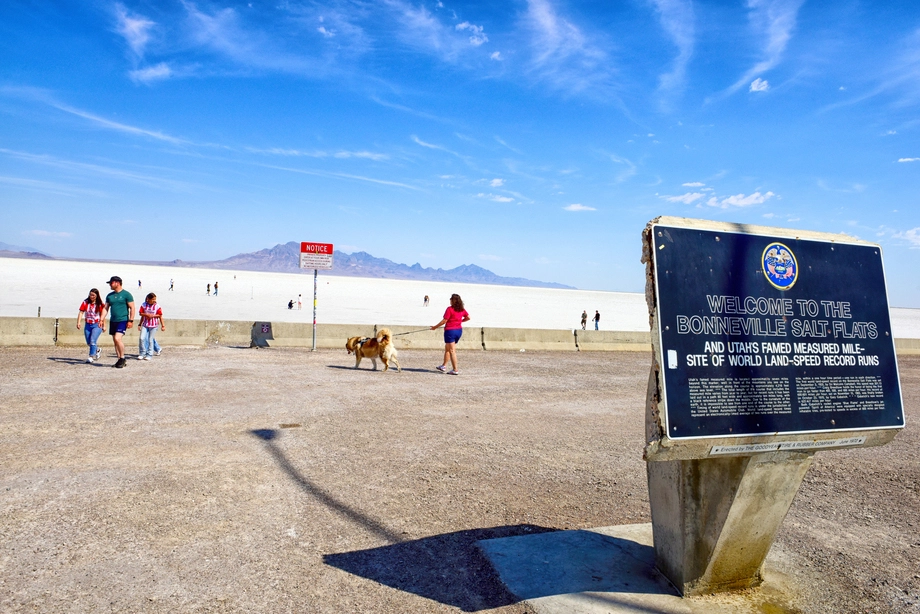
Our Bonneville Salt Flats Tour from Salt Lake City — From $120 | Matei Travel and Bonneville Salt Flats Sunset Adventure of the White Desert — From $120 | Matei Travel are full-day excursions built to give guests meaningful time for photography and walking on the flats, rather than a brief roadside stop. Pick the sunset-focused option if evening light is part of your preference, while remembering that weather and conditions cannot be promised.
For travelers comparing the best scenic drives near Salt Lake City, the key tradeoff is straightforward: driving independently means managing the route, fuel, parking, and timing yourself; joining a guided trip lets us handle transport, curated stops, and basic supplies. Browse our Utah Day Tours from Salt Lake City to compare available dates and choose the landscape experience that fits the rest of your stay.
How can you turn this route into a realistic one- or two-day plan?
A one-day visitor should choose either a short downtown walk plus an afternoon Antelope Island departure, or a full-day landscape trip with only a brief downtown evening stroll. With two days, use one morning or afternoon for the complete historic loop and reserve the other day for Antelope Island or the Bonneville Salt Flats.
- Arrival-day plan: Walk Temple Square, Exchange Place, and part of Central City after checking in, then keep the next day open for a full excursion.
- One-day split plan: Complete the Temple Square and Exchange Place sections in the morning, then consider an afternoon Antelope Island departure if the timing works for your travel schedule.
- Two-day plan: Do the full loop at an unhurried pace on one day and take a dedicated natural-site tour on the other.
- No-car plan: Stay downtown, walk the route, and use hotel pickup for the landscape day so you do not need to rent a vehicle.
We design our one-day tours for travelers with limited time who still want key Utah landscapes without taking on the logistics themselves. The right plan is not the most packed one; it is the one that leaves enough margin to enjoy both the historic streets and the destination beyond them.
What should you check before starting the walk?
Confirm weather, daylight, building-access conditions, your tour departure time, and the distance you are comfortable walking. A few minutes of preparation keeps the route flexible and prevents a downtown stroll from interfering with the rest of a short itinerary.
- Footwear: Choose comfortable walking shoes appropriate for the season.
- Timing: Allow more time if you plan to photograph façades, visit interiors where available, or stop for food.
- Navigation: Save the route on your phone and note the location of your hotel before heading east toward Central City.
- Tour logistics: Check the departure time and inclusions before committing to a same-day combination.
- Route flexibility: Make Exchange Place your natural stopping point if you need to shorten the walk.
Downtown Salt Lake City rewards a focused walk because Temple Square, Exchange Place, and Central City make the city’s layers easy to see in sequence. We use that same time-aware mindset when building excursions to Antelope Island and the Bonneville Salt Flats: enough time at meaningful stops, without asking visitors to solve every transport detail. If you have one or two days in the city, choose your preferred date through our Utah Day Tours collection and reserve the landscape portion of your itinerary in advance.
How long is the complete historic downtown Salt Lake City route?
Allow about two to three hours for the full loop, depending on pace, photo stops, and how long you spend in Central City.
Can I do a shorter version of this walk?
Yes. Temple Square and Exchange Place make a strong shortened route that generally fits into a 60–90 minute window.
What is the historical importance of Exchange Place?
Its ten buildings date from 1903 through 1917 and illustrate early commercial use of steel frames and masonry construction intended to be fire resistant.
Why should I walk to Central City Historic District?
Central City preserves ten-acre blocks and a mix of homes, apartments, and commercial buildings that show the residential side of historic urban development.
Is Antelope Island possible without renting a car?
Yes. The Antelope Island Tour includes hotel pickup, transportation, and park admission, so visitors can travel from Salt Lake City without driving.
How long is the Antelope Island Tour from Salt Lake City?
The tour lasts approximately seven hours and operates with a maximum of 13 guests.
What should I bring for a downtown walk and a Utah landscape tour?
Bring season-appropriate clothing, comfortable shoes, water for the city walk, and a charged phone. Day-tour essentials include bottled water, hot drinks, and granola bars.

Dima, owner and guide, is passionate in his advocacy for the health of Utah\'s parks and...
Read more →Such an amazing trip and experience. Dima is a cool tour guide, very humorous and willing...
Read more →Your was super thorough and guide was very helpful and informative throughout the tour
Read more →Our guide was very knowledgeable, friendly and helpful. We saw lots of interesting parts of Utah...
Read more → Antelope Island – Wild Heart of the Great Salt Lake Adventure
 Antelope Island Sunset Wildlife Expedition – Great Salt Lake Odyssey
 Bonneville Salt Flats – Sunset Adventure of the White Desert
 Bonneville Salt Flats – Journey to the Edge of the World