
Why Quick-Hit Zion Hikes Can Disappoint on Day Two

A rushed Zion plan often burns your best energy on day one, then repeats the same crowds, shuttles, and terrain on day two. Better pacing, more variety, and smarter routing fix that.
Day one in Zion often looks great on paper. You land a big-name hike, take the classic canyon photos, and feel like you are making the most of a short trip. Then day two arrives and the same plan that felt efficient suddenly feels crowded, repetitive, or far more tiring than expected.
This is a trip-planning problem, not a character flaw. For travelers trying to squeeze Zion into one to three days, especially as part of a wider Utah trip, the real challenge is not choosing the most famous trail. It is knowing how to structure effort, timing, and variety so the second day still feels worth it.
If you are searching for a step-by-step planning guide to visiting Zion National Park for first-timers, this is the practical version of that advice. We see the same mismatch often. Travelers build a short DIY plan around one or two headline hikes, but they do not account for shuttle repetition, crowd pressure, or how much less exciting the same corridor can feel the next morning.
Why does Zion so often peak on day one and flatten on day two?
Because many short Zion plans spend their best energy, novelty, and patience on the first big hike. Day two then repeats the same transport pattern, the same canyon setting, and the same physical strain, but with less adrenaline and less margin for delays.
A common version is easy to recognize. Day one is built around Angels Landing or The Narrows, with an early start, lots of anticipation, and a sense of achievement. Day two is supposed to be another full canyon day, but now the traveler is sore, the shuttle line feels longer, every viewpoint requires more effort, and even a good trail can feel like a comedown instead of a fresh experience.
This is why a short, high-intensity Zion segment can disappoint even when nothing technically goes wrong. The problem is usually not that Zion failed. The problem is that the plan assumed the second day would feel as fresh as the first, even though the conditions are usually less favorable.
What goes wrong with quick-hit Zion plans?
Quick-hit Zion plans usually fail in predictable ways. The biggest issues are crowd concentration, shuttle fatigue, physical overcommitment, repeated scenery, unrealistic timing from Salt Lake City, and underestimating heat or weather.
These are not random inconveniences. They reinforce each other, which is why a plan can look realistic at home and still feel frustrating on the ground.
- Overcrowding on the same few trails: A lot of short visits target the same signature routes, so the experience narrows around the busiest parts of the park instead of broadening across different kinds of scenery.
- Shuttle fatigue: Even when the shuttle system is working as intended, it adds waiting, boarding, and stop-to-stop decision making. By day two, that friction feels heavier because the novelty is gone.
- Physical overcommitment on day one: A hard opening day can drain the next day more than travelers expect. Sore legs, poor recovery, and heat exposure change what sounds fun the next morning.
- Lack of variety in viewpoints and pace: If both days stay in the same main corridor, the second day can feel visually repetitive, even when the trail itself is different.
- Unrealistic timing from Salt Lake City: Travelers sometimes add a long transfer day, a late arrival, or a same-day push into Zion and still expect two full-energy hiking days. That is where the plan starts breaking before the first trailhead.
- Weather and heat misjudgment: A hot afternoon, changing water conditions, or a simple midday slowdown can turn a tightly packed plan into a slog.
How do crowd dynamics on Zion’s most popular hikes affect day-two enjoyment?
Crowding reduces more than trail speed. It also lowers the sense of immersion and makes the second day feel like more logistics for less payoff.
According to the National Park Service, visitors have reported overcrowding concerns on popular trails such as Angels Landing, and that matters because crowd pressure changes the emotional arc of a short trip. If day one already required patience around other hikers, the idea of returning to similar conditions on day two feels less like adventure and more like repetition.
That is one reason we do not treat the most famous trail as the whole objective. A satisfying short park visit depends on how that hike sits within the rest of the route, not just whether it appears on the itinerary.
You found a hidden promo code!
Use code WOWBLOG at checkout and get 10% OFF any tour!
Limited time offer. Book now and save!
Browse ToursHow can you tell which planning mistake is actually causing the letdown?
You can usually isolate the root cause by looking at when the frustration starts. If disappointment begins before the trail, it is often a logistics issue. If it starts mid-hike, it is more likely an effort, heat, or expectations problem.
Use these quick checks before rewriting the whole trip. They help you fix the right thing instead of assuming you simply picked the wrong park.
- Check your energy before breakfast: If you wake up sore, dehydrated, or unmotivated, day one was probably too ambitious for back-to-back effort.
- Track where patience drops: If your mood sinks during parking, shuttle waits, or repeated stop patterns, the friction is logistical rather than scenic.
- Compare your two planned settings: If both days rely on the same valley corridor and similar viewpoints, the issue is lack of contrast, not lack of beauty.
- Look at transfer timing: If your route from Salt Lake City compressed arrival, dinner, sleep, and an early hike into one tight window, the problem started with the travel day.
- Review heat exposure: If the most demanding sections fall in the warmest part of the day, fatigue is being amplified by timing, not only by distance.
- Ask whether day two has its own identity: If the second day is basically “more Zion” with no different rhythm, it was never designed to feel distinct.
What does a satisfying two-day Zion plan actually look like?
A good two-day Zion segment feels varied, not maximal. It usually includes one true anchor experience, one lighter or contrasting day, and enough space for viewpoints, photos, and recovery without constant queueing.
The key is not doing less for the sake of it. The key is distributing effort so that the second day still delivers a different kind of reward.
- One headline hike, not two: Pick the experience you would most regret missing, then build the rest of the visit around it.
- A complementary second day: Follow a high-effort trail with shorter walks, scenic stops, or a different landscape rather than another physical peak.
- Visible contrast: Zion pairs well with a change in terrain and viewpoint style. In a short Utah trip, Bryce Canyon often works better as a day-two contrast than trying to force another equally intense Zion day.
- Realistic transitions: Leave room for arrival, food, breaks, and travel time so the trip does not feel like one long scramble between milestones.
- Time to absorb the place: Great park days include unhurried overlooks and short walks, not just one line item after another.
This is also why many short trips work better as a broader Utah circuit than as a Zion-only sprint. When the second day offers a different visual language, different trail texture, and a different tempo, the trip feels larger than the number of days suggests.
How should you redesign your plan so day two is not a letdown?
Redesigning the trip means solving the specific failure point, not just cutting items at random. For most travelers, that means choosing one anchor hike, staggering effort, and giving day two a different pace or setting.
If you are still deciding how to visit Zion National Park on a short trip, use the sequence below as your planning filter.
- Choose one anchor experience: Make Angels Landing or The Narrows your main exertion day, not one stop in a stack of demanding plans.
- Protect the day before and after it: Avoid pairing your hardest hike with a late arrival, a long transfer, or another strenuous trail the next morning.
- Build variety on purpose: Add scenic drives, viewpoints, and short walks so the trip does not depend on constant trail intensity to feel memorable.
- Consider the Salt Lake City start honestly: If your flight and arrival flow work better there, a structured multi-park route can use that gateway more efficiently than a rushed dash to one park base.
- Mix Zion with another park when you only have two or three days: A different landscape often gives a better second day than repeating the same corridor under more fatigue.
- Match terrain to your real fitness, not your ideal version of it: Hiking ambition falls apart fast when the body is tired, hot, or under-fueled.
Which fix path should you choose based on how severe the problem is?
The right fix depends on whether your issue is mild boredom, moderate fatigue, or a fundamentally overloaded route. Minor problems can be corrected with pacing changes. Severe ones usually require rebuilding the trip around fewer high-effort moments and more geographic contrast.
| Severity | Typical signals | Best fix |
|---|---|---|
| Low | Day two feels slightly repetitive, but energy is fine | Keep Zion, but make day two shorter and more scenic. Reduce shuttle dependence and add relaxed viewpoints or brief walks. |
| Medium | Soreness, slower pace, frustration with waiting, less excitement | Keep one major hike only. Move the second day toward a contrasting landscape or a lighter schedule with clear recovery time. |
| High | Late arrival, stacked hard hikes, long transfers, heat stress, unrealistic timing | Rebuild the route entirely. Use Zion as one anchor inside a broader Utah plan rather than trying to max it out in 24 to 36 hours. |
For travelers who insist on Angels Landing and The Narrows back-to-back, the tradeoff is straightforward. You may complete both, but the second effort often comes with lower energy, less flexibility, and a higher chance that crowds or conditions will make the day feel more like management than enjoyment.
If you only have one day in Zion, you are not doing it wrong. The smart move is to commit to one excellent experience, set realistic expectations, and save variety for a future Utah loop rather than pretending one day can deliver everything.
When does DIY still work, and when should you hand the plan off?
DIY works when your schedule is simple, your fitness matches the route, and you are comfortable losing some time to self-managed logistics. It stops working well when the trip depends on tight timing, multi-park sequencing, or getting the physical pacing exactly right.
These are the clearest escalation triggers:
- You only have two to four days total in Utah: At that length, poor sequencing hurts more because there is no spare day to absorb mistakes.
- You want Zion plus another major park: This is where route design matters more than trail selection.
- Your group has mixed abilities or expectations: Clear communication about distance, duration, and terrain becomes important before the trip starts.
- You want flexibility but keep building overly tight plans: In practice, many DIY schedules are more rigid than small-group guiding because shuttles, parking, and timing leave little room to adapt.
- You are unsure whether Salt Lake City is a smart starting point: For many travelers, it is a useful gateway because flights, a first city day, and a structured departure into the parks can simplify the whole trip.
That is where our Utah National Parks Tours are meant to help. We organize tours from Salt Lake City to Zion, Bryce Canyon, Arches, Canyonlands, and Capitol Reef, and we design those park days so travelers can see more than one iconic landscape without treating every day like a race against the clock.
How do we approach Zion inside a short Utah trip from Salt Lake City?
We treat Zion as one part of a well-paced route, not as a rushed box to check. That means explaining walking level, duration, and terrain in advance, then sequencing park days so the trip keeps its momentum instead of burning out after the first peak experience.
Our local guides lead small groups, which matters for this kind of trip. Travelers can ask practical questions about effort, timing, and what a day will actually feel like, and that reduces the gap between the imagined plan and the lived one.
We use the same planning discipline in our park itineraries that we apply to city touring. On our Salt Lake City walking experiences, we already make route length, timing, and terrain clear so guests know what kind of day they are choosing. The same logic carries into our park planning, where realistic pacing matters even more.
For travelers who want a shorter guided piece before or after a park trip, our Utah day tours can also make sense as a lower-commitment way to add scenery without forcing another hard hiking day.
What should you check before locking in any short Zion itinerary?
A short Zion plan works best when it passes a simple prevention checklist. If you cannot answer these questions clearly, the trip is still too fragile.
- Is there only one true high-effort anchor? If not, you are probably stacking strain.
- Does day two feel different on paper? If it sounds like a weaker copy of day one, revise it.
- Did you account for transfer fatigue from your arrival city? A plan that ignores travel-day energy usually disappoints.
- Do all travelers understand the terrain and pace? Shared expectations reduce conflict and overreach.
- Is there room for photos, views, food, and slow moments? If every hour is spoken for, the itinerary is too tight.
- Would the trip still feel worthwhile if one trail is more crowded than expected? If the answer is no, the plan depends too heavily on one perfect outcome.
The best short Utah trips are not the ones with the most checked boxes. They are the ones that still feel good on the second day.
Quick-hit Zion plans disappoint when they confuse intensity with value. A stronger short trip uses one anchor hike, protects recovery, and adds contrast so the second day feels new instead of depleted. For many travelers, that means seeing Zion within a broader Utah route from Salt Lake City rather than isolating it in an overpacked sprint. Explore our Utah National Parks Tours or send us your dates and fitness level if you want help shaping a realistic Zion-plus-another-park plan.
Is one day in Zion a bad idea?
No. One day can work well if you choose one main experience and avoid expecting a complete Zion checklist.
Why does the second day feel less exciting even when the views are still great?
The novelty drops while fatigue and logistics become more noticeable. Repeating the same shuttle pattern and canyon setting can make a good day feel flatter.
Should I do Angels Landing and The Narrows on back-to-back days?
You can aim for that, but it is a high-effort pairing with less margin for crowds, heat, and recovery. Most short trips feel better when one of those is the clear centerpiece.
Does starting from Salt Lake City make sense for a Zion trip?
For many travelers, yes. It can simplify flights and work better when Zion is part of a multi-park route instead of a fixed one-park base.
What makes a two-day plan feel balanced?
One demanding anchor, one lighter or contrasting day, and enough time for viewpoints and breaks usually creates a better rhythm than two maximum-effort hiking days.
Are guided trips too rigid for this kind of travel?
Not necessarily. Small-group planning often creates more realistic flexibility because you are not spending your energy solving parking, timing, and route decisions on the fly.
I am not a strong hiker. Can I still enjoy Zion as part of a multi-park trip?
Yes. A good plan can emphasize overlooks, scenic drives, and shorter walks so you still get major scenery without turning every day into a strenuous hike.
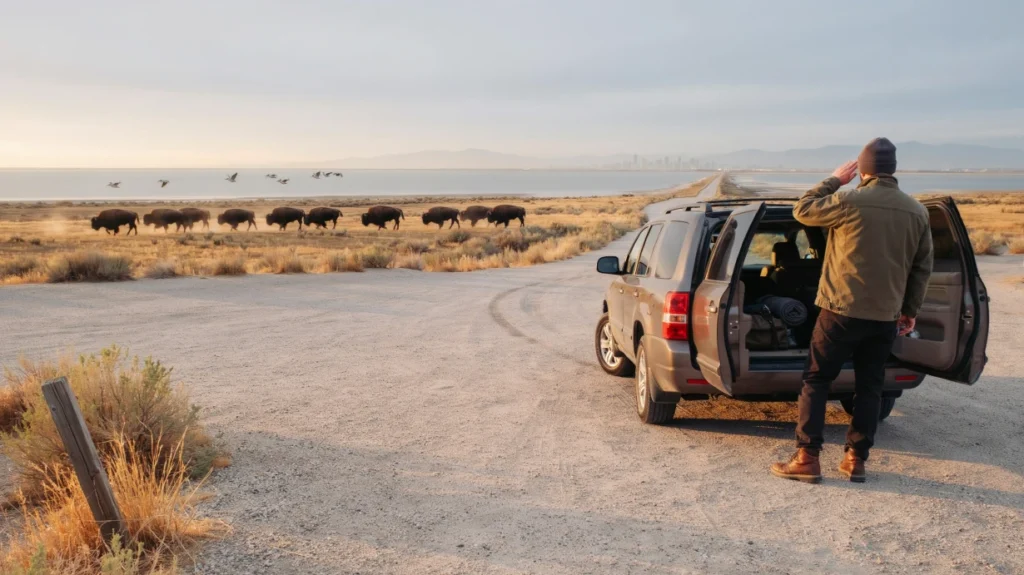 Antelope Island Day Tour or Sunset Wildlife Tour: Which Fits Your Salt Lake City Schedule?
 How to Dress for Changing Weather on Antelope Island
 How to Photograph People at Bonneville Salt Flats at Sunset
 How to Dress for Wind and Glare at Bonneville Salt Flats
 What a Guide-Led Utah Day Tour Handles for You
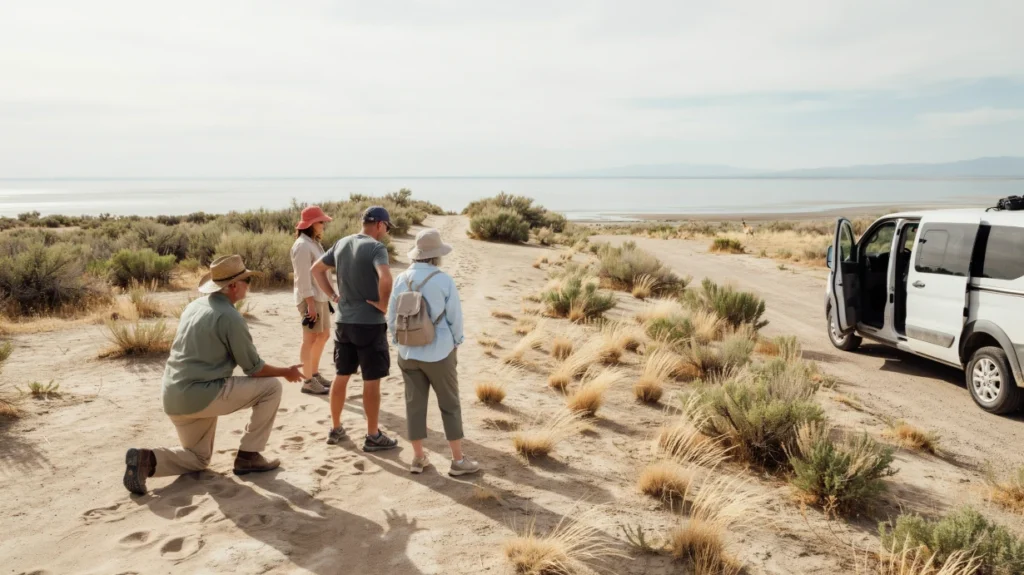 Why Wildlife Sightings Cannot Be Guaranteed on Antelope Island

The tour was great and beautiful. Dima, the tour guide, explained everything clearly and had some...
Read more →What a beautiful experience! The drive is about 2 hours one way with interesting scenery the...
Read more →(From North Carolina on a business trip) '+ 'HANDS DOWN the best tour/guide I’ve ever had. And...
Read more →Went to Antelope Island. Terrible. Tour guide didn\'t do what he said he was going to...
Read more → Bonneville Salt Flats – Sunset Adventure of the White Desert
 Antelope Island – Wild Heart of the Great Salt Lake Adventure
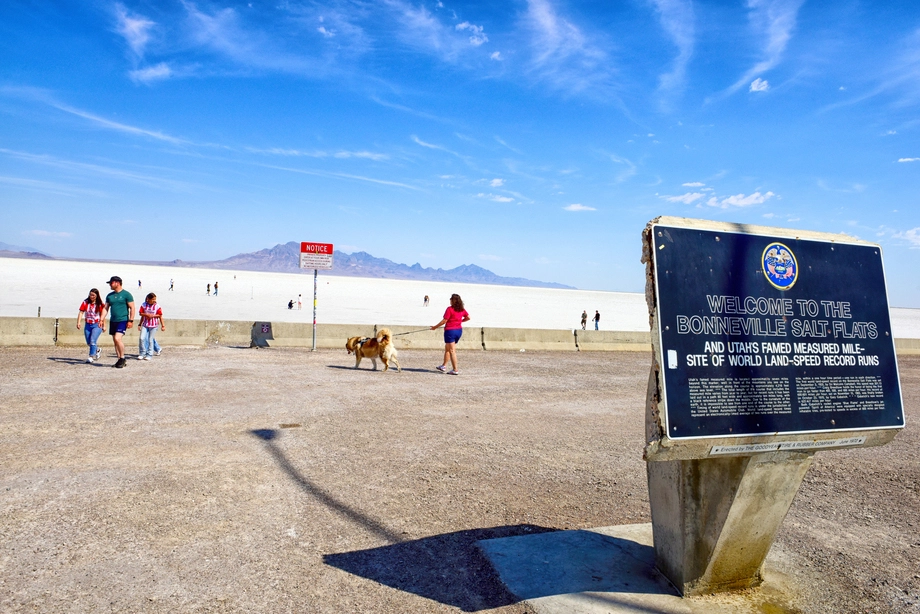 Bonneville Salt Flats – Journey to the Edge of the World
 Antelope Island Sunset Wildlife Expedition – Great Salt Lake Odyssey