
Who Should Book a Zion, Bryce, and Arches Photo Expedition?
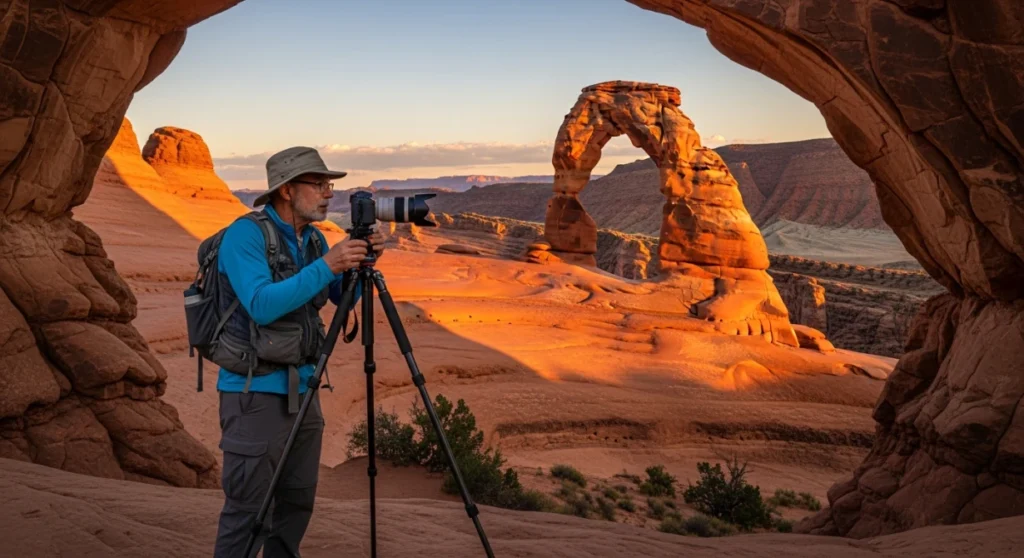
This trip suits confident intermediate to advanced photographers who want a small-group, natural-light schedule and can handle active park days. Skip it if you want a beginner class, a bus-style overview, or technical backcountry routes.
Many travelers assume a photo expedition is just a prettier version of a park tour. In practice, the hardest part is not finding scenery. It is matching your shooting goals to long driving days, dawn and dusk timing, park rules, shuttle systems, and the physical reality of carrying camera gear across high desert terrain.
That is why this category exists. A Zion, Bryce, and Arches photography trip is a specialized multi-day national parks tour for travelers who care more about light, pacing, and shooting space than about checking off every overlook as fast as possible. We build these Utah itineraries from the standpoint that logistics and regulations shape the creative experience just as much as camera skill.
Who is this Zion, Bryce, and Arches photo expedition really for?
It is best for travelers who already enjoy making deliberate landscape photographs and want a small, focused trip built around timing, access, and realistic park pacing. It is not the right choice for people expecting a casual sightseeing bus day, a beginner camera class, or a rugged technical adventure with overnight permits and ropes.
A multi-day guided photography expedition visiting Zion, Bryce and Arches for advanced photographers fits strongest when your expectations line up with how these parks actually work. The people who get the most from it usually recognize themselves in most of the traits below.
- Strong intermediate to advanced shooter: You do not need to be a full-time pro, but you should already understand your camera well enough to work without constant button-by-button instruction.
- Patient with light: You are happy to be in the right place early, stay out late, and sometimes spend more time at one viewpoint instead of rushing through a long attraction list.
- Comfortable carrying gear: You can walk with a camera kit, tripod, water, and layers on paved paths, overlooks, and short to moderate trail segments.
- Interested in small-group travel: You prefer room to set up, ask questions, and work compositions without a crowd of people cycling on and off the bus.
- Open to structure: You want someone else to handle the route logic, park sequencing, and realistic day flow from Salt Lake City rather than spending your own time decoding every moving part.
- Rule-aware: You want a trip designed around current park restrictions instead of improvising your way into a frustrating or noncompliant shooting plan.
You should probably not book if your priority is sleeping in, making lots of shopping or restaurant stops, bringing along companions who dislike waiting for photographers, or learning photography from scratch. In those cases, a more general sightseeing itinerary or a simpler Utah outing will usually feel better paced.
Photographic skill level: how advanced should you be?
This is best for confident intermediate and advanced photographers, not just experts with published portfolios. You should be comfortable using manual or semi-manual settings, working with a tripod, and making your own composition decisions without needing a beginner workshop.
In this context, “advanced” does not mean celebrity status or commercial credentials. It means you can react to changing light, understand exposure well enough to work independently, and spend location time refining a frame instead of trying to learn what aperture or shutter speed does from the ground up.
That is why this trip is a poor fit for travelers whose main need is camera basics. If you are still figuring out autofocus modes, exposure triangle fundamentals, or how to mount and use a tripod efficiently, you may feel rushed rather than supported. A photo expedition assumes the parks themselves are the classroom context, not that the guide is there to deliver a first camera lesson.
- You are ready if: You can change key settings quickly, review your own images critically, and know how you like to shoot in low light or contrasty desert conditions.
- You are probably ready enough if: You are a serious hobbyist who shoots regularly and wants better field decisions, better timing, and better access planning.
- You should wait if: You want a fundamentals course on camera operation before dealing with park pacing, travel fatigue, and changing weather.
We can adapt a multi-day Utah route to be more photography-focused for groups that fit this profile, but we do not position it as a beginner boot camp. That honesty matters because skill mismatch is one of the fastest ways to turn a beautiful itinerary into a stressful one.
You found a hidden promo code!
Use code WOWBLOG at checkout and get 10% OFF any tour!
Limited time offer. Book now and save!
Browse ToursFitness and comfort in the desert environment
You do not need to be an endurance athlete, but you do need to be comfortable with early starts, time on your feet, uneven ground in places, and carrying your own equipment. The standard version is built around accessible viewpoints and day hikes rather than technical routes, yet it is still an active trip.
The physical challenge is rarely one dramatic hike. It is the cumulative effect of several days of driving, stopping, walking, waiting for light, getting back in the vehicle, and doing it again before and after sunrise. Add dry air, elevation changes, seasonal temperature swings, and a tripod on your shoulder, and the trip feels more demanding than a generic scenic tour.
Travelers who do well on this kind of itinerary usually handle the following without surprise:
- Early departures: Dawn light does not wait for a leisurely breakfast schedule.
- Late finishes: Sunset and blue-hour work can make for long park days.
- Variable weather: Utah can swing from cold mornings to warm afternoons, especially across multiple parks and elevations.
- Gear carry: Even short walks feel longer with a camera body, lenses, tripod, water, and layers.
- Repeated stops: Photography pacing often means getting out often, standing around, then moving again.
Who tends to struggle? Travelers with very low tolerance for cold dawns, long vehicle days, or any schedule disruption tied to weather and light. The same applies to people who want every walk to be optional and every stop to be brief. If that sounds like you, a broader scenic itinerary may be the better call.
One practical advantage of our Utah tours is that we publish route descriptions with useful expectation-setting such as duration, terrain, and walking level. That matters because the right physical fit is not about proving toughness. It is about knowing your comfort threshold before you commit.
Travel style: small, focused group vs. sightseeing bus
A real photo expedition works best in a small group because photographers need setup room, time to concentrate, and the ability to ask detailed questions. If you are picturing a large panoramic bus tour with quick hop-off stops, this is the wrong product category.
The group format matters especially in Arches. Commercial photography instruction groups there are capped at 15 people including the guide, which is a practical reminder that serious shooting and large-volume touring do not mix well. For participants, that limit is not a drawback. It is what protects tripod space, sightlines, and a calmer working rhythm.
This is also why a photographer-first departure feels different from a standard sightseeing run. The day is built around where the light will be usable, how much time a location deserves, and whether the group can move smoothly without turning every stop into a queue. We already design small-group experiences in Utah, including local guided walking tours in Salt Lake City where guests can ask questions easily, and the same logic carries over to park itineraries.
If your priority is seeing the most landmarks with the least waiting, a broader park tour is probably the better fit. If your priority is making deliberate images with fewer people around you, a specialized trip makes more sense.
For travelers who want to compare that broader option first, our Utah National Parks Tours page shows how our multi-day routes from Salt Lake City are structured when the goal is to cover Utah’s flagship parks without self-driving every mile yourself.
What this expedition is, and is not, photography-wise
It is a natural-light landscape trip built around dawn, dusk, tripods, patient composition work, and realistic roadside or day-hike access. It is not a rule-bending night shoot, a drone trip, or a creative-lighting workshop.
That distinction is important because many people imagine desert photography as a free-for-all once the sun drops. In Arches, artificial light cannot be used to illuminate landscapes, rock formations, or other park features, so the expedition has to be designed around available light rather than light painting. If that kind of nighttime setup is central to your creative goals, this three-park format will feel restrictive.
Zion creates a different boundary. Permits are required there for overnight backpacking, overnight climbing bivouacs, and certain canyoneering routes, which means a standard photography departure focuses on accessible viewpoints and day hikes rather than technical or overnight objectives. That is good news for travelers who want dramatic scenery without turning the trip into an expedition in the mountaineering sense.
- Yes: Sunrise and sunset timing, careful framing, tripod-based work, repeated time at strong viewpoints, and day-accessible landscape locations.
- No: Drone use in the parks, artificial-light landscape setups in Arches, or assuming the guide will take the group into restricted terrain.
- Also no: Expecting every iconic composition to be available on demand regardless of weather, crowds, or current park operations.
If your creative interests are aligned with natural light and disciplined field craft, these boundaries are not a compromise. They are part of what makes the trip coherent. If your goals depend on special effects or technical backcountry access, it is better to know now that this is not that format.
Regulations that quietly shape your shooting experience
Park rules are not side notes. They determine group size, where the trip can reasonably go, and what kind of photography makes sense. A well-run itinerary feels smoother because those limits are built into the design before you ever arrive.
There are four rule patterns that matter most here. First, Arches limits commercial photography instruction groups to 15 people including the guide, which pushes any serious operator toward intentionally small departures. Second, as of January 4, 2025, the EXPLORE Act generally removes permits and fees for filming, still photography, or audio recording involving eight or fewer people in public areas, which makes small, focused groups simpler and more flexible to operate than very large ones.
Third, Arches prohibits artificial lighting on landscapes and formations, so the shooting plan has to respect natural light instead of building around night illumination tricks. Fourth, Zion requires permits for overnight backpacking, overnight climbing bivouacs, and specific canyoneering routes, so an ordinary photo itinerary should stay grounded in places that can be visited legally and realistically on a multi-day route.
Our role is to translate those constraints into a trip that still feels creative. You should not have to spend your planning time sorting out which activities need permits, whether a large group will be awkward in the field, or whether a desired setup conflicts with park rules. The right operator filters those questions out before the itinerary reaches you.
Should you book this, go self-guided, or choose a general Utah tour?
You should book the photography-focused version if your main goal is image-making and you value small-group logistics help more than total independence. Go self-guided if you enjoy planning, driving, and solving park systems on your own. Choose a broader sightseeing trip if photos matter, but they are not the reason the trip exists.
The most common comparison is cost and flexibility versus friction. A self-drive road trip can absolutely work for highly independent travelers, but the hidden tradeoff is time spent on route design, parking strategy, timing sunrise and sunset across long distances, and interpreting park restrictions correctly. A generic sightseeing tour removes some of that stress, but it rarely gives photographers enough time or space to work seriously.
| Option | Best for | Main advantage | Main drawback |
|---|---|---|---|
| Photo-focused multi-day trip | Photographers who care about light, pacing, and small-group field time | Better alignment between shooting goals, park logistics, and group size | Less suited to casual travelers or total beginners |
| Self-guided road trip | Very independent travelers who like planning every detail | Maximum personal flexibility | More planning burden, parking stress, and greater risk of mis-timed visits |
| General sightseeing tour | Travelers who want scenery without a photographer-first schedule | Simple overview of the parks | Less time for tripod work and repeat visits at strong light |
There is also a middle path. If you want Utah scenery and guided logistics but know you do not want several days built around photographers’ pacing, our Utah day tours are a better fit for shorter, easier sightseeing-oriented experiences.
Common booking mistakes people make with this kind of trip
The biggest mistake is booking by scenery alone instead of by travel style. Zion, Bryce, and Arches are spectacular either way, but the same landscapes feel very different on a photographer-first schedule than on a casual vacation.
- Confusing “photo expedition” with “camera class”: If you need basics first, this format will feel too advanced and too fast.
- Bringing the wrong travel companion expectations: A non-photographer can still enjoy the parks, but only if they genuinely like landscapes, walking, and patient stop lengths.
- Underestimating the physical load: People often judge the trip by hike mileage alone and forget the cumulative effect of carrying gear over several long days.
- Assuming rules are minor details: Artificial light restrictions, group-size limits, and permit boundaries are not edge cases. They shape the whole trip.
- Choosing by price alone: Renting a car can look cheaper on paper, but that does not count the value of route sequencing, timing, transport, and not burning hours on avoidable logistics problems.
- Expecting special access: National park photography still operates within public rules. No honest operator should imply otherwise.
If you are on the fence, ask yourself a blunt question: would you still want this trip if one evening is spent waiting on subtle light rather than racing to another landmark? If yes, you are probably close to the right profile.
Pre-booking checklist: how to tell if this is the right choice for you
This expedition is right for you when your skill, stamina, and expectations all point in the same direction. If even one of those three is badly mismatched, the smarter move is to choose a different Utah format now instead of trying to force the wrong trip.
- Camera confidence: I can work in manual or semi-manual modes without needing a beginner lesson.
- Photographic patience: I am happy to build days around sunrise, sunset, and lingering at strong viewpoints.
- Physical comfort: I can handle several active days, carry my own gear, and tolerate variable desert weather.
- Group preference: I want a small, focused experience rather than a large sightseeing coach environment.
- Rules mindset: I want a compliant itinerary and do not expect drones, artificial-light landscape setups, or restricted-route shortcuts.
- Travel priorities: My trip is primarily about making photographs, not just seeing famous places quickly.
If you checked most of those boxes, the practical next step is to review our Utah park itineraries, then contact us to ask about dates and options for a photography-focused Zion, Bryce, and Arches departure matched to your skill level and physical comfort. If you still need help picturing the rhythm, our related article on how a 3-day small-group Zion, Bryce, and Arches photo workshop flows is worth reading before you inquire.
In short, this kind of trip is for serious hobbyists and advanced photographers who want natural-light landscape time, small-group logistics, and a realistic route through Zion, Bryce, and Arches without managing every detail alone. It is not for travelers seeking a beginner camera course, a big-bus sightseeing pace, or a technical backcountry challenge. The better your expectations match the rules, timing, and physical rhythm of the parks, the more satisfying the experience will be. Start by reviewing the route options on our Utah National Parks Tours page, then contact MateiTravel to ask about a photography-focused departure that fits your goals.
Do I need to be a professional photographer to join?
No. Strong intermediates usually do well if they already understand their camera and can shoot independently with basic confidence.
Is this a good trip for someone who wants to learn photography from scratch?
Not really. The format assumes you already know your camera and want a field-focused trip rather than a beginner lesson series.
Will a non-photographer enjoy coming along?
Sometimes, yes, if they like landscapes, walking, and waiting at viewpoints. It is a poor match for someone who wants constant variety or a relaxed vacation pace.
Are these trips built around extreme hiking or overnight camping permits?
No. A standard version focuses on road-accessible viewpoints and day hikes, not technical canyoneering or overnight backpacking.
Why does group size matter so much on a photography trip?
Smaller groups make it easier to get tripod space, move efficiently, and spend time composing without feeling crowded or rushed.
Can the trip include light painting or other artificial lighting in Arches?
No. Arches prohibits artificial light used to illuminate landscapes and rock formations, so the trip should be planned around natural light only.
Would I save money by renting a car and doing the parks myself?
You might spend less directly, but you also take on the route planning, timing, driving, parking, and rule interpretation yourself. For some travelers that freedom is worth it, and for others it is exactly the stress they want to avoid.
 Should You Cancel a Utah Outdoor Day Because of Wildfire Smoke?
 When Should a Utah Park Day Trip From Salt Lake City Become an Overnight?
 Your First Evening in Salt Lake City: A Low-Pressure Orientation Plan
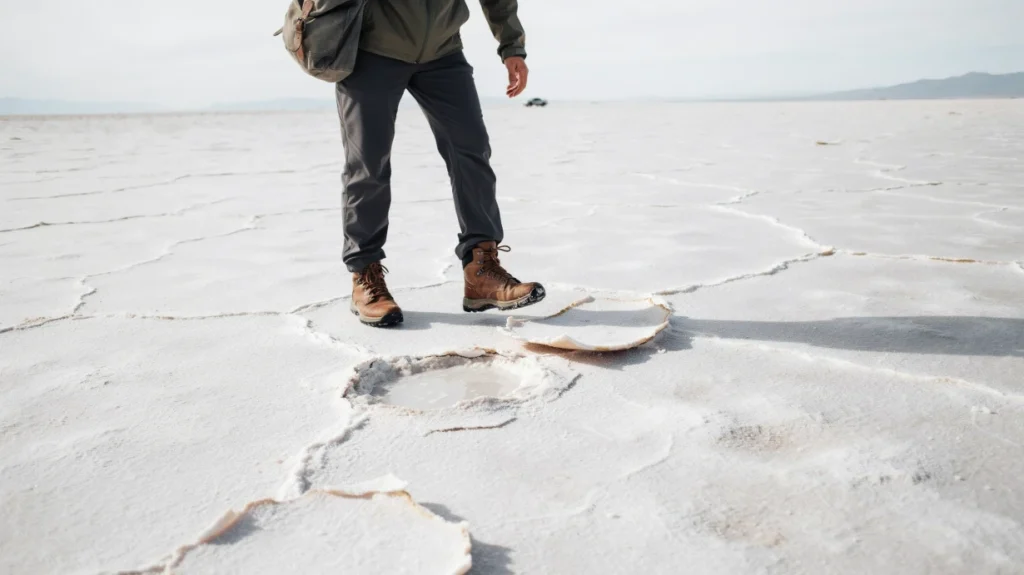 Bonneville Salt Flats Photography Etiquette: How to Protect the Surface and Share the View
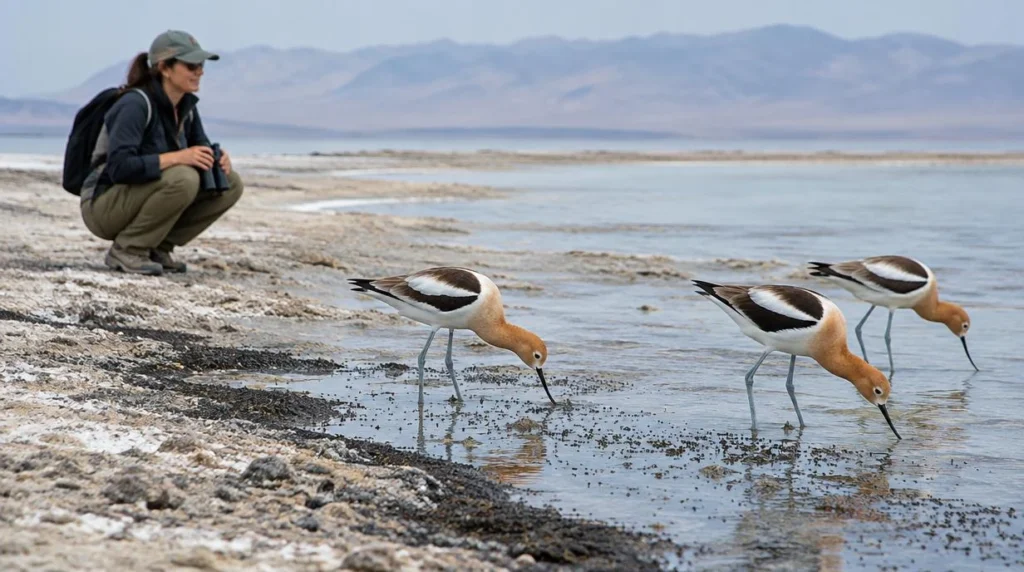 How to Plan an Antelope Island Birdwatching Visit
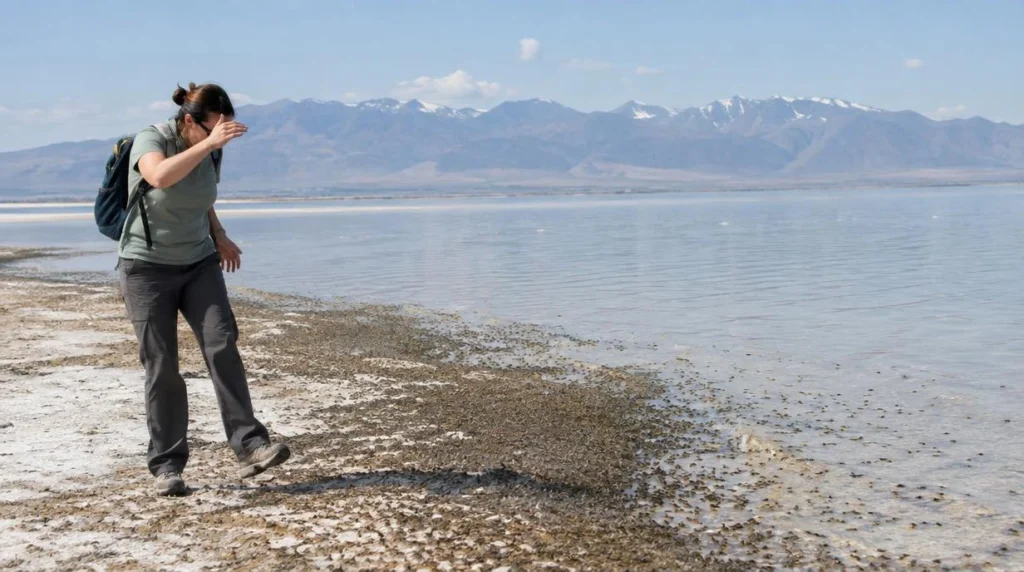 Why Are There So Many Brine Flies on Antelope Island?

Guide was Great! The salt flats had alot of water due to recent rain which limited...
Read more →I booked the Bonneville Salt Flats tour w Matei bc the owners are Ukrainian. I’m so...
Read more →This experience is a must-do! Dima explains the history of the area as well as the...
Read more →I had never been on a guided tour before, but Dima made it the best experience...
Read more → Antelope Island – Wild Heart of the Great Salt Lake Adventure
 Antelope Island Sunset Wildlife Expedition – Great Salt Lake Odyssey
 Bonneville Salt Flats – Journey to the Edge of the World
 Bonneville Salt Flats – Sunset Adventure of the White Desert