
Weekend Astrophotography Near Canyonlands: Is It Worth It?
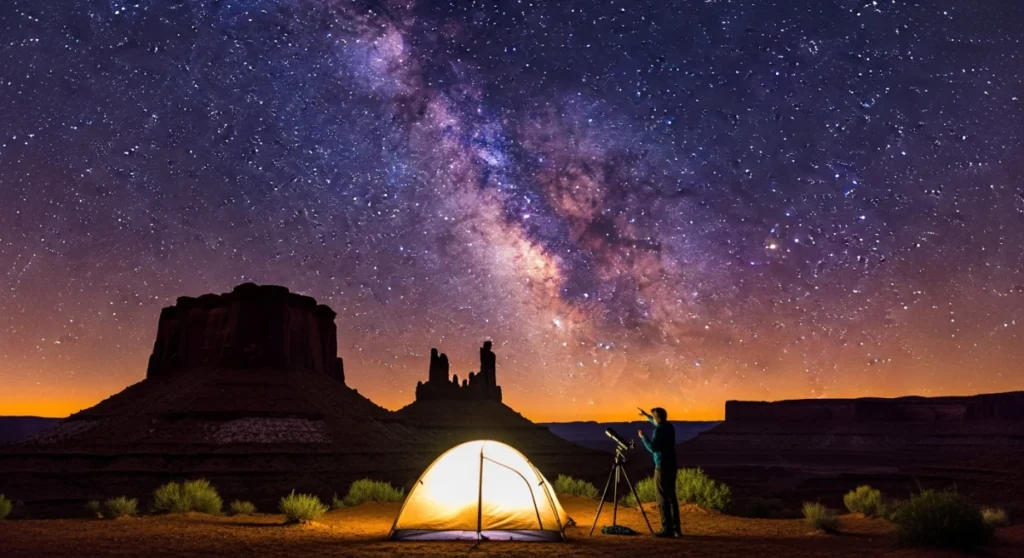
It is worth it for travelers who can time the trip well, protect their energy, and accept one focused night session instead of a packed photo marathon. It is a poor fit if you want long hikes, guaranteed Milky Way shots, or a relaxed weekend with little sleep loss.
The mistake we see most often is not bad camera technique. It is treating Moab and Canyon Country like an easy add-on from Salt Lake City, then trying to squeeze in big daytime outings and a 2 a.m. sky shoot on the same trip.
A Canyonlands astro weekend is a very specific kind of travel decision. It sits halfway between a photography workshop and a Utah parks getaway, which means the real question is not whether the sky is good, but whether your timing, stamina, and logistics make the weekend worth the drive.
When people search for a weekend astrophotography intensive near Canyonlands combining field shots and post-processing classes, they are usually trying to answer a practical problem: can one short trip deliver meaningful night-sky shooting without turning the rest of the weekend into a sleep-deprived blur? From organizing Utah park trips out of Salt Lake City, we know that answer depends more on pacing than ambition.
Who is a Canyonlands astro weekend actually worth it for?
It is worth it for photographers who can line up dark conditions, accept a narrow shooting window, and structure the weekend around one main night session. It is not worth it for travelers who want a full sightseeing schedule, long hikes, and comfortable sleep on the same two-day trip.
The best-fit traveler is usually intermediate, or a beginner with basic camera familiarity who wants to learn in the field and is happy to do any deeper editing practice later. The worst-fit traveler is the person who imagines they can hike hard all afternoon, eat late, drive to a remote viewpoint, stay alert until after midnight, and still enjoy the next morning.
- Worth it: You are comfortable with a late night, willing to keep daytime plans modest, and mainly want one strong sky opportunity near Moab and Canyonlands.
- Worth it: You can choose dates with a favorable moon phase and understand that spring timing is much more valuable for Milky Way-focused goals.
- Worth it: You are fine using a broader Utah trip as the framework, with photography as one priority rather than the only purpose.
- Not worth it: You want guaranteed Milky Way images, clear skies, or classroom-style instruction packed into one short weekend.
- Not worth it: You are traveling with a partner or family who would be unhappy waiting around for late-night shooting.
- Not worth it: You already know you struggle with sleep deprivation, desert heat, or long driving days.
Our honest view is narrow but useful. A dedicated weekend can absolutely pay off, but only when the trip is designed around the night session instead of squeezing night photography into an otherwise normal park weekend.
What do people usually mean by an astrophotography intensive near Canyonlands?
Most people mean a compressed trip with two parts: field shooting after dark and some kind of image review or post-processing instruction before or after. In practice, a true intensive is hard to fit cleanly into a Salt Lake City weekend unless you simplify the rest of the itinerary.
The phrase sounds bigger than the reality. Over a weekend, “intensive” often means arriving in Moab, scouting or visiting a viewpoint in daylight, resting when possible, shooting at night or pre-dawn, then reviewing images later on your own or through a general editing lesson. That can still be valuable, but it is not the same as a multi-day workshop with lots of repetition.
Drive time is the hidden limiter. If you are starting from Salt Lake City, the distance to Moab and the parks already consumes a meaningful part of the weekend, which is why we usually advise treating the trip as a Utah parks itinerary with one protected photo block rather than pretending every hour can be optimized for shooting.
If you are building the trip from our Utah National Parks Tours, that framework helps because the route, transport, daily pace, and major viewpoints are already thought through. Then the question becomes how to shape one evening or very early morning for night-sky time without overloading the rest of the trip.
You found a hidden promo code!
Use code WOWBLOG at checkout and get 10% OFF any tour!
Limited time offer. Book now and save!
Browse ToursAre the skies near Canyonlands good enough to justify the effort?
Yes, the sky quality is good enough to justify the effort. The catch is that the park’s rules, remoteness, and nighttime self-sufficiency matter just as much as darkness.
This area offers the two things night photographers want most: dark skies and dramatic landforms. Canyon rims, arches, and open desert horizons can create memorable compositions, and the Moab area gives you access to more than one kind of foreground if one plan needs to change.
But there is a constraint many visitors miss. Canyonlands has strict rules against using artificial light to illuminate landscapes or rock formations at night. Minimal personal navigation light is allowed, which is important for safety, but common light-painting habits are not something you should build your shoot around here.
That rule changes expectations. If your style depends on actively lighting foreground features, the park is a poor match for that technique. If you are happy to work with available darkness, silhouettes, moonlight when appropriate, and natural shape rather than lit rock detail, the location becomes much more compelling.
Remoteness is the second reality check. Facilities are limited, distances feel longer after dark, and the temperature swing between day and night can be sharp, so self-sufficiency matters more than people expect.
- Bring enough water: Desert fatigue starts earlier than many visitors realize, especially after a long drive.
- Plan for colder night conditions: A hot afternoon does not mean a comfortable midnight on an exposed viewpoint.
- Use red-light flashlights: They help preserve night vision and keep personal navigation safer.
- Assume limited support: Night shooting here works better when you arrive prepared rather than hoping to solve problems on site.
When is the timing good enough for a focused sky trip?
The best timing for a Milky Way-centered weekend is spring, especially April and May. If your dates fall outside that window, the trip can still be worthwhile, but the case for a pure photo-intensive gets weaker.
For iconic compositions near Canyon Country, the Milky Way’s galactic core is most useful in spring, and around places such as Mesa Arch that often means very late or very early hours, roughly around 1 to 3 a.m. That timing matters because it turns the weekend into a sleep-management problem as much as a photography opportunity.
Summer creates a different trade-off. Long days and vacation schedules make travel easier, but daytime temperatures can exceed 100°F, and afternoon thunderstorms can complicate both comfort and planning. A traveler who spends a summer day hiking hard is often too drained to do careful night work later.
Outside peak Milky Way timing, you still have reasons to go. Star fields, constellations, moonlit canyon scenes, and quiet night-sky viewing can all be rewarding. The key is to stop judging the weekend by one narrow image goal if the season does not support it well.
| Season or timing | What makes it attractive | Main drawback for a weekend | Best trip style |
|---|---|---|---|
| April to May | Best chance to align with Milky Way core goals | Very late or very early shooting hours | One protected night session, lighter daytime plans |
| Summer | Popular travel season and broad park access | Heat, thunderstorms, and faster exhaustion | Hybrid park trip with modest night ambitions |
| Other months | Pleasant park experience can still outweigh photo limitations | Less value for a pure Milky Way-focused weekend | General canyon trip with optional stargazing |
What does a realistic weekend from Salt Lake City actually look like?
A realistic weekend works when you accept trade-offs early. The version that usually succeeds includes travel to Moab, selected daytime highlights, one main night or pre-dawn session, and shorter walks instead of stacking major hikes.
We plan around how a full day in Canyon Country actually feels, not how it looks on a map. That means leaving room for meals, changing layers, regrouping after sunset, and preserving energy for the one window that matters most.
Sample pacing that protects one sky session
- Day 1, morning: Depart Salt Lake City with the drive itself treated as part of the trip, not dead time. Arrive understanding that you are not fresh in the same way you would be on a local outing.
- Day 1, afternoon: Visit one park area or a small number of viewpoints. Keep walking moderate, skip any ego-driven long hike, hydrate, and eat earlier than usual.
- Day 1, early evening: Rest, organize gear, and decide whether conditions still justify going out late. This reset period is where many self-planned trips fail because people keep sightseeing instead.
- Night session: Commit to one primary location or one backup, not a hopscotch of multiple spots. Stay focused on a small set of compositions rather than chasing everything.
- Day 2, morning: Sleep in if the night ran late, or do one easy scenic stop rather than a demanding hike. Build the day around recovery, then continue with Arches or Canyonlands highlights.
- Day 2, later: Return toward Salt Lake City with realistic expectations about how much energy remains.
This is why a broader canyon itinerary often beats a rigid workshop mindset. If your group also wants classic viewpoints and short walks, a structured route is far more valuable than trying to improvise the whole weekend after dark.
For travelers comparing the closest national parks to Salt Lake City for a weekend road trip, Moab is not the easiest option. It is one of the most rewarding, but only if you respect the driving and pace the days accordingly.
What are the biggest strengths, limits, and trade-offs?
The biggest strength is image potential in truly dramatic terrain. The biggest limit is that the best shooting hours directly compete with sleep, comfort, and the rest of your vacation.
This is where we think travelers need the most honest guidance. A Canyonlands astro weekend can feel extraordinary when it works, but it is one of the easiest Utah trips to over-design.
- Strength: You can pair world-class desert scenery with dark skies in one destination cluster around Moab.
- Strength: Even one well-chosen night session can justify the trip if the rest of the weekend is paced well.
- Strength: Beginners do not need advanced technical mastery to enjoy the experience if they already know their camera basics.
- Limit: Park rules remove artificial landscape lighting as a creative crutch, so you need to work within a stricter visual approach.
- Limit: Remote access and limited facilities mean poor preparation becomes a bigger problem after dark than during normal daytime sightseeing.
- Trade-off: To protect the night shoot, you will likely need shorter hikes, less nightlife, and a slower next morning.
- Trade-off: If weather or moon conditions do not cooperate, the weekend must still be rewarding as a canyon trip, not only as a photography mission.
That last point is critical. The smartest weekend is one that still feels worthwhile if the sky session becomes shorter, later, or less productive than you hoped.
Should you choose a full photo-intensive or a night-sky-friendly parks tour instead?
Choose a full intensive only if photography is the main purpose of the trip and your group accepts the sacrifice in sleep and flexibility. Choose a night-sky-friendly Canyonlands and Arches trip if you want a better overall weekend and one serious chance to shoot.
For most travelers, the hybrid option wins on value. It keeps the trip enjoyable even if conditions shift, and it works better for mixed-skill groups or for anyone traveling with a non-photographer partner.
| Traveler type | Pure intensive | Night-sky-friendly park trip |
|---|---|---|
| Beginner | Good only if you already know your camera controls and accept a steep learning curve at night | Usually the better fit because logistics are simpler and expectations stay realistic |
| Intermediate photographer | Strong option if dates, moon phase, and stamina line up | Best value if you want good images and a satisfying Utah weekend |
| Traveler with non-photographer partner | Often frustrating for the other person | Much easier to balance scenic highlights with one dedicated shoot |
| Summer visitor | Risky because heat can drain the energy needed for late-night work | Safer and more enjoyable in most cases |
| Off-season visitor | Harder to justify if Milky Way imagery is the only goal | Usually the smarter choice because the parks themselves still carry the trip |
This is also where our planning role matters most. We already organize short Utah park trips out of Salt Lake City, including Arches and Canyonlands, so we can help shape an itinerary where one evening is intentionally protected for dark-sky time instead of buried under too much daytime mileage.
How should you decide, and what is the most practical next step?
You should say yes if you can answer four questions positively: are the dates favorable, can you protect your energy, will your group accept one night-focused schedule, and would the trip still feel worthwhile if the sky is not perfect? If any of those answers is no, a broader park itinerary with optional night shooting is the better call.
We recommend using this quick decision checklist before you commit:
- Check season first: If your dream is the Milky Way core, spring is the strongest target.
- Limit yourself to one major night effort: A single focused outing is more realistic than trying to shoot deeply on both nights.
- Cut daytime ambition by a third: Whatever hiking and sightseeing load you first imagine, reduce it.
- Plan around rules, not habits: Do not assume you can light up foreground rock features in the park.
- Make the weekend resilient: The canyons, viewpoints, and scenic drives should still justify the trip if the sky underperforms.
If that sounds like your kind of weekend, the practical next step is to start with our Utah National Parks Tours as the base template, then ask us to shape timing around one evening or pre-dawn sky session near Moab. If you are still deciding how much road time and park time you want in Utah overall, our Utah day tours can also help you judge your travel pace before committing to a longer canyon weekend.
A weekend near Canyonlands is worth it for a fairly specific traveler: someone who can align the season, protect one serious night window, and avoid overloading the day before or after. For everyone else, the better answer is not “don’t go,” but “go in a way that lets the parks carry the value even if the astrophotography piece is only one part of the experience.”
That is the approach we trust most because it respects the realities of distance, fatigue, weather, and park rules. Review the Utah National Parks Tours and contact Matei Travel to shape a Salt Lake City to Moab weekend that leaves room for one high-quality night-sky session without wrecking the rest of the trip.
Is one night enough for useful astrophotography near Canyonlands?
Yes, one well-protected night can be enough if your timing is good and you avoid exhausting yourself during the day. The trip becomes much less rewarding when you try to force multiple heavy shooting sessions into one short weekend.
Do I need to be advanced to enjoy a night shoot in Canyon Country?
No. Beginners can still have a good experience if they know their camera basics and arrive with realistic expectations about what one short trip can deliver.
Can I use light painting on rock formations in Canyonlands?
No, you should not plan on that. Artificial light is restricted for illuminating landscapes and rock formations, so your approach needs to work within darker, more natural conditions.
What season gives the best chance for Milky Way-focused goals?
Spring, especially April and May, is the most valuable period for that kind of trip. Those opportunities often land in very late-night or pre-dawn hours, which is why sleep planning matters so much.
Is summer a bad time for this kind of weekend?
Not always, but it is harder than many travelers expect. Extreme daytime heat and possible afternoon storms can leave you too drained for careful night shooting.
What if my partner is not interested in photography?
A pure photo-intensive may feel lopsided for them. A broader Arches and Canyonlands trip with one dedicated night outing is usually a better compromise.
Why not just self-drive from Salt Lake City and keep it cheap?
You can, but the hidden cost is often fatigue and poor pacing rather than gas money. Many self-planned trips fail because visitors underestimate the drive, overbook the first day, and reach the night shoot already worn out.
What should I bring besides camera gear?
Bring enough water, layers for cooler night temperatures, and a red-light flashlight for navigation. Remote conditions make basic self-sufficiency part of the photography plan, not an afterthought.
 How to Plan a Day Tour Around Your Salt Lake City Flight
 Antelope Island Sunset Tours: How Wildlife Viewing Really Works
 Antelope Island Day Tours: How to Plan a Low-Stress Visit
 Bonneville Salt Flats Sunset Tours: What the Experience Includes
 Bonneville Salt Flats Tours: Plan a Comfortable First Visit
 How to Plan a Utah Day Tour During a Short Salt Lake City Stay

Very happy with the whole experience, Dmitro was an excellent tour guide, very knowledgeable about area...
Read more →Matei Travel was the vendor for the trip. Don\'t use them. The tour was not as...
Read more →I would highly recommend touring with Dima! He was so knowledgeable and personable, and very open...
Read more →Experience was fabulous!!! We saw spectacular views of the flats, bison and prong horn. Mateo travel...
Read more → Antelope Island – Wild Heart of the Great Salt Lake Adventure
 Antelope Island Sunset Wildlife Expedition – Great Salt Lake Odyssey
 Bonneville Salt Flats – Sunset Adventure of the White Desert
 Bonneville Salt Flats – Journey to the Edge of the World