
Walking Tour Near You in Salt Lake City: What Actually Matters
Jun 20, 2026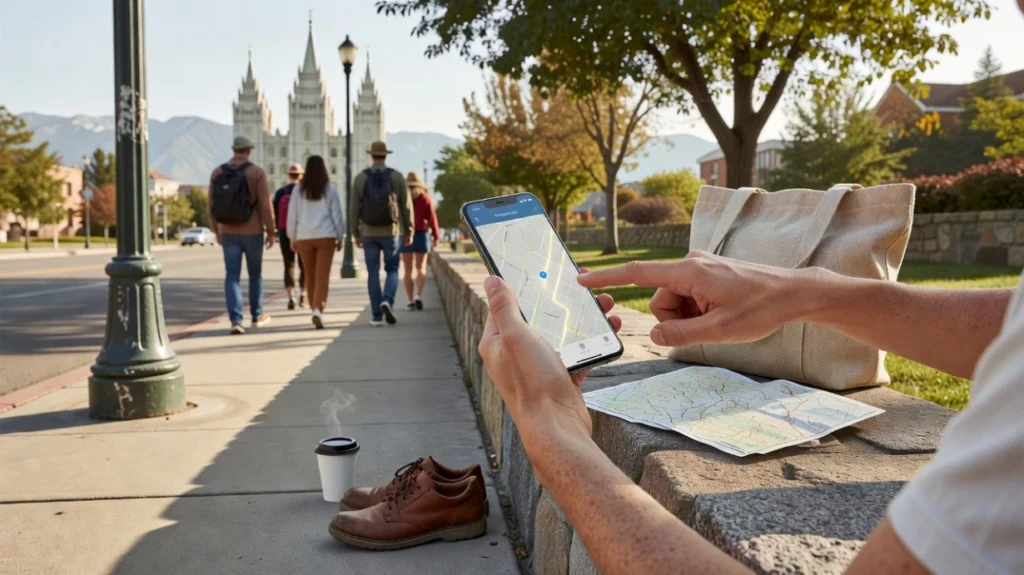
In Salt Lake City, the best walking tour is usually a compact downtown route with realistic distance, small groups, and a guide who adds context. Prioritize comfort, pacing, and clear route details over a long stop count.
You land in Salt Lake City, check the weather, feel the dry air, and search for a walking tour near you. Then the choices start to blur together. One promises lots of stops, another sounds vague on distance, and suddenly the simple idea of an easy first-day walk feels harder than it should.
This is a buying decision, not just a sightseeing one. In Salt Lake City, route design matters more than flashy stop counts because the city is spread out, summer heat can be draining, and the elevation can make an overambitious walk feel longer than it looks on a map. We design and run downtown walking tours, so our view is straightforward: the worthwhile option here is usually the one that respects the city’s geography instead of pretending you can comfortably walk all of it.
That is why people who start by looking for free self-guided walking routes in downtown Salt Lake City for history buffs often end up wanting more structure. A local guide, a compact route, and published distance and terrain details can turn a generic stroll into a useful first-day orientation.
Who is a Salt Lake City walking tour actually for?
A walking tour in Salt Lake City is best for visitors who want a focused introduction to the downtown core without spending a full day in transit. It is less suitable for people who want to cover the whole valley, avoid walking almost entirely, or visit far-flung sights in one outing.
The right fit is someone who has a few hours, wants to understand how the city developed, and would rather see a dense cluster of meaningful places than rush through scattered landmarks. That is especially true on a first day, when getting a mental map of central Salt Lake City can make the rest of the trip easier.
- A good fit: First-time visitors, short-stay travelers, curious walkers, and anyone who wants history and city-planning context rather than just photo stops.
- Often a good fit: Couples, solo travelers, friends, and mixed-age groups who are comfortable with a moderate city walk and want time to ask questions.
- Usually not the best fit: Travelers with very limited mobility, people arriving during the hottest part of a summer day who do not want outdoor time, or visitors whose priority is seeing sights outside downtown.
If your goal is “show me the city so I know where everything is,” a downtown walk can do that well. If your goal is “show me every major sight in the valley today,” walking is the wrong format from the start.
Why is “near me” misleading in Salt Lake City?
“Near me” sounds simple, but in Salt Lake City it can lead you to overestimate what is comfortably walkable in one tour. The smarter interpretation is not “closest to me right now,” but “most efficiently clustered for the time and energy I actually have.”
Salt Lake City is not a compact old town where every major attraction sits within a few blocks. Key landmarks and visitor interests are dispersed around the valley, so a tour that hints at covering everything on foot can sound exciting online and feel exhausting in real life.
The city’s climate reinforces that point. In summer, temperatures can climb to around or above 100°F with dry air, and the elevation of roughly 4,300 feet can subtly affect stamina for some visitors, especially right after arrival. None of that means you should skip a walk. It means route compactness and pacing are the real quality markers.
That is why we favor downtown-focused routes rather than citywide promises. The central core gives you the best return on foot: historic buildings, hidden corners, and enough urban texture to make a guided walk feel rich without becoming a forced march.
You found a hidden promo code!
Use code WOWBLOG at checkout and get 10% OFF any tour!
Limited time offer. Book now and save!
Browse ToursWhat are the criteria that matter most when choosing a walking tour here?
The most important criteria in Salt Lake City are route compactness, honest distance and duration, climate and altitude realism, group size, guide depth, and first-day usefulness. If a tour scores well on those six points, it is far more likely to be enjoyable than one that simply advertises the most stops.
These are the filters we would use ourselves if we were choosing with limited time after arrival.
| Criterion | What to look for | Why it matters in Salt Lake City |
|---|---|---|
| Route compactness | A downtown-centered path with logically grouped stops | The valley is spread out, so concentrated routes usually feel better on foot |
| Distance and duration | Clear published walking length, total time, and terrain notes | Visitors need to judge effort realistically in heat and at elevation |
| Climate readiness | Timing and pacing that make sense for outdoor conditions | Dry heat can drain energy faster than many travelers expect |
| Group size | Small enough for conversation and questions | Smaller groups move more smoothly and feel less herded |
| Guide expertise | Local storytelling about history, planning, and development | That context is what separates a guided walk from wandering on your own |
| First-day suitability | An orientation-friendly route that helps you understand the city layout | A good first walk makes later meals, museums, and sightseeing easier to plan |
1. Route compactness beats an inflated stop list
A long list of stops can be misleading if those stops are stitched together by too much pavement. In this city, a better route is one that concentrates on the historic and walkable core so the experience feels coherent instead of scattered.
Ask yourself one practical question: does the route seem built around one neighborhood center, or does it sound like it is trying to compensate for geography with marketing language? Compact almost always wins.
2. Clear distance, duration, and terrain are not small details
If a tour page does not tell you how far you will walk, how long you will be out, and what the terrain is like, you are being asked to guess. That guess matters more in Salt Lake City than in some cooler, denser destinations.
Distance is not just about fitness. It affects hydration needs, family stamina, whether a late-arrival afternoon slot is realistic, and whether older relatives or kids will still enjoy dinner afterward.
3. Climate and altitude honesty matters more than hype
A credible walking tour here acknowledges the high-desert setting instead of pretending every day is equally easy for outdoor sightseeing. Realistic pacing and reasonable route length are signs of good design, not limitations.
You do not need a tour that dramatizes heat or elevation. You need one that quietly plans around them.
4. Small groups improve both comfort and depth
Large groups can make an urban walk feel slower at crossings, harder to hear, and less personal. Small groups are especially valuable when the appeal of the tour is interpretation, not just transportation.
If you want to ask why a street is laid out a certain way, how a district changed over time, or what you are looking at beyond the façade, group size directly affects the experience.
5. Guide quality should add meaning, not just point out landmarks
You can identify famous buildings on your own. What usually justifies booking is a guide who can connect architecture, city planning, local history, and overlooked details into one readable story.
That is also the answer to the common objection, “Can’t I just wander downtown myself?” You can. But without interpretation, you often miss why a place matters and walk right past the less obvious corners that give the city character.
6. First-day usefulness is a real selection criterion
Some tours are best after you already know the city. Others work as orientation. In Salt Lake City, first-day suitability matters because visitors often arrive with limited time and an incomplete sense of distances.
A useful first walk should help you decide what to revisit later, what belongs on a non-walking day, and how downtown relates to the rest of your trip.
How do our downtown walking tours line up with those criteria?
Our walking tours are built around the exact factors that matter most in this city: compact downtown routing, small groups, local guides, and clear expectations about what the walk involves. They are designed for people who want substance and orientation, not a bloated checklist.
We operate small-group walking tours in downtown Salt Lake City, and we keep the focus on central routes because that is where a walk makes the most sense. Our guides are local, so the tour is not just a sequence of buildings. It is a conversation about how the city took shape, how its core developed, and what many visitors would miss without context.
Our routes include both historic buildings and hidden corners rather than only the most obvious postcard stops. That mix matters because the downtown core becomes more interesting when the famous places are connected to the quieter details around them.
We also publish practical route information on our Salt Lake City Walking Tours page, including distance, duration, and terrain notes for each option. That lets you compare routes based on your real pace, your arrival day energy level, and who is traveling with you.
- Compact downtown focus: We do not frame a city-center walk as a way to cover the entire valley.
- Local interpretation: Our guides explain history, planning, and development, which adds meaning beyond sightseeing.
- Small groups: The format makes it easier to hear, ask questions, and move at a more natural pace.
- Hidden details: The routes are built to include lesser-known corners as well as major historic sites.
- First-day practicality: We have designed these walks to work especially well as an early-trip orientation.
- Clear booking path: You can review the route details and reserve online before you arrive.
When is a walking tour not the best format in Salt Lake City?
A walking tour is not the best choice when your group needs minimal walking, when the outdoor conditions feel too intense for comfort, or when your main priority is seeing sights far beyond downtown. In those cases, forcing a walk usually leads to disappointment.
This city simply has attractions that are better reached by vehicle-based touring or separate day plans. That is not a weakness of walking. It is just the honest boundary of what the format does well.
Consider another format if any of these sound like you:
- Very limited mobility: Even a well-designed downtown route may still be too demanding for your group.
- Extreme heat timing: If the only open window is the hottest part of a summer day and you do not want outdoor exposure, a walk may not be the smart choice.
- Valley-wide sightseeing goals: If you want to combine downtown with more distant landscapes or landmarks, walking alone will not cover that efficiently.
- Young children with narrow stamina windows: Families looking for half-day family-friendly activities near Salt Lake City with toddlers may prefer a shorter city walk only if the published distance truly matches the group’s pace.
For the places that are not practical to cover on foot from downtown, the next step is usually one of our Utah day tours. Those tours make more sense for bigger geographic jumps, whether your interest is open landscapes, wildlife-focused outings, or other things to do near Salt Lake City after you have oriented yourself downtown.
What type of tour fits your actual use case?
The right choice depends less on your abstract interest in walking and more on what role the tour needs to play in your trip. In Salt Lake City, the best match often comes from pairing your schedule and energy level with the format’s natural strengths.
Here is the practical mapping we recommend.
- First afternoon in town: Choose a compact downtown walk with clear distance and duration details. This is often the highest-value use because it gives you orientation without consuming the whole day.
- You want depth, not just landmarks: Choose a guide-led route centered on history, planning, and hidden spots. That is where a guided walk clearly outperforms wandering on your own.
- You want the broadest possible city overview: Do not try to force that into a single walk. Start downtown on foot, then use a separate non-walking day plan for the wider region.
- You are traveling with mixed ages: Let the published route length and terrain decide for you, not the marketing photos. A shorter, clearly defined route usually beats an “ambitious” one that sounds impressive but drags.
- You only have a few hours between arrival and dinner: A first-day city-center tour is still worthwhile if the timing and effort level fit your group. A good walk can make the rest of your visit more efficient.
What buying mistakes should you avoid?
The biggest mistakes are choosing by stop count, underestimating the weather, and assuming all “nearby” Salt Lake attractions belong in one walk. These errors usually lead to rushed pacing, fatigue, or a tour that does not match the day you actually have.
Most regrets come from selecting the most expansive-sounding option instead of the most realistic one.
- Buying the promise of “everything”: In this city, that usually means too much ground for one comfortable walk.
- Ignoring the route details: If you skip distance, duration, and terrain, you are choosing blind.
- Treating your first day like your most energetic day: Flights, dry air, and elevation can change how far you want to walk.
- Assuming self-guided and guided are interchangeable: If you care about story, urban context, and hidden details, they are not the same product.
- Trying to solve downtown and outer-area sightseeing in one booking: Those are usually separate needs that deserve separate formats.
How should you read an individual tour page before booking?
The fastest way to judge fit is to scan four items in this order: distance, duration, terrain, and route focus. If those align with your group’s comfort level and your schedule, you are close to a confident booking decision.
Do not start with the photo gallery. Start with the practical constraints, then decide whether the story focus is what you want.
- Check distance first: Ask whether that amount of walking feels good on your arrival day, not on your best day at home.
- Check duration second: Make sure the time block fits around flights, hotel check-in, meals, and kid or elder energy limits.
- Read the terrain note: This tells you whether the route is likely to feel easy, moderate, or less suitable for your group.
- Look at the route focus: Confirm that the walk concentrates on downtown history, planning, architecture, or hidden corners that interest you.
- Match it to your group, not to generic advice: A couple, a solo traveler, and a multigenerational family may choose differently from the same page.
- Book the slot that suits your real day: Once the route looks right, reserve online so your first-day plan is settled before arrival.
If you are deciding between two options, choose the one that leaves a little energy in reserve. In Salt Lake City, that usually produces the better memory.
A worthwhile Salt Lake City walking tour is not the one that claims the most. It is the one that fits the city’s spread-out geography, respects heat and elevation, and gives you a richer understanding of the downtown core at a sustainable pace. For most first-time visitors, that means a compact, small-group route with a local guide and clearly published distance, duration, and terrain details.
Use those criteria to compare the options on our Salt Lake City tours page, then choose the route that matches your first-day energy and interests. If you want to see more of Utah after your city walk, you can plan one of our day tours for the following days. Open the Salt Lake City Walking Tours page, compare the route details, and book the best fit online.
Is a walking tour a good first-day activity in Salt Lake City?
Yes, if the route is compact and the distance fits your arrival-day energy. A downtown orientation walk can help you understand the city quickly without overcommitting.
Can one walking tour cover all of Salt Lake City’s main sights?
No. The city and valley are too spread out for one comfortable walk to cover everything in a meaningful way.
What matters more here: number of stops or route design?
Route design matters more. A compact, well-paced downtown route usually feels better and teaches more than a long list of scattered stops.
Why book a guided walk instead of exploring downtown on my own?
A guide adds history, planning context, and hidden details that are easy to miss when you are just following a map. The experience becomes more than a checklist of buildings.
What should families or older travelers check before booking?
Look first at the published distance, duration, and terrain. Those details tell you much more than marketing language about whether the route fits your group.
When should I skip a walking tour and choose another format?
If your group wants very little walking, only has time during intense heat, or wants to see places well beyond downtown, another format will likely be more comfortable.
What should I compare on a tour page before reserving?
Compare the route length, total time, terrain, and focus of the walk. Those four points usually tell you whether the tour suits your schedule and pace.

Had a great tour with Dima. Very knowledgeable, fun and courteous. Highly recommend this tour guide....
Read more →Dima, owner and guide, is passionate in his advocacy for the health of Utah\'s parks and...
Read more →Such an amazing trip and experience. Dima is a cool tour guide, very humorous and willing...
Read more →Your was super thorough and guide was very helpful and informative throughout the tour
Read more → Antelope Island – Wild Heart of the Great Salt Lake Adventure
 Antelope Island Sunset Wildlife Expedition – Great Salt Lake Odyssey
 Bonneville Salt Flats – Sunset Adventure of the White Desert
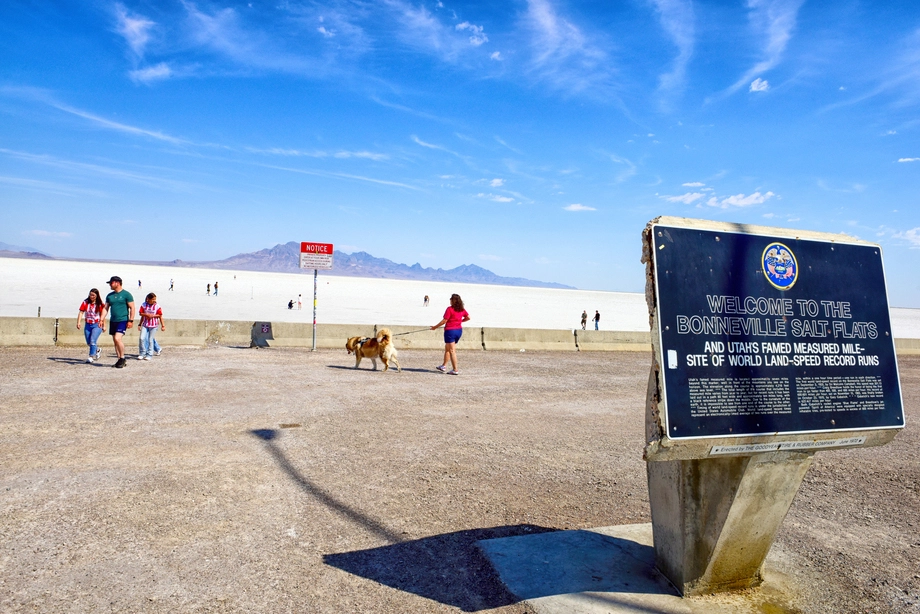 Bonneville Salt Flats – Journey to the Edge of the World