
Walking Tour Near Me in Salt Lake City: What Actually Matters
Jun 11, 2026
In Salt Lake City, the closest tour is often not the smartest choice. A compact downtown route, cooler start time, small group, and strong local guide usually matter more than proximity.
A lot of visitors search for a walking tour from their hotel lobby, pick whatever looks closest, and assume they have solved the problem. In Salt Lake City, that shortcut often backfires because the city’s blocks are unusually large, the streets are wide, major sights are not packed tightly together, and summer heat plus elevation can make a short-looking route feel much bigger on foot.
This is a buying decision as much as a sightseeing decision. If you are in town for a first day or a short stay, the right downtown walking tour can give you orientation, context, and a realistic feel for the city without wasting energy on poor routing, extra waiting, or navigation guesswork.
Who should choose a guided walking tour in Salt Lake City, and who should not?
A guided downtown walk makes the most sense for first-time visitors, short-stay travelers, and anyone who wants a clear orientation to the city without spending mental energy on route planning. It is less ideal if your real goal is a long independent neighborhood ramble or a bike-focused outing rather than a compact city introduction.
We design our downtown walks for people who want to understand how Salt Lake City fits together on day one. That includes travelers arriving for a weekend, families who want a defined activity instead of open-ended wandering, and visitors who would rather hear the story of the city from a local guide than piece it together from scattered plaques and map pins.
- A good fit: You have limited time and want a structured introduction to downtown landmarks, city history, and hidden places.
- A good fit: You prefer asking questions in real time instead of reading your phone at every corner.
- A good fit: You want to judge the rest of your trip better after learning the grid, the core historic area, and where major sites sit relative to one another.
- Less ideal: You already know the city well and mainly want a niche neighborhood walk on your own schedule.
- Less ideal: You want a long scenic ride or broader city coverage that is better matched to biking or a separate day trip format.
That distinction matters in Salt Lake City more than in denser downtowns. A casual “we’ll just walk and see what happens” approach can turn into more distance, more backtracking, and less context than visitors expect.
Why does the “near me” approach backfire in Salt Lake City?
In Salt Lake City, “near me” is often the wrong filter because a route that starts closest to you may still be inefficient, hot, or poorly sequenced. A short transfer to a smart downtown meeting point usually saves time and walking overall.
The city’s original layout is the key reason. Salt Lake City is known for very wide streets, around 132 feet in the historic grid, and for large downtown blocks. That means two places that look close on a map can involve more walking exposure and more empty-feeling distance than visitors anticipate.
The coordinate-based street system adds another layer. Addresses like 300 West and 600 North are logical once you understand the grid, but for newcomers they create extra cognitive load during a self-guided outing, especially when you are also watching traffic, heat, timing, and where the next point of interest actually sits.
This is why we favor routes that are planned around sequence, density of stories, and ease of access rather than raw proximity. For a first day in town, getting to a practical downtown starting point is usually the efficient move, not an inconvenience.
You found a hidden promo code!
Use code WOWBLOG at checkout and get 10% OFF any tour!
Limited time offer. Book now and save!
Browse ToursHow does Salt Lake City’s layout change what a good walking tour looks like?
A good walking tour here needs compact sequencing, not just famous stops. Because the city uses a large-block grid with broad streets, route design has to work harder to keep the experience coherent and manageable.
Salt Lake City’s street pattern was not built like older, tighter downtowns where attractions cluster on every short block. The wide-grid structure can spread out major buildings and make transitions between sites feel longer, even when the map looks simple. Visitors often underestimate that difference until they are in the middle of it.
That is why route compactness matters more than a long checklist of attractions. A strong downtown walk should connect sites in a way that feels like one story, not a series of disconnected crossings. Our routes focus on the city’s planning, development, historic buildings, and overlooked spots that many people miss when they improvise.
City planning also shapes what is realistic for independent exploration. According to Salt Lake City’s Pedestrian & Bicycle Master Plan, walking and bicycling are important parts of the city’s transportation system, which is useful context, but it does not remove the practical issue for visitors: downtown navigation and distances still require deliberate route choice if you want an easy first-day experience.
What actually matters more than “near me” for a Salt Lake City walking tour?
The best selection criteria are route design, start time versus heat, duration and terrain, guide quality, group size, and meeting-point access. In this city, those factors predict a good experience better than distance from your current location.
When travelers compare tours, we recommend using a short checklist instead of chasing the nearest starting point.
- Route design and compactness: Look for a downtown route that connects key historic sites and lesser-known places without long dead stretches. In Salt Lake City, a compact sequence matters because large blocks magnify weak planning.
- Start time versus temperature: Morning departures are often the smarter pick in hotter months. Dry heat and sun exposure can make midday self-guiding more draining than visitors expect.
- Duration and terrain clarity: Choose a tour that clearly explains how long it runs and what kind of walking it involves. We provide duration, distance, and terrain details on our tour pages so you can match the route to your schedule and energy level.
- Guide expertise: The strongest tours are led by local guides who can explain the city’s history, planning logic, and current life, not just point out buildings.
- Group size: Smaller groups make a bigger difference here because guests can hear the guide, ask questions, and adjust pace slightly without the stop-start feel of a large crowd.
- Meeting-point access: An easy downtown start often beats a random nearby one. A short rideshare, train stop, or walk to the right starting point can produce a better route and less total effort.
If you are comparing options, start with our Salt Lake City Walking Tours overview and read each route as a fit question, not just a proximity question. The practical filters are timing, route logic, terrain, and whether the walk gives you real orientation on your first day.
How much do heat and elevation really affect a walking tour in Salt Lake City?
They matter more than many visitors expect. Salt Lake City’s high-desert climate, low humidity, and roughly 4,300-foot elevation can make a modest walk feel harder, especially for travelers arriving from lower elevations.
Summer temperatures often exceed 100°F, and the dry air can mask how quickly you are tiring out. The issue is not only comfort. Heat changes pacing, stop tolerance, and how enjoyable an unstructured route feels once you start crossing several wide blocks in direct sun.
This is one reason a defined guided walk often works better than wandering. You can choose a route length and time slot in advance instead of realizing halfway through that your improvised plan was too ambitious for the conditions.
- For summer visits: Prioritize earlier departures when possible, especially if your first day already includes airport travel or hotel check-in.
- For higher-effort concerns: Read the tour page details on duration, distance, and terrain before booking rather than assuming every downtown route feels the same.
- For first-day arrivals: A compact guided experience usually demands less decision-making than trying to build your own path while adjusting to the altitude.
- For mixed-age groups: Defined timing can be more practical than open-ended wandering, because you know when the activity starts and ends.
If you are worried that a walk may be too tiring, that is a reason to choose more carefully, not a reason to default to the nearest route. In this city, timing and sequencing are the levers that matter.
Is it better to self-guide, use a sightseeing bus, or join a small-group downtown walk?
For a first day in Salt Lake City, a small-group downtown walk is usually the most time-efficient and insightful option. Self-guiding gives freedom but adds navigation effort, while hop-on hop-off style sightseeing can lose efficiency because attractions are spread out.
| Option | Best for | Main advantage | Main tradeoff in Salt Lake City |
|---|---|---|---|
| Fully self-guided walking | Independent travelers with time and local curiosity | Maximum flexibility | You handle the grid, distances, pacing, and story-building yourself |
| Hop-on hop-off style bus sightseeing | Visitors who want less walking between stops | Lower navigation effort on paper | Spread-out attractions can mean more waiting and less efficient sightseeing |
| Small-group guided downtown walking | First-day visitors and short-stay travelers | Compact route, local context, and direct questions | You commit to a scheduled start time |
Self-guided exploration is absolutely possible, and some visitors enjoy it. There are even niche local examples of independent routes. According to K.E.E.P. Yalecrest walking tours, that neighborhood offers self-guided brochures focused on local history and architecture. That can be rewarding if you specifically want a residential area walk, but it is a different goal from getting an efficient downtown orientation on your first day.
The same applies to bike-oriented sightseeing. If you are researching free self-guided walking routes in downtown Salt Lake City for history buffs, it helps to know that some city experiences are better suited to another format entirely. For example, Salt Lake City’s Cycle the City loop is a 13.5-mile route designed for a half-day bike outing, which reinforces the point that not every appealing map-based city route is best handled on foot.
As for buses, the tradeoff is city-specific. When key attractions are relatively spread out, hop-on hop-off patterns can introduce waiting and dead time instead of saving it. A focused guided walk through the downtown core usually concentrates the best first-day value into a defined window.
How does a small-group local guide change the experience?
A small-group local guide turns a walk from simple movement into orientation, interpretation, and useful conversation. In Salt Lake City, that matters because the city’s planning logic and attraction spread are not always obvious from the street.
We keep our groups intentionally small so guests can actually interact with the guide. That means you can ask why the streets are so wide, how the grid works, what shaped the city’s development, and which nearby places are worth returning to after the tour ends.
The local-guide factor also improves what you notice. Our downtown walking tours combine major historic buildings with smaller hidden places, and the route is built to tell the story of the city rather than just pass landmarks in silence. That is especially valuable on the first day, when visitors need a mental map as much as a sightseeing list.
This is the point where a guided walk justifies itself against apps and generic wandering. The value is not only navigation help. It is having someone connect the planning, history, and current life of the city while the route still feels manageable.
What are the most common mistakes people make when choosing a Salt Lake City walking tour?
The biggest mistakes are overvaluing proximity, underestimating heat and elevation, and treating all downtown routes as interchangeable. In this city, poor tour selection often comes from using generic travel assumptions instead of local conditions.
- Picking the closest start: This sounds efficient, but a poorly designed nearby route can mean more total walking and less insight than traveling briefly to a better downtown meeting point.
- Ignoring start time: Midday can feel much harder in hot months, especially if you arrived recently or are not used to the altitude.
- Assuming self-guiding will be simpler: The grid is orderly, but not always intuitive for first-time visitors trying to connect sites into a satisfying route.
- Choosing by attraction count alone: More stops do not automatically mean a better walk if the route between them is awkward or thin on interpretation.
- Overlooking group size: Large groups often reduce questions, flexibility, and the chance to notice smaller places along the way.
- Using a bus as the automatic fallback: In Salt Lake City, spread-out attractions can limit the efficiency that hop-on hop-off sightseeing promises elsewhere.
What should you check before booking?
Before booking, confirm that the route is compact, the timing fits the weather, the effort matches your day, and the starting point is practical to reach. Those four checks will eliminate most bad-fit choices quickly.
Use this short pre-booking checklist.
- Read the route description for sequence: Does it sound like a coherent downtown story, or just a list of places?
- Check the scheduled time: Is it realistic for the season, your arrival plans, and your tolerance for heat?
- Review duration, distance, and terrain: Do not assume every city walk is light just because it is downtown.
- Confirm the guide format: Small-group, locally guided tours usually offer the best first-day value here.
- Look at meeting-point access: A slightly farther start that is easy to reach can outperform a closer but less useful route.
- Book with your broader trip in mind: If this is your arrival day or first full day, choose the tour that gives orientation first and niche exploring later.
Once your city day is locked in, longer-stay travelers can plan outward from there. After your downtown orientation, our Utah day tours are the logical next step for nearby landscapes, and our Utah national parks tours fit travelers who want bigger park days from Salt Lake City without managing the logistics themselves.
So which walking tour should most first-time visitors pick?
Most first-time visitors should choose a small-group, locally guided downtown walking tour with a practical meeting point and a start time that respects the weather. That combination usually beats the nearest route, a random self-guided plan, or a bus-based overview for day-one efficiency.
For this city, the smart choice is a tour built around Salt Lake City’s actual conditions: wide blocks, dry heat, elevation, and a downtown core whose best stories come out through sequence and explanation. That is exactly why our downtown walking tours focus on compact routing, local guides, small groups, and clear trip details before you book.
If your goal is to get your bearings quickly and use the rest of your trip better, start there. You will leave with a clearer mental map, a better sense of what deserves a return visit, and less chance of burning time on a route that only looked convenient on your phone.
Check current dates and route details on our Salt Lake City walking tours page, then reserve the option that best fits your arrival day or first full day in town.
Why is a “near me” walking tour search less useful in Salt Lake City?
Because wide streets and large blocks can make nearby-looking routes feel longer and less efficient than expected. A better downtown start point often saves effort overall.
Are self-guided walks a bad idea in Salt Lake City?
Not at all, but they work better for travelers with extra time or a specific neighborhood interest. For a first-day downtown overview, they require more navigation and planning than many visitors want.
Does the city’s elevation really change how a walking tour feels?
Yes. At about 4,300 feet, combined with dry air and summer heat, even moderate walking can feel harder for travelers who just arrived.
Why can a small group matter more than the number of stops?
Smaller groups make it easier to hear, ask questions, and keep a comfortable rhythm. That often adds more value than squeezing in extra landmarks without context.
Is a hop-on hop-off bus a better option if I do not want to walk much?
It can reduce walking between stops, but Salt Lake City’s spread-out attractions can make bus sightseeing less efficient than visitors expect. A focused guided walk often uses time better on a short trip.
When should I schedule a downtown walking tour?
Your arrival day or first full day is usually the most useful timing. It gives you orientation early, which helps the rest of your visit go more smoothly.
What should I compare on a tour page before booking?
Focus on start time, duration, terrain, route logic, and meeting-point access. Those details tell you far more than the map pin alone.

 Bonneville Salt Flats – Sunset Adventure of the White Desert
 Antelope Island – Wild Heart of the Great Salt Lake Adventure
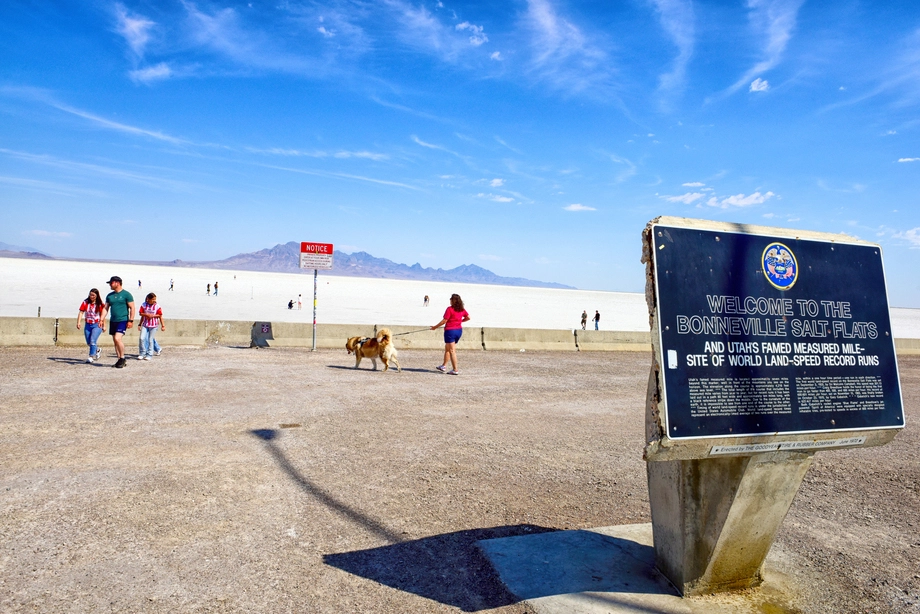 Bonneville Salt Flats – Journey to the Edge of the World
 Antelope Island Sunset Wildlife Expedition – Great Salt Lake Odyssey
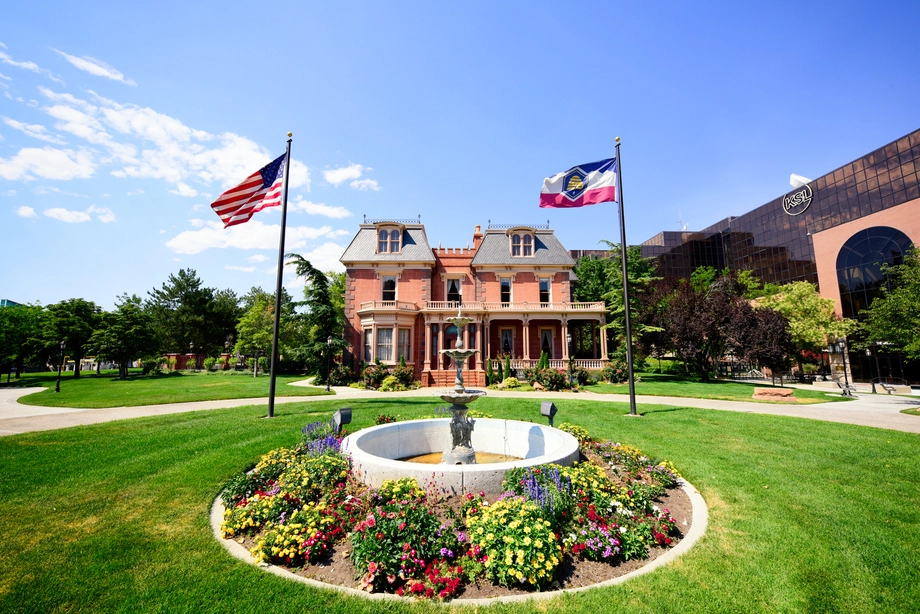 Salt Lake City – The City of Zion. Historical Interactive Walking Tour