
Salt Lake City tours: how they differ and how to choose the right one
Jan 9, 2026
Salt Lake City tours differ mainly in distance, structure, and focus: city walks give orientation and stories, while ski, national park, and Utah day trips trade more driving for bigger landscapes and simpler logistics.
Over the last few years Salt Lake City has turned from a simple stopover into a real basecamp for exploring Utah. Travelers now face a different kind of challenge. Not “Is there anything to do here?” but “Which of the many tour options actually fits my time, budget, and travel style?”.
This article walks you through the main types of Salt Lake City tours, from compact downtown walking routes and self-guided strolls to organized ski day trips, national parks expeditions, and other one-day adventures across Utah. You will see how these formats differ in logistics, price, physical effort, and overall experience, and you will get concrete tips, examples, and a balanced list of pros and cons so you can confidently pick the right option for your next trip.
What makes Salt Lake City tours different from each other?
Urban stories vs big landscapes
Most tours starting in Salt Lake City fall into two broad groups. City-focused experiences and nature-focused excursions. Downtown walking routes zoom in on history, architecture, religious heritage, and the way the city was planned and has grown. Guides use short distances and dense points of interest so you are constantly learning something new within a compact area.
Nature-focused tours flip that ratio. You spend more time driving through Utah’s open spaces and less time in one fixed spot, but every stop is explosive in terms of scenery. Think national parks, salt flats, canyons, ski valleys, and wildlife areas. Instead of one neighborhood, you get entire landscapes in a single day.
How far you travel and how much time you spend in transit
One of the biggest differences between tour types is travel time. A downtown walk keeps everything within a small radius of the city center. You can usually start and finish without even needing a car or public transit. These tours are perfect for your first day in town when you are still orienting yourself.
By contrast, day trips to ski resorts, national parks, or places like Bonneville Salt Flats and Antelope Island build several hours of driving into their schedule. The trade-off is clear. More time in the vehicle, but much bigger visual rewards. A good operator balances this by planning scenic roads and short photo stops along the way so the journey itself feels like part of the attraction.
Level of structure and hand-holding
Guided tours differ sharply in how structured they are. Walking tours downtown are usually quite curated. The guide knows exactly which alley, building, or hidden courtyard to show and in what order, leaving just enough time for questions and photos.
Ski and national park tours offer more open blocks of free time. You receive transfers, orientation, and key viewpoints. Then you often have windows where you can ski specific runs, choose a short hike, or simply soak in the scenery. The main contrast is how tightly your day is scripted versus how much freedom you have inside the framework.
How downtown walking tours in Salt Lake City work
Small groups and local guides
City walking tours in Salt Lake City are typically guided by people who live locally and know the city’s backstory beyond basic dates and names. Small group sizes are a key feature. With fewer participants you can actually ask questions, clarify details about planning and development, or dig deeper into topics that interest you personally.
That interactive element turns what could be a passive lecture into a conversation. It is particularly valuable if this is your first encounter with the city and you want context on how it was laid out, how neighborhoods evolved, and how local culture works today.
Routes, terrain, and hidden corners
Their routes are designed to link iconic buildings with lesser-known spots that you might walk past on your own without realizing their story. Expect a logical progression through key streets, squares, and historic structures with occasional detours into quieter side streets or courtyards.
Good operators publish route details in advance. They indicate how long the tour will take, how far you will walk, and what sort of terrain to expect. That way you can judge whether a particular walk is suitable for all members of your group, including kids or older travelers who may prefer flatter sections.
Why walking tours are ideal on your first day
For many visitors, a guided walking excursion on day one sets up the rest of the trip. You quickly get a mental map of the center, understand where key landmarks sit relative to each other, and discover spots you might want to return to later on your own.
If you like to start with a strong orientation, booking something like the Salt Lake City Walking Tours early in your stay gives you that foundation. You can then plan your food, museums, and evening walks around places you have already seen and heard about from a local perspective.
Who these tours suit best
Guided downtown walks work best for travelers who enjoy stories, architecture, and a slower pace. They are an excellent match for solo visitors, couples, and families who want to ask questions and interact instead of just checking off photo stops.
They are also practical if you have limited mobility or are sensitive to higher altitudes or strenuous hikes. You stay in the city center, cover modest distances, and still get a rich sense of place.
You found a hidden promo code!
Use code WOWBLOG at checkout and get 10% OFF any tour!
Limited time offer. Book now and save!
Browse ToursGuided vs self-guided walking in Salt Lake City
When a guided walk is the smarter choice
A guided walking tour in Salt Lake City adds a layer of interpretation that you will not get from a map alone. Historical context, planning decisions, and local anecdotes are all delivered in real time and adjusted to your questions.
Guided options are particularly valuable if you are short on time, traveling with people who dislike planning, or simply prefer to let someone else optimize the route. You also benefit from a guide’s ability to adapt to weather, crowds, or temporary closures on the day.
When a self-guided walking tour makes sense
A self-guided walking tour of Salt Lake City is a good alternative if you enjoy spontaneity, want to stop in every café that catches your eye, or are on a tighter budget. You can create your own route using digital maps or printed notes, then adjust it as the day unfolds.
Technology helps here. According to one study,
“Maps users are, on average, saving 1.7% of CO₂ emissions and 6.5% travel time.”
Quantifying the sustainability impact of Google Maps: A case study of Salt Lake City
This gives some reassurance that self-guided exploration with navigation tools can still be efficient if you plan a little in advance.
Combining both approaches in one trip
In practice, many travelers combine one structured guided walk with additional self-guided strolls. For instance, you might book a morning walking tour with a local guide, then revisit your favorite blocks in the afternoon at your own pace.
From a planning perspective, this hybrid approach delivers both depth and flexibility. You get context and insider tips early, then you use that knowledge to customize the rest of your stay without feeling locked into a schedule.
Quick comparison of guided vs self-guided walks
| Aspect | Guided walking tour | Self-guided walking tour |
|---|---|---|
| Planning effort | Low, operator plans route and timing | High, you design your own route |
| Local insights | High, direct access to a local guide | Limited to what you research in advance |
| Flexibility on the day | Moderate, depends on group and guide | High, you can change plans anytime |
| Budget | Higher cost per person | Lower or free apart from attractions |
| Interaction | Social, small group atmosphere | Mostly just you and your companions |
Day trips from Salt Lake City to Utah ski resorts
Transfers and on-mountain orientation
From Salt Lake City, organized day trips to Utah’s ski resorts take care of the most stressful part of a ski day. Getting to and from the mountain safely and on time. You are collected in the city, driven up to the resort, and brought back at the end of the day.
Once on site, you receive help with basic orientation. Where lifts start, which runs are better for beginners or advanced skiers, and how to structure your time on the slopes. This saves a lot of trial and error, especially on your first visit.
Flexible time on the slopes
These tours are designed so that transportation does not eat up all of your ski time. The schedule typically allows a generous block of hours on the mountain so you can ski, snowboard, or simply enjoy the alpine atmosphere before meeting for the return trip.
If you are adding skiing to a broader Utah itinerary, this format lets you sample the resorts without needing to move hotels or rent a car for the entire week. It is a plug-in experience that fits neatly into a longer journey.
Who benefits most from ski day trips
Ski day tours from the city suit couples, groups of friends, and families who do not want to learn every local detail about parking, road conditions, and resort logistics. Newcomers to the slopes benefit from reduced stress, while experienced skiers appreciate quick access to local knowledge.
For many visitors the peace of mind alone justifies the organized format. You know your transfers are covered and you can relax into the day instead of constantly checking maps and schedules.
Adding skiing to a wider Utah adventure
Because you start and end in Salt Lake City, it is easy to weave a ski day into a more diverse trip that also includes city time, day hikes, or even a national park visit. You can switch between cultural exploration and mountain adventure without complicated logistics.
This mix-and-match approach is one of the city’s biggest strengths as a base. You do not need to choose between an urban stay and outdoor activities. With the right planning you can have both in the same week.
Tours from Salt Lake City to Utah’s national parks
“Mighty Five” highlights without the logistics headache
Multi-park tours that start from Salt Lake City are designed for travelers who want to see Utah’s famous national parks but are not excited about handling complex driving and lodging on their own. Common routes include Zion, Bryce Canyon, Arches, Canyonlands, and Capitol Reef.
The structure is straightforward. You leave from the city, are driven to selected parks, and visit signature viewpoints with planned time for photos and short walks. Your guide provides commentary on geology, natural processes, and human history along the way.
Time on the road vs time on the trail
Any national parks tour from Salt Lake City involves significant driving, simply because the parks are spread across the state. A well-designed itinerary manages that by combining scenic roads with strategic rest stops and viewpoints.
While you will not be doing long backcountry hikes on a typical tour, you should expect several shorter walks to arches, canyon rims, or viewpoints. The emphasis is on accessible highlights that most reasonably fit travelers can enjoy.
Understanding physical effort and pacing
Tour descriptions usually spell out the expected physical effort. They indicate whether you will be walking mostly on paved paths, gravel trails, or uneven rocky ground, and roughly how long each segment takes. This clarity helps visitors decide if a particular itinerary fits their abilities.
If you travel with a mixed-ability group, look for tours that allow optional short hikes. Some members can do the extra walk while others remain at a viewpoint or rest area, so everyone still enjoys the landscape at a comfortable level.
Who national park tours are best for
These tours are ideal for people who value seeing as much as possible with minimal logistical stress. First-time visitors, international travelers unfamiliar with local driving rules, and anyone who prefers having a guide explain the landscape rather than decoding it alone all benefit here.
They are also practical if your time window is tight. Instead of spending days researching routes and accommodations, you step into an organized framework where that work has already been done for you.
Other Utah day tours that start in Salt Lake City
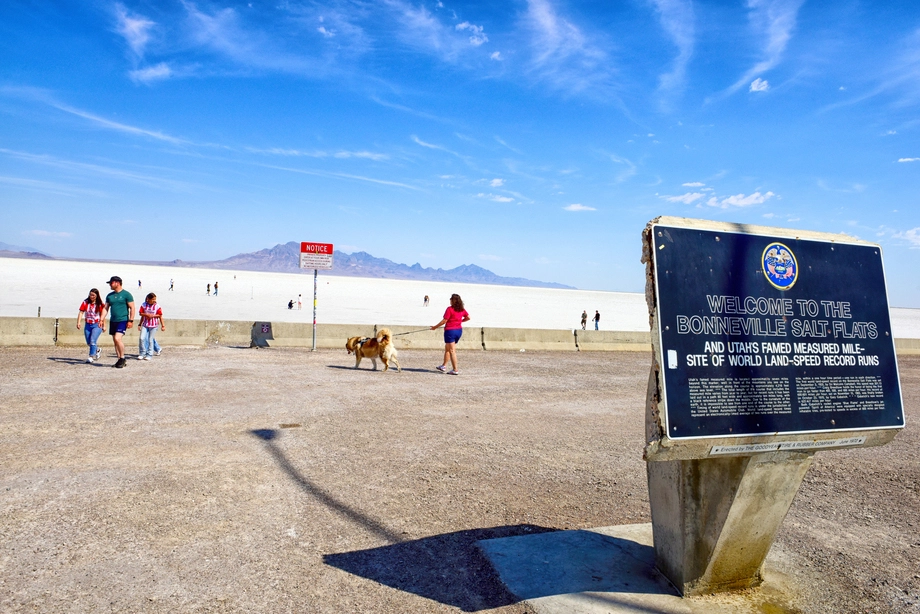
Bonneville Salt Flats: otherworldly landscapes in one day
One popular style of day trip from Salt Lake City focuses on the Bonneville Salt Flats. These tours showcase the vast white expanse west of the city, often timed for the best light to capture dramatic photos.
The route typically balances driving with time on the flats themselves. You may walk out onto the salt, learn about its formation, and hear stories about land speed records and film shoots that have used this unique setting.
Antelope Island and wildlife-focused tours
Another common route leads to Antelope Island, known for open views across the Great Salt Lake and chances to see wildlife. Some tours emphasize animals and birdlife, while others combine light walking, viewpoints, and informative stops.
These trips work particularly well for families or anyone reluctant to commit to a long national parks journey but still wanting a taste of Utah’s natural side.
Pricing, timing, and what is usually included
Many organized Utah day tours from the city are structured with pricing that starts around entry-level options and moves up based on destination distance and inclusions. In some cases, you will find offers beginning at about 35 dollars, while a large share of full-day routes sit close to 99 dollars.
To help you choose, operators describe departure times, return windows, and how much time you can expect at each main stop. This transparency makes it easier to compare different itineraries when you are shortlisting options such as general Utah day tours versus more specialized routes.
Balancing road time and on-site experience
A well-designed itinerary maintains a reasonable proportion between hours in the vehicle and hours spent on site. For many travelers, a “full but realistic” schedule is more appealing than trying to cram in too many distant locations at once.
When evaluating different day trips, check that the promised stops leave enough time for you to actually walk around, take photos, or join short guided segments instead of just jumping out for quick snapshots.
Pros and cons of organized Salt Lake City tours
Key advantages
- Low-stress logistics: Organized tours handle transfers, parking, and timing, which is especially helpful for ski resorts and distant national parks.
- Local insight: You gain access to guides who know the city’s history, planning, and hidden corners, as well as lesser-known viewpoints in natural areas.
- Efficient use of time: Carefully planned routes minimize backtracking and confusion so you can see more in a limited timeframe.
- Safety and comfort: Drivers accustomed to local roads and weather conditions reduce risk, particularly on mountain routes.
- Social atmosphere: Small groups on walking and day tours can make it easier to meet other travelers and share experiences.
Important limitations
- Less flexibility: You follow a set schedule, which leaves less room for spontaneous detours or spending longer at a favorite stop.
- Group dynamics: Your experience can be influenced by the pace and interests of the group, especially on walks and shared transfers.
- Per-person cost: Organized tours usually cost more than doing everything yourself if you have the time and confidence to self-plan.
- Fixed pace: Very active travelers may find some sightseeing segments too slow, while others might feel rushed at popular viewpoints.
- Limited deep hiking: Many day tours focus on short accessible walks rather than long, strenuous hikes into the backcountry.
How to balance the pros and cons
To put it simply, the best way to use organized tours is selectively. Choose them where they remove the most stress or add the most value, such as ski resorts, complex national park logistics, or your first orientation in the city.
Then, complement them with self-guided time on easier days when you have more energy to plan and explore. This combination gives you structure where it matters and freedom where it is safe to improvise.

Common mistakes when booking Salt Lake City tours
Planning mistakes before you arrive
- Underestimating distances: Many visitors misjudge how far national parks and some natural attractions are from the city, then feel surprised by the amount of driving involved.
- Overpacking the schedule: Trying to fit a city walking tour, a full-day excursion, and evening activities into one day often leads to fatigue and reduced enjoyment.
- Ignoring terrain details: Skipping the fine print about walking distances and elevation changes can cause issues for travelers with mobility concerns.
Mistakes during the tour itself
- Not speaking up: Some guests are shy about asking questions or flagging discomfort, even though guides are usually happy to adjust pace within reason.
- Poor clothing choices: Arriving in city shoes for a day that includes gravel paths or ignoring mountain weather forecasts can make the experience less comfortable than it needs to be.
- Forgetful packing: Failing to bring water, sun protection, or layers can become a problem on longer outdoor segments, especially in Utah’s dry climate.
How to avoid disappointment
The easiest way to avoid frustration is to read descriptions carefully and match them honestly to your group’s energy and interests. Note departure and return times, walking distances, and terrain descriptions, then compare them with your usual activity level at home.
It also helps to build in “buffer” days. If you plan a long national park or ski excursion, keep the next morning or evening light, perhaps with a gentler city walk or café time instead of another dawn-to-dusk outing.
Practical tips for choosing the right tour with MateiTravel
Matching tour types to your travel style
If you enjoy stories, architecture, and slower exploration, prioritize downtown walking experiences early in your stay. They build a strong base of understanding that makes the rest of your trip more meaningful.
If you feel most alive in big landscapes, put national parks, ski resorts, and other Utah day tours at the center of your plan, then use short city walks to balance the schedule.
Questions to ask before booking
- How much time is in transit vs on site? This tells you whether the day will feel mostly like a road trip or more like a series of walks and visits.
- What are the walking distances and terrain? Check that everyone in your party is comfortable with the physical demands.
- What is included in the price? Clarify whether transfers, guiding, and any entrance fees are included so you can compare offers fairly.
- How big are the groups? Smaller groups allow more questions and flexibility, which can transform the experience.
Two example itineraries for different travelers
Imagine Traveler A, a couple on a three-day city break. On day one they take a guided walking tour of downtown for orientation. Day two they enjoy a relaxed self-guided walk with café stops and a museum. On day three they choose a short Utah day trip to somewhere like Antelope Island to taste the wider landscape without overcommitting.
Traveler B has a week and wants variety. They start with a city walking tour, then add a ski day from Salt Lake City, followed by a national parks tour, with easier city days in between. By mixing guided and self-guided time, both travelers avoid burnout and still feel they have made the most of their stay.
At-a-glance comparison of main tour types
| Tour type | Primary focus | Typical duration | Best for |
|---|---|---|---|
| Downtown walking tours | History, planning, hidden city spots | Half day or less | First-time visitors, culture lovers |
| Ski resort day trips | Skiing, snowboarding, mountain scenery | Full day | Active travelers, families, friend groups |
| National parks tours | Iconic landscapes and viewpoints | Full day or multi-day | Scenery seekers, first-time Utah visitors |
| Other Utah day tours | Salt flats, wildlife, open spaces | Full day | Families, photographers, casual explorers |
Key takeaways on choosing Salt Lake City tours
In essence, downtown walking tours, ski day trips, national parks routes, and other Utah excursions each serve a different travel need. City walks provide narrative and orientation, while ski and park tours offer big scenery without logistical stress.
The smartest approach is to decide which experiences matter most to you, then mix guided and self-guided time so you get both structure and freedom. If you want help shaping that balance, MateiTravel can suggest combinations that fit your dates, fitness level, and interests, so your time in Salt Lake City and Utah feels full but never frantic.
FAQ about Salt Lake City tours and Utah day trips
What is the best first tour to take when I arrive in Salt Lake City?
For most visitors, a guided downtown walking tour on the first day works best. It gives you a clear mental map of the center, introduces key buildings and hidden spots, and provides local context that makes the rest of your trip easier to plan.
How do guided walking tours differ from a self-guided walking route?
Guided walking tours add live commentary from a local guide, small-group interaction, and a carefully planned route. A self-guided walking tour relies on your own research and navigation, which offers more spontaneity and lower cost but less depth of information.
How long do day tours from Salt Lake City to Utah attractions usually last?
Most full-day Utah tours from Salt Lake City last from morning to early evening, with several hours spent in transit and multiple hours on site. Downtown walking tours are shorter, often taking just a half day or less, which makes them easier to fit into a busy schedule.
When should I choose an organized ski day trip instead of going on my own?
Choose an organized ski day trip if you do not want to deal with mountain driving, parking, and orienting yourself at the resort. It is especially helpful for first-time visitors, families, and anyone who prefers to have transfers and basic orientation handled in advance.
What should I check before booking a national parks tour from Salt Lake City?
Pay close attention to how much time is spent driving versus at viewpoints and on short hikes. Also review walking distances, terrain descriptions, and group size to ensure the physical effort and pacing match your comfort level and expectations.
How much do Utah day tours typically cost?
Many entry-level Utah day tours start at around 35 dollars, while a large number of full-day itineraries are priced around 99 dollars. The exact cost depends on distance, what is included, and whether the tour focuses on simple sightseeing or more specialized experiences.
What are common mistakes people make when booking Salt Lake City tours?
Typical mistakes include underestimating driving distances, cramming too many activities into a single day, and ignoring route and terrain details. These issues can lead to fatigue or discomfort, which you can avoid by reading descriptions carefully and leaving buffer time in your plan.
How can I avoid being uncomfortable on outdoor day trips from the city?
Check the itinerary for walking distances, surfaces, and expected weather, then choose appropriate shoes, layers, sun protection, and water. Bringing these basics and matching the tour’s difficulty to your abilities makes outdoor segments much more enjoyable.
Is it better to rely only on tours or also explore Salt Lake City on my own?
A mix usually works best. Many travelers take a guided tour for orientation and complex logistics, such as ski resorts or national parks, then use self-guided walks and free time to revisit favorite spots and explore at their own pace on lighter days.
How does using digital maps help with self-guided walking in Salt Lake City?
Digital maps can make self-guided walking more efficient by optimizing routes and reducing time spent lost. One study of maps users in Salt Lake City found that smart routing can cut average travel time and emissions, which supports the idea that tech-assisted self-guided tours can work well.

 Bonneville Salt Flats – Sunset Adventure of the White Desert
 Antelope Island – Wild Heart of the Great Salt Lake Adventure
 Bonneville Salt Flats – Journey to the Edge of the World
 Salt Lake City – The City of Zion. Historical Interactive Walking Tour
 Antelope Island Sunset Wildlife Expedition – Great Salt Lake Odyssey