
Salt Lake City Walking Tours: How Route Length Shapes Your Day
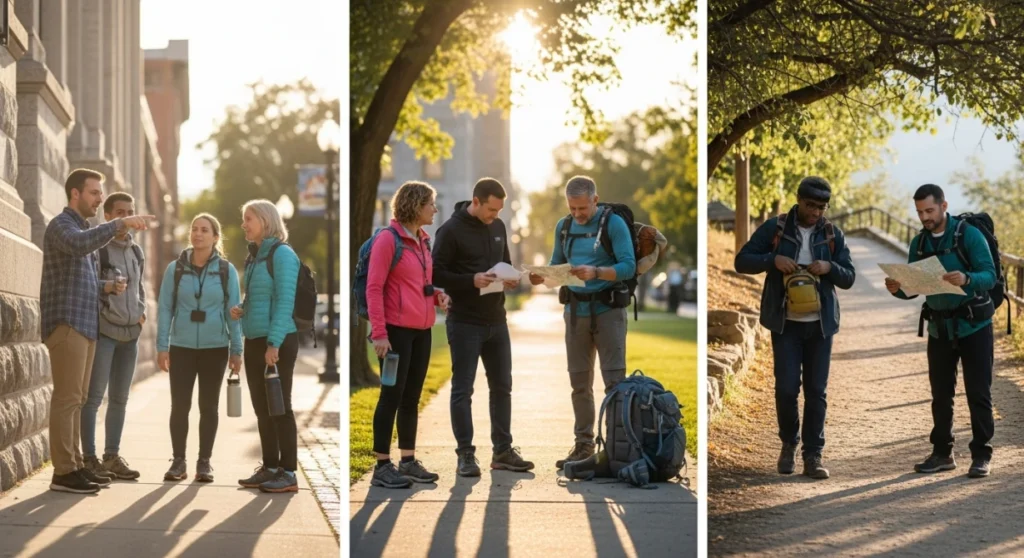
In Salt Lake City, route length changes more than sightseeing. Long blocks, desert heat, and spread-out attractions mean the right walking distance can keep your day enjoyable instead of draining it.
Visitors often make the same mistake on day one in Salt Lake City. They assume a walk that looks short on the map will feel easy, then discover that the blocks are longer, the sun is stronger, and the city spreads farther than expected.
That is why the real decision is not whether walking belongs on your itinerary. It is how far you should walk, how long you should stay on your feet, and what that choice leaves you able to enjoy afterward. For travelers comparing things to do near salt lake city, route length is one of the most practical filters because it determines whether your downtown time becomes a useful orientation or an energy drain.
We organize small-group downtown walks led by local guides, and we treat route length as a planning tool rather than a badge of ambition. In Salt Lake City, that distinction matters more than many first-time visitors expect.
When is a Salt Lake City walking tour the right fit for your day?
A downtown walking tour is the right fit when you want orientation, local context, and a realistic amount of sightseeing on foot. It is not the right tool for covering the full valley, where many major sights are far too spread out to connect comfortably by walking alone.
Salt Lake City works differently from dense older cities where a long walk naturally strings together landmark after landmark. Here, the downtown core is walkable and rich in history, architecture, and city-planning stories, but the broader metro area stretches across a wide valley, with some attractions located up to about 30 miles apart.
That is why we design our Salt Lake City Walking Tours around the most rewarding downtown grid. Our routes focus on historic buildings, hidden places, and the story of how the city was planned and developed, which gives guests a strong first-day understanding without pretending a single walk can cover everything.
- Best use case: Your first day in town, a free afternoon after arrival, a morning before another activity, or a short urban window during a Utah trip.
- Less suitable use case: Trying to see outlying natural sites, valley-wide landmarks, or multiple far-apart destinations in one continuous walking itinerary.
- Why guided helps: A local guide turns the downtown grid into context, not just mileage, and helps you avoid wasting energy on inefficient routing.
How does Salt Lake City’s layout make route length matter more?
Route length matters more in Salt Lake City because the city’s long blocks and wide geography make map distances deceptive. A modest-looking route can feel longer on the ground, while adding extra distance often adds fatigue faster than it adds value.
One of the biggest reasons is block size. Salt Lake City blocks measure roughly one-eighth of a mile, which is nearly twice as long as what many travelers are used to in other downtowns, so a route with “just a few blocks” can still mean substantial time on your feet.
The second reason is city spread. Downtown is walkable enough for a meaningful guided experience, but the wider valley is not something you can realistically conquer on foot in one sightseeing day. If your goal extends beyond the central grid, a walking tour should orient you first, then you can use a vehicle-based outing for non-walkable places.
That is also why we treat downtown walks and broader Utah outings as different tools for different jobs. If your trip plan also includes open landscapes or scenic areas beyond the center city, our Utah Day Tours are the practical complement once you understand what walking can and cannot efficiently cover.
You found a hidden promo code!
Use code WOWBLOG at checkout and get 10% OFF any tour!
Limited time offer. Book now and save!
Browse ToursWhat does “route length” actually mean in Salt Lake City?
In Salt Lake City, route length means more than miles. It includes total time on your feet, the pace of the group, the feel of the terrain, the size of the blocks, and how heat or altitude changes your comfort over the course of the day.
Visitors often reduce a walking tour to distance alone, but that misses the real experience. A two-hour route with frequent stops for stories, questions, and city context can feel easier and more rewarding than a self-directed walk of similar mileage done in direct sun with no pacing plan.
For our walks, practical route details matter because they help people choose honestly. We publish approximate duration, distance, and terrain so guests can match a route to their own comfort, not to an abstract idea of what they “should” be able to do.
- Distance: The raw length of the route, which looks smaller on a map than it can feel on Salt Lake City’s oversized blocks.
- Time on feet: The full walking window, including how long you stay active before resting, dining, or moving on to another activity.
- Pace: Small-group tours allow a more sustainable rhythm and more room for questions than a rushed point-to-point march.
- Terrain: Even when a route is urban, surface feel and overall walking continuity affect comfort.
- Day context: The same route can feel very different at 9:00 a.m. in spring than at mid-day in summer.
Which route length is right for your schedule, energy, and travel style?
The best route length depends on what the rest of your day needs from you. In Salt Lake City, a shorter or medium walk often creates a better overall day than an ambitious half-day route, especially for first-time visitors, summer travelers, and anyone arriving from a flight or road trip.
The key is to think in day structure, not bragging rights. A walking tour should leave you better oriented and still interested in dinner, museums, meetings, family time, or the next leg of your Utah itinerary.
| Route length | Best for | How it changes the day | What to expect afterward |
|---|---|---|---|
| Up to about 1.5 hours | First-day arrivals, families, business travelers, cautious walkers, hot-weather visits | Light orientation with manageable fatigue | You usually still have energy for lunch, another indoor stop, or evening plans |
| About 2 to 3 hours | Most first-time visitors in mild weather, travelers wanting more context without losing the day | Balanced mix of stories, landmarks, and meaningful walking time | You will likely want a rest break afterward, but the day still feels open |
| Half-day or longer | Cooler-season visitors with strong walking comfort and a sightseeing-focused day | Walking becomes the central activity, not just an introduction | The route will shape the rest of the day, so later plans need to stay light |
Short routes: up to about 1.5 hours
A short route is often the smartest first-day choice because it gives you downtown orientation without taking over the day. In Salt Lake City, that can be enough to understand the street grid, get historical context, and learn how the city fits together.
This length works well for travelers landing that morning, people fitting a walk between meetings, and families who want a shared activity without pushing patience or stamina too far. It is also the easiest option in hotter weather because it limits sun exposure and keeps the experience feeling fresh.
A shorter walk does not mean missing the point. In this city, thoughtful curation matters more than piling on extra blocks, and a compact route can still deliver the planning story, architectural highlights, and lesser-known spots that many people would miss on their own.
Medium routes: about 2 to 3 hours
A medium route is the sweet spot for many visitors because it balances depth with endurance. It gives enough time for a downtown narrative to develop while still leaving room for the rest of your day.
This is usually the right choice if you want more than a quick introduction but do not want walking to become a test of resolve. It suits couples, solo travelers, and first-time visitors in spring, fall, or mild mornings when conditions support a longer but still realistic outing.
With this length, the rest of the day should stay flexible. You can still add lunch, an easy indoor attraction, or an evening plan, but you should expect your feet to notice the route, especially if the walk happens after travel or before dinner.
Longer routes: half-day walking
A longer route only makes sense when walking itself is the main event and conditions support it. In Salt Lake City, extra distance often adds more exposure and fatigue than extra insight once you move past the most story-rich downtown areas.
This option fits visitors in cooler seasons, strong walkers who already know their comfort level, and travelers with a deliberately light schedule afterward. It is less suitable for a first afternoon after flying, for mixed-ability groups, or for hot summer mid-days.
If you choose a half-day route, plan the rest of the day accordingly. Keep later commitments simple, leave room for rest and food, and do not assume you will still want another long outing afterward.
How do climate and start time change the right route length?
Climate and timing can make a medium walk feel ideal or make the same walk feel draining. Summer heat, strong ultraviolet exposure, and high-altitude dryness mean that start time is part of route design, not a minor detail.
Salt Lake City’s summer temperatures can exceed 100°F, and the sun can feel intense even before the hottest part of the afternoon. That shifts the tradeoff sharply. After late morning, every extra block can cost more comfort than it would in a cooler city or season.
Because of that, we generally recommend matching route length to the clock as much as to fitness. A short morning or later-afternoon walk can feel much more enjoyable than a longer mid-day route completed under the same sky.
- Morning: Best for longer or medium routes, especially in warmer months, because your energy and the temperature are working in your favor.
- Late afternoon or evening: Often a strong choice for shorter and medium routes when you want the day’s heat to ease before walking.
- Mid-day in summer: Best reserved for shorter outings unless your group is very comfortable with the conditions and has kept the rest of the day light.
- Cooler seasons: Give you more flexibility to choose a medium or longer route without the same heat penalty.
Simple preparation also matters. Water, sun protection, and realistic footwear will not change the weather, but they do make it easier to enjoy the route you chose rather than merely finish it.
Why are walking tours especially useful on your first day in Salt Lake City?
A first-day walking tour works well because it turns an unfamiliar grid into a usable mental map. It helps you understand where downtown ends, what is worth returning to later, and which places belong in a separate day plan rather than in a longer walk.
That is one of the clearest advantages of a guided downtown route early in the trip. Instead of spending your first hours misjudging distances or wandering between oversized blocks, you learn how the city was laid out and how its landmarks connect to its development.
We consider this especially useful at the start of a Utah stay because the walk becomes a decision tool for everything that follows. Once you see the downtown core with a local guide, it is easier to separate what should be revisited on foot from what belongs in a vehicle-based plan later.
This is also where small groups make a difference. Guests can ask the practical questions that matter on day one, such as what feels close but is not, how much more walking makes sense that afternoon, and whether the next outing should stay urban or move to a different setting.
What is the booking and planning process, and who is responsible for what?
The booking process works best when the tour provider supplies clear route details and the traveler matches them to the realities of their trip. Our role is to design and describe routes honestly, and your role is to choose based on your schedule, season, and normal walking comfort.
That responsibility split matters because the same route can suit one group and wear out another. Good planning starts before the walk begins.
Stage 1: Choose whether walking is the right format
Our responsibility is to make the scope clear. We focus on curated downtown walking experiences led by local guides, not on covering the whole valley on foot.
Your responsibility is to define the purpose of the day. If you mainly want orientation, history, and city context, walking is a strong fit. If you are aiming for natural sites or broader regional sightseeing, keep the walk compact and reserve separate transportation for the rest.
Stage 2: Compare route length, duration, and terrain
Our responsibility is to publish practical route information so you can compare options by distance, time, and terrain. That helps remove guesswork from the decision.
Your responsibility is to choose honestly, not aspirationally. Think about arrival time, weather, age range in your group, and how much more walking you still want later that day.
Stage 3: Prepare for the day itself
Our responsibility is to keep the walking experience manageable through small groups and a guided pace that allows questions. Your responsibility is to arrive prepared for the season and for the amount of time you selected.
If you are unsure between two lengths, the safer choice for a first day is usually the shorter one. A walk that ends with energy left is almost always the better memory.
What should you expect as the timeline, deliverable, and quality standard of a good walking tour?
The main deliverable of a good downtown walk is not raw distance covered. It is a useful understanding of the city, a route completed at a sustainable pace, and enough energy left to enjoy the rest of your schedule as planned.
That is how we judge route design in practice. In Salt Lake City, “successful” does not mean pushing as many blocks as possible. It means aligning the route with the day it sits inside.
Expected timeline
Before booking, you should be able to review the route’s approximate duration, distance, and terrain. After booking, the main timeline question is simple: where does this walk sit within your arrival, meals, and later sightseeing.
For a first afternoon, short and medium lengths usually integrate best. For a dedicated sightseeing morning in cooler weather, a medium or longer route can make sense if the rest of the day stays open.
Acceptance criteria you can use
A route length is a good match when the walk achieves three things. It should give you downtown orientation, feel manageable for the slowest comfortable member of your group, and leave the rest of the day looking realistic rather than compromised.
- Good fit signal: You can still imagine enjoying a meal, museum stop, or evening plan afterward.
- Poor fit signal: You are choosing a route mainly because “more must be better,” even though your day already includes travel, heat, or other walking.
- Good fit signal: The route’s published details match your normal comfort with walking, not your vacation optimism.
- Poor fit signal: You are relying on the map alone and ignoring block size, heat, or the fact that downtown stories matter more than covering extra ground.
What preparation checklist helps you choose the right route the first time?
The best preparation is a short self-check before booking. Most bad route choices come from underestimating the conditions, overestimating daily stamina, or forgetting what else the day already contains.
- Check your arrival pattern: If you are flying in, driving in, or starting after a busy morning, lean shorter.
- Check the season and hour: In hot weather or under strong sun, shorten the route or move it earlier or later.
- Check your group’s true comfort: Choose for the least comfortable regular walker in the group, not the most ambitious one.
- Check what comes next: If dinner, family plans, meetings, or another outing matter, protect energy with a short or medium walk.
- Check your trip goals: Use downtown walking for orientation and stories. Use separate transport for wider regional sights, wildlife areas, or scenic excursions.
- Check the route details: Compare duration, distance, and terrain before booking rather than judging only by a map view.
If your broader plan also includes drives or nature-based sightseeing beyond downtown, keep that part separate from the walking day. A compact city route plus one of the Utah Day Tours is often a better structure than trying to force urban walking and far-flung scenery into one overlong schedule, even for travelers also researching the best scenic drives near salt lake city.
How should you make the final choice between a short, medium, or longer route?
The final choice should come down to what kind of day you want to have afterward. If you want the city to feel clear and your schedule to stay pleasant, choose the shortest route that still delivers the context you care about.
For many first-time visitors, that means a short or medium downtown walk, especially on day one. Longer routes have their place, but they work best when the weather is cooperative, your group already knows its walking comfort, and the walk itself is the day’s main event.
If you are deciding between two options, err toward the route you can finish comfortably rather than the one that looks more impressive on paper. Browse the Salt Lake City Walking Tours page, compare the published route details, and book the length that matches your dates, energy, and the rest of your itinerary.
Are walking tours in Salt Lake City worth it if the city is so spread out?
Yes, if you use them for the downtown core rather than for the entire valley. The value is orientation, history, and efficient storytelling on foot, not trying to cover every major sight in one walk.
Will a shorter route feel like I missed the city?
Not necessarily. In Salt Lake City, a well-planned shorter route can deliver more usable context than a longer, tiring walk that adds extra blocks without adding much insight.
What route length is best for a first afternoon after arrival?
A short route is usually the safest choice because it gives you a feel for downtown without using up the rest of the day. A medium route can also work if the weather is mild and your group is ready for more time on foot.
Why do Salt Lake City walks feel longer than they look on a map?
The city’s blocks are unusually long, about one-eighth of a mile each. That makes “just a few blocks” a more substantial walk than many visitors expect.
Is summer a bad time for a walking tour?
Summer can still work, but route length and start time matter more. Shorter walks and earlier or later starts are usually more comfortable than long mid-day routes.
Can a walking tour still make sense if I only have a couple of hours?
Yes. A compact downtown route can fit neatly between travel, meetings, or other plans and still give you a much better grasp of the city.
What should I do if I want downtown history and out-of-town scenery on the same trip?
Use the walking tour for your urban orientation, then treat regional sightseeing as a separate outing with transportation. That split usually makes the trip feel smoother and more realistic.

Had a great tour with Dima. Very knowledgeable, fun and courteous. Highly recommend this tour guide....
Read more →Dima, owner and guide, is passionate in his advocacy for the health of Utah\'s parks and...
Read more →Such an amazing trip and experience. Dima is a cool tour guide, very humorous and willing...
Read more →Your was super thorough and guide was very helpful and informative throughout the tour
Read more → Antelope Island – Wild Heart of the Great Salt Lake Adventure
 Antelope Island Sunset Wildlife Expedition – Great Salt Lake Odyssey
 Bonneville Salt Flats – Sunset Adventure of the White Desert
 Bonneville Salt Flats – Journey to the Edge of the World