
Safety Basics for a Moab Rock Crawler 4×4 Adventure
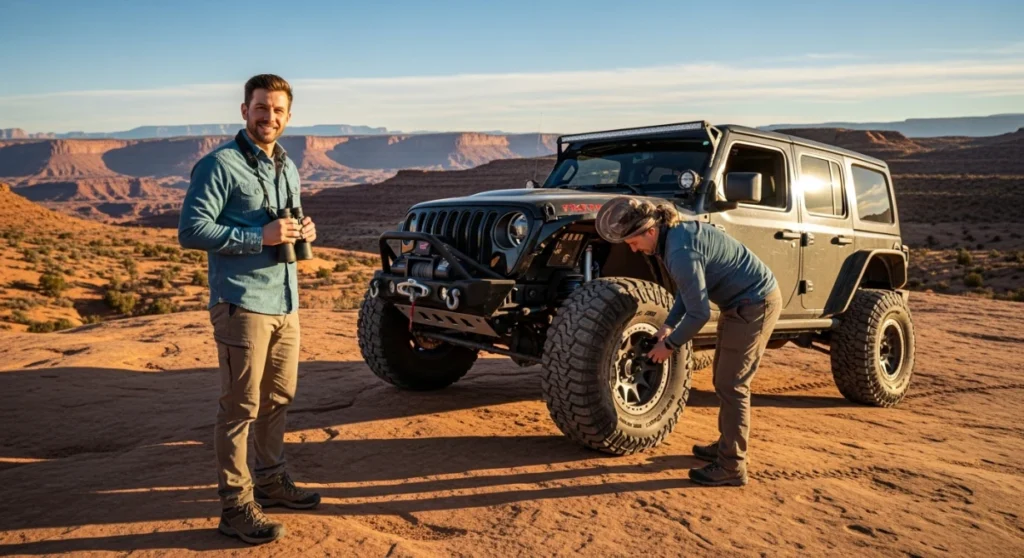
For a safer Moab rock-crawling day, use proper all-terrain tires, inspect the vehicle before departure, carry full recovery and emergency gear, and stay on designated trails.
The problem usually starts before the tires touch slickrock. People show up for a Moab off-road rock crawler 4×4 adventure with local spotter, assume low-speed driving means low risk, and skip the boring checks that prevent the day from falling apart.
That matters more now because many travelers want big scenery without wasting limited vacation days on avoidable breakdowns. If you want the fun part to stay fun, focus on vehicle readiness, recovery basics, trail discipline, and a simple plan for what happens when conditions turn awkward.
When a minor oversight turns into a trip-ending problem
On this terrain, small mistakes compound fast. A tire that looked acceptable in the parking area can lose traction or fail on rough surfaces, and a missing shovel or weak jack setup can turn a short delay into a long wait.
The user impact is simple. You lose time, confidence, and flexibility, and the group starts making rushed decisions instead of calm ones. That is when people leave designated routes, misuse equipment, or keep driving a vehicle that already gave them a warning sign.
- Early symptom: Tire damage risk increases when the vehicle is not equipped with all-terrain tires meant for off-pavement use.
- Operational symptom: A basic recovery task stalls when there is no stable jack base or the wrong gear is packed.
- Safety symptom: A simple delay becomes more serious when extra food, water, or satellite communication is missing.
- Trail symptom: Poor route discipline creates avoidable exposure and environmental impact when drivers leave designated roads and trails.
| Warning sign | What it usually points to | Why it matters right away |
|---|---|---|
| Uneven tire condition or street-focused tread | Weak traction and greater flat risk | Climbing and descending become less predictable |
| No clear place to use the jack safely | Recovery setup is incomplete | A routine tire change can become unstable |
| Food and water packed for comfort only | No delay margin | A short hold-up becomes a stress problem |
| No satellite communication device | Thin emergency backup | Help is harder to reach if the group is stuck |
| Driving outside marked routes | Poor trail discipline | Risk rises for both the group and the landscape |
Top mistakes people repeat on Moab rock-crawling days
Mistake 1. Treating tire choice like a minor detail
This is one of the most common setup errors because many drivers judge readiness by whether the vehicle feels fine on pavement. The correction starts with the tire itself. Use all-terrain tires suitable for off-pavement travel, because that directly improves traction and helps reduce flat risk on challenging ground.
A realistic outcome is easy to picture. Two vehicles leave on the same day, but the one with proper off-pavement tires maintains grip and confidence where the other starts slipping, spinning, or taking poor lines to compensate.
Mistake 2. Packing recovery gear without packing enough of it
People often remember a jack and forget the conditions under it. On uneven ground, a jack without a stable base is not a real plan, and one spare tire is thin protection when sharp surfaces or long access routes are involved.
The practical fix is specific, not vague. Carry a shovel, a jack with a stable base, and two spare tires, not just one. That set gives you a workable response instead of a hopeful one.
Mistake 3. Assuming the route itself will keep them safe
Marked trails do not remove the need for discipline. Drivers leave designated roads and trails because they think a short detour will bypass a rough spot or create a better photo angle, but that decision increases exposure and creates unnecessary impact on the area.
Travel only on designated roads and trails to reduce environmental impact and keep the trip safer.
Field safety guidance
A common scenario looks harmless at first. A group edges off the route to avoid an obstacle, then spends more time repositioning and recovering than it would have spent making a cleaner approach on the intended line.
Mistake 4. Skipping the pre-trip inspection because the vehicle drove fine yesterday
This happens when people confuse recent use with current readiness. Before heading out, check tires, lights, fluids, and confirm that every critical piece of equipment is present and functional.
The cause is usually rushed departure, not lack of knowledge. Once the day starts late, inspection gets cut first, even though it is the cheapest way to avoid a preventable stop.
You found a hidden promo code!
Use code WOWBLOG at checkout and get 10% OFF any tour!
Limited time offer. Book now and save!
Browse ToursFix pattern: mistake, cause, correction
The strongest fixes are simple because they remove guesswork. If you can pair each mistake with one visible cause and one direct correction, the group can prepare faster and make cleaner calls at the trailhead.
| Mistake | Likely cause | Direct correction |
|---|---|---|
| Using the wrong tires | Readiness judged by pavement driving | Fit all-terrain tires suitable for off-pavement use before the trip |
| Bringing incomplete recovery gear | Packing for best case instead of delay or damage | Carry a shovel, stable-base jack, and two spare tires |
| Leaving marked routes | Trying to save time or simplify an obstacle | Stay on designated roads and trails and commit to a legal line |
| Skipping inspection | Rushed start and overconfidence | Check tires, lights, fluids, and verify equipment function before departure |
| No emergency communications margin | Assuming a phone is enough | Add a satellite communication device plus extra food and water |
- Correct the traction problem first: If the tire setup is wrong, every later decision gets harder because grip and sidewall confidence are already compromised.
- Build a real recovery kit: Gear should solve a predictable problem on rough ground, not just look complete in the cargo area.
- Make route discipline non-negotiable: The safest shortcut is usually no shortcut at all.
- Use a departure check: Inspect tires, lights, fluids, and emergency items before you leave, not after the first warning sign.
Prevention protocol for future runs
Prevention works best when it is repeatable. Instead of asking whether the vehicle is probably fine, use the same short protocol every time and refuse to trim it when the group is excited or running late.
- Set the vehicle up for the surface: Confirm all-terrain tires are on the vehicle and visually inspect their condition before loading anything else.
- Pack for delay, not just distance: Bring extra food and water even if the route looks short on paper.
- Verify recovery gear by function: Touch the shovel, check the jack, confirm the stable base is actually packed, and count both spare tires.
- Protect your communication margin: A satellite communication device belongs in the plan before the day starts, not as an afterthought.
- Keep the route clean: Commit to designated roads and trails so decision-making stays simple when pressure rises.
If you are visiting Utah and want fewer moving parts, guided planning can help because clear schedules and inclusions remove some of the usual trip friction. Travelers comparing canyonlands tours from moab often value the same thing they want on a driving day: known timing, clear walking level, and fewer logistical surprises.
That is also why small group tours utah national parks appeal to people who like asking questions in real time. Small groups led by local guides create more room for practical discussion, and that format tends to surface issues early instead of letting uncertainty build all day.
People searching for the best tours of utah national parks usually are not only chasing viewpoints. They also want a day that runs on a clear plan, with the basics handled and enough context to make better decisions along the way.

Practical recommendations that pay off immediately
These are the habits that prevent the most avoidable trouble. None of them are complicated, but each one changes the odds in your favor.
- Inspect before loading passengers: It is easier to spot missing gear and low preparedness before the vehicle is packed and everyone is ready to roll.
- Count consumables out loud: Food, water, and communication support are easier to forget than mechanical items because they do not look like tools.
- Match gear to terrain reality: A jack without a stable base is incomplete on uneven ground, even if it works fine in a driveway.
- Treat the second spare as insurance, not excess: On demanding routes, redundancy is part of the plan.
- Use a local spotter for line judgment: A second set of experienced eyes helps keep tire placement and route discipline cleaner than guesswork from the driver seat.
Quick self-diagnosis checklist before you commit
If you cannot answer these with a clear yes, you are not ready yet. This check takes only a minute, and it catches the issues that most often get dismissed.
- Tires: Are they all-terrain tires intended for off-pavement use?
- Inspection: Have tires, lights, and fluids been checked today, not just recently?
- Recovery: Do you have a shovel, a jack with a stable base, and two spare tires?
- Emergency margin: Are extra food, extra water, and a satellite communication device packed and easy to reach?
- Trail discipline: Is the plan limited to designated roads and trails only?
That checklist matters most when people are tempted to rush. A good day in rough country usually feels uneventful because the preparation was boring and complete.
The basics are not glamorous, but they are what keep a rock-crawling day from becoming a recovery story. Proper off-pavement tires, a full emergency and recovery kit, a real pre-trip inspection, and strict route discipline solve most preventable problems before they start. If you want a Utah trip with clearer logistics and more room to ask questions, MateiTravel can help you choose a guided option that fits your pace.
Why are all-terrain tires such a big deal for Moab driving?
They improve traction on rough surfaces and help reduce the chance of flats compared with a setup chosen only for pavement comfort.
Is one spare tire enough for a rock-crawling day?
It is a thin backup. Carrying two spare tires gives you a better margin if the route or access time is demanding.
What should I check right before leaving?
Look at tires, lights, and fluids, then confirm that every key safety item is packed and working.
Why does the jack need a stable base?
Uneven ground can make a normal tire change unstable. A solid base helps the jack work as intended during recovery or repair.
Do extra food and water really matter on a shorter outing?
Yes. Delays change the day faster than distance does, so a short plan still needs buffer supplies.
What is the simplest trail rule to follow?
Stay on designated roads and trails for the entire run. That keeps decisions cleaner and reduces unnecessary impact.
 Antelope Island Day Tour or Sunset Wildlife Tour: Which Fits Your Salt Lake City Schedule?
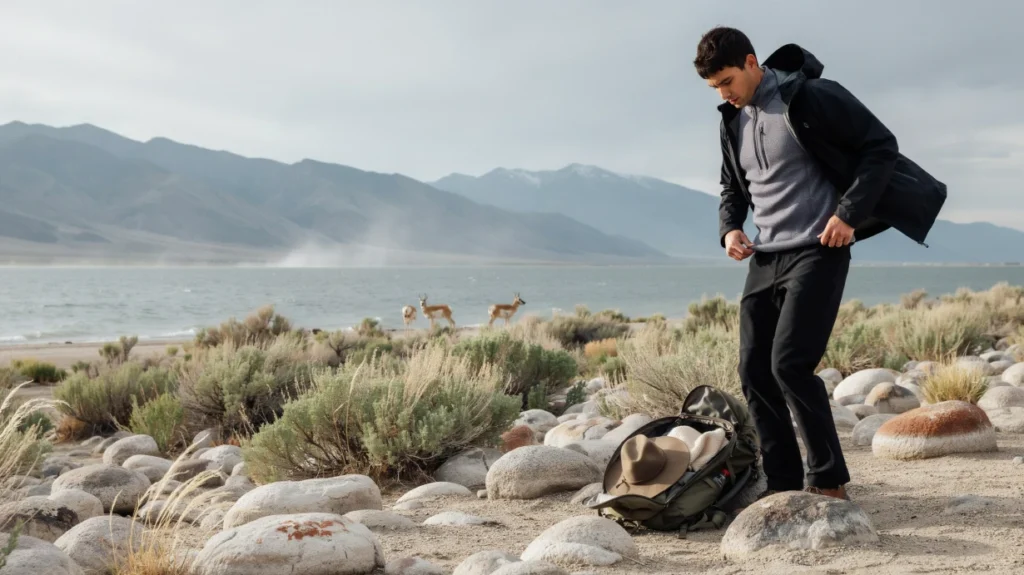 How to Dress for Changing Weather on Antelope Island
 How to Photograph People at Bonneville Salt Flats at Sunset
 How to Dress for Wind and Glare at Bonneville Salt Flats
 What a Guide-Led Utah Day Tour Handles for You
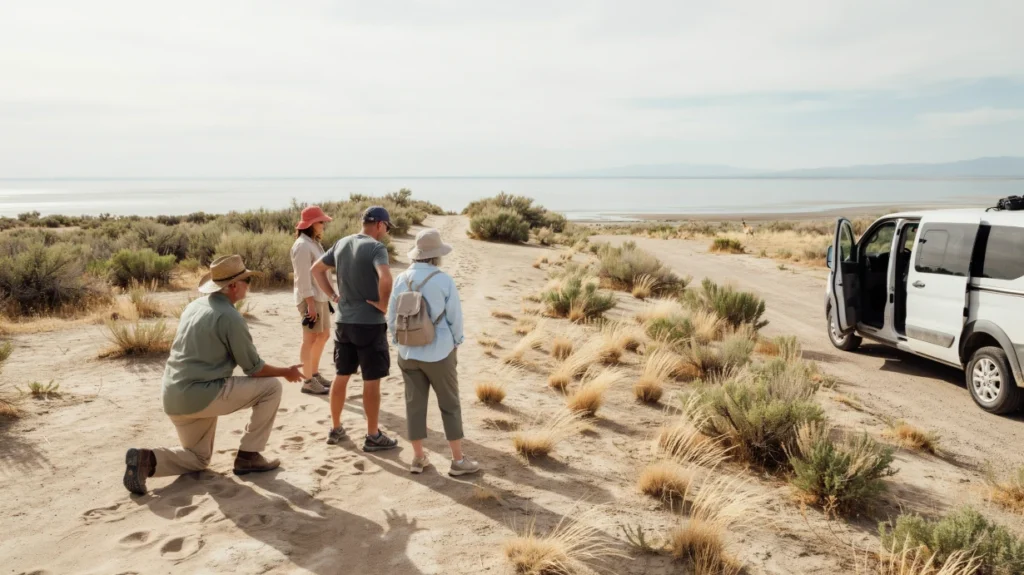 Why Wildlife Sightings Cannot Be Guaranteed on Antelope Island

The tour was great and beautiful. Dima, the tour guide, explained everything clearly and had some...
Read more →What a beautiful experience! The drive is about 2 hours one way with interesting scenery the...
Read more →(From North Carolina on a business trip) '+ 'HANDS DOWN the best tour/guide I’ve ever had. And...
Read more →Went to Antelope Island. Terrible. Tour guide didn\'t do what he said he was going to...
Read more →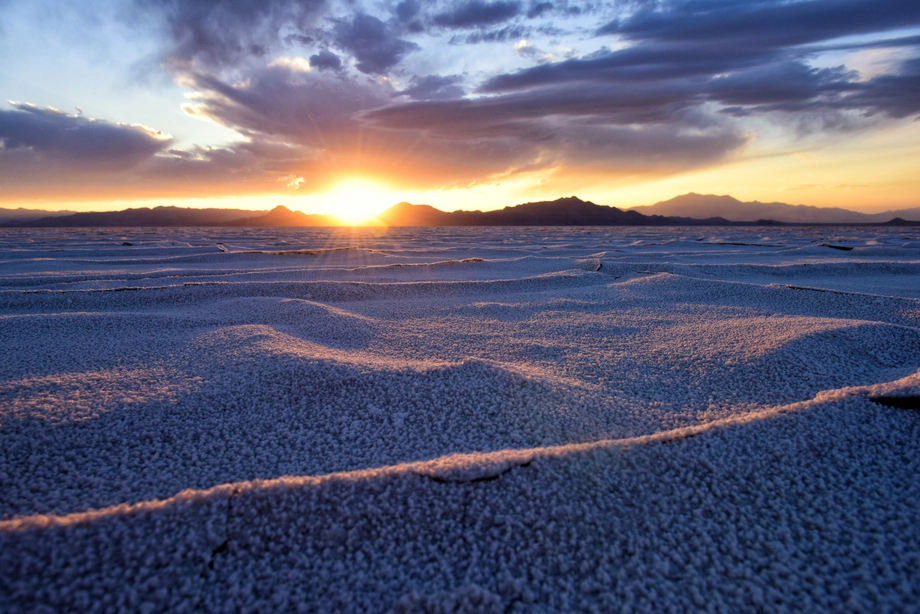 Bonneville Salt Flats – Sunset Adventure of the White Desert
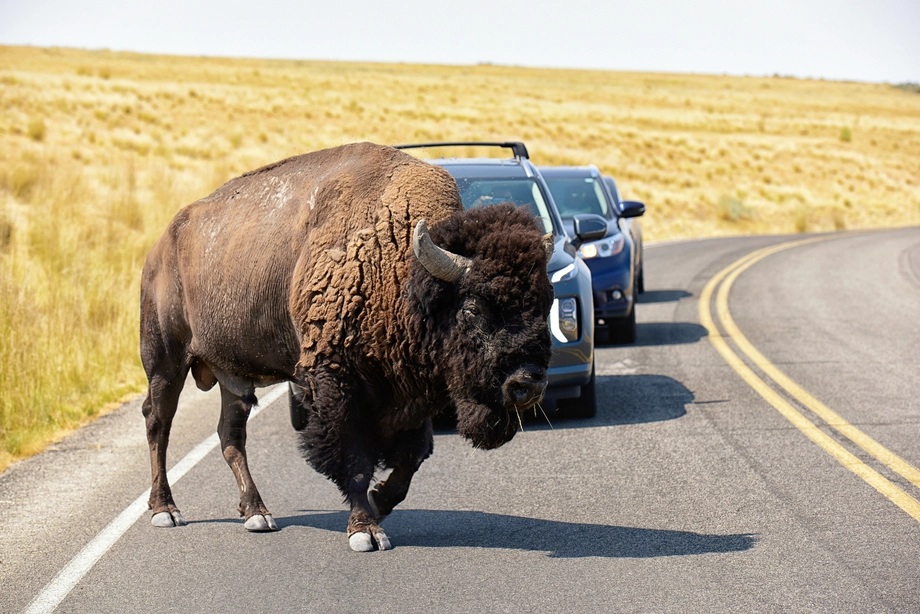 Antelope Island – Wild Heart of the Great Salt Lake Adventure
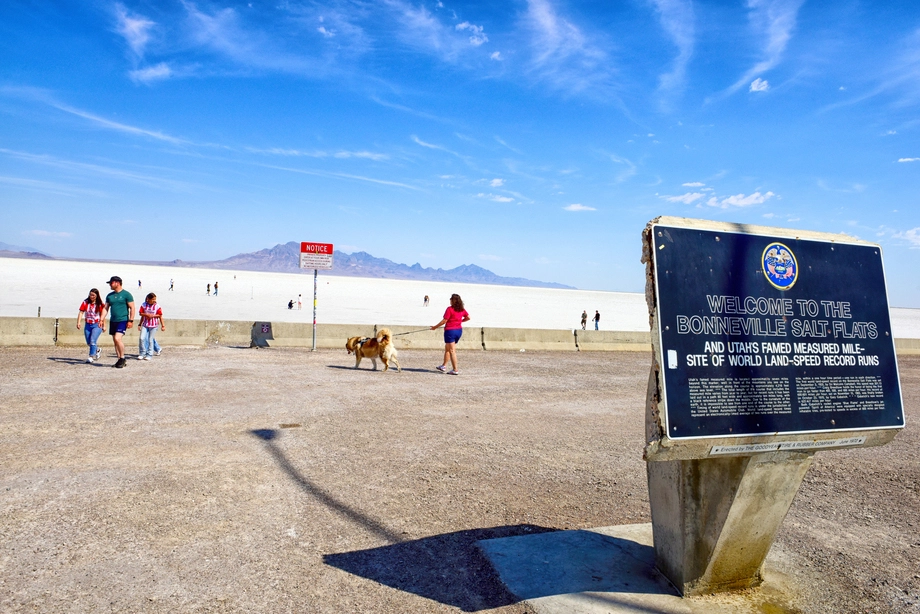 Bonneville Salt Flats – Journey to the Edge of the World
 Antelope Island Sunset Wildlife Expedition – Great Salt Lake Odyssey