
Pet-friendly scenic drives and park rules for Utah national parks
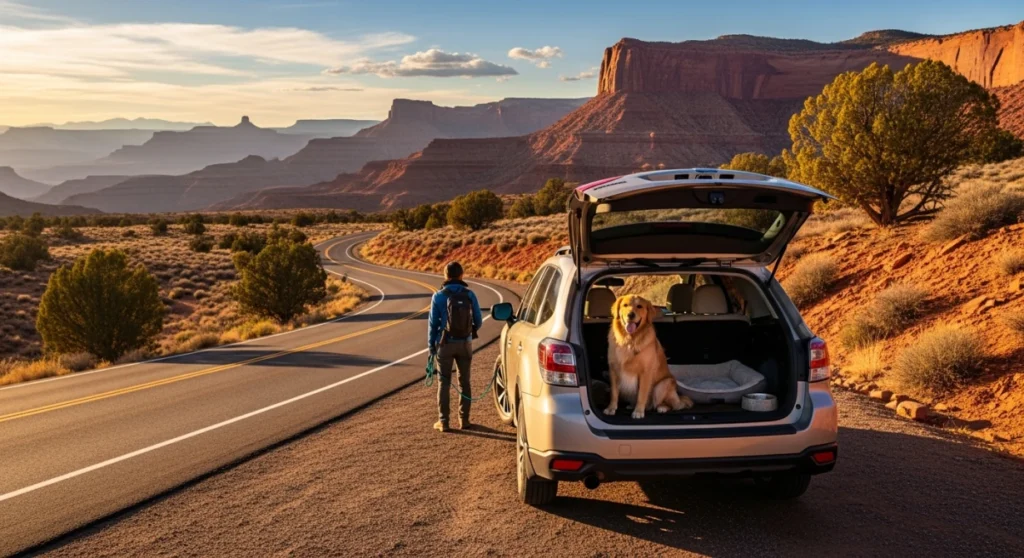
Utah’s desert parks allow pets mainly on roads, campgrounds, and select paved paths. Plan pet and non-pet days separately, verify rules by site, and use guided tours when you want longer walks or deeper context.
Many travelers plan a dream desert road trip, only to find out at the gate that their dog is not allowed on the trail they came to see. Others assume “no dogs anywhere,” then skip parks where they could have enjoyed safe, legal walks together. Utah’s rules are specific, they differ by site, and they matter even more when you structure your route around your animal.
If you understand where companion animals can actually go, how to set up your driving days, and which areas are better seen on guided tours without your dog, you can design a realistic itinerary instead of improvising from parking lot signs.
Let’s map out the most pet-tolerant scenic drives, the exact access rules that are known for key Utah units, and a step-by-step way to “qualify” your road trip so you do not get turned away or fined.
Who really “qualifies” for a pet-inclusive Utah desert road trip
Not every traveler is a good fit for bringing a companion animal through Utah’s national and monument landscapes. The terrain is hot, shade is limited, and access is more restricted than in many forests or city parks.
Before planning a self driving tour of utah national parks with your dog, check yourself against a few practical criteria.
Travelers and pets that usually fit well
- Calm, leash-trained dogs: Animals that tolerate a six-foot leash, unfamiliar people, and vehicles at pullouts are much easier to manage in developed desert areas.
- Owners comfortable with structure: You need to respect area boundaries, leave dogs in vehicles only when temperatures are safe, and stick to paved or signed zones.
- Drivers who can take breaks often: Good candidates plan frequent stops for water, short walks, and cooling, rather than racing between viewpoints.
- People fine with skipping long hikes: Because many trails are closed to pets, your focus should be overlooks, short paved segments, and scenic roads.
Who should reconsider bringing a pet
- Owners with reactive animals: If your dog lunges at people, cars, or other dogs, confining them to roads and parking areas will be stressful for everyone.
- Travelers in midsummer without cooling options: High desert heat makes it hard to leave an animal in the car, even briefly, which limits where you can step away.
- Visitors focused on long backcountry hikes: In units where pets are kept off trails, your hiking ambitions and your animal’s comfort will directly conflict.
- People uncomfortable with strict rules: If you tend to “just try it and see,” the fines and enforcement in sensitive desert environments will feel harsh.
Key pet access rules by Utah sites with scenic drives
Access for leashed animals in Utah’s desert units is targeted to specific roads, campgrounds, and short segments. Treat each site as its own rulebook. The following details are limited to what is clearly stated in available guidance.
Arches area: drive-heavy, trail-limited with pets
Arches is one of the most famous road loops in the region, but it is also one of the most restrictive for dogs once you step away from your vehicle.
At Arches National Park, pets are permitted along established roads, in parking areas, campgrounds, and picnic areas, but are prohibited on any hiking trails, at overlooks, and in visitor centers.
This creates a clear pattern. You can enjoy the paved scenic road, pull into parking lots, and share time at your campsite or a picnic table. You cannot legally walk your dog out to viewpoints on formal trails or bring them inside facilities.
Canyonlands front-country by car
Known rules keep companion animals close to the built environment in this park as well. You may travel with your leashed dog along front-country roads and keep them with you in established camp and picnic areas.
However, they are excluded from all hiking paths and from the backcountry. That makes Canyonlands a park where your pet stays on or next to the pavement while you enjoy the expansive overlooks from designated roadside spots.
Natural Bridges National Monument viewpoints
Natural Bridges offers a loop road with several bridge viewpoints that are especially suited to a drive-centric visit with an animal. Pets are allowed on all park roads and in the campground according to available guidance.
Regulations also allow them on paved paths to bridge viewpoints, at paved pullouts along the scenic drive, and at picnic sites. This is a rare case where your leashed dog can legally accompany you on the hard-surfaced walks to see the main geologic features, as long as you stay on pavement.
Capitol Reef developed-area walks
For Capitol Reef, specifics concentrate on a small number of routes tied to the historic Fruita area and nearby campground. Companion animals are permitted on the path that runs from the visitor center to the Fruita Campground.
They may also join you on the Fremont River Trail from the campground to the south end of Hattie’s Field. Beyond these segments and other unfenced or unlocked developed areas, do not assume access extends onto unlisted trails.
| Site | Where pets are clearly allowed | Key limits mentioned |
|---|---|---|
| Arches | Roads, parking lots, campgrounds, picnic areas | No hiking trails, no overlooks, no visitor centers |
| Canyonlands | Front-country roads, front-country parking, campgrounds, picnic zones | No hiking trails, no backcountry |
| Natural Bridges | All roads, campground, paved paths to bridge viewpoints, paved pullouts, picnic areas | Stay on paved surfaces for viewpoint access |
| Capitol Reef | Path from visitor center to Fruita Campground, Fremont River Trail (campground to Hattie’s Field south end), certain developed areas | Access beyond named segments not specified |
For Bryce Canyon, Zion, and other regional units not described here, verify current regulations directly with rangers before assuming your dog can leave the car.
You found a hidden promo code!
Use code WOWBLOG at checkout and get 10% OFF any tour!
Limited time offer. Book now and save!
Browse ToursRequirements, limits, and constraints for pet-friendly scenic drives
Thinking in terms of “eligibility” helps you avoid problems. Your animal must meet behavior and equipment standards, and you must treat the car and the desert climate as part of your safety system.
Non-negotiable behavior and equipment rules
- Leash length: You should plan around a six-foot leash or shorter, which is the common maximum in sensitive areas.
- Physical control: Your dog needs to walk calmly near moving cars in parking areas without lunging or roaming.
- Waste management: Always bring bags and carry them back to a trash can; leaving waste along roadsides damages fragile soil and is often ticketed.
- Vehicle readiness: Sunshades, plenty of water, and a way to ventilate the car while parked are essential in desert heat.
Environmental and itinerary constraints
Heat is the single biggest natural limit. If asphalt is too hot for your hand, it is too hot for paws. Shade is rare along many scenic roads, so mid-day walking windows can be short.
Many iconic viewpoints require at least a short trail segment from the parking area. At sites where animals cannot legally step onto those paths, you must decide in advance who stays with the dog or whether to skip that stop.
| Constraint | Impact on your day | Mitigation strategy |
|---|---|---|
| High temperature | Limits safe time out of the car, increases risk in parked vehicles | Drive mid-day, walk at dawn and dusk, use shade and ventilation |
| Trail restrictions | Prevents pets from joining on most hikes | Prioritize overlooks accessible from paved paths or pullouts |
| Long driving distances | Fewer stops can stress animals | Break drives into 60–90 minute segments with short, legal walks |
What to prepare before you start your pet-inclusive drive
Treat your animal as a traveler with their own packing list and documents. Preparing these items in advance makes it easier to react if conditions change or rangers ask questions.
Documents and information to have ready
- Vaccination proof: Keep a digital or paper copy of current rabies documentation in case of any incident or question.
- Emergency contacts: Save details for a vet in Salt Lake City or your next major town, plus your home clinic.
- Vehicle and lodging reservations: If you need to switch to a guided day or stay in town, knowing your confirmation details lets you adjust quickly.
Practical gear checklist
- Hydration setup: Collapsible bowl, several liters of water, and a way to store cool water inside the car.
- Comfort and safety: A light blanket or mat for hot ground, paw protection if your dog tolerates it, and a harness with ID tag.
- Containment: A crate or seat-belt harness can keep your pet secure while you drive winding desert roads.
- Shade aids: Window reflectors and a light-colored towel to cover dark seats reduce interior heat when parked.
Step-by-step: setting up a pet-friendly scenic drive plan
Instead of thinking in broad strokes, build your route in a clear sequence that accounts for animal access at each stage. This mirrors how you might prepare an application for permission or a permit, but applied to your own itinerary.
1. Choose which days are for pets and which are for human-only exploring
Start by labeling each trip day. Some days are pet-accompanied road days, others are hiking or guided-tour days when your dog stays in suitable care or with a travel companion in town.
For example, you might dedicate a Natural Bridges loop and a Capitol Reef Fruita day to traveling with your animal, and reserve Arches hiking areas for a different day when you can join a tour or walk without them.
2. Map legal walking segments before you depart
For each park or monument, list where pets can clearly walk: paved paths, specific campground connectors, and scenic road pullouts. Use that to set realistic expectations about how much on-foot time your dog actually gets.
Without this step, it is easy to overestimate and then end up with an under-exercised, anxious animal confined to the car for hours.
3. Decide how you will handle restricted viewpoints
At Arches and Canyonlands, you will face situations where a famous overlook lies beyond a no-pets zone. Choose your approach in advance so you are not debating ethics in a full parking lot.
- Rotate guardians: In a group, one person stays close to the car for a short window while others walk to the viewpoint, then switch.
- Skip certain spots: If temperatures make even a short solo walk away from the car feel unsafe, accept that some viewpoints are off the list.
4. Integrate guided days when you do not drive
If you want deeper context or to see many highlights in limited time, consider structured Utah national parks tours from salt lake city on days when your animal is not with you. Many organized trips depart from downtown, handle transport, and include major overlooks and short walks.
Such tours often describe their schedule, walking level, and inclusions clearly, from half-day city walks to longer desert excursions, so you can match them to your energy level and leave logistics to a guide.
5. Set daily “go/no-go” checks
Each morning, make a quick readiness assessment for both you and your animal. Check forecast temperatures for the hottest part of the day, confirm you have enough water, and review which segments involve leaving your dog in the car.
If any element fails that check, be willing to re-order your route or swap in a cooler, higher-elevation activity or an urban walking tour where shade and services are easier to find.
Typical failure points and how to tell if you are “ready”
Most issues on pet-inclusive desert trips come from a small set of predictable mistakes. Use them as a final checklist before you commit to your route.
Common reasons plans fall apart
- Assuming rules are the same everywhere: Owners often expect one standard across all parks, then are surprised when an area like Arches keeps dogs off even the overlooks.
- Underestimating heat: People plan mid-day walks on dark pavement that quickly becomes unsafe for paws and for animals waiting in parked vehicles.
- No backup for human-only activities: Without a plan for days when your pet cannot join, you either break rules or skip experiences you care about.
- Poor timing of scenic drives: Long, non-stop drives leave animals cramped and anxious, especially if you hit road construction or delays.
Readiness checklist before your trip
- Rules verified: You have confirmed pet regulations for each site you intend to visit and noted where your dog can legally walk.
- Heat strategy: Your schedule clusters driving during the hottest hours and walking in the cooler morning and evening.
- Gear and documents packed: Leash, water, shade tools, waste bags, and vaccination proof are all stored where you can reach them quickly.
- Alternate days planned: You know which days will be guided-tour or hiking focused and do not involve your pet at all.

Realistic examples: how different travelers can structure their days
Case 1: Couple with a calm dog and three driving days
A couple arrives in Salt Lake City with a relaxed, medium-sized dog and three full days. They dedicate one day to a city walking experience, leaving the dog in pet-friendly lodging while they join a small-group downtown tour with a local guide and learn the layout and history of the city’s center.
The next day becomes a Natural Bridges loop with their animal, using the scenic drive, paved pullouts, and bridge viewpoint paths to walk short, legal segments together. Their final day focuses on Capitol Reef’s developed area, driving the main road and walking the visitor center to Fruita Campground path and the Fremont River Trail segment where dogs are allowed.
Case 2: Solo traveler who alternates tours and self-driving
A solo visitor wants both deep context and time alone with their dog. They start with a guided desert day that departs from Salt Lake City, where a driver-guide handles the hours of transport, narrates geology and history, and leads optional short walks while the dog stays in appropriate care in the city.
Armed with this overview and without needing to manage every detail, the traveler then plans a quieter self-drive day to Natural Bridges and nearby roads that allow pets at paved viewpoints and picnic spots, timing all walks for cool hours and focusing on safe, leashed exploration near the car.
Practical recommendations to keep your trip smooth
- Design for the dog’s experience, not just the scenery: If most of a day is car time without legal walking breaks, redesign that day or leave your pet with a trusted caregiver.
- Use city days to recover: Slot in a Salt Lake City walking tour between long drives so humans can stretch and learn while the dog rests in a controlled environment.
- Favor drives with paved viewpoints: Routes like the Natural Bridges loop with its paved paths to viewpoints are more satisfying for both you and your animal than drives where your dog never leaves the car.
- Keep conversations with rangers proactive: At visitor centers where pets must stay outside, speak with staff at outdoor windows or before bringing your dog near entrances so you do not accidentally cross a line.
- Plan photo stops around shade: If you want time for photography, choose pullouts where someone can wait with the dog in the shade or in a well-ventilated car, instead of leaving them alone in direct sun.
When guided Utah tours from Salt Lake City make more sense than self-driving with a pet
There are days when the best choice for your animal is to skip the long drive altogether. This is especially true if you have limited time and want to see multiple highlights with commentary, short walks, and photo stops handled for you.
Structured offerings such as the Utah National Parks Tours include round-trip transport from Salt Lake City, scenic drives past major viewpoints, and optional short walks, all with a small group and a local guide explaining geology and history.
These experiences suit visitors who do not want to manage parking, reservations, and navigation on their own, and they work particularly well on “human-only” days of your itinerary while your pet rests comfortably off the road.
Building a pet-inclusive road trip through Utah’s desert landscapes is less about finding “anything goes” areas and more about matching your expectations to specific, clearly defined zones. Roads, campgrounds, and paved paths at places like Natural Bridges, Arches, Canyonlands, and Capitol Reef each have their own access pattern that you can plan around.
By checking rules per site, preparing your animal and your vehicle for heat, separating pet and non-pet days, and being realistic about how much walking your companion can legally do, you avoid last-minute disappointments and safety risks. When your priorities shift toward deeper context or longer walks that exclude dogs, guided days from Salt Lake City can carry the load while your pet stays comfortable elsewhere.
With that structure in place, your scenic drives become calmer for you, your animal, and the fragile desert you are there to appreciate, not stress. For help shaping the non-pet parts of your itinerary, consider booking a small-group tour with MateiTravel as an efficient complement to your self-planned days.
Can my dog walk to viewpoints at Arches if we stay on pavement?
No. At Arches, pets are limited to roads, parking areas, campgrounds, and picnic areas, and they are not allowed on hiking trails or at overlooks.
Which Utah site in this guide offers the most paved walking with a pet?
Natural Bridges stands out because leashed pets can use paved paths to bridge viewpoints, as well as roads, paved pullouts, the campground, and picnic spots.
How can I avoid leaving my dog in a hot car at viewpoints?
Time longer photo stops for cooler morning or evening hours, rotate with a travel partner near the vehicle, and skip stops that require a longer walk away in full sun.
What documents should I carry for my dog on a Utah road trip?
Keep proof of current rabies vaccination, your vet’s contact, and contact details for a clinic in your next major town or in Salt Lake City.
How do guided Utah tours from Salt Lake City fit into a pet-friendly plan?
Use guided days when your pet stays in suitable care, letting you see more viewpoints and short hikes without juggling heat, parking, and pet restrictions.
Are there any hiking trails in this guide that definitely allow pets?
Only specific short segments are mentioned, such as the path from the Capitol Reef visitor center to Fruita Campground and part of the Fremont River Trail.
What is a good way to structure driving and walking with a dog in summer?
Do most of your driving during midday heat, then use early morning and evening for short, legal walks on cooler pavement or shaded campground paths.
How often should I stop the car for my pet on long scenic drives?
A break every 60 to 90 minutes for water and a short, legal walk near a road or picnic area keeps most dogs more relaxed and comfortable.
 Antelope Island Day Tour or Sunset Wildlife Tour: Which Fits Your Salt Lake City Schedule?
 How to Dress for Changing Weather on Antelope Island
 How to Photograph People at Bonneville Salt Flats at Sunset
 How to Dress for Wind and Glare at Bonneville Salt Flats
 What a Guide-Led Utah Day Tour Handles for You
 Why Wildlife Sightings Cannot Be Guaranteed on Antelope Island

The tour was great and beautiful. Dima, the tour guide, explained everything clearly and had some...
Read more →What a beautiful experience! The drive is about 2 hours one way with interesting scenery the...
Read more →(From North Carolina on a business trip) '+ 'HANDS DOWN the best tour/guide I’ve ever had. And...
Read more →Went to Antelope Island. Terrible. Tour guide didn\'t do what he said he was going to...
Read more → Bonneville Salt Flats – Sunset Adventure of the White Desert
 Antelope Island – Wild Heart of the Great Salt Lake Adventure
 Bonneville Salt Flats – Journey to the Edge of the World
 Antelope Island Sunset Wildlife Expedition – Great Salt Lake Odyssey