
Moab Arches tours photography guide: choosing sunrise or sunset
Feb 22, 2026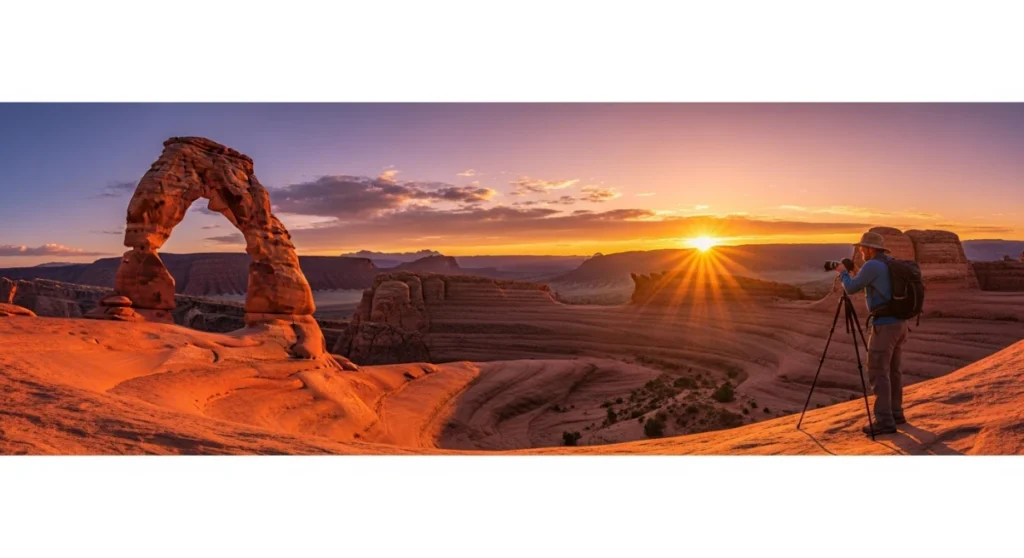
Sunrise in Arches offers clearer air, calmer conditions, and fewer crowds. Sunset gives warmer glow and iconic Delicate Arch views but more people. Match timing to specific formations, your energy, and your tour’s schedule.
Many travelers reach Arches after a long drive, jump on a tour, and discover their “bucket list” arch is in harsh overhead light or buried in a crowd of tripods. In the desert, timing is almost more important than the camera you carry. If you plan your visit around how the sun actually hits each formation, your guide can put you in the right place at the right moment instead of racing the light.
The good news is that both early morning and late afternoon give beautiful light. The reality is that they work very differently on specific arches, crowds, and even your own energy level. Once you know how sunrise and sunset behave in Arches and nearby viewpoints, choosing becomes a practical decision, not a guess.
What sunrise vs sunset really means in Arches and around Moab
In practice, choosing morning or evening is less about “which is prettier” and more about angle, air quality, and how you handle early starts. The lower sun near the horizon creates long shadows that reveal texture in the sandstone and make colors stronger. This is why photographers chase the first and last light instead of midday hours.
Early in the day the air is cooler and usually clearer. That reduces haze and wind, which helps with sharp images of distant formations around Moab. By late afternoon the light becomes warmer and softer again, but you may have more dust and more people in the frame, especially at classic arches.
The best photographic light in Arches National Park occurs early in the morning and late in the afternoon, as the lower angle of light adds depth and enhances the redness of the rock formations.
Different arches favor different times. Turret Arch and Double Arch respond best to the rising sun behind you, which illuminates their faces and nearby fins. Delicate Arch and Balanced Rock turn into silhouettes or glowing icons when the sun drops behind them later in the day.
How light affects real tour stops and classic shots
Most guided outings in the Moab area combine scenic drives with short walks to overlooks and famous spans. Your timing choice decides whether those stops give you side-lit texture or flat front light. That changes everything from contrast to how dramatic the sky feels.
Morning departures tend to reach viewpoints with cooler color temperatures. This works well for wide landscapes where you want crisp detail in every ridge and distant canyon. Evening departures arrive when the rock reflects richer oranges and reds, which can be ideal for tight compositions of a single arch glowing against a darkening sky.
Many Utah National Parks tours start in Salt Lake City with round-trip transport to the parks. When Arches or Canyonlands is part of a longer route, check whether your day is structured around dawn or dusk at the key viewpoints. That schedule matters more for your gallery than the exact number of stops.
| Factor | Sunrise in Arches | Sunset in Arches |
|---|---|---|
| Light quality | Cooler, very clear, strong depth and contrast | Warmer, glowing rock, softer contrast |
| Crowd levels | Generally quieter at most arches | Busy at icons like Delicate Arch and Balanced Rock |
| Temperature | Cooler start, comfortable hikes | Can be hot earlier, more pleasant as sun drops |
| Sky look | Often cleaner blue, subtle color on clouds | Potential for vivid oranges and reds in the sky |
| Energy demands | Requires pre-dawn wake-up and prep | Fits better after a day of touring or driving |
You found a hidden promo code!
Use code WOWBLOG at checkout and get 10% OFF any tour!
Limited time offer. Book now and save!
Browse ToursWhere people misinterpret sunrise vs sunset in the desert
The most common mistake is assuming that “golden hour” is identical everywhere in the park. In reality the direction of the sun against each arch matters more than the clock. A planned sunset at a formation that faces east can leave it in deep shade while the sky explodes behind it.
Another frequent misunderstanding is that more color always equals better photos. Very strong red skies can overpower delicate rock textures. For arches with fine detail, the softer early morning glow can actually give you more usable images than a dramatic sunset where everything turns into silhouettes.
Travelers also underestimate how crowds change with time of day. Delicate Arch at sunset is a social event with many visitors waiting along the bowl. The same spot at sunrise is still impressive but much quieter, with fewer people walking through your composition. Expecting identical atmosphere at both times leads to frustration when planning portraits or tripod setups.
Decision scenarios: which time fits your tour style and goals
Choosing between first light and evening light becomes easier when you match it to your priorities. Think in terms of scenarios instead of abstract “better or worse” judgments.
If your priority is iconic postcards of the most famous arches
For the classic Delicate Arch scene with the arch glowing against a warm sky, late afternoon into sunset works best. The sun moves behind the arch and lights up the sandstone from the side, which creates that deep color people recognize.
Balanced Rock also plays well with late-day light that gives strong side shadows and emphasizes its shape against the sky. If your tour focuses on these two, an afternoon schedule that ends at twilight will likely feel more rewarding.
If you want quieter viewpoints and clean, detailed landscapes
Early morning near Turret Arch and Double Arch gives calmer conditions. The air is clearer and wind is usually lighter, so long exposures are easier to control. You also avoid the heavier flow of day visitors that arrives as tours and self-drivers spread through the park.
This timing is ideal if your goal is wide landscape shots of fins, buttes, and distant horizons rather than only one famous icon. It also suits travelers who prefer cooler hiking temperatures and do not mind an early alarm.
If you are combining Arches with Canyonlands in one day
Many canyonlands tours from Moab or from broader Utah routes balance one park in the morning and the other in the evening. For example, you might photograph canyon rims with long morning shadows, then drive to arches for glowing rock at the end of the day.
In that kind of schedule, it can be smarter to accept that you will not have perfect light everywhere and instead choose one anchor location for either dawn or dusk. Decide which park matters most to you visually, then let the other one follow as a bonus rather than competing main event.
How tour logistics and departures shape your light
Guided outings work within fixed driving times, park entrance procedures, and walking distances. Understanding those constraints helps you read any itinerary and predict how your light will actually look when you reach each stop.
Utah National Parks tours that start in Salt Lake City list approximate daily schedules, walking level, and route. For Arches days, check what time you leave the city, how long the drive takes, and whether the plan focuses on sunrise, afternoon, or sunset in the park. The same applies if your trip includes other parks like Zion, Bryce Canyon, or Canyonlands.
Local guides handle navigation, parking, and short hikes to overlooks, which saves time compared to figuring out trailheads yourself. That extra time often translates directly into setting up your tripod a little earlier and working through more compositions while the light changes.
| Logistics factor | Self-drive visit | Guided small-group visit |
|---|---|---|
| Navigation and parking | Must plan routes and find parking on your own | Driver handles routing and parking near key stops |
| Timing to viewpoints | Easy to misjudge drive and walk times before sunrise or sunset | Guide uses experience to plan arrival during peak light |
| Photo guidance | Rely on your own research for angles | Can receive suggestions on where to stand and when to shoot |
| Crowd management | Little help avoiding busy moments at icons | Guide may adjust sequence to dodge peak crowds |
| Energy and focus | More mental load before and after dark | More bandwidth to focus on composition and creativity |
MateiTravel designs small-group itineraries in Utah that integrate light, walking time, and driving in a realistic way so you are not sprinting to each arch. That kind of planning is especially valuable when your day also includes other parks or scenic routes that cut into your available golden hour.
Common mistakes that cost you the best light
One major error is planning by clock instead of by sun position. People often assume that arriving right at published sunrise or sunset times guarantees great conditions. In reality, the most interesting light can be 20 to 40 minutes before or after, depending on clouds and terrain.
Another frequent mistake is ignoring how far the parking area is from the viewpoint. Even “short” walks in Arches or nearby canyon overlooks can take 10 to 30 minutes with a camera bag and mild elevation gain. If you underestimate that timing, you arrive just as the color fades.
Many visitors also forget to factor in weather, especially wind. Late-day breezes can make it harder to keep a tripod stable or to photograph vegetation in the foreground without blur. Early morning calm can be a major advantage if you like including plants or pools of water in your compositions.

Practical tips for choosing and using sunrise or sunset
- Anchor one hero location: Decide which single arch or viewpoint matters most, then choose sunrise or sunset specifically for that spot instead of trying to optimize every stop.
- Study the facing direction: Look at a map and note whether your chosen formation faces east or west, then match it with the rising or setting sun for side light rather than backlighting.
- Account for walking time: Add at least 15 to 30 minutes to any estimate that combines driving, parking, and walking, especially when you will be moving in the semi-dark.
- Plan a backup composition: Have a second angle ready nearby, such as turning around to photograph the opposite horizon if clouds block the direct light on your main subject.
- Use the quieter window: If you dislike crowds or need space for a tripod, lean toward early morning for popular arches or choose less-famous stops for your sunset session.
- Balance with your travel day: On long driving days or multi-park itineraries, pick either dawn or dusk for serious photography and treat the other end of the day as relaxed sightseeing.
Examples: how different travelers might decide
Case 1: Short trip, iconic arches, and limited energy for early alarms
A couple has only one full day based out of Moab and wants the classic glowing Delicate Arch image without waking up before dawn. They book an afternoon-focused visit that reaches viewpoints as the sun moves lower in the sky.
Their guide structures the route so that less-critical stops happen earlier, then times the walk to Delicate Arch for late afternoon. They accept busier conditions but return with the warm, dramatic hero shot they wanted.
Case 2: Photo-focused traveler on a longer Utah route
A solo traveler joins one of the best tours of Utah national parks that links several parks from Salt Lake City, including Arches and Canyonlands. Photography is the priority, and they are comfortable with early starts.
They choose the itinerary that emphasizes sunrise in Arches for clean air and quieter arches, then uses late afternoon and sunset at canyon rims for layered shadows. The trade-off is fewer evening shots of Delicate Arch, but the overall portfolio shows strong variety and depth.
Action checklist before you book your Moab–Arches light
Before you lock in sunrise or sunset, run through a short checklist. This keeps you focused on what will actually matter in the field instead of abstract preferences.
- Define your main subject: Choose the one or two arches or vistas you care about most, then confirm which time of day favors them.
- Review your physical limits: Decide honestly whether pre-dawn departures or late returns fit your energy and the rest of your trip schedule.
- Check tour timing details: Look closely at departure times, driving durations, and walking levels so you know when you will truly be at each viewpoint.
- Plan for conditions: Prepare layers for cool mornings or lingering heat in the evening and pack a simple kit so you can move quickly between compositions.
- Coordinate with your guide: Communicate your priority shots ahead of time so your guide can adjust the order of stops where possible and help you reach them during the best light.
Local guides around Moab and from Salt Lake City build their commentary and pacing around geology, history, and photo stops. Companies like MateiTravel use small groups and clear schedules, which makes it easier for you to translate this checklist into real timing on the ground.
Choosing sunrise or sunset in Arches is not about chasing a generic golden hour. It is about matching specific formations, your energy, and tour logistics with the way desert light actually behaves. Mornings favor clarity, calmer air, and quieter arches, while evenings bring warmer color, iconic silhouettes, and often more people.
When you anchor your choice around one or two key locations, factor in walking times, and coordinate with a guide, both options can deliver a strong set of images. Decide what matters most, then let the schedule, not chance, place you in front of the sandstone at the right moment. To turn that plan into a smooth real-world itinerary, consider scheduling your Utah park days with MateiTravel so you can focus more on the light and less on the logistics.
Is sunrise or sunset better for photographing Delicate Arch?
Late afternoon into sunset usually works better for Delicate Arch because the sun lights the arch from the side and behind, creating the classic glowing look people expect.
Which arches in Arches National Park work best at sunrise?
Turret Arch and Double Arch respond well to first light, since the rising sun illuminates their faces and nearby rock fins, giving strong texture and detail without heavy crowds.
How early should I arrive before sunrise or sunset on a tour?
Plan to reach the trailhead or viewpoint at least 20 to 40 minutes before the key moment, allowing extra time for the walk from parking and for setting up your gear.
Are morning photo sessions in Arches less crowded?
Early visits usually have fewer people at popular arches, which helps if you want tripod space or clean compositions without constant foot traffic through your frame.
How does a guided tour help with getting the best light?
A guide manages timing, driving, and short hikes so you reach arches during peak light, and can suggest angles and quick adjustments if weather or crowds change.
Can I see both sunrise and sunset in Arches in one day?
It is possible, but it makes for a long day. Most travelers get better results by focusing serious photography on either dawn or dusk and using the other period for easier sightseeing.
What if my main goal is wide landscapes, not just arches?
Morning often works better for broad landscapes around Moab because cooler, clearer air improves visibility and long shadows add depth across ridges and distant canyons.
How should I choose between Arches and Canyonlands for sunrise or sunset?
Pick one park as your main light priority. Many travelers favor sunrise for the clarity and quiet of arches and use sunset for canyon rims with layered shadows and warm sky color.

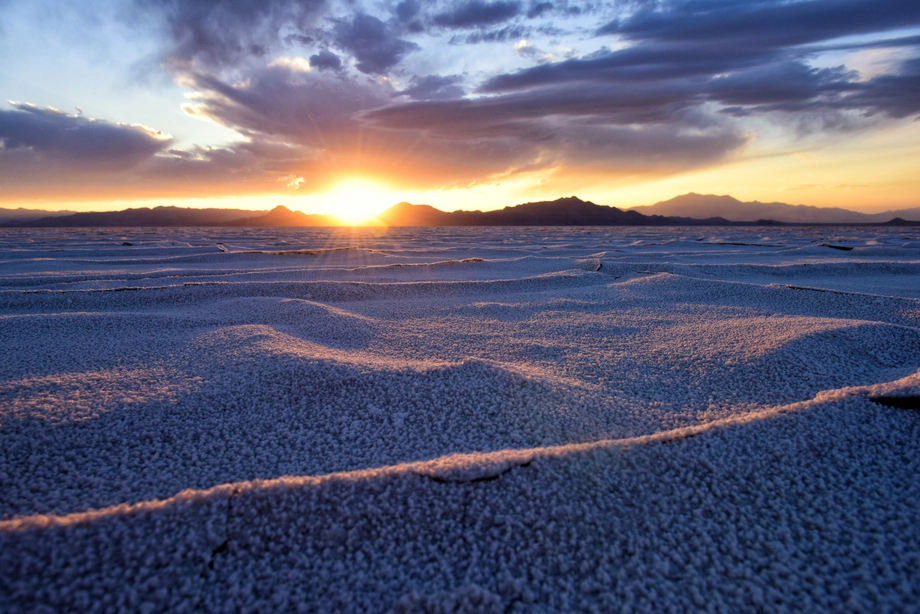 Bonneville Salt Flats – Sunset Adventure of the White Desert
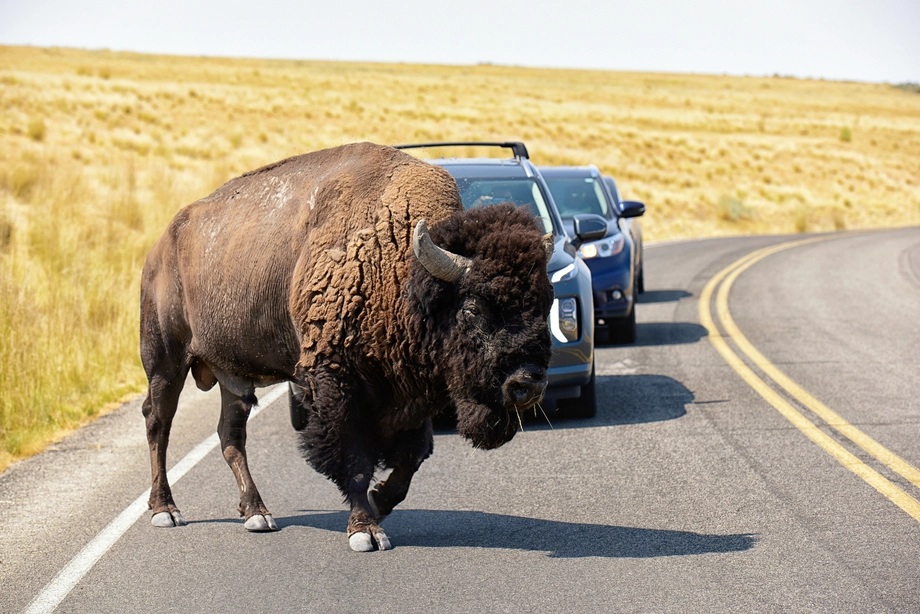 Antelope Island – Wild Heart of the Great Salt Lake Adventure
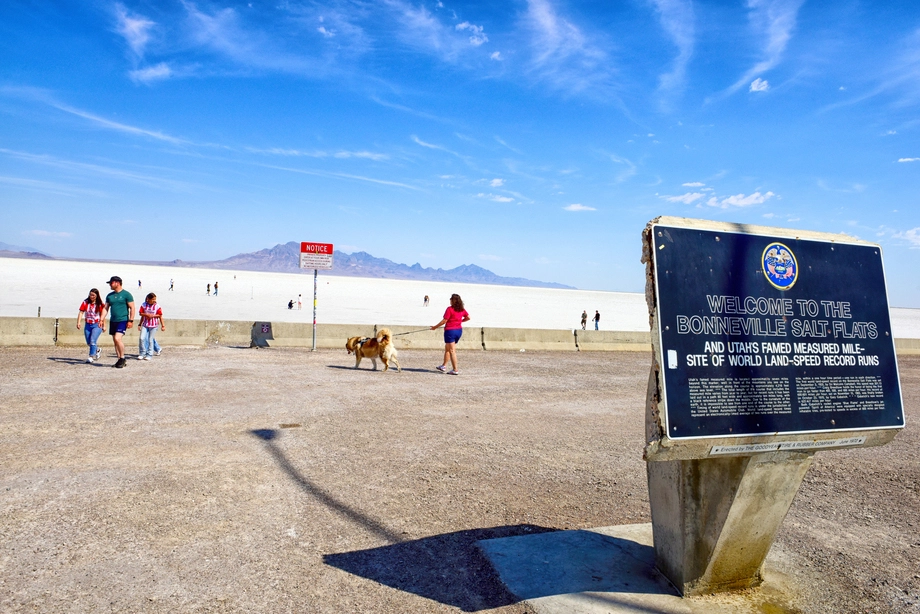 Bonneville Salt Flats – Journey to the Edge of the World
 Salt Lake City – The City of Zion. Historical Interactive Walking Tour
 Antelope Island Sunset Wildlife Expedition – Great Salt Lake Odyssey