
Moab astronomy nights with guided stargazing and a portable planetarium experience
Apr 11, 2026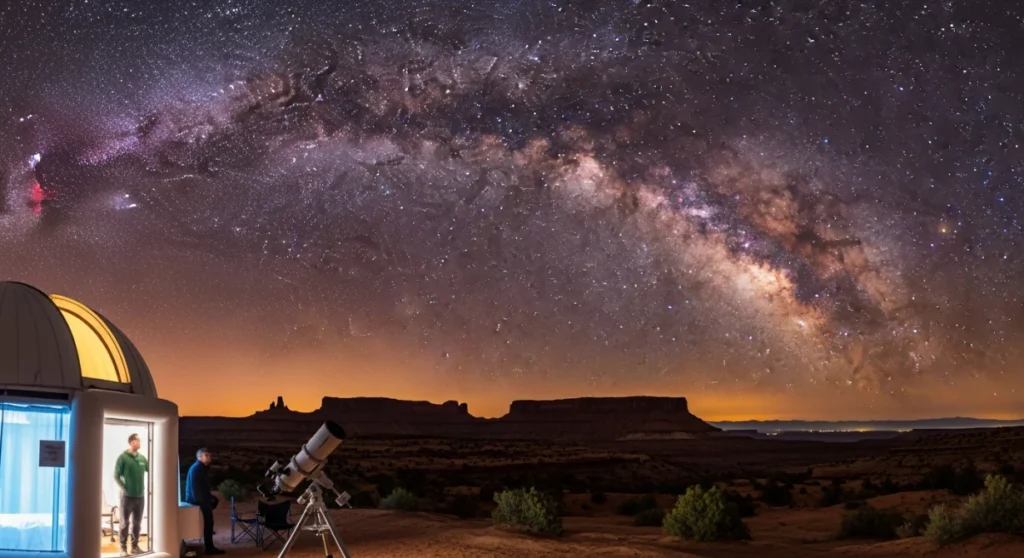
Use guided Moab astronomy nights with a portable planetarium to turn one desert evening into a structured, comfortable, and educational experience, then fit that highlight into a broader, well-paced Utah itinerary.
Many visitors drive into Moab, look up once from a motel parking lot, grab a quick photo of the Milky Way on their phone, and assume they have “seen the desert night sky”. The reality is that light pollution, timing, and lack of context mean most people miss 90 percent of what is actually overhead. When you combine a dark-sky desert setting, an astronomy guide, and a portable planetarium, the experience turns from “pretty stars” into a night you remember in detail years later.
That difference comes from structure, not luck. The right guide turns raw starlight into a story, uses the dome inside the planetarium tent to preview what you will see outside, and plans around moon phases, crowds, and weather so you do not waste one of your limited nights in Moab.
What Moab astronomy nights look like in real practice
A structured astronomy evening around Moab usually starts before the sky is fully dark. You meet your guide at an accessible pullout or viewpoint near the red rock formations, far from the main town lights, and have time to let your eyes adjust while getting oriented to the desert environment.
The portable planetarium often comes in the form of an inflatable dome or compact projection setup. Inside, your guide can simulate the rotating night sky, highlight constellations, and show how planets and deep-sky objects move through the seasons before you step outside to find them for real.
Once you move outdoors, the format shifts from “classroom” to shared discovery. A typical session weaves together:
- Naked-eye skywalk: Learning the big constellations, cardinal directions, and how to read the sky without equipment.
- Laser-guided tour: A green laser pointer tracing star patterns, bright stars, and the Milky Way structure so you can lock them into memory.
- Telescope views: Targeted looks at planets, clusters, or nebulae that were just previewed inside the planetarium dome.
- Local context: Stories that connect the sky to desert geology, Indigenous sky lore, and how early explorers navigated using the same stars.
Compared with a do-it-yourself night, you spend less time fumbling with apps and more time really seeing. The portable planetarium is especially useful if thin clouds, haze, or bright moonlight limit what is visible. The guide can still walk you through the key objects virtually, so the evening remains rewarding even if conditions are not perfect.
Where people misinterpret Moab stargazing (and why that matters)
Visitors often treat stargazing as an “extra” to squeeze between daytime hikes and a late dinner. That mindset leads to rushed, sleep-deprived nights where everyone is too tired or cold to enjoy anything. In practice, the desert night sky is a primary attraction that deserves the same planning as a hike to an arch or canyon overlook.
Another common misconception is expecting a giant fixed observatory with permanent domes on a hill outside town. Around Moab, the strength is flexibility. Mobile telescopes and a portable planetarium can move to where the conditions are best, which generally beats being stuck in one location when haze or local light pollution is not ideal.
Many people also assume any clear night is equally good. In reality, several factors change your experience:
- Moon phase: Bright moonlight washes out faint Milky Way detail but is excellent for lunar viewing and landscape photography.
- Season: Summer shows the bright Milky Way core. Winter and spring bring sharper, clearer skies and different constellations.
- Timing: The first two hours after astronomical darkness are usually the most comfortable for families, while late-night sessions reach the darkest conditions.
- Group size: Smaller groups mean longer telescope time per person and more chances to ask questions.
Misreading these variables leads to disappointment. When you work with a guide, these trade-offs are made explicit so you can match the night to your expectations.
You found a hidden promo code!
Use code WOWBLOG at checkout and get 10% OFF any tour!
Limited time offer. Book now and save!
Browse ToursChoosing between astronomy nights, Canyonlands outings, and wider Utah trips
For many travelers, Moab is only one stop on a short Utah itinerary. You may be trying to decide whether to devote an evening to a detailed sky program or to spread your time across more locations. The right answer depends on how you like to travel, how much driving you want, and who is in your group.
When a dedicated Moab astronomy night makes the most sense
If Moab is your base for several days, a focused stargazing evening is often the most efficient way to connect with the desert nights. You minimize driving because the skies darken quickly once you leave town, and you can plan daytime hikes around one late night instead of several.
Families with older kids, couples who enjoy learning together, and photographers who want both context and inspiration usually get the most from an evening that combines outdoor observing with a Moab astronomy guided stargaze with portable planetarium. The session gives you skills you can reuse on subsequent nights when you go out on your own.
These nights also pair well with daytime hiking or scenic drives within Arches and nearby landscapes. You see the rock formations under the sun, then understand how the same terrain sits under the Milky Way arch after dark.
When to add stargazing onto Canyonlands and multi-park trips
If you are planning canyonlands tours from moab or including Arches and Canyonlands within a larger circuit, you can still get a rich sky experience by adding a guided night along the way. The same guide skills apply, but the backdrop shifts from Moab’s nearer viewpoints to more remote rims and wide basins.
Travelers starting in Salt Lake City often choose broader Utah National Parks Tours that bundle several parks into a compact schedule. These excursions include structured driving days, key viewpoints, and light walks in places like Zion, Bryce Canyon, Arches, and Canyonlands, without the stress of managing long distances and logistics alone.
In that context, a single planned astronomy evening can serve as the “night anchor” for the whole trip. You see how the same stars stretch from one park to another and how geology and starlight interact across the state, instead of treating each stop as an isolated postcard.
Comparing DIY stargazing, guided nights, and multi-park trips
The best choice is not the same for every visitor. The table below compares three realistic scenarios using the type of services that operate in Utah.
| Option | Main advantage | Main limitation | Best for |
|---|---|---|---|
| DIY stargazing from Moab | Maximum flexibility, no added cost beyond fuel | Easy to miss dark spots, no expert guidance, more trial and error | Experienced skywatchers with their own gear |
| Guided Moab astronomy night with planetarium | Deep learning, flexible location, backup plan if clouds move in | Fixed schedule, you share telescope time with a group | Couples, families, curious first-time visitors |
| Multi-park Utah National Parks trip with one stargazing evening | Broad park coverage plus one curated night sky highlight | Less time in any single location, more travel time overall | Short trips focused on seeing several major parks |
If your time in Utah is short and you want variety first, the multi-park route with one key astronomy night gives you a strong balance. If Moab is the centerpiece of your trip, the dedicated local evening usually feels more relaxed and personal.
Common mistakes that can ruin a stargazing night
Most disappointing astronomy evenings are not caused by bad guides. They happen because of preventable planning issues. Being aware of them lets you avoid wasting a night of your vacation.
- Ignoring the moon calendar: Booking blindly without checking the moon phase can turn a hoped-for Milky Way session into a very bright but less star-filled sky. Decide whether you want dark skies or detailed lunar views before you choose a date.
- Overloading the day: Pairing an intense full-day hike with a late-night stargaze leaves everyone exhausted and less patient with cold or learning. Keep the same-day daytime activity modest.
- Underestimating desert temperatures: Even warm-season nights cool fast. People who arrive in shorts and a single hoodie often cut the session short because they are uncomfortable.
- Assuming kids will “just handle it”: Young children need clear expectations, snacks, and realistic bedtimes. A shorter, earlier session is usually better than an over-ambitious midnight plan that ends in tears.
- Not asking about backup plans: Thin clouds or haze do not always cancel a night, but you want to know in advance whether your guide uses the planetarium dome or alternative teaching plans if conditions are marginal.
Signals of a well-planned astronomy experience
Because many services sound similar at a glance, use clear, practical criteria when deciding how to spend your night. Look for specific signals rather than vague promises.
- Clear schedule outline: You know roughly when you will meet, how long the session lasts, and what happens if it runs late.
- Location strategy: The provider can explain how they choose sites relative to Moab or the parks, and how they adjust for weather or crowds.
- Group size limits: Small to mid-sized groups mean more interaction. When maximum group size is capped, you get more telescope time and personal attention.
- Equipment variety: A mix of naked-eye instruction, laser pointer use, and appropriate telescopes matters more than a long equipment list.
- Educational approach: Guides who mention geology, local stories, and navigation methods usually offer a richer experience than those who only list object names.
When you compare options for the best tours of utah national parks or for focused nights near Moab, these same signals apply. Structure and clarity almost always predict a better use of your limited vacation hours.

Desert sky theory translated into real decisions
Understanding a few basic sky concepts helps you make smarter choices about date, time, and location. It shifts you from hoping for good conditions to actively picking them.
One foundational idea is how the Milky Way and constellations move through the year. A portable planetarium program can show this in minutes by fast-forwarding the simulated sky. You can see how your trip dates line up with the brightest section of the Milky Way or with specific constellations you care about.
External astronomical research also emphasizes that true dark adaptation takes time, and that even moderate light pollution cuts the number of visible stars dramatically.
Under a genuinely dark rural sky, an average observer can see several thousand stars with the unaided eye, compared with only a few dozen from a brightly lit town.
That difference is exactly why leaving central Moab or the lit areas around visitor centers matters. In practical terms, your decision flow might look like this:
- Pick your priority: Milky Way views, planets, or a bright Moon and landscape combination.
- Check your dates: Match your priority to the moon phase and season.
- Choose the format: Dedicated Moab night if you want depth, or a single evening during a multi-park route if you want breadth.
- Match to your group: Shorter, earlier sessions for families; longer, darker ones for serious sky fans and photographers.
By aligning these pieces before you even look at specific providers, you make it easier to recognize which program actually fits your plans.
Practical packing and behavior checklist for Moab astronomy nights
Once you have chosen how to spend your night, a few simple preparations will dramatically improve comfort and what you remember afterwards.
- Layered clothing: Bring a warm base layer, an insulating mid-layer, and a wind-blocking shell. Add a hat and thin gloves outside of peak summer.
- Red-light flashlight or headlamp: Red light preserves night vision. If you only have white light, keep it pointed at the ground and on the lowest setting.
- Quiet snacks and water: Choose foods that do not crinkle loudly in the dark and pack a bottle that will not spill if set on uneven ground.
- Simple seating: A compact camp chair or pad makes it easier to relax while listening to explanations or watching meteor showers.
- Optional binoculars: Even basic binoculars can turn fuzzy patches into rich star fields when guided by an expert.
- Notebook or phone notes: Jot down object names and tips while they are fresh so you can revisit them on your next clear night.
Combine this checklist with realistic expectations about temperature and timing, and your focus stays on the sky instead of small physical discomforts.
How astronomy fits into a broader Utah travel plan
If your Utah visit includes more than Moab, you can treat astronomy as one of several core themes. Daytime might focus on walking tours in Salt Lake City or light hikes among arches and canyons. Evenings can alternate between city dining and desert skies.
Structured excursions from Salt Lake City offer walking introductions to the city’s history and layout, while day trips reach iconic natural locations like the salt flats and wild islands with wildlife. These experiences are intentionally designed to balance time on the road with time exploring on foot, guided by local experts who handle timing and context.
Adding a curated astronomy night into this rhythm gives your itinerary a different kind of memory anchor. You are not just collecting viewpoints. You are learning a skill that follows you home, every time you look up from a darker backyard or a future trip.
Companies such as MateiTravel exist specifically to remove guesswork from this kind of planning, from city walks and ski day shuttles to multi-park itineraries that can easily incorporate a star-focused evening.
Summary: turning one night into a lasting highlight
A Moab-area astronomy night with an experienced guide and a portable planetarium turns a dark sky from a backdrop into a main event. When you match moon phase, season, and group type to the right format, you get more from a single evening than from several unplanned nights.
Avoid the common pitfalls of overloading your schedule, under-packing for the cold, or treating the sky as an afterthought. Use clear signals like group size limits, location strategy, and backup plans to choose who to trust with your time.
Stargazing then slots naturally into broader Utah plans, whether you are focusing on Moab, linking several national parks, or mixing city walks with desert nights. To build an itinerary that weaves these experiences together smoothly, reach out to MateiTravel for help planning your Utah journey.
How far in advance should I plan a Moab astronomy night?
Plan at least a few weeks ahead so you can match your preferred night to the moon phase and your hiking schedule. Popular dates around new moon and holidays fill first.
Is a portable planetarium still useful if the sky is clear?
Yes, it lets the guide preview seasonal changes, motion of objects, and faint targets you may not notice alone, making the outdoor portion easier to follow and remember.
Can young children enjoy a guided stargazing session?
They can, if you choose an earlier, shorter program and bring layers, snacks, and clear expectations. Sessions that mix indoor planetarium time with outdoor viewing work best.
What if thin clouds appear during my scheduled night?
Ask in advance about backup plans. Many guides will lean more on the planetarium or adjust targets rather than cancel outright when conditions are only partly obstructed.
How does stargazing fit with a multi-park Utah itinerary?
One structured astronomy evening can act as the night highlight of a broader circuit, connecting what you see in different parks under a single, shared sky story.
Do I need my own telescope or binoculars?
No, guided programs generally provide suitable equipment. A simple pair of binoculars, if you already own one, can add extra depth to the experience.
What clothing is best for desert stargazing near Moab?
Bring layers that you can add as temperatures fall, plus a hat and light gloves outside midsummer. Even warm days can turn quite cool after dark.
How do I decide between a dedicated Moab night and a broader Utah trip?
If you want depth in one region, focus on Moab. If your priority is seeing several major parks in limited time, choose a broader circuit and include one planned stargazing night.

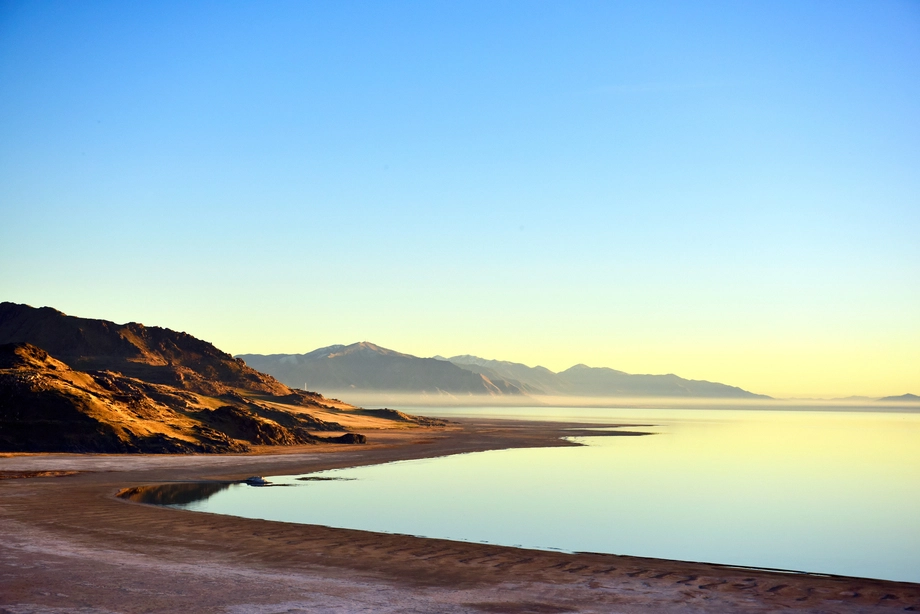 Antelope Island Sunset Wildlife Expedition – Great Salt Lake Odyssey
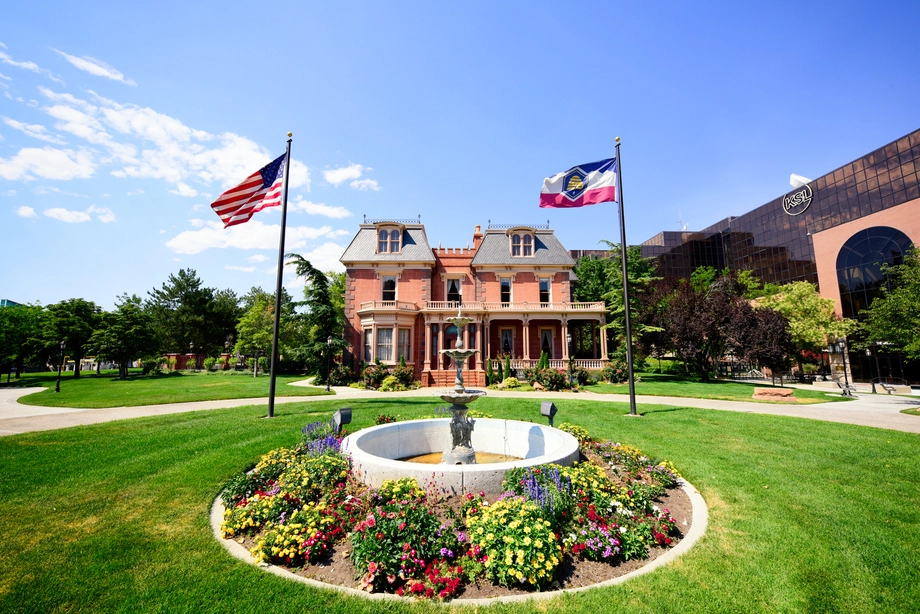 Salt Lake City – The City of Zion. Historical Interactive Walking Tour
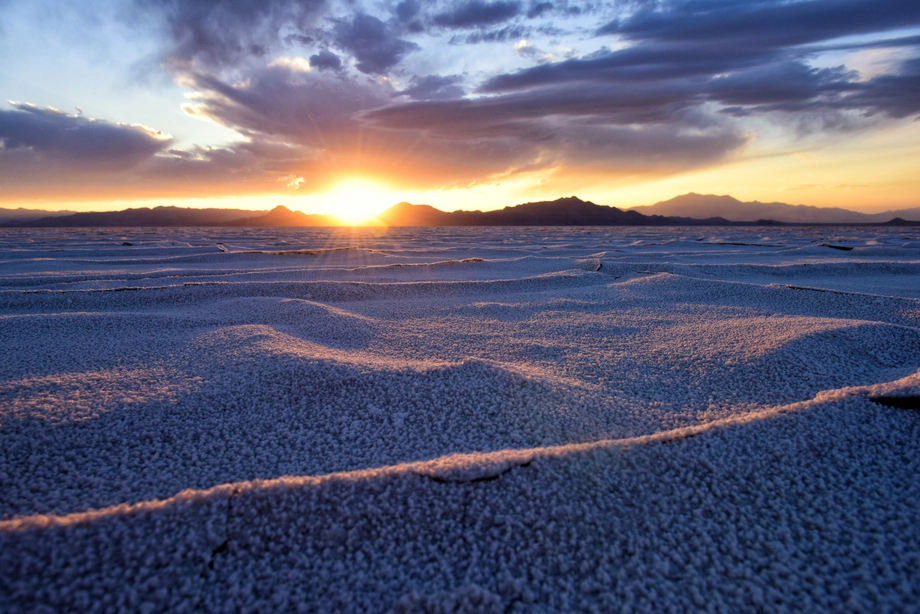 Bonneville Salt Flats – Sunset Adventure of the White Desert
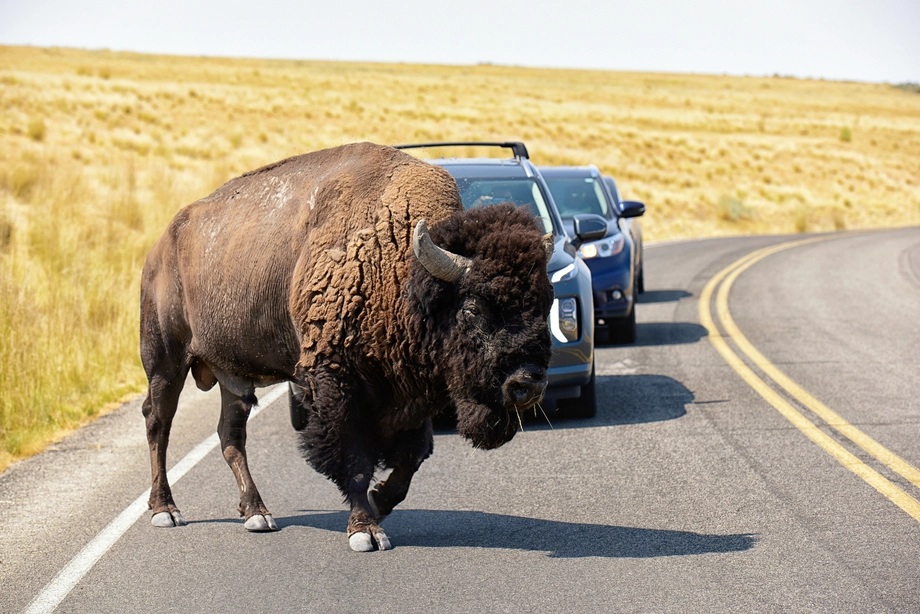 Antelope Island – Wild Heart of the Great Salt Lake Adventure
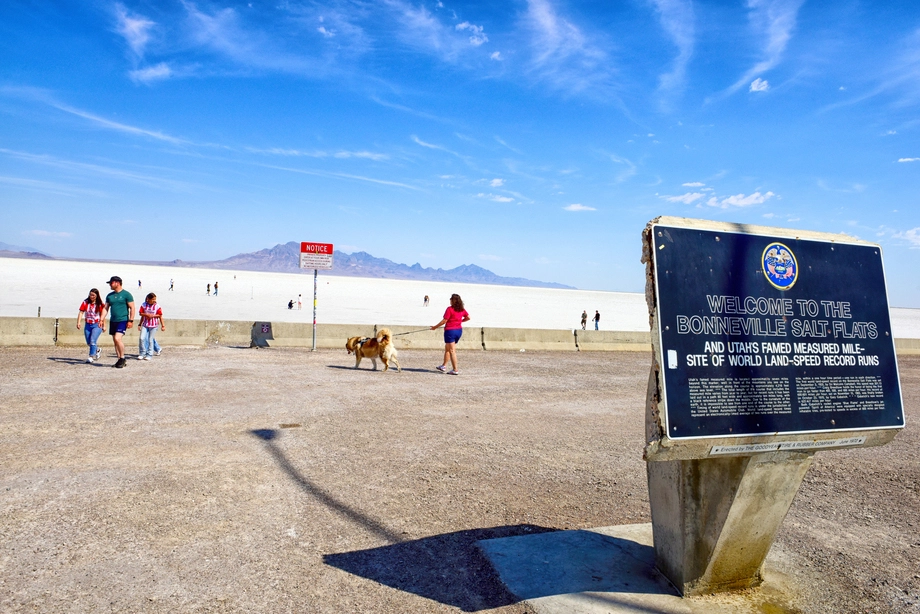 Bonneville Salt Flats – Journey to the Edge of the World