
Mesa Arch Sunrise Shuttles From Moab: What Photographers Actually Need to Plan
Jul 23, 2026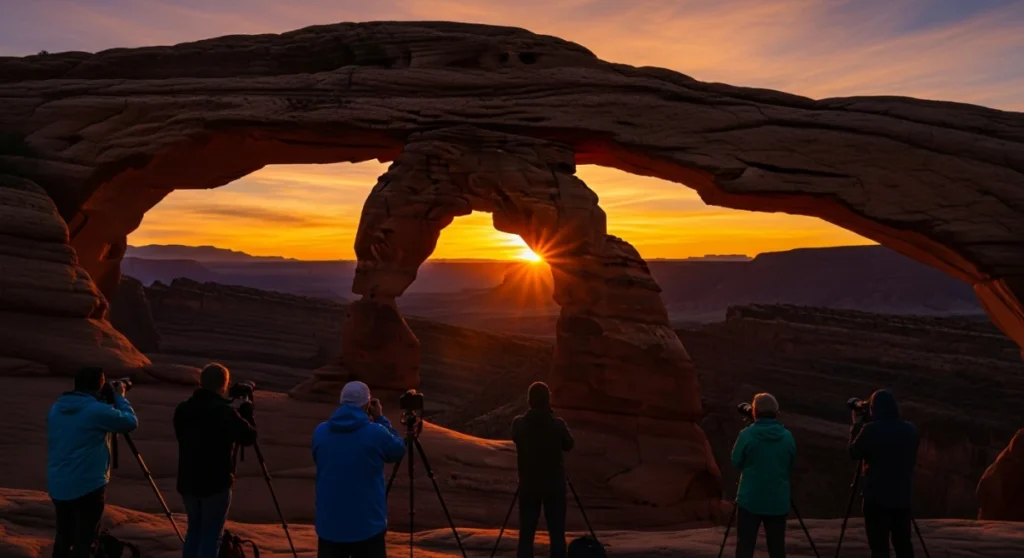
There is no regular public sunrise shuttle from Moab to Mesa Arch. Photographers usually self-drive or join a private or small-group guided Canyonlands itinerary, then arrive about an hour before sunrise to claim space.
The biggest planning mistake we see is assuming Mesa Arch is hard because of the hike, when the real challenge is everything before the hike starts. For photographers coming from Moab, the decision point is simple: if you want the classic glow-under-the-arch sunrise shot, your success depends far more on pre-dawn transport, arrival timing, and crowd behavior than on physical difficulty.
This is a narrow logistics question, not a generic sightseeing one. It matters most for visiting photographers who are weighing a self-drive against a guided option and want an honest answer about whether a sunrise Mesa Arch photo shuttle from Moab with vehicle tripod mounts actually exists, and what to do when it does not.
Is there a public sunrise shuttle from Moab to Mesa Arch?
No. There is currently no regular public sunrise shuttle from Moab to Mesa Arch for photographers, and you should plan your morning around that reality from the start.
In practical terms, that means the classic sunrise visit is usually done one of three ways: you drive yourself, you arrange a private guided outing, or you join a custom small-group day built around Canyonlands timing. If your main reason for wanting a shuttle is avoiding a dark drive, a guided trip is the closest real substitute because it combines transport, timing management, and local judgment without pretending there is a fixed public shuttle product.
It also means vehicle-mounted tripod systems are not the deciding factor here. Mesa Arch photography happens on foot at the viewpoint, so a stable tripod you can carry and a realistic arrival buffer matter much more than any special in-vehicle hardware.
When is self-drive versus a guided trip the right fit?
Self-drive is the right fit if you are comfortable driving paved roads in the dark and managing your own sunrise schedule. A guided trip is the better fit if you want transport, timing discipline, and on-site support without doing the 4 a.m. coordination yourself.
We organize guided experiences across Utah with the same planning logic we use for our city walks and national park days: clear route expectations, realistic timing, and small-group flexibility. That matters at Mesa Arch because sunrise is a narrow operating window, and the short trail only works if the whole morning is built around light and crowds first.
| Option | Best for | Main advantage | Main tradeoff |
|---|---|---|---|
| Self-drive | Independent photographers with a car | Maximum control over departure time and gear | You handle dark driving, parking, and timing mistakes |
| Private guided trip | Travelers who want the smoothest sunrise plan | Driver and guide manage the pre-dawn logistics | Less DIY spontaneity, though the morning can still be photo-focused |
| Custom small-group Canyonlands run | Visitors who want transport plus shared costs | Practical alternative to a non-existent shuttle | Your pace must still work with the group schedule |
If you do not have a rental car, the decision gets easier. Your realistic choices narrow to arranging your own vehicle access or booking a guided day that effectively serves as transport plus timing support for photographers.
If you want that kind of planning help, our Utah National Parks Tours are the most relevant starting point because they are built around park access, scenic viewpoints, short walks, and realistic time on site rather than loose sightseeing promises.
You found a hidden promo code!
Use code WOWBLOG at checkout and get 10% OFF any tour!
Limited time offer. Book now and save!
Browse ToursWhat is the exact timing plan from Moab to the arch for sunrise?
For most photographers, the safest plan is to work backward from official sunrise and aim to be at the viewpoint roughly one hour early. That usually means leaving Moab well before dawn, allowing time for the drive, park entry, parking, and the short walk in the dark.
The trail itself is not what consumes the morning. The pressure points are entry timing, parking availability, getting organized in low light, and finding a workable position before the viewpoint fills in.
- Check the official sunrise time the day before: Use the date-specific sunrise for your visit, not a rough seasonal guess.
- Set a viewpoint arrival target: Plan to reach the arch area about 60 minutes before sunrise if getting a front-row composition matters to you.
- Back up for trail time: The walk is short, but give yourself at least 15 to 20 minutes from car to setup so you are not rushing with gear in the dark.
- Add parking and entry buffer: Build in extra minutes for the park entrance and for finding a space at the trailhead.
- Set your Moab departure time from that full chain: Do not base it on pure drive time alone. Your real departure time is sunrise minus your desired photo buffer, minus trail time, minus parking and entry time, minus the road time from town.
A good mental model is this: if sunrise is your event, the parking lot is not your arrival point. Your arrival point is a stable tripod position at the viewpoint, composed and ready before the brightest pre-sunrise changes begin.
For travelers who do not want to own that entire chain of responsibility, a guided Canyonlands morning is often the cleaner solution. We treat dawn stops as timing-sensitive operations, not just destinations on a list, which is the same discipline behind our broader Utah day tours and other structured Utah outings.
What is the Mesa Arch trail actually like with camera gear?
The trail is short and easy by national park standards, which makes it realistic with a modest camera kit. The difficulty comes from walking it before daylight and then working in a crowded shooting area, not from distance or steepness.
According to the U.S. National Park Service, Mesa Arch is a classic sunrise location with views toward the La Sal Mountains and remains photogenic throughout the day. That second point matters: if sunrise logistics do not line up, the stop can still be worth including in a broader Canyonlands itinerary.
The commonly cited trail facts are straightforward: a 0.6-mile loop, about 56 feet of elevation gain, and an easy rating with a typical walk time of around 30 minutes. In practice, most photographers carrying a camera body, one or two lenses, and a tripod can handle that comfortably if they use a headlamp and keep their load reasonable.
Before sunrise, expect people to cluster around the rim and the most obvious forward-facing compositions. The viewpoint area is limited, and once tripods go down, movement becomes slower and more sensitive. That is why arriving early matters so much more here than at a spread-out overlook.
What crowd density usually feels like on the ground
At sunrise, think of Mesa Arch as a compact photo platform, not an open meadow. Even when the trail feels easy and casual, the final few yards can feel competitive because everyone is aiming at the same light effect.
- Front positions fill first: Low tripod spots near the obvious arch opening are claimed early.
- Late arrivals lose flexibility: You may still get a shot, but your angle, height, and clean foreground options become more limited.
- Standing room changes fast: Once the glow starts, people stop moving, so last-minute repositioning becomes harder.
What gear is genuinely useful for this sunrise, and what is overkill?
The useful kit is simple: a tripod, a headlamp, warm layers, and a camera setup you can carry comfortably in the dark. Overpacking hurts more than it helps because the walk is short, the space is tight, and lens swapping in a crowd wastes time.
For this location, we recommend building a lean sunrise kit around stability and speed rather than around every possible focal length. You want to set up quickly, stay compact, and avoid turning your spot into a gear dump.
- Tripod: Essential if you want low-light stability before the sun breaks. Choose one you can deploy fast without spreading its footprint wider than necessary.
- Headlamp: Important for the walk and for adjusting your setup without using a bright phone screen that bothers others.
- Layers: Pre-dawn waiting is colder than the trail length suggests, especially when you stand still for a long period.
- Lens range: A wide to moderate focal length is the most practical place to start. A second lens can be useful, but carrying a full lens lineup usually adds clutter more than value.
- Filters: Bring only what you know you will use. If you are unsure, skip them and reduce setup friction.
- Small pack: Better than loose accessories in hand because you can keep the rim area tidy.
What is usually overkill here includes oversized kits, multiple backup bodies for a short dawn stop, and any expectation that vehicle-based tripod mounts will matter at the actual shot location. The car gets you to the trailhead. The photograph is made on foot, in a crowded space, where compact handling wins.
How should photographers use tripods and share the viewpoint respectfully?
Use your tripod, but use it like shared space is limited, because it is. Good Mesa Arch etiquette means keeping your footprint tight, avoiding sudden movements in front of lenses, and never treating an early arrival as a license to control the entire rim.
This is where planning ahead reduces conflict. Photographers who know their lens choice, approximate framing, and tripod height before they reach the edge are much less likely to block others while experimenting at the last second.
- Set up compactly: Keep tripod legs as narrow as stability allows and avoid creating a barrier across the best standing line.
- Choose a height and stick to it: Constantly raising and lowering your setup disrupts everyone behind you.
- Do not step into established frames: If people are already composed and waiting, move behind them or around the edge only when there is a clear gap.
- Keep light discipline: Turn off bright beams once you are set so others can work in the dark.
- Stay on the trail and viewpoint area: Do not leave marked paths, scramble for a cleaner angle, or climb on features for a shot.
- Respect park rules: A dramatic frame is never worth breaking regulations or damaging the site.
The best acceptance criterion for your own behavior is simple: another photographer should still be able to work near you without your tripod, bag, or movements ruining their setup. If that is not true, shrink your footprint.
What does a guided sunrise-friendly process look like, and who handles what?
A photography-friendly guided morning works best when responsibilities are explicit before departure. The guide handles transport planning, timing logic, and on-site flow, while the guest handles personal gear readiness, fitness for a short dark walk, and realistic expectations about crowds and weather.
That division matters because sunrise failures often come from fuzzy ownership. If nobody clearly owns departure time, park-arrival buffer, or the choice to keep gear lean, the whole morning gets riskier.
Stage 1: Fit check
We first treat Mesa Arch sunrise as the right fit only when the traveler values dawn light enough to accept an early start, a dark walk, and a shared viewpoint. If you want a casual scenic stop without a rigid alarm clock, later light at the arch or another overlook may be a better use of the day.
Stage 2: Itinerary design
Our responsibility is to build the morning around light, access, and transition time, then place the rest of the Canyonlands day after that. Your responsibility is to confirm whether the priority is the classic under-arch glow, a broader landscape morning, or a mixed sightseeing day with photography included.
Stage 3: Pre-departure preparation
We set expectations for timing, walking level, and what to bring. You arrive with your camera charged, your bag pared down, and clothing appropriate for standing still before sunrise.
Stage 4: On-site execution
The guide manages arrival discipline, pacing from vehicle to viewpoint, and practical reminders about space sharing and safety. You focus on shooting, staying compact, and adapting if the best front position is already taken.
Stage 5: Morning success criteria
The deliverable is not a guaranteed hero shot. The real deliverable is a sunrise plan that gets you to the arch on time, with workable gear, a realistic position, and a broader Canyonlands day that still functions if weather or crowding changes the exact photographic outcome.
What should you do the day before, so the morning actually works?
The best client-side preparation is boring, specific, and done early. If you leave gear decisions, sunrise checks, and clothing choices until bedtime, you increase the odds of a rushed and frustrating start.
- Check official conditions: Confirm current park status, sunrise time, and any operational changes the day before.
- Pack once: Load your bag the night before and remove anything you are unlikely to touch during a short dawn stop.
- Mount your likely first lens early: Avoid lens changes in the parking lot unless you truly need one.
- Charge everything: Camera batteries, phone, and headlamp should all be ready before sleep.
- Dress for waiting, not just walking: The hike is easy, but standing still can be the colder part of the morning.
- Decide your tolerance for crowds: If crowd stress ruins the experience for you, consider asking for a broader photo-focused Canyonlands outing that includes alternative dawn options.
If you are comparing self-drive with a guided alternative, this is the practical test: ask yourself whether you want to spend your energy on the road and schedule, or save it for the actual shooting. When the answer is the second one, a custom park itinerary is usually the cleaner choice.
What is the most practical decision for a visiting photographer?
If you have a car and do not mind a dark departure, self-driving is the most direct way to shoot sunrise at Mesa Arch. If you lack a car, dislike pre-dawn driving, or want the morning structured around photography rather than logistics, a private or small-group guided Canyonlands plan is the more practical answer.
The key is to choose based on who should own the fragile parts of the morning. When you self-drive, that is you. When you book a guided park outing, the transport and timing burden shifts off your shoulders so you can focus on light, composition, and keeping your setup efficient.
Mesa Arch is worth treating as an operations problem first and a photography problem second. Once timing, parking, the dark walk, and viewpoint etiquette are handled honestly, the decision becomes much clearer and the morning becomes much more manageable.
If you want help building a photo-friendly Canyonlands day that can include Mesa Arch at dawn when conditions allow, start with our Utah National Parks tours page and send an inquiry with your sunrise priority.
How long is the Mesa Arch trail?
It is a short 0.6-mile loop with about 56 feet of elevation gain. Most visitors can manage it with a modest camera kit if they bring a headlamp.
How early should I get to the viewpoint for sunrise?
Aim to be set up at the arch about an hour before official sunrise. That buffer gives you a better chance of finding space before the rim gets crowded.
Can I shoot Mesa Arch at sunrise without renting a car?
Yes, but not through a regular public shuttle because one does not currently operate. Your realistic alternatives are arranging your own vehicle access or joining a guided itinerary.
Do I need a vehicle with tripod mounts for this location?
No. The important support system is the tripod you carry to the viewpoint, since the actual shooting happens on foot at the rim.
Is Mesa Arch only worth visiting at sunrise?
No. Sunrise is the famous window, but the arch and its views remain photogenic later in the day, which can make it easier to include in a broader Canyonlands plan.
What is the biggest mistake photographers make here?
Most problems start with underestimating the pre-dawn schedule. People plan around drive time alone and forget to budget for entry, parking, the walk, and claiming a workable spot.
Will a guided trip limit my photography time?
Not if the outing is structured around light from the beginning. A well-planned small-group or private day can actually give you more usable shooting time because someone else is managing the logistics.

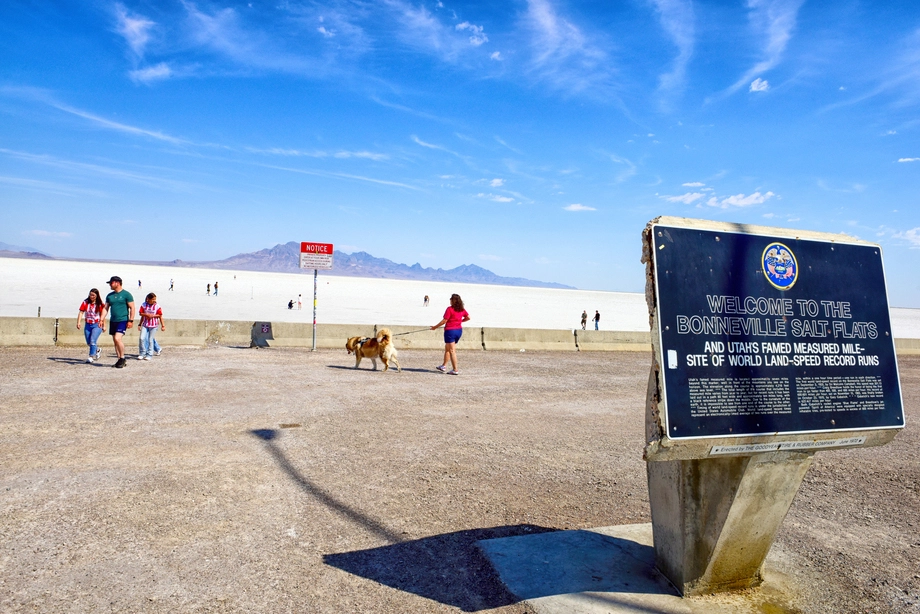 Bonneville Salt Flats – Journey to the Edge of the World
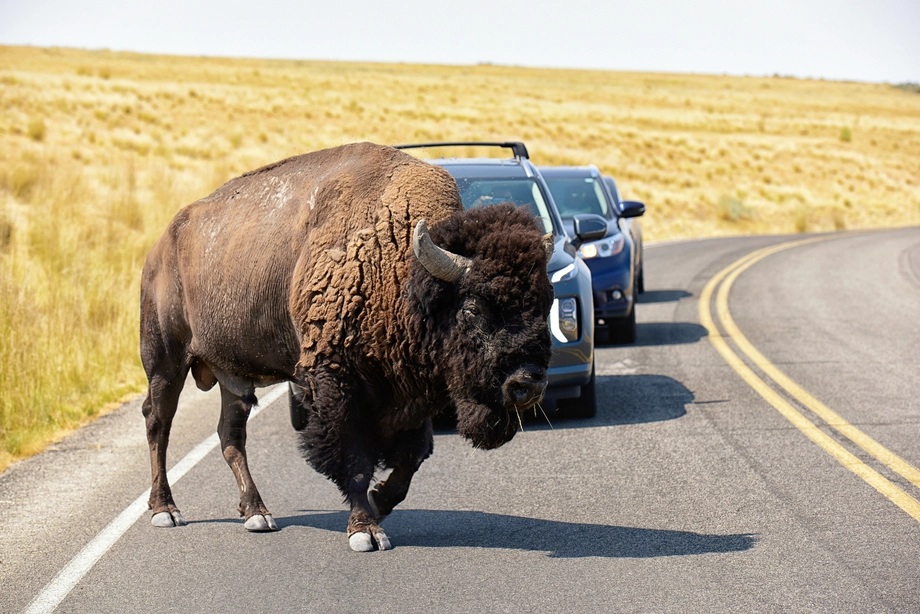 Antelope Island – Wild Heart of the Great Salt Lake Adventure
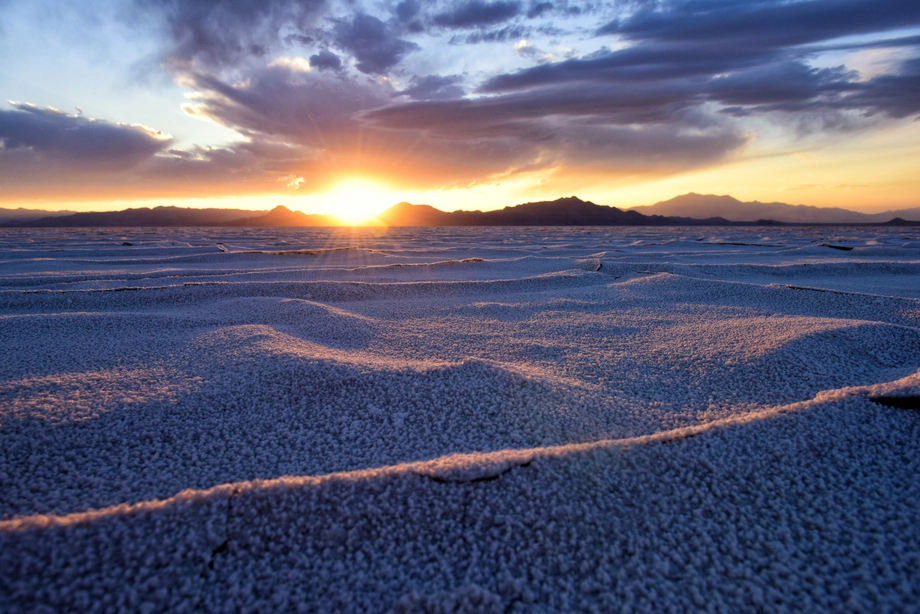 Bonneville Salt Flats – Sunset Adventure of the White Desert
 Antelope Island Sunset Wildlife Expedition – Great Salt Lake Odyssey
 Salt Lake City – The City of Zion. Historical Interactive Walking Tour