
Mesa Arch Sunrise From Moab
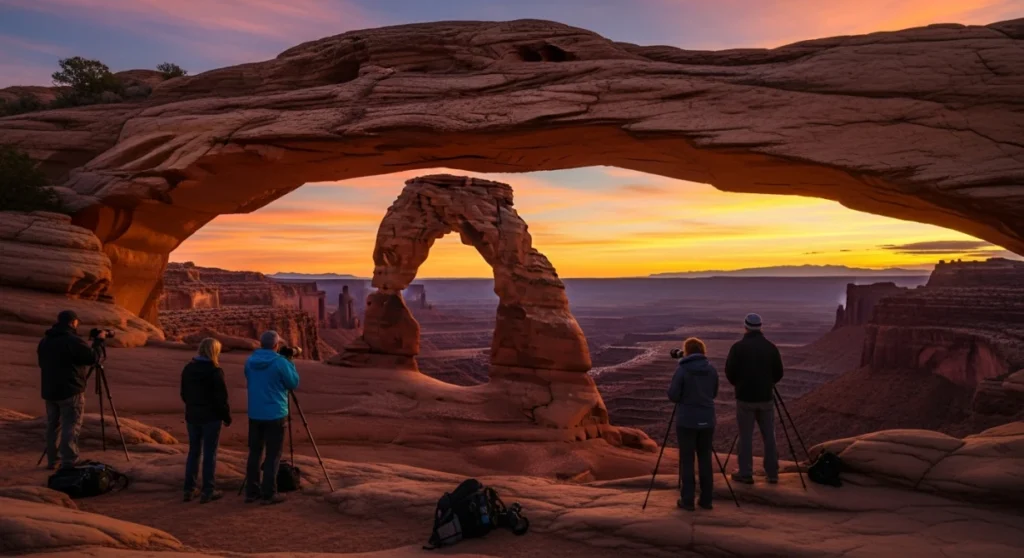
There is no official or regular public sunrise shuttle from Moab to Mesa Arch. Photographers should self-drive, arrange a private transfer, or fold sunrise into a guided Canyonlands day built around early arrival.
Most people who search for a Mesa Arch sunrise ride are not really shopping for transportation. They are trying to solve a harder problem: getting to a crowded dawn location early enough, with camera gear, in the dark, without wasting their only morning in Moab.
That is why the idea of a specialized shuttle sounds appealing, especially for photographers. People searching for a sunrise Mesa Arch photo shuttle from Moab with vehicle tripod mounts are usually looking for reliable timing, room for gear, and a plan that still works if the light or crowds are less than ideal.
Is there an official sunrise shuttle from Moab to Mesa Arch?
No. There is no official or park-run sunrise shuttle from Moab to Mesa Arch, and there is not a regular public service designed around dawn photography there.
In practice, most visitors drive themselves to the trailhead. That matters because your real planning decision is not which shuttle to reserve, but how you will secure early arrival and what backup you want if you do not want to drive in the dark.
This does not make the outing difficult. It makes it timing-sensitive. Mesa Arch is popular because the trail is short and the sunrise view is famous, so the main challenge is showing up early enough to have workable space and realistic expectations.
When is a Mesa Arch sunrise plan the right fit for you?
A Mesa Arch sunrise works well if you can handle an early start and want one of the easiest high-reward dawn stops near Moab. It is less about physical difficulty and more about your tolerance for dark-time logistics and crowds.
According to the U.S. National Park Service Mesa Arch trail page, Mesa Arch is a classic sunrise spot and also offers strong views toward the La Sal Mountains at other times of day. That is useful because even if sunrise conditions disappoint, the stop is not automatically lost.
- Good fit: You want a short walk, have one morning available, and can leave very early without rushing.
- Still workable: You do not want to drive yourself, but you can arrange a private transfer or join a day built around sunrise.
- Less ideal: You want guaranteed elbow room at the arch or expect a dedicated photography transport service that reserves shooting positions.
- Best use case: You plan to continue deeper into Canyonlands or other Moab-area stops after dawn, rather than treating the morning as a stand-alone transfer.
You found a hidden promo code!
Use code WOWBLOG at checkout and get 10% OFF any tour!
Limited time offer. Book now and save!
Browse ToursHow far is Mesa Arch from Moab, and what time should you actually leave?
From Moab, the drive to the Mesa Arch trailhead is about 45 minutes under normal conditions. Add the short walk and a strong buffer for parking, setup, and crowd positioning, and photographers should plan to be at the trailhead about 60 minutes before sunrise.
The trail itself is a 0.6-mile loop with minimal elevation gain, which is one reason the site attracts such heavy dawn demand. The hike is manageable for many travelers, but the easy access means the best spots fill early.
If sunrise is your non-negotiable moment, work backward from the sunrise time for your date rather than from a generic departure hour. For many photographers, the useful benchmark is not “leave by sunrise minus 45 minutes,” but “stand at the trailhead by sunrise minus 60 minutes.”
- Check the sunrise time for your date. Use that as the anchor for the whole morning.
- Set your trailhead arrival for about 60 minutes earlier. This gives you time to walk in, choose a position, and avoid frantic setup.
- Back out the 45-minute drive from Moab. That becomes your minimum wheels-rolling time.
- Add your own margin. If you move slowly in the dark, carry a larger tripod, or are traveling with non-photographers, add extra minutes before departure.
| Planning point | What to use | Why it matters |
|---|---|---|
| Sunrise anchor | Your date-specific sunrise time | The light window changes through the year |
| Trailhead target | About 60 minutes before sunrise | Popular positions go early |
| Drive from Moab | About 45 minutes | Transport time is longer than many first-time visitors assume |
| Walk to the arch | Short 0.6-mile loop, minimal gain | Easy access increases crowd pressure |
What are your realistic transport options from Moab?
You have three realistic choices: self-drive, a specially arranged private transfer, or a guided day that starts with dawn. Which one is best depends on whether your main constraint is budget, dark driving, or wanting the whole day sequenced well after sunrise.
There is no need to overcomplicate the choice. If you are comfortable driving early and want the cheapest path, self-driving is the default. If you dislike unfamiliar pre-dawn travel, the value shifts from “shuttle” to “someone else handles the timing.”
| Option | Who it suits | Main advantages | Main tradeoffs |
|---|---|---|---|
| Self-drive | Independent travelers, budget-focused photographers, couples with a rental car | Lowest cost, maximum control over departure and departure changes, easy to leave when you want | You handle dark driving, timing, parking, and all recovery planning if the morning slips |
| Private transfer | Travelers without a car or those uncomfortable driving before dawn | No need to drive yourself, can be arranged around your exact morning | Not a routine dedicated Mesa Arch run, requires advance arrangement, usually costs more, and still does not solve crowd competition |
| Guided day built around sunrise | Travelers who want logistics handled and a full Canyonlands or Moab-area day afterward | Morning timing can be integrated with the rest of the day, less guesswork, better use of one limited day | Less of a pure transfer, and the fit depends on whether the rest of the itinerary matches your priorities |
For travelers who want the morning to connect naturally to a broader park day, our Utah National Parks Tours are the clearest model for how we structure time-sensitive stops. We build around key light windows, route logic, and walking level, instead of treating transport as a disconnected errand.
What do photographers actually need from a “shuttle” here?
Photographers do not need a mythical specialist van. They need an early departure that is not negotiable, enough room for normal gear, a calm arrival in the dark, and a plan that accepts the reality of crowds.
This is the point many searches miss. Even a perfect transfer could not guarantee an unobstructed shooting position under the arch, because the bottleneck is on-site space and arrival order, not just the ride from town.
- Departure discipline: The vehicle needs to leave when planned, not after one sleepy delay that costs you your position.
- Gear practicality: Bring a tripod you can carry comfortably on a short walk and manage in tight space around others.
- Dark-time readiness: Pack the night before so you are not reorganizing batteries, lenses, or layers in the parking lot.
- Crowd expectations: Expect other tripods, people already in place, and limited freedom to spread out.
- Exit flexibility: Decide in advance whether you will leave right after the glow or stay for broader daylight views.
If your ideal product in your head includes guaranteed spots, reserved shooting lanes, or built-in camera hardware, reset that expectation now. The practical win is not specialized transport equipment. It is arriving early enough and being organized enough that the morning still works.
How do we build Mesa Arch sunrise into a well-run Canyonlands or Moab-area day?
The best version of this outing is usually not a stand-alone transfer. It is a full day whose first fixed point is sunrise, with the rest of the route paced around energy, short walks, and backup viewpoints if the dawn light underperforms.
That is how we plan throughout Utah. Our small-group, local-guide style is built around realistic timing, clear route expectations, and enough flexibility for questions and practical adjustments on the ground, whether the day starts in a city or at a national park trailhead.
Stage 1: Decide whether you need transport only or day design
The traveler owns the first decision: are you comfortable self-driving, or do you want the entire morning and follow-on day organized for you? We can help most when sunrise is one stop inside a larger Canyonlands or Moab-area plan, because the day then has structure even if sunrise itself is crowded or clouded out.
Stage 2: Lock the non-negotiables
We anchor the date, your base, who is traveling, and how photography-focused the morning is. If one person wants tripod time while another wants a lighter sightseeing pace, that affects departure, stop length, and what comes after sunrise.
Stage 3: Back-plan the morning
The key deliverable here is a clear timing chain: departure time, target trailhead arrival, expected walking effort, and how long to stay after first light. Good planning removes vague assumptions and replaces them with a morning that can actually be followed.
Stage 4: Protect the day after sunrise
The next deliverable is route logic. Instead of driving back to Moab without a plan, the day can continue to additional viewpoints or short walks that fit your energy level and keep the morning worthwhile if the classic arch shot is not your favorite frame of the trip.
If you want a sense of how we document day length, route flow, and what the walking really feels like, our Utah Day Tours show the planning style we use across the state. The same logic applies here: realistic drive time, clear stop structure, and enough context that guests do not have to reverse-engineer the day themselves.
What counts as a good plan, and who is responsible for what?
A good Mesa Arch sunrise plan is one where everyone knows the departure time, arrival target, walking expectations, and fallback value of the day. It does not promise empty overlooks or perfect weather, but it does remove avoidable mistakes.
The traveler is responsible for being ready on time, carrying manageable gear, and communicating whether the morning is photography-first or mixed-interest. We are responsible for building a realistic sequence, documenting the effort level, and shaping the day around the time-sensitive moment rather than forcing a checklist.
- Acceptance criterion 1: You know your exact leave time from Moab before the evening prior.
- Acceptance criterion 2: You know the walk is short but that the crowd pressure is high because the trail is easy.
- Acceptance criterion 3: You know what happens after sunrise, so the day still feels worthwhile if conditions are average.
- Acceptance criterion 4: Your gear list is simple enough to move quickly and behave well around other people.
- Acceptance criterion 5: No one in your group is surprised by the early start or by the social reality of sharing the arch with other photographers.
How should photographers prepare the night before and on the trail?
Preparation is straightforward. Keep the gear list lean, know your departure time, and treat space at the arch as shared working space rather than a private set.
This is also where independent travelers lose the morning. They focus on lenses and forget batteries, warm layers, headlamps, water, or the simple fact that reorganizing a camera bag at the trailhead burns precious minutes.
- Pack the night before. Camera body, lenses, tripod, spare batteries, memory cards, layers, and water should already be in place.
- Use a tripod you can place cleanly. Oversized setups are harder to manage when people are packed in close.
- Plan your position early. If a prime angle is full, do not escalate the situation. Adjust and shoot what is available.
- Leave extra setup time. Gloves, cold hands, and low light all slow basic tasks.
- Keep your expectations broad. The famous sunrise glow is one possibility, not the only worthwhile result from the stop.
What should you expect on site, and what are the best backup moves?
Expect a crowd at sunrise and expect most people to cluster near the classic arch opening. If the main line is full, your best response is to work calmly, respect tripod space, and remember that the location remains scenic after the first rush.
Because the arch is so well known, tension usually comes from people arriving late and trying to insert themselves into a full front row. The better move is to arrive early, claim a reasonable footprint, and avoid expanding your setup once others have settled in.
- Where people bunch up: The most obvious composition points at the arch opening fill first.
- Best etiquette: Keep tripod legs tight, do not drift forward into someone else’s frame, and communicate briefly if you need to move.
- Fallback angle: Step back and look for broader context rather than forcing the same crowded composition as everyone else.
- Fallback timing: Stay after the main sunrise moment for cleaner movement and different light, or treat Mesa Arch as one scenic stop within a wider park morning.
- Fallback mindset: If the glow is weak, the outing can still succeed because the viewpoint itself is strong beyond the postcard shot.
That broader-day mindset is the difference between a stressful dawn transfer and a solid national park outing. When the morning is planned as one important segment rather than the only reason you left bed, you protect both your photography goals and your budget.
There is no official sunrise shuttle from Moab to Mesa Arch, but there is a clear way to make the morning work. Start with honest transport choices, back-plan from sunrise to trailhead arrival, and prepare for shared space rather than guaranteed solitude. If you want help turning that sunrise into a realistic Canyonlands day instead of an isolated logistics problem, review our Utah national parks tours and send an inquiry with your dates, base, and photography priorities.
Can I book a regular public shuttle from Moab to Mesa Arch for sunrise?
No. There is no regular public or park-run sunrise shuttle for this route, so most visitors either drive themselves or arrange another custom transport solution.
How early should I reach the trailhead for sunrise?
A practical target is about 60 minutes before sunrise. That buffer helps with parking, the short walk, and finding a workable position before the arch area fills up.
Is Mesa Arch hard to reach for non-hikers?
The trail is short at 0.6 miles and has minimal elevation gain. The bigger challenge is the early hour and crowd pressure, not the physical effort.
Is a private transfer from Moab a realistic alternative?
Yes, but it is usually something you arrange in advance rather than a routine scheduled dawn run. It can solve the driving issue, but it will not solve crowding at the viewpoint.
What if sunrise conditions are poor?
The stop is still worthwhile because the viewpoint remains scenic outside the peak sunrise moment. A better day plan includes additional Canyonlands or Moab-area stops so the morning is not all-or-nothing.
Do I need specialized photography transport to bring a tripod?
No. What matters more is carrying a tripod you can handle easily on the short walk and in a tight crowd. Good timing and compact gear matter more than a specialized vehicle setup.
Is this a good plan if I am traveling with non-photographers?
It can be, because the walk is short and the sunrise stop itself is manageable. The key is building the rest of the day so everyone has worthwhile stops after the early start.
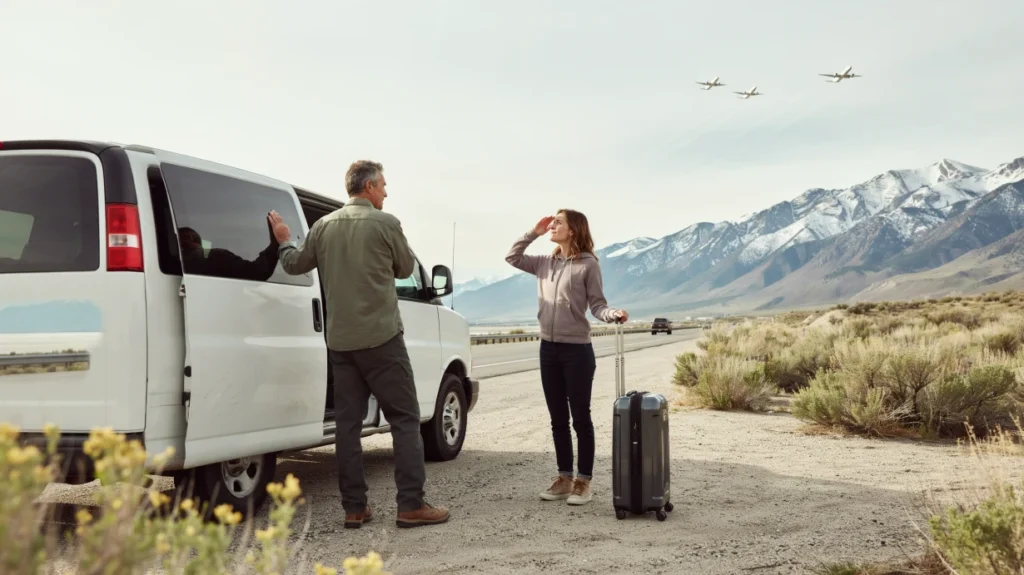 How to Plan a Day Tour Around Your Salt Lake City Flight
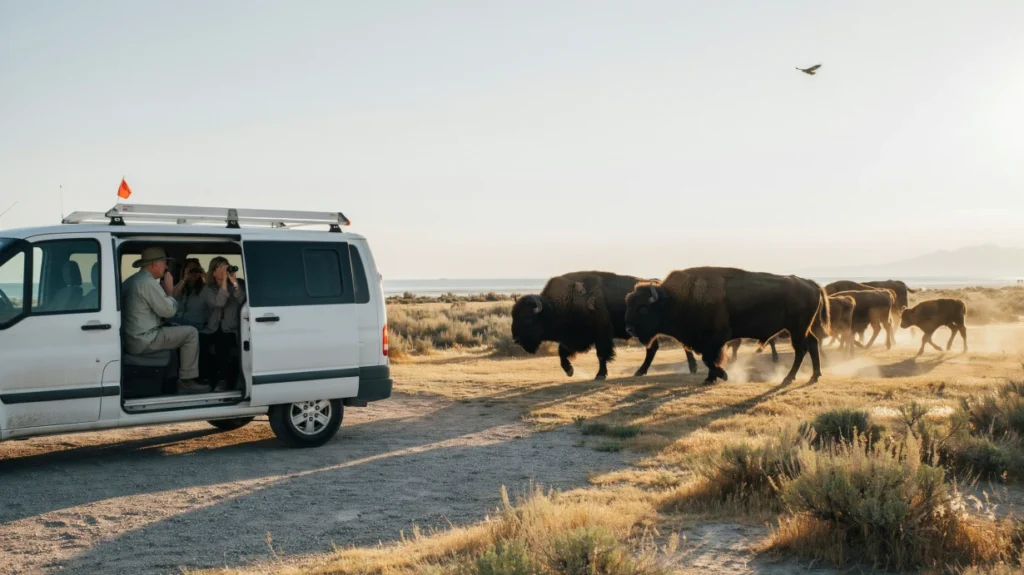 Antelope Island Sunset Tours: How Wildlife Viewing Really Works
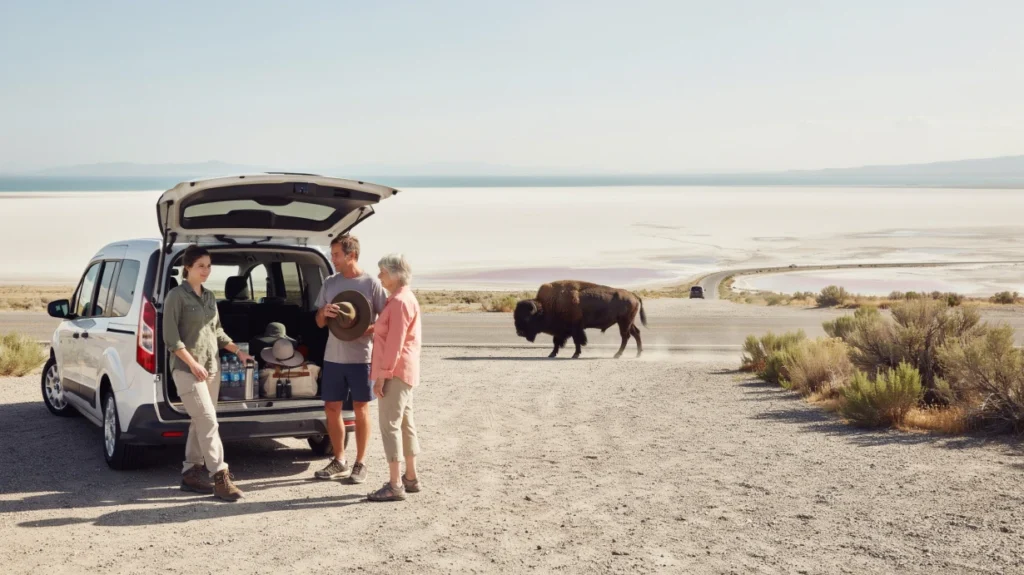 Antelope Island Day Tours: How to Plan a Low-Stress Visit
 Bonneville Salt Flats Sunset Tours: What the Experience Includes
 Bonneville Salt Flats Tours: Plan a Comfortable First Visit
 How to Plan a Utah Day Tour During a Short Salt Lake City Stay

Very happy with the whole experience, Dmitro was an excellent tour guide, very knowledgeable about area...
Read more →Matei Travel was the vendor for the trip. Don\'t use them. The tour was not as...
Read more →I would highly recommend touring with Dima! He was so knowledgeable and personable, and very open...
Read more →Experience was fabulous!!! We saw spectacular views of the flats, bison and prong horn. Mateo travel...
Read more → Antelope Island – Wild Heart of the Great Salt Lake Adventure
 Antelope Island Sunset Wildlife Expedition – Great Salt Lake Odyssey
 Bonneville Salt Flats – Sunset Adventure of the White Desert
 Bonneville Salt Flats – Journey to the Edge of the World