
How to Visit Bryce Canyon After a Late-Morning Arrival
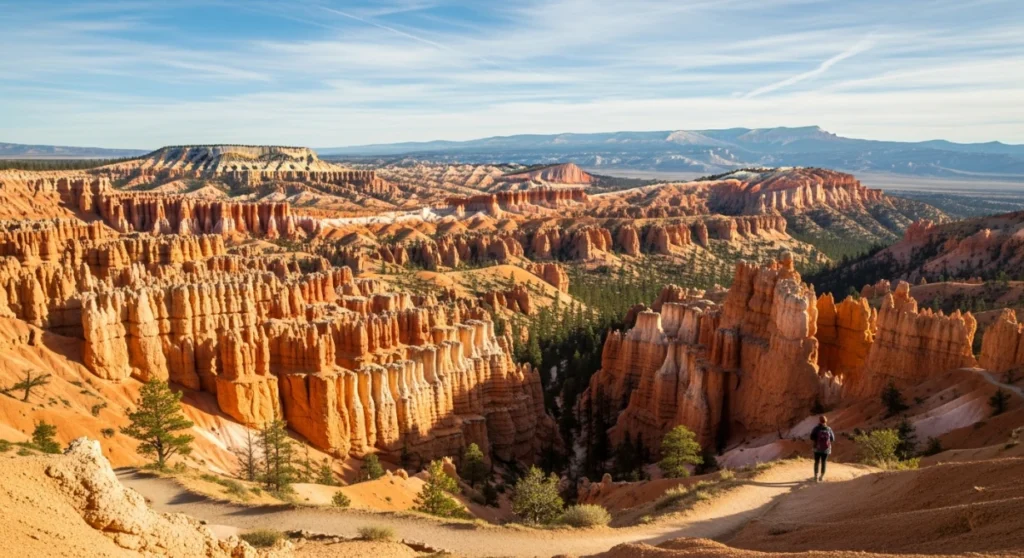
Yes, Bryce Canyon is still worth it if you arrive around 10:00 to 12:00 and have at least 3 focused hours. Stay in the Bryce Amphitheater first, use the shuttle if parking is tight, and skip the long scenic drive until later if time remains.
The most common late-arrival mistake at Bryce is treating a short visit like an all-day one. People drive deep into the park, stop at too many overlooks, then discover they spent the best midday hours in traffic, in parking loops, or hurrying past the hoodoos they actually came to see.
For this kind of visit, “late morning” means roughly 10:00 a.m. to noon. That timing matters because parking pressure is usually highest around the main amphitheater viewpoints during the middle of the day, while Bryce’s most iconic scenery is concentrated close to the entrance along the first three miles of road. Our planning logic for Utah park days starts there: if time is limited, be ruthless about priorities and protect your time on foot in the Bryce Amphitheater.
Is a late-morning arrival at Bryce Canyon still worth it?
Yes, a late-morning arrival is still worth it if you have at least 3 hours and you focus tightly on the Bryce Amphitheater. No, it is usually not worth trying to “see everything” after arriving that late, especially in busier months.
If you miss sunrise, you have not missed the entire value of the park. Bryce still delivers a memorable visit in the middle of the day because the amphitheater holds the highest concentration of hoodoos, classic rim views, and key trailheads in one compact zone.
Use this quick gate before you commit:
- Go ahead with the visit if you have 3 to 7 hours in the park, can walk at least short rim segments, and are willing to skip lower-priority stops.
- Adjust expectations if you are arriving tired from a long drive, are not used to 8,000 to 9,000 feet of elevation, or the weather is turning.
- Reconsider a self-drive rush if Bryce is only one stop in a very tight Utah schedule and you are also trying to force Zion into the same short window.
- Choose a guided format if your main stress is timing, long-distance driving, parking, and knowing what to cut without second-guessing.
That last point is exactly why we build Utah National Parks Tours around early departures, realistic drive times, and high-payoff stops rather than a long list of theoretical possibilities.
Why do so many travelers reach Bryce around midday?
Many visitors arrive late because Bryce sits in a part of Utah where drive times add up fast. From Salt Lake City or when combining parks, midday arrival is often the realistic outcome, not a planning failure.
This matters because your plan should match how people actually travel. A same-day push from Salt Lake City is long, and even shorter regional hops can stretch once you add fuel, food, scenic stops, and park entry lines.
In practice, late arrivals often come from a few patterns:
- From Salt Lake City: Travelers leave later than they meant to, then lose more time than expected to distance alone.
- From Zion or another park: People assume a park-to-park transfer is a simple half day, then reach Bryce with less energy than planned.
- On a broader Utah road trip: Bryce gets squeezed between check-out times, changing weather, and one too many stops.
If you are comparing Bryce with other quick escapes from northern Utah, our Utah day tours from Salt Lake City are useful as a reality check for what fits comfortably into one day versus what is better handled as a longer national parks outing.
You found a hidden promo code!
Use code WOWBLOG at checkout and get 10% OFF any tour!
Limited time offer. Book now and save!
Browse ToursWhat should you prepare before entering the park?
Before you enter, decide two things: whether you are visiting for 3 to 4 hours or 5 to 7 hours, and whether you will commit to the shuttle if parking around the amphitheater is congested. Those two choices prevent most wasted time.
The park typically runs a shuttle from about April through October, with exact seasonal operations varying, and late-morning visitors often benefit from parking once and moving around the main corridor that way. Midday parking around Sunrise, Sunset, Inspiration, Bryce, and Paria Points can be extremely congested, with better odds early and later in the day.
Your pre-entry checklist should be short and practical:
- Pick your time box. Decide now whether this is a 3 to 4 hour salvage plan or a 5 to 7 hour deeper visit.
- Choose your movement mode. If central lots look crowded, stop hunting for the perfect spot and shift to shuttle logic.
- Start conservatively on exertion. Bryce sits high enough that even easy walking can feel harder than expected.
- Carry water and a light layer. Effort, sun, and elevation can catch people off guard even when the visit looks short on paper.
- Define one must-do hike at most. For a late arrival, one good short or moderate walk beats two rushed trail attempts.
We use the same decision-first method in our own route planning. Whether it is a city walking route in Salt Lake City or a national park day, distance on paper is never the same as distance felt on the ground.
Why does the Bryce Amphitheater come first?
The Bryce Amphitheater comes first because it gives you the highest payoff per minute in the park. For a short visit, it is the non-negotiable zone because the iconic hoodoo scenery, major viewpoints, and the most useful trail access are concentrated along the first three miles.
This is the key late-arrival correction. A lot of generic advice starts with the full scenic drive south and treats the amphitheater as one stop among many. If you arrive around 11:00 a.m., that order is backwards.
By staying near the amphitheater first, you protect the part of Bryce most people actually remember:
- Dense scenery: The hoodoos are packed tightly here, so short walks produce big visual rewards.
- Viewpoint efficiency: Sunset, Sunrise, Inspiration, and Bryce Point are close enough to connect without eating the whole day in transit.
- Trail flexibility: You can keep it to rim views, add a short descent, or build a moderate loop if energy holds.
- Better recovery options: If weather, fatigue, or altitude change your plan, you can shorten the visit without feeling you missed the core of the park.
If you only remember one rule, make it this: amphitheater first, scenic drive later only if time, energy, and conditions still support it.
What is the best 3 to 4 hour late-morning plan?
The best 3 to 4 hour plan is to park once or switch to the shuttle, see the core amphitheater viewpoints, walk part of the rim, and add one short hoodoo descent only if you feel strong at altitude. This gives you the classic Bryce experience without the usual late-arrival waste.
Here is the sequence we would recommend to a traveler messaging from the road around 10:30 a.m.:
- Enter and make a parking decision fast. If parking near the main amphitheater lots looks jammed, do not burn 20 to 30 minutes circling. Park at a workable hub and use the shuttle.
- Start with Sunset Point or Sunrise Point. Either works as an anchor because both put you immediately into Bryce’s signature landscape.
- Walk a short rim segment between Sunrise and Sunset. This is the safest way to test how you feel at elevation while still getting excellent views.
- Add Inspiration Point or Bryce Point next. Choose one if time is tightening, both if the shuttle flow or parking situation is smooth.
- Do one quick hoodoo hike only if energy is solid. A short descent from the rim can be enough to feel the scale of the formations without committing to a larger loop.
- Save the southern scenic drive for last. Only do it if you still have time after the amphitheater and are not rushing your exit.
For many first-time visitors, the smartest “quick hoodoo hike” is not the longest option available. At Bryce’s elevation, a modest descent and climb back out can feel much bigger than expected, so judge by breathing and legs, not by what looked easy on the map.
A good 3 to 4 hour visit often looks like this in practice:
- First hour: Arrival, parking or shuttle adjustment, Sunset and Sunrise viewpoints.
- Second hour: Rim walk segment and time for photos instead of repeated short parking hops.
- Third hour: Inspiration Point or Bryce Point.
- Optional extra hour: Short descent below the rim, or a late-afternoon scenic-drive add-on if the day is opening up.
What is the best 5 to 7 hour late-morning plan?
The best 5 to 7 hour plan still starts in the Bryce Amphitheater, but it gives you enough time to go deeper on one substantial walk and then expand outward later in the day. The smart order is core viewpoints and trail first, scenic drive second, especially if parking eases after about 5:00 p.m.
With this longer window, you can stop thinking in terms of salvage and start thinking in terms of sequencing. Your main advantage is not that you can suddenly do everything. It is that you can experience the amphitheater more fully without feeling rushed at every stop.
- Late morning arrival and setup. Use the same fast parking-versus-shuttle decision as the shorter plan.
- Anchor the visit at Sunset and Sunrise. This gives you orientation before you commit to a longer walk.
- Choose one meaningful amphitheater hike. If you are feeling well at elevation, this is the time to do your main below-rim effort.
- Add Inspiration Point and Bryce Point. These are worth protecting because they round out the classic rim perspective.
- Pause and reassess energy. If you are tired, stay in the core area and skip expansion.
- Drive farther south only in the later afternoon if conditions allow. This is when adding part of the scenic drive makes more sense than forcing it first.
The tradeoff is simple. A longer visit does not mean you should stop at every overlook. It means you can combine depth in the amphitheater with a selective expansion, rather than a rushed parade of windshield viewpoints.
If you are trying to combine Bryce with Zion in a short Utah trip, this is also where guided structure can help. The real benefit is not rigidity. It is removing the mental load of long transfers, parking pinch points, and constant recalculation so your time in the park feels more open, not less.
Which viewpoints should you prioritize, and in what order?
For a late-morning visit, prioritize Sunset, Sunrise, Inspiration, and Bryce Point in that general order, with Paria View as optional. This sequence keeps you inside the highest-value corridor and works well whether you move by foot, shuttle, or a mix of both.
The exact order can flex based on parking and shuttle timing, but the priority should not. If time is short, the right move is to see fewer viewpoints well, not to tag every named stop.
| Viewpoint | Priority for late arrival | Why it matters | Best use of your time |
|---|---|---|---|
| Sunset Point | Highest | Strong immediate hoodoo impact and useful trail access | Start here if available, then connect on foot |
| Sunrise Point | Highest | Classic broad amphitheater perspective close to other core stops | Pair with Sunset for your first hour |
| Inspiration Point | High | Excellent layered view that adds depth after the rim core | Visit once you have locked in Sunset and Sunrise |
| Bryce Point | High | Major panorama that feels distinct enough to justify the stop | Do it if shuttle flow or parking allows |
| Paria View | Optional | Good extra stop, but not a first-priority stop on a short day | Add only after the main four are secure |
Two practical rules keep this simple:
- If you are on a 3 to 4 hour visit, make Sunset and Sunrise mandatory, then add one or two of Inspiration and Bryce Point.
- If you are on a 5 to 7 hour visit, do the full main set and only then consider Paria View or part of the southern drive.
How can you tell your late-arrival plan is working?
Your plan is working if you are spending most of your time looking into the amphitheater or walking its rim and very little time searching for access. The success signal is not the number of named stops. It is whether you experienced Bryce’s core scenery without feeling trapped by logistics.
Use these checks during the day:
- You committed early. You did not spend a large chunk of midday trying multiple full parking lots.
- You stayed in the core zone first. The amphitheater got your best energy, not your leftovers.
- Your hike matched your body. You could finish the climb back up without turning the rest of the visit into recovery mode.
- You cut low-value stops quickly. You were willing to skip optional overlooks rather than protect a bad original plan.
- You still had margin. Even on a short visit, you were not racing every minute against your exit time.
If those boxes are checked, the visit was worthwhile even if you skipped the park’s southern end. For a limited day, depth in Bryce’s best corridor is the stronger result.
What should you do if parking, altitude, weather, or energy derail the plan?
If one part of the plan fails, shorten the geography before you shorten the experience. In practice, that means staying near the amphitheater, using the shuttle when available, and downgrading hikes before cutting the main viewpoints.
Here are the most useful fallback moves:
- If parking is a mess, stop chasing close spaces and commit to the shuttle strategy for the amphitheater corridor.
- If altitude hits harder than expected, keep to rim viewpoints first, slow down, hydrate, and skip the more strenuous descent below the rim.
- If weather is changing, secure your top viewpoints early instead of saving them for later.
- If you arrived later than planned, cut Paria View and the southern scenic drive before cutting Sunset and Sunrise.
- If you are combining parks, choose one park to experience properly rather than flattening both into rushed checklists.
That last adjustment matters for self-drivers coming from Salt Lake City or trying to force Zion and Bryce into a very short schedule. When the day is tight, careful route design creates more freedom than improvising from the road.
At Matei Travel, that is the planning problem we solve on Utah park days: realistic distance, realistic walking, and fewer decisions made when you are already tired.
When is a guided Utah parks trip the smarter choice than self-driving?
A guided Utah parks trip is the smarter choice when your main constraint is not interest but logistics. If the stress points are long drives from Salt Lake City, midday arrival, parking uncertainty, and fitting Bryce into a bigger route, handing off that coordination often improves the day.
Self-driving still makes sense for travelers who like to improvise, are comfortable cutting stops on the fly, and have enough buffer in their schedule. But if you are noticing that the best version of your Bryce day depends on leaving early, timing transfers, understanding shuttle tradeoffs, and judging how much hiking feels realistic at altitude, you are already doing operator-level planning.
That is why many travelers move from “we can probably figure it out” to a curated national parks day or multi-park plan. The gain is not just transportation. It is having the route built around actual pinch points instead of hopeful assumptions.
For a short Bryce window, the practical takeaway is simple: if you want this level of prioritization without managing every variable yourself, a Utah parks itinerary built around those constraints is the low-stress option.
A late-morning Bryce arrival can still feel very worthwhile if you protect the Bryce Amphitheater, make a quick parking or shuttle decision, and keep your hiking realistic for the elevation. The biggest mistake is using limited hours on the wrong order, especially by driving far south before seeing the core hoodoo corridor. For 3 to 4 hours, stick to the main amphitheater viewpoints and one short walk; for 5 to 7 hours, deepen the amphitheater first and expand later only if time and energy remain. If you want help fitting Bryce into a tighter Utah schedule from Salt Lake City, explore our Utah national parks tours and ask us which route makes the most sense for your trip.
If I arrive around 11:00 a.m., should I still go into Bryce?
Yes, if you have at least 3 focused hours and are willing to stay centered on the amphitheater. A shorter, well-prioritized visit usually feels better than trying to cover the whole park too fast.
What should I skip first if time is getting tight?
Skip the southern scenic drive and optional overlooks before you cut Sunset Point, Sunrise Point, and the main amphitheater rim experience. Those core stops deliver the highest value for limited time.
Is the shuttle better than driving for a late-morning visit?
Often yes during busier months, especially if parking near the main viewpoints is crowded. The shuttle lets you stop hunting for close spaces and move more efficiently through the core corridor.
Can I enjoy Bryce without doing a long hike?
Absolutely. Short rim walks and a handful of major viewpoints are enough for many first-time visitors, especially if altitude makes exertion feel harder than expected.
Will I miss the best scenery if I do not drive all the way south?
No. The park’s most iconic hoodoo concentration is in the Bryce Amphitheater near the entrance, which is why it should get your best hours on a short day.
How many viewpoints are realistic in 3 to 4 hours?
Usually two mandatory core viewpoints plus one or two additional rim stops is realistic, along with a short walk. That is enough for a satisfying visit if you keep transitions efficient.
What is the safest hiking approach if I am not used to elevation?
Start with the rim, see how your body responds, and only then decide whether to descend below the rim. It is fine to keep the day gentle and still have a strong Bryce experience.
 Antelope Island Day Tour or Sunset Wildlife Tour: Which Fits Your Salt Lake City Schedule?
 How to Dress for Changing Weather on Antelope Island
 How to Photograph People at Bonneville Salt Flats at Sunset
 How to Dress for Wind and Glare at Bonneville Salt Flats
 What a Guide-Led Utah Day Tour Handles for You
 Why Wildlife Sightings Cannot Be Guaranteed on Antelope Island

The tour was great and beautiful. Dima, the tour guide, explained everything clearly and had some...
Read more →What a beautiful experience! The drive is about 2 hours one way with interesting scenery the...
Read more →(From North Carolina on a business trip) '+ 'HANDS DOWN the best tour/guide I’ve ever had. And...
Read more →Went to Antelope Island. Terrible. Tour guide didn\'t do what he said he was going to...
Read more → Antelope Island – Wild Heart of the Great Salt Lake Adventure
 Antelope Island Sunset Wildlife Expedition – Great Salt Lake Odyssey
 Bonneville Salt Flats – Sunset Adventure of the White Desert
 Bonneville Salt Flats – Journey to the Edge of the World