
Do You Need a Ridge Scramble Safety Course Near Park City? A…
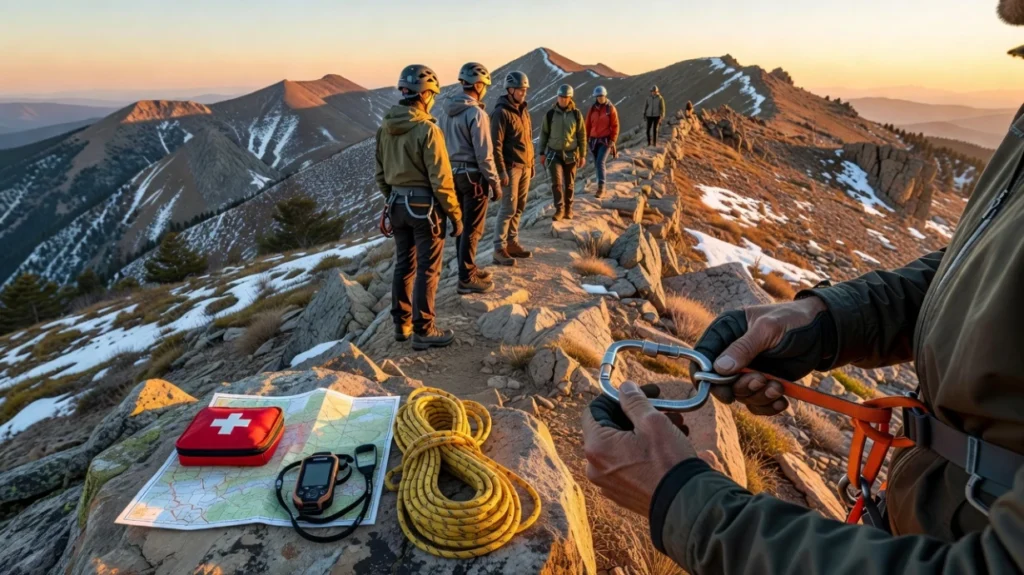
If your planned ridge involves exposure, off-trail route-finding, loose rock, or possible rope use, a course is strongly recommended or necessary. If you mainly want views, stick to lift-served, marked resort hikes instead.
A lot of visitors look at a ridge above a resort and assume it is just a steeper hike. That is the mistake that matters most around Park City in summer, because terrain can shift from a scenic walk to exposed, loose, off-trail scrambling faster than most short-stay travelers expect.
We organize realistic Utah mountain days for people based in Salt Lake City, and our consistent advice is simple. The key question is not whether you are fit, but whether the route demands movement skills, judgment, and route-finding that go beyond normal hiking. That is why people searching for backcountry safety courses near Park City for summer ridge scrambles need a decision guide before they need gear.
Why do Park City ridge scrambles feel easy to access, yet still turn serious?
They feel approachable because ski resorts, roads, and trail networks put you close to high terrain quickly. They turn serious when that easy access masks exposure, loose rock, weather shifts, and the consequences of leaving maintained paths.
In practice, resort adjacency creates a false sense of security. A ridge may start near lifts or obvious trails, but once the line narrows, steepens, or breaks into rocky steps, you are no longer making a normal hiking decision. You are making a scrambling decision, and that requires a different threshold for skill and caution.
This matters even more on a one-day outing from Salt Lake City. Tight schedules, unfamiliar terrain, and the temptation to “just go a little farther” can push visitors into terrain they did not really choose on purpose.
What counts as a “ridge scramble” near Park City, and how is it different from hiking?
A ridge scramble is terrain where you may need your hands for balance or upward movement, where a slip has more serious consequences, and where the route may not be fully built or obvious. Regular hiking stays mostly on marked trails or broad paths where footing, navigation, and fall consequences are more forgiving.
In plain language, the common scrambling scale helps you classify what you are really planning:
- Grade 1: Mostly a hike with occasional use of hands. The terrain can still be steep or airy, but movement is usually straightforward if it is dry and you stay on the right line.
- Grade 2: More sustained use of hands, more exposure, and more consequence if you misread the route. Some people may want or need rope protection depending on the exact terrain and conditions.
- Grade 3: This is close to easy climbing terrain. Rope use, anchor knowledge, and climbing competence may be required, and it is not appropriate as a casual add-on to a sightseeing day.
The practical dividing line is this. If you are relying on balance, composure with heights, and accurate route choices rather than simply following a built trail, you have moved out of standard hiking. According to The Mountaineers’ alpine scrambling course description, scrambling instruction focuses on off-trail wilderness travel skills needed to reach snow and rock summits, which shows how different it is from ordinary trail hiking.
You found a hidden promo code!
Use code WOWBLOG at checkout and get 10% OFF any tour!
Limited time offer. Book now and save!
Browse ToursWhat risk factors make Park City-area summer ridges more demanding than they look?
The main risk factors are exposure, loose rock, weather, route-finding, and altitude. Any one of those can elevate a simple-looking ridge; combined, they are the clearest sign that a course is warranted or that you should choose a safer alternative.
Exposure is often the factor people underestimate most. You may be physically able to step up onto rock, but if the drop beside you changes how you move, pause, or panic, your fitness is no longer the limiting variable.
Loose rock changes the equation too. Stable dirt trail habits do not automatically transfer to broken terrain where holds can shift and small route errors can force awkward downclimbing.
Weather is not just about storms. Wet rock can turn easy movement into insecure movement, and lingering shoulder-season snow can make a summer outing behave more like a mountaineering problem. If a route suggests equipment such as a helmet, or in some seasons traction and snow tools, that route is outside the scope of casual tourism.
Route-finding is the hidden hazard for out-of-town visitors. Following an app track or another group is not the same as understanding where the safe line goes, where retreat is possible, or how terrain changes once you are committed.
- Exposure: Narrow sections, steep sides, and serious consequences from a slip.
- Loose rock: Unstable footing and handholds that demand careful movement.
- Changing conditions: Rain, wet stone, wind, or leftover snow can sharply raise difficulty.
- Off-trail navigation: Ridges often require judgment, not just following signs.
- Altitude and fatigue: High elevation can reduce pace and clarity, especially on a compressed trip.
Who needs a safety course, who is probably fine without one, and who should avoid scrambling altogether?
If you are planning exposed off-trail terrain, need to use your hands regularly, or are unsure how to retreat safely, a scrambling or backcountry safety course is strongly recommended or required. If you only want scenic ridge views and easy walking, you are usually better off staying on broad, marked, lift-served terrain and skipping true scrambling entirely.
The easiest way to decide is to match yourself to a real profile instead of to your ideal self. Most bad mountain decisions start when people classify themselves by fitness alone and ignore exposure tolerance, route-finding skill, and time pressure.
| Visitor profile | What you are really bringing | Recommendation | Safer next step |
|---|---|---|---|
| Strong gym-goer or trail runner, little off-trail experience | Good fitness, limited scrambling judgment, unknown reaction to exposure | Course strongly recommended for anything beyond easy hands-optional terrain | Choose marked ridge walks and resort viewpoints |
| Experienced hiker, comfortable on steep trails, but no helmet, rope, or route-finding background | Solid hiking base, but not trained for consequential rocky terrain | Probably fine without a course only on easy, well-marked, non-technical routes | Avoid ridges that suggest protective gear or complex route choices |
| Climber or scrambler with formal instruction and recent similar experience | Relevant movement skills and hazard awareness | May not need a new course for easy objectives, but still must choose terrain conservatively | Use current conditions and honest objective selection |
| Nervous about heights, traveling with family, or only in Utah for a day or two | Low appetite for exposure and limited time to learn or adapt | Should avoid scrambling entirely on this trip | Use gondolas, chairlifts, broad ridgelines, and scenic resort walks |
Profile 1: Strong hiker, no scrambling background
You are not automatically ready for a ridge just because you can handle mileage and elevation gain. If the route includes hands-on movement, route ambiguity, or meaningful exposure, this is the profile where a course is most often justified.
The common objection is, “I’m strong enough.” Strength helps on the approach. It does not teach you how to assess loose blocks, reverse a move calmly, or decide when a line has crossed from adventurous into unsafe.
Profile 2: Comfortable hiker who wants “just a little scramble”
You may be fine without formal instruction only if you stay on easy ground that remains clearly non-technical. The moment the day depends on off-trail navigation, sustained hand use, or commitment to exposed sections, your margin disappears.
This is where a lot of visitors should deliberately stop one step earlier. A broad ridge path with views gives you the mountain experience you came for without converting the outing into a skills test.
Profile 3: Already trained and experienced
You may not need a new course before every outing. You still need honest terrain selection, because prior instruction does not make every ridge suitable in every condition.
Formal training is a foundation, not a blanket clearance. Research on scrambling competence consistently points to rope and anchor knowledge, hazard assessment, navigation, and leadership as leader-level expectations, which is another way of saying that experience has to match the actual terrain.
Profile 4: Height-sensitive, gear-light, or on a tight itinerary
You should skip scrambling on this trip. That is not a failure. It is a clear decision that protects the experience you actually want, which is usually scenery, elevation, and mountain atmosphere rather than a technical achievement.
For this profile, a lift-served resort day is the cleaner answer. We already build Utah mountain days around transport, realistic timing, and flexible on-mountain time, so visitors can enjoy ridge views without pretending they have the background for a serious off-trail objective.
What does a local scrambling or backcountry safety course typically teach?
A good course teaches movement skills, route-finding, hazard assessment, decision-making, and basic equipment use for off-trail mountain travel. It exists to close the gap between being a competent hiker and being a competent scrambler.
That gap is larger than many visitors expect. If you have only hiked on maintained paths, the new skill is not just “using hands on rock.” It is understanding terrain consequences, pacing, retreat options, and what changes when the route stops being obvious.
- Movement on rock and steep ground: Foot placement, balance, body position, and how to move efficiently without dislodging rock.
- Route-finding: Reading terrain, choosing the safer line, and avoiding getting pulled into harder ground by mistake.
- Hazard assessment: Evaluating loose rock, exposure, weather, and changing surface conditions.
- Navigation: Off-trail map and terrain awareness rather than blind reliance on an app.
- Equipment judgment: When a helmet or other protective gear is prudent, and when the need for technical gear is a sign you should not be there without instruction.
- Decision-making and retreat: Turning around early, downclimbing safely, and avoiding summit-first thinking.
For anyone who wants long-term scrambling ability, booking a course with a qualified local provider is sensible. It is a better investment than trying to assemble skill from social media clips, borrowed gear, and a hopeful one-day attempt.
What should you prepare before you decide on a course or a self-guided outing?
You should prepare an honest inventory of your skills, gear, comfort level, and time constraints before you choose the objective. Most poor decisions happen because people start with the view they want and only later ask whether they are qualified for the terrain.
This is the mountain version of readiness screening. If your answers are weak or vague, the route is too serious for self-guided experimentation.
- Classify the terrain you want: Is it a maintained trail, an airy ridge walk, or a hands-on off-trail line with real fall consequences?
- Check your true background: Have you done exposed scrambling before, or only steep hiking?
- Review your gear: If the route conversation includes a helmet or other protective kit and you do not own or understand that gear, that is your answer.
- Assess your height response: Can you stay calm and deliberate above drop-offs, or do you freeze or rush?
- Consider the trip format: Are you trying to fit this into a short vacation day from the city, with limited margin for route errors or weather delays?
- Choose a fallback: Pick a non-technical ridge walk or scenic resort plan before the day begins so you are not improvising under pressure.
How should you make the decision step by step?
Use a simple pass-or-fail flow. If the route is exposed, off-trail, gear-dependent, or beyond your recent experience, move it into the “take a course first” or “not on this trip” category.
This is the clearest setup process for visitors who want a concrete answer instead of mountain ambiguity:
- Start with your goal: If your real goal is views, photos, and alpine atmosphere, do not default to scrambling.
- Screen the terrain: Any route with sustained hand use, route ambiguity, or serious consequences from a slip should trigger caution.
- Match the profile: Place yourself in one of the four profiles above without inflating your experience.
- Apply the threshold: If you need technical gear, have no formal instruction, or are uneasy with heights, do not self-guide it.
- Choose the right path: Either book a proper course for future skill building or switch this trip to a resort-based, non-technical mountain day.
The key is deciding before you arrive. “We’ll see how it feels” is not a plan once retreat becomes awkward or pride starts driving the day.
When is a course overkill, and what should you do instead?
A full course is overkill when your actual goal is simply to enjoy high-elevation scenery on easy, marked, non-technical terrain. In that case, the smarter move is to choose lift-served ridges, broad viewpoint walks, or other mountain experiences that do not require scrambling competence.
This is especially true for people in Utah for only a couple of days. If you do not want to invest your limited time in instruction, that does not mean you need to gamble on off-trail ridges. It means you should choose terrain that matches your trip format.
That is where our Utah Day Tours make practical sense. We organize day trips from Salt Lake City with transport and flexible mountain time, which is a much better fit for visitors who want alpine views, resort access, and realistic pacing without turning the day into an unguided technical objective.
- Pick lift-served access: Gondolas and resort infrastructure reduce the hardest part of the day and put you near scenery quickly.
- Favor marked terrain: Wide ridge paths and signed walking areas are a different category from true scrambling.
- Use guided logistics, not bravado: A well-planned resort day removes the pressure to improvise transportation, timing, and backup options.
- Save technical goals for a future trip: If you want genuine scrambling skills, come back for a proper course rather than forcing it into a short vacation.
- Be honest about what you want: Many visitors want the feeling of being in the mountains, not the risk profile of an exposed ridge.
What are the most common reasons visitors make the wrong call?
The usual failure points are overestimating fitness, underestimating exposure, trusting apps or other people too much, and not setting a turnaround boundary in advance. These are readiness problems, not motivation problems.
The strongest warning signs are simple:
- You have never downclimbed exposed rock before.
- You do not know how to judge whether a line is getting harder than expected.
- You are relying on a phone track as your main navigation method.
- You do not own the gear that experienced people say is prudent for that terrain.
- You are trying to squeeze the outing into a tight same-day window from Salt Lake City.
If several of those apply, your borderline case is not actually borderline. It is a clear signal to step down the objective.
What is the safest practical next step if you are unsure?
If you are unsure, assume you do not need a scramble today. Pick a scenic, non-technical mountain day now, and pursue formal training later if scrambling still appeals to you.
That sequence works because it separates sightseeing from skill acquisition. You still get the ridge views and alpine setting, but without asking an unfamiliar mountain to become your classroom.
In our experience, short-stay visitors do best when they choose the version of the day that leaves room for enjoyment, questions, and course correction. That is the same consultative mindset we bring to our small-group city walking experiences, where people benefit from local guidance and realistic pacing rather than trying to force too much into a first encounter with a place.
If your answer after reading this is “I want views, not exposure,” that is a complete answer. If your answer is “I want the skills for future off-trail ridges,” then a qualified course is the right long-term move.
The right choice is not the boldest one. Around Park City, a course is worth it when your objective involves real exposure, off-trail judgment, or any chance that rope skills and protective gear enter the conversation. If that sounds like more commitment than you want on this trip, the safer and more enjoyable alternative is a lift-served, non-technical mountain day with time to enjoy the views instead of manage avoidable risk. Browse Matei Travel’s Utah day tours and send a short note about your hiking background so we can help you choose a resort-based option that fits your comfort level.
Do I need a course if the ridge is close to a ski resort?
Not automatically, but resort access does not make exposed off-trail terrain into a normal hike. If the route involves hands-on movement, route-finding, or serious consequences from a slip, instruction is a smart threshold.
Is being a strong hiker enough for a summer scramble?
No. Hiking fitness helps with distance and elevation, but it does not replace exposure tolerance, terrain judgment, or the ability to reverse moves safely.
Can I just follow other hikers or use an app?
That is not reliable in scrambling terrain. Other people may be on a harder line than you realize, and apps do not replace navigation skills or on-the-ground judgment.
What if I do not own a helmet or technical gear?
If a route is one where experienced people would consider protective gear prudent, treat that route as outside your current scope. Stay on easier marked terrain unless you are in a proper instructional setting.
I am nervous about heights but still want ridge views. What should I do?
Skip true scrambling and choose lift-served viewpoints or broad ridge walks. You can still get the alpine scenery without committing to exposed moves.
If I take a course, does that mean any ridge is fair game?
No. A course builds baseline skills and judgment, but you still need to match each outing to your current experience and the day’s conditions.
I only have a couple of days in Utah. Should I spend one on a course?
If your goal is this trip’s scenery rather than long-term skill building, a full course is often too much. Use this visit for non-technical mountain access and save formal training for a future trip.
 Antelope Island Day Tour or Sunset Wildlife Tour: Which Fits Your Salt Lake City Schedule?
 How to Dress for Changing Weather on Antelope Island
 How to Photograph People at Bonneville Salt Flats at Sunset
 How to Dress for Wind and Glare at Bonneville Salt Flats
 What a Guide-Led Utah Day Tour Handles for You
 Why Wildlife Sightings Cannot Be Guaranteed on Antelope Island

The tour was great and beautiful. Dima, the tour guide, explained everything clearly and had some...
Read more →What a beautiful experience! The drive is about 2 hours one way with interesting scenery the...
Read more →(From North Carolina on a business trip) '+ 'HANDS DOWN the best tour/guide I’ve ever had. And...
Read more →Went to Antelope Island. Terrible. Tour guide didn\'t do what he said he was going to...
Read more → Antelope Island – Wild Heart of the Great Salt Lake Adventure
 Antelope Island Sunset Wildlife Expedition – Great Salt Lake Odyssey
 Bonneville Salt Flats – Sunset Adventure of the White Desert
 Bonneville Salt Flats – Journey to the Edge of the World