
Bonneville Salt Flats Tour Timing
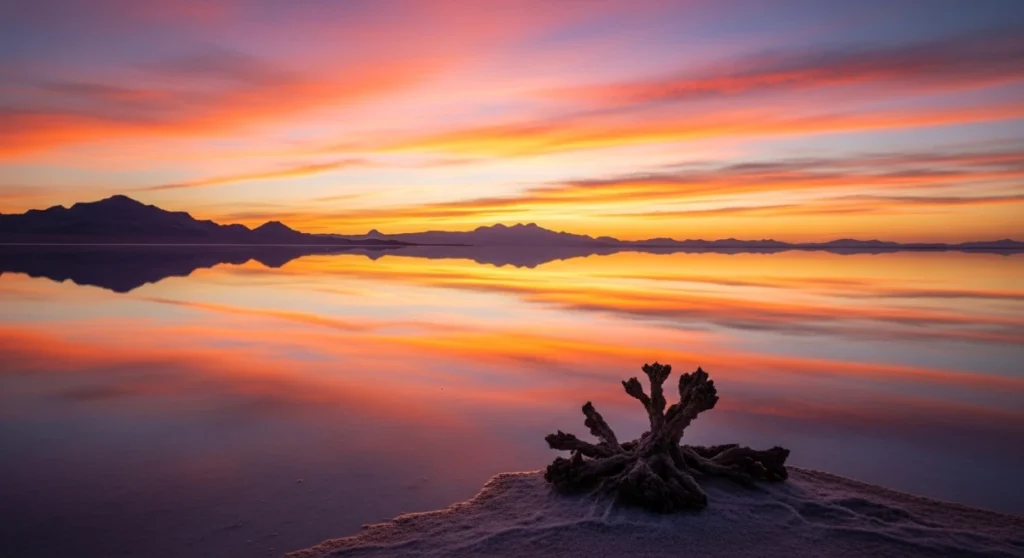
For most visitors coming from Salt Lake City, sunset is the better choice because it is easier to schedule, often gives richer color, and can offer a longer photo window. Sunrise wins mainly for travelers who want cooler temperatures, fewer people, and very soft early light.
People often assume sunrise is automatically the right call for a landscape visit, then realize too late that a Bonneville trip from Salt Lake City is not just about pretty light. It is also about when you have to leave, how tired you will be on the road, what the surface is doing that day, and whether you want a focused photo outing or a more relaxed half-day rhythm.
That is why timing matters for this stop more than it does for many other things to do near Salt Lake City. For day trippers, first-time Utah visitors, families, and photographers with one shot at the flats, the better choice is the one that fits your actual priorities, not the one that sounds more dramatic online.
We plan Utah day experiences from Salt Lake City around realistic timing, local conditions, and what different travelers actually enjoy. That same planning mindset matters here because Bonneville can feel serene, cinematic, harsh, easy, or exhausting depending on whether you arrive before dawn or stay through blue hour.
Who is this guide for, and what question does it answer?
This guide is for travelers starting in or near Salt Lake City who want to decide whether a Bonneville visit should be timed for sunrise or sunset. It is especially useful if you care about photos, comfort, family rhythm, or fitting the flats into a one-day Utah outing without guessing.
The core question is not “Which is prettier in theory?” It is “Which timing gives you the better overall day?” That includes the drive of roughly 1.5 to 2 hours each way, the season, whether you want reflections, and how much effort you want to put into early starts or late returns.
- Day trippers from Salt Lake City: You need the best return for limited time and do not want a badly timed long drive.
- Photographers: You care about color, reflective conditions, shooting window length, and whether you can work through changing light.
- Families and casual visitors: You may care more about sleep, temperature, and a smoother schedule than about chasing perfect light.
- First-time Utah travelers: You want a clear recommendation, not vague advice that ignores logistics.
In most cases, is sunrise or sunset better from Salt Lake City?
For most visitors based in Salt Lake City, sunset is the better choice. Sunrise becomes the better pick when you strongly value cooler temperatures, a quieter atmosphere, and soft morning light enough to accept a very early start.
The reason the answer leans toward sunset is practical as much as visual. Late afternoon gives you a more relaxed departure, a longer shooting sequence from golden hour into blue hour, and often the kind of layered pink, lavender, gold, and blue sky that many travelers expect from the flats. It also avoids the middle-of-the-night alarm that sunrise usually requires from the city.
The answer flips for a smaller group of travelers. If you hate returning late, want the cleanest possible start to the day, or are traveling in hotter months and care most about cooler conditions on the salt, sunrise can absolutely win. It is also appealing if you want the calmest mood and do not mind trading flexibility for discipline.
- Choose sunset if: You want the easiest overall day, richer color potential, a longer photo window, or a more family-friendly schedule.
- Choose sunrise if: You prioritize cool air, peace, and soft low-angle light more than sleep or scheduling ease.
- If you are unsure: Default to sunset. It is the safer recommendation for most first-time visitors coming from Salt Lake City.
You found a hidden promo code!
Use code WOWBLOG at checkout and get 10% OFF any tour!
Limited time offer. Book now and save!
Browse ToursHow do sunrise and sunset compare side by side?
Sunrise and sunset produce different experiences at Bonneville, not just different photos. Sunset usually wins on flexibility and color variety, while sunrise wins on calm, cool conditions, and a quieter feel.
The comparison below is the simplest way to make the decision without overthinking it.
| Decision factor | Sunrise | Sunset |
|---|---|---|
| Light and colors | Gentle, soft, subtle early light | Broader color range, often including pinks, lavenders, golds, and blues |
| Mirror-effect potential | Can be beautiful if water is present, but usually not the timing most people target | Often the preferred timing when travelers hope for reflective conditions |
| Shooting window | Shorter build from dawn into early morning | Longer sequence from pre-sunset light through blue hour |
| Temperature and comfort | Usually cooler, especially in warmer months | More comfortable than midday, but can begin warm in summer |
| Crowds and atmosphere | Quieter, more meditative | Can feel more social, though still spacious |
| Drive from Salt Lake City | Requires very early departure and driving in the dark before arrival | Allows easier afternoon departure, with the return often after dark |
| Impact on your day | Front-loads the effort, leaves the rest of the day open | Lets you keep a normal daytime rhythm but finishes later |
| Best fit | Dedicated early risers, heat-averse travelers, quiet-seekers | Most first-time visitors, casual photographers, and relaxed day trippers |
Why does timing matter so much at Bonneville instead of just visiting anytime?
Timing matters because the flats can look and feel dramatically different depending on light angle, sky color, surface moisture, and temperature. A noon visit can still be memorable, but it usually does not deliver the same atmosphere, comfort, or photographic range as sunrise or sunset.
This is the point many travelers miss when treating Bonneville like one of the best scenic drives near Salt Lake City rather than a timed visual experience. The open surface is simple, almost minimal, so changes in light do more of the work than they do in busier landscapes. That is why the same location can feel flat at one hour and extraordinary at another.
The practical effect is just as important. If you do not care about photography, you still care whether your kids are overtired, whether you are stepping onto blazing white salt in afternoon heat, or whether you are driving half-asleep before dawn. The right timing shapes the whole day, not only the photos.
What does a sunrise visit feel like in practice from Salt Lake City?
A sunrise visit feels quiet, disciplined, and cooler, but it usually asks the most from you before the day has even started. For travelers staying in Salt Lake City, it means a very early wake-up and a pre-dawn drive so you arrive before first light.
In real terms, sunrise is rarely the “easy” option on a day trip. You are getting dressed in the dark, leaving while the city is still asleep, and trying to be mentally sharp on arrival. If that sounds exciting rather than painful, you may be the right traveler for it.
Where sunrise shines
The best part of sunrise is the mood. The light is delicate, the salt often feels more still and open, and warm-season mornings are much more comfortable than later hours on the flats.
- Cooler temperatures: This is the biggest non-photo advantage in late spring, summer, and early fall.
- Peaceful atmosphere: The early hour usually feels calmer and less social.
- Soft light: If you like understated images instead of dramatic skies, dawn can be the better artistic fit.
- Day stays open afterward: You can pair the visit with other stops later, or simply return to Salt Lake City earlier.
Where sunrise gets harder
The downside is not subtle. Sleep loss changes the experience, and the short transition from dark to usable light means you have less room for a slow, exploratory session.
- Very early departure: For many visitors, this is the single reason sunrise stops making sense.
- Driving in darkness before arrival: Some travelers would rather avoid that than deal with a darker return after sunset.
- Cold in colder months: Morning comfort can swing from refreshing to harsh.
- Less forgiving schedule: If anyone in your group runs late, the best light is easy to miss.
We usually recommend sunrise only when the early hour itself is part of the appeal, not when someone is choosing it out of habit. If you are forcing yourself into a dawn outing because you think “real photographers do sunrise,” you are often better served by a well-timed evening plan instead.
What does a sunset visit feel like in practice from Salt Lake City?
A sunset visit feels more relaxed and more versatile for most people starting in Salt Lake City. You can leave in the afternoon, arrive with time to settle in, and shoot or explore through golden hour, sunset, and blue hour.
This timing works well because it gives you several looks in one outing. The light softens, the colors often broaden, and you are not racing from darkness into a narrow dawn window. That is a major advantage if you only have one visit and want more than one visual mood from it.
Why sunset is the usual recommendation
Sunset often produces the strongest overall mix of convenience and visual payoff. It is also the easier option for travelers who are not hardcore photographers but still want the flats at their most memorable.
- More relaxed departure: You avoid the brutal early alarm and can reach the flats without a pre-dawn rush.
- Longer shooting sequence: Starting 60 to 90 minutes before sunset and staying into blue hour gives several distinct looks.
- Richer sky color potential: Evening light often brings the wider palette many people picture when they imagine Bonneville.
- Good fit for one-shot visitors: If you only get one attempt, sunset gives more flexibility.
What to watch for with sunset
Sunset is not automatically easier in every way. The trip ends later, summer can still feel warm before the sun drops, and the return drive often happens after dark.
- Later return: Great for adults on a scenic outing, less ideal for travelers with strict early bedtimes.
- Heat earlier in the outing: In hot periods, the approach to sunset can still feel bright and warm.
- Dark drive back: Some travelers find this tiring, though others prefer it to a pre-dawn departure.
For many visitors, this iswhere a guided day trip becomes useful rather than luxurious. A small-group plan built around the evening light removes the guesswork on departure timing, route pacing, and how long to stay for blue hour without turning the day into a scramble. If you want to see how these outings are structured from Salt Lake City, the Utah Day Tours page is the most relevant starting point.
How do seasons and weather change the answer?
Season can absolutely flip the recommendation. Spring moisture, summer heat, winter cold, and shoulder-season surface conditions all change whether sunrise or sunset feels practical and whether access is straightforward.
The biggest mistake is choosing a time based only on photos from another month. Bonneville is a place where conditions matter close to your actual date.
Spring can be visually exciting because moisture may still be present, but it is also the season when surface conditions need the most caution. According to the Bonneville Salt Flats Special Recreation Management Area, the flats are generally open for recreation, but motor vehicle use can be limited during spring closures when the salt is moist or has standing water on the surface.
That matters whether you are self-driving or joining a planned outing. If your date falls in a wetter period, ask your tour operator to confirm current access and surface conditions close to departure rather than assuming your plan from weeks earlier still works.
Summer
Summer often pushes the answer toward sunrise for comfort, especially for travelers sensitive to heat. Sunset still works very well for photos and color, but the earlier part of the outing may feel bright and hot until the sun gets lower.
If you are traveling with kids or anyone who struggles in heat, this is one of the strongest cases for dawn. If you can handle warmth for a while and value the visual drama more, sunset still often remains the better all-around choice.
Fall and shoulder season
Late spring through early fall is often the easiest period for a sunset-timed outing because late afternoon access and surface predictability tend to align well with evening visits. Shoulder season can offer a nice middle ground with gentler temperatures and fewer extremes.
This is often when the sunset recommendation is strongest for casual travelers. You get the color and longer session without the same summer heat penalty.
Winter
Winter makes sunrise much harder for comfort. Even if you like the soft morning look, cold temperatures and the effort of an early departure can turn a simple outing into a demanding one.
Sunset can still be cold, but the day tends to feel less punishing overall because you avoid starting in the coldest, darkest part of the morning. The tradeoff is a later finish, so winter visitors should choose based on tolerance for cold versus tired driving.
Which option is better for your travel style and priorities?
The right answer depends less on general travel advice and more on what kind of day you want. If you match the timing to your priority, the decision becomes much easier.
- You care most about the best photo variety: Pick sunset. It usually gives more color shifts and a longer creative window.
- You care most about staying comfortable in warm weather: Pick sunrise. The cooler temperatures matter more than the sky palette.
- You are traveling with children or casual sightseers: Pick sunset in mild seasons, because the departure is easier and the experience feels less punishing.
- You are a serious early riser and want quiet space: Pick sunrise. The calmer feel may outweigh every logistical drawback.
- You dislike either very early alarms or planning stress: Pick sunset and build the whole day around an afternoon departure.
- You want to combine Bonneville with another stop: Decide based on what else is in the day. Sunrise leaves more room afterward, while sunset makes Bonneville the natural grand finale.
If you are new to Utah, another practical pattern is to keep your city orientation and your scenic day trip separate. Our Salt Lake City Walking Tours work well on a first day because local guides can give you context on the city, its layout, and hidden corners before you head out on a bigger landscape-focused outing.
What hidden trade-offs do travelers overlook when choosing between sunrise and sunset?
The most overlooked trade-off is energy, not light. Sunrise sounds efficient until the wake-up time makes the whole outing feel rushed, while sunset sounds easy until travelers forget that they still have a long return after dark.
Another hidden issue is expectation management around reflections. The mirror effect is a special-condition bonus, not something to count on. Sunset is often the timing people target when they hope for that reflective look, but thin water, dry salt, and access limitations all change what is possible on a given date.
The third overlooked trade-off is itinerary design. A sunrise outing can leave time for other stops later, but only if your group has the energy for them. A sunset outing can be wonderfully simple because it asks less of your morning, yet it often works best when the whole day is designed to build toward that final scenic moment instead of cramming in too much.
- Common mistake: Choosing sunrise because it sounds iconic, then regretting the sleep loss.
- Common mistake: Choosing sunset without accounting for a late dinner, tired kids, or a dark drive back.
- Common mistake: Assuming reflections will be there no matter when you go.
- Common mistake: Treating Bonneville like a quick roadside stop instead of a timing-sensitive outing.
This is exactly where route planning matters. For travelers comparing broader Utah options, our Utah National Parks Tours show the same planning principle on larger scenic days: timing key viewpoints well often matters more than trying to do too much in one trip.
How should you make the final decision?
If you want the simplest rule, choose sunset unless you have a strong reason to prefer sunrise. Choose sunrise only when cooler temperatures, solitude, and soft dawn light clearly matter more to you than sleep and schedule ease.
Use this quick checklist before you lock anything in.
- Pick your real priority: Photos, comfort, family schedule, quiet, or fitting in other stops.
- Check the season: Summer heat favors sunrise for comfort. Shoulder season often strengthens the case for sunset.
- Be honest about sleep and driving: Decide whether you would rather leave before dawn or return later in the evening.
- Treat reflections as a bonus: Do not build the whole decision around a mirror effect that may not show up.
- Confirm conditions close to your date: Surface moisture and access can change the plan.
- Choose a route, not just a time: The best experience comes from a realistic day plan built around the light you want.
If you are stuck between the two, sunset is the safer first choice for most Salt Lake City-based visitors. Browse Utah Day Tours and send a short inquiry with your priorities so MateiTravel can suggest whether a sunrise or sunset-timed Utah day trip fits you better.
For most travelers starting in Salt Lake City, sunset is the better Bonneville choice because it combines easier logistics, a longer visual window, and stronger odds of feeling worth the effort. Sunrise is still excellent for travelers who value cool air, quiet, and soft light enough to embrace the early start. The best decision comes from matching the timing to your energy, season, and goals instead of following a blanket rule. If you want help turning that choice into a realistic day plan, start with the Utah Day Tours page and ask for guidance based on your priorities.
Is sunset always better than sunrise at Bonneville?
No. Sunset is the better default for most Salt Lake City day trippers, but sunrise is stronger if cool temperatures and a quieter atmosphere matter most to you.
How early would I need to leave Salt Lake City for sunrise?
Expect a very early departure because the drive is roughly 1.5 to 2 hours each way and you need to arrive before first light. Sunrise is best for travelers who are comfortable with a pre-dawn start.
Is the mirror effect guaranteed at sunset?
No. Reflections depend on surface moisture and current conditions, so treat them as a bonus rather than the main promise of the trip.
Does timing matter if I am not a serious photographer?
Yes. Timing changes comfort, departure stress, and how easy the outing feels for families or casual visitors, not just the pictures.
What season makes sunset the strongest choice?
Late spring through early fall often lines up well with sunset visits because late afternoon conditions are commonly easier to work with. You should still confirm access close to your date.
When does sunrise become the smarter option?
It becomes smarter in hot weather, for strong early risers, and for travelers who want the calmest possible setting. It also helps if you want the rest of the day open afterward.
Can I combine Bonneville with a Salt Lake City city tour?
Yes, but it usually works best on separate days. A city walking tour is a good first-day activity, while Bonneville is better treated as its own timed scenic outing.
Choose your Bonneville tour
For the complete daytime itinerary with round-trip transportation from Salt Lake City, see the regular Bonneville Salt Flats tour. If sunset light is the main reason for your visit, choose the Bonneville Salt Flats sunset tour.
 Should You Cancel a Utah Outdoor Day Because of Wildfire Smoke?
 When Should a Utah Park Day Trip From Salt Lake City Become an Overnight?
 Your First Evening in Salt Lake City: A Low-Pressure Orientation Plan
 Bonneville Salt Flats Photography Etiquette: How to Protect the Surface and Share the View
 How to Plan an Antelope Island Birdwatching Visit
 Why Are There So Many Brine Flies on Antelope Island?

Guide was Great! The salt flats had alot of water due to recent rain which limited...
Read more →I booked the Bonneville Salt Flats tour w Matei bc the owners are Ukrainian. I’m so...
Read more →This experience is a must-do! Dima explains the history of the area as well as the...
Read more →I had never been on a guided tour before, but Dima made it the best experience...
Read more → Antelope Island – Wild Heart of the Great Salt Lake Adventure
 Antelope Island Sunset Wildlife Expedition – Great Salt Lake Odyssey
 Bonneville Salt Flats – Journey to the Edge of the World
 Bonneville Salt Flats – Sunset Adventure of the White Desert