
Bentonite Hills Utah tours: how to visit this fragile landscape safely
Mar 23, 2026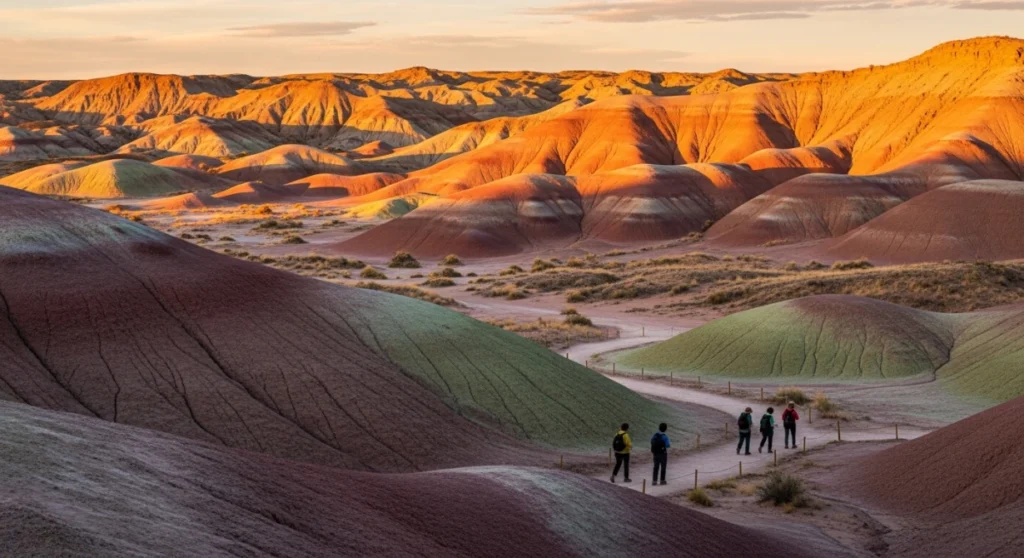
Visit the Bentonite Hills only in dry conditions with a high-clearance vehicle, stay on firm disturbed areas when walking, and treat the stop as optional so you never drive or hike on soft, wet clay.
Every season, drivers nose a low-clearance rental down a muddy track toward the Bentonite Hills, realize too late that the “road” has turned to glue, and spend the afternoon digging out instead of taking photos. Others reach the colored domes and wander all over the soft clay, leaving footprints that will outlast their vacation by decades. Both problems come from underestimating how fragile and unforgiving this terrain really is.
Access here changes dramatically with the weather, and there is no winter maintenance or quick rescue service. The same rainbow hills that look so inviting on social media are made of swelling clay that can trap vehicles and hold human impact for years. Understanding what this means in practice is the key to planning a visit that is both safe for you and kind to the landscape.
If you are weighing bentonite hills utah tours, a DIY visit, or folding this stop into a longer Utah road trip, you need to make a few very specific decisions about timing, access, and how you move on the ground.
What visiting the Bentonite Hills really means in practice
The Bentonite Hills are not a park with paved loops, restrooms, and clear trail maps. They are a remote badlands-style area made of bentonite-rich clay, part of the Brushy Basin shale member of the Morrison Formation that dates back to the Jurassic period.
In real terms, this geology controls everything you do here. The same clay that formed from ancient mud, silt, fine sand, and volcanic ash will swell and become slick when wet. That affects your vehicle, where you can safely walk, and even whether you should attempt the approach at all.
Access conditions you should expect
Getting to the hills requires leaving main highways and driving unpaved roads. These roads are rough enough that a high-clearance vehicle is needed, even when the surface is dry. There are no services or winter plowing, and there may be little to no cell service.
- Vehicle demands: Rutted, rocky sections and occasional wash crossings favor higher clearance. Standard sedans risk undercarriage damage and getting hung up.
- Weather sensitivity: Even a modest storm can turn sections of road into deep, sticky mud that grabs tires and creates dangerous sliding on slopes.
- Seasonal limits: In winter, snow and ice accumulate and are not cleared. Access can quickly become risky or entirely blocked.
Once you arrive, you are stepping into a landscape that works more like wet pottery than solid stone. That is where the biggest practical responsibilities begin.
Why people misread this landscape and get into trouble
Most problems happen because visitors treat the Bentonite Hills like any other desert viewpoint. The terrain looks firm and durable, yet behaves the opposite way when conditions shift. Several predictable misunderstandings appear over and over.
Misconception 1: “If my tires can move, the road is fine”
A common mistake is continuing to drive simply because the vehicle still crawls forward. On bentonite-rich roads, the danger starts long before you are fully stuck. As the clay absorbs water, it becomes extremely slick, so stopping, steering, and climbing even slight grades become uncertain.
- Reality check: “Passable” is not the same as “safe.” If you see mud building up on tire treads or the vehicle starts to fishtail even slightly, conditions are already marginal.
- Visible cues: Deep ruts, standing water in road depressions, and a gray, sticky sheen on the surface indicate trouble, even if another vehicle went through earlier.
Misconception 2: “Footprints disappear fast in the desert”
People often assume their footsteps will blow away or erode in a season. In bentonite terrain, that is wrong. The surface is easily damaged, and scars from footprints and tire tracks may remain for many years. The result is a spiderweb of paths across once-smooth hills.
One geologic description of the area notes that the swelling bentonite surface is so delicate that even a single set of tracks can persist, especially where the clay has dried and hardened after being disturbed.
This is why land managers urge visitors to limit walking to firmer areas such as washes and zones that are already visibly disturbed, rather than intact, untouched slopes.
Misconception 3: “Winter is quieter, so it must be easier”
The absence of crowds does not mean the approach is safer in winter. Roads here are not plowed or maintained during snowy months. Any combination of snow, ice, or saturated clay multiplies the risk of sliding, getting stuck, and being exposed to very cold temperatures while you sort it out yourself.
The calm winter photos you see online often come from brief, ideal windows. It is important not to assume those conditions are typical.
You found a hidden promo code!
Use code WOWBLOG at checkout and get 10% OFF any tour!
Limited time offer. Book now and save!
Browse ToursDecision scenarios: choosing how and when to visit
There is no single “right” way to experience the Bentonite Hills, but there are clear decision points. Thinking through them before you leave pavement will help you avoid unnecessary risk and reduce your impact.
Scenario 1: Adding Bentonite Hills to a longer Utah trip
Many travelers discover the hills while planning a bigger circuit that may include national parks or guided day trips. If you are already considering utah national parks tours from salt lake city, you are probably aiming to maximize scenery without micromanaging every logistic yourself.
Because the Bentonite Hills sit in a more fragile, unmaintained zone, they fit best into your trip if you are flexible on timing and willing to skip the stop entirely after recent storms, even if that means reworking your route that day.
| Trip style | How Bentonite Hills fit | Key decision |
|---|---|---|
| Guided park-focused tour | Focus on major viewpoints and short hikes, leave fragile back roads for a future trip with better conditions. | Is it worth adding a high-risk detour off your otherwise smooth itinerary? |
| Independent road trip | Plan Bentonite as an optional spur, not a fixed promise. Decide on the day based on weather and road reports. | Will you turn back at the first signs of mud or snow, without forcing it? |
Scenario 2: Self-reliant explorer with a high-clearance vehicle
If you have the right vehicle and are comfortable with remote driving, the Bentonite Hills can be a rewarding side trip. Your main choices then become when to attempt it and how far to go off the main track.
- Weather-first planning: Choose dry periods, and avoid going in shortly after storms, even if the sky has cleared.
- Turnaround discipline: Decide in advance what your “no-go” signs will be, such as sticky mud on tires or encountering a slope with visible ice.
- On-foot limits: Commit to staying on firm surfaces and previously disturbed ground rather than walking over untouched domes.
Scenario 3: Photographer chasing a specific shot
Photographers are often tempted to walk far onto the hills for a clean composition. This is where environmental impact can easily outweigh the benefit of the image.
Instead, treat your tripod placement the way you would treat moving a rock in a fragile habitat. Ask whether the image truly requires a new footprint on pristine clay, or whether a lower-impact angle from a wash or existing disturbance can give nearly the same result.
Comparing access conditions: dry vs wet vs winter
Because bentonite reacts so strongly to moisture, trip planning should be built around expected surface conditions rather than just temperatures or crowd levels.
| Condition | Road surface | Vehicle risk | Foot travel impact | Recommended? |
|---|---|---|---|---|
| Dry, stable weather | Firm, rutted, dusty in places | Moderate if using high clearance; sedans still vulnerable to ruts | Least damaging if you stay on disturbed or firm areas | Best window, but still requires care |
| Recently wet or actively raining | Sticky, slick, can ball up on tires | High risk of getting stuck or losing control | Footprints and ruts leave deep, long-lasting scars | Generally avoid |
| Snow/ice (winter) | Unplowed, hidden ruts, icy patches | High risk of sliding, getting stranded in cold | Tracks in thawing clay may persist through multiple seasons | Only for very experienced, and often best skipped |
Common mistakes visitors make and how to prevent them
Most damage and mishaps can be traced back to a small set of avoidable errors. Addressing these upfront can save your vehicle and protect the land.
Mistake 1: Treating the Bentonite Hills like a roadside overlook
Stopping for a quick wander over soft hills, as if they were a gravel turnout, ignores how slowly this substrate heals. Unlike a paved viewpoint, every extra set of tracks increases visual scarring and concentrates future erosion along those paths.
- Prevention: Limit your walking to existing disturbed zones and washes, and keep your group tight instead of spreading footprints widely.
Mistake 2: Driving “just a bit farther” into deteriorating conditions
Many stuck vehicles end up in trouble because the driver tried to cross one more muddy dip or climb one more slick hill to reach a photo stop. Once you lose momentum in deep bentonite mud, recovery is difficult without external help.
- Prevention: Turn around as soon as you sense worsening traction, even if navigation apps show the destination as close.
Mistake 3: Underestimating winter and shoulder-season risks
Because the roads are not maintained in winter, an early storm can shut down access long before peak cold. Ice and snow can conceal deep ruts and saturated sections that will trap a vehicle as they thaw.
- Prevention: If snow or ice is present on approach roads, treat Bentonite as off-limits unless you are prepared to handle remote winter recovery on your own.

From theory to on-the-ground choices
The geology and access facts only matter if they change what you actually do. Before you head toward the hills, translate this knowledge into concrete choices about your route, your timing, and how you move.
Choosing whether to self-drive this stop
For some travelers, the appeal of a self driving tour of utah national parks naturally extends to exploring side roads and quieter corners like bentonite terrain. The mindset that works on paved scenic drives, however, does not always scale well into fragile, unmaintained areas.
- Ask about your tolerance: Are you prepared to abandon the plan at the first sign of mud, even after a long approach?
- Check your vehicle: Does it have enough clearance for ruts and wash crossings, not just highway comfort?
- Assess your skills: Are you comfortable reversing long distances on rough roads if you need to retreat?
If any answer is “no,” you can still enjoy Utah’s landscapes by leaning more on guided experiences that stay within managed road networks, and saving the Bentonite Hills for a future trip under ideal conditions.
Deciding when to stay in town instead
On days when storms move in or recent rain has clearly soaked the region, shifting from fragile backroads to city-based exploring is not a consolation prize. A small-group walking tour in downtown Salt Lake City with a local guide can fill a day with stories, historic buildings, and hidden corners without the risk of damaging soft desert surfaces.
Because those city routes are built around short walks, questions, and human history rather than delicate geology, they pair well with postponing a high-impact desert outing until conditions are better.
Priority action checklist for a low-impact visit
Before you commit to driving out toward the Bentonite Hills, run through this short, practical checklist. It is ordered by priority, from “go / no-go” decisions to finer details of how you move on site.
- Check recent and forecast weather: If heavy rain or snow has fallen or is expected along your access route, plan a different activity that day.
- Evaluate your vehicle honestly: Only proceed if you have sufficient clearance for rough, ungraded roads. If you are in a low rental, skip this stop.
- Decide your turnaround rules in advance: For example, agree that you will turn back at the first signs of sticky mud on tires or sliding, without debate.
- Limit where you walk: Once there, keep to firm surfaces, wash bottoms, and clearly disturbed zones instead of climbing untouched domes.
- Keep your group tight: Walk single-file or in a narrow band so that any unavoidable impact is concentrated in one narrow strip rather than spread widely.
- Have an alternate plan: If conditions are bad, shift to more resilient experiences, from broader Utah park viewpoints to guided city walks that do not rely on fragile dirt access.
How guided experiences elsewhere can complement a Bentonite visit
Not every part of your Utah trip needs to involve self-navigation on unpaved roads. Many visitors choose one or two more delicate stops like the Bentonite Hills, then spend other days letting guides handle logistics in more developed areas.
Multi-stop Utah tours that depart from Salt Lake City often focus on major viewpoints, moderate walks, and scenic drives where roads are maintained and clearly marked. That makes them a good counterpart to a carefully planned, weather-dependent detour into more sensitive bentonite terrain.
MateiTravel, for example, organizes Utah excursions with local guides, including small-group walking tours through downtown Salt Lake City that highlight historic buildings, urban planning, and hidden details. Blending that kind of structured day with a cautious, low-impact Bentonite outing can give you variety without overloading fragile landscapes.
Because those city tours encourage questions and context, they also help you better understand Utah’s broader story, which deepens your appreciation when you do stand in front of remote geologic formations.
Visiting the Bentonite Hills responsibly starts with recognizing that this is not just another desert pullout. The clay-rich surface, unmaintained roads, and slow-healing scars from tracks mean your timing, vehicle, and on-foot choices matter more here than in many better-known sites.
Build your decision around weather and access first, then commit to strict limits on where you drive and walk. Treat this stop as optional, not guaranteed, even on trips carefully planned around Utah’s highlights. When conditions do align, you will be ready to enjoy the colors and shapes with a minimal footprint.
For the rest of your Utah days, leaning on structured experiences such as MateiTravel’s guided tours allows you to see more of the state while keeping fragile places like the Bentonite Hills from absorbing unnecessary impact.
To keep your Utah itinerary both memorable and low-stress, consider combining a carefully timed Bentonite visit with a guided day from MateiTravel when conditions are less than ideal for remote dirt roads.
Do I need a high-clearance vehicle to reach the Bentonite Hills?
Yes. The access roads have ruts, rocks, and potential wash crossings that are better suited to high-clearance vehicles than standard sedans.
Is it safe to visit the Bentonite Hills right after rain?
No. Bentonite clay becomes extremely sticky and slick when wet, which raises the risk of getting stuck and leaves deep, long-lasting tracks.
Can I walk anywhere on the Bentonite Hills?
You should avoid pristine slopes and limit walking to firm, previously disturbed areas and washes to reduce lasting damage to the surface.
Are the roads to the Bentonite Hills maintained in winter?
No. They are not plowed or maintained, so snow and ice can quickly make access dangerous or impossible.
What is the best season to plan a visit to the Bentonite Hills?
Dry periods in non-winter months are best, as the roads and surfaces are more stable and less likely to turn to mud.
How can I reduce my impact while photographing the Bentonite Hills?
Choose angles from washes or already disturbed areas and keep your tripod and footprints within a narrow zone instead of spreading out.
What should I do if conditions look bad on the approach road?
Turn around immediately, even if your destination is close, and switch to a more resilient activity such as a city walking tour.
Can I combine a Bentonite Hills stop with guided Utah tours?
Yes. Many visitors pair a cautious, weather-dependent Bentonite visit with guided days to major viewpoints and urban walking tours.

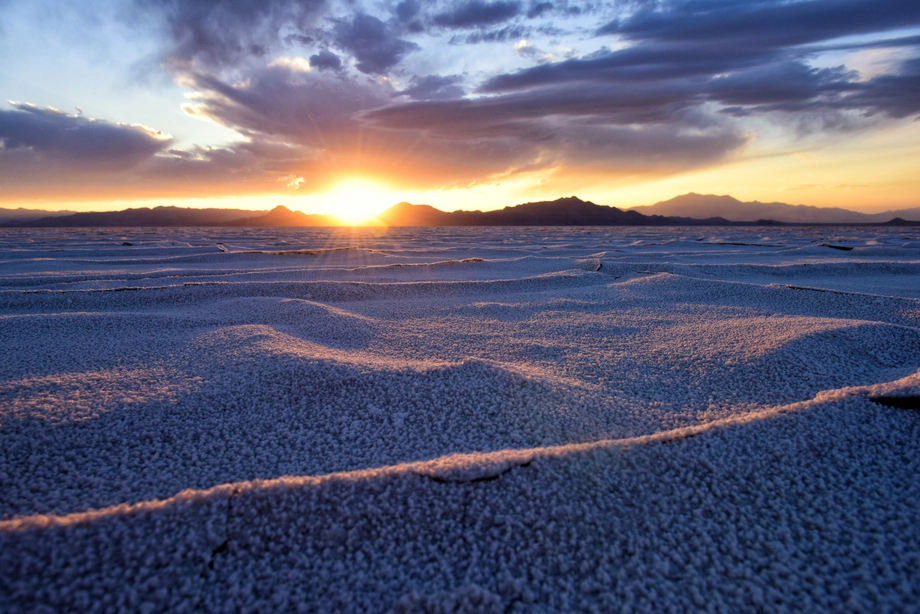 Bonneville Salt Flats – Sunset Adventure of the White Desert
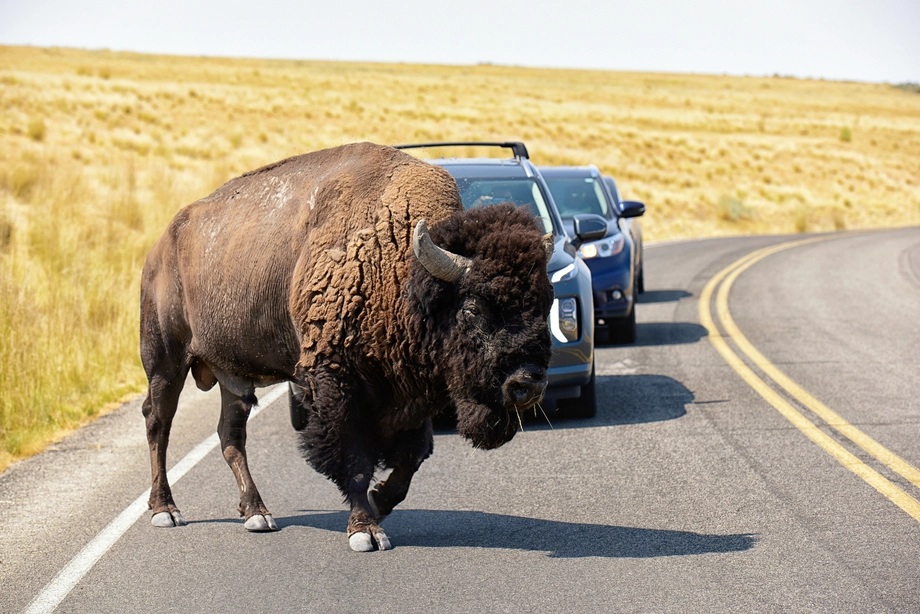 Antelope Island – Wild Heart of the Great Salt Lake Adventure
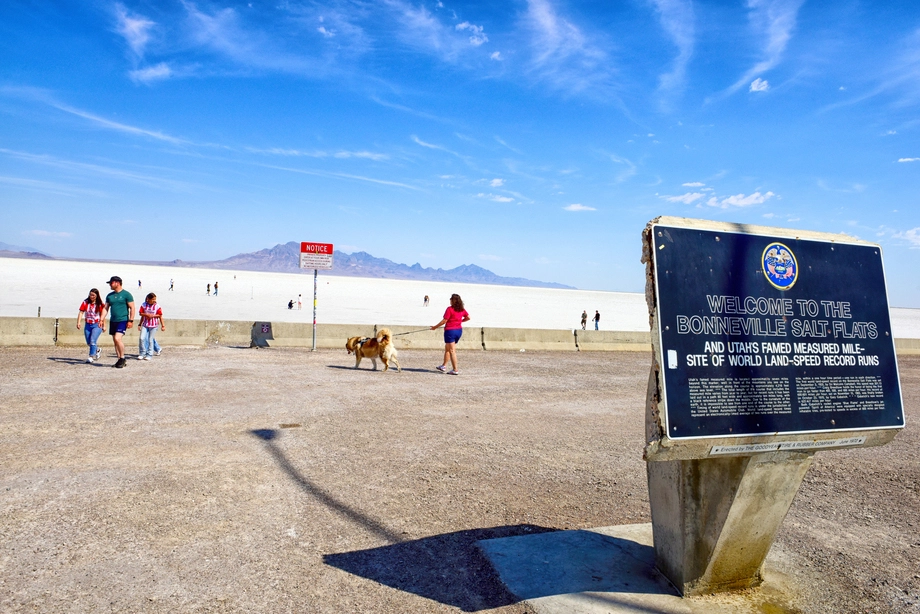 Bonneville Salt Flats – Journey to the Edge of the World
 Salt Lake City – The City of Zion. Historical Interactive Walking Tour
 Antelope Island Sunset Wildlife Expedition – Great Salt Lake Odyssey