
Beginner-Friendly Backcountry Ski Routes Near Park City: When to Choose a Resort
Jul 26, 2026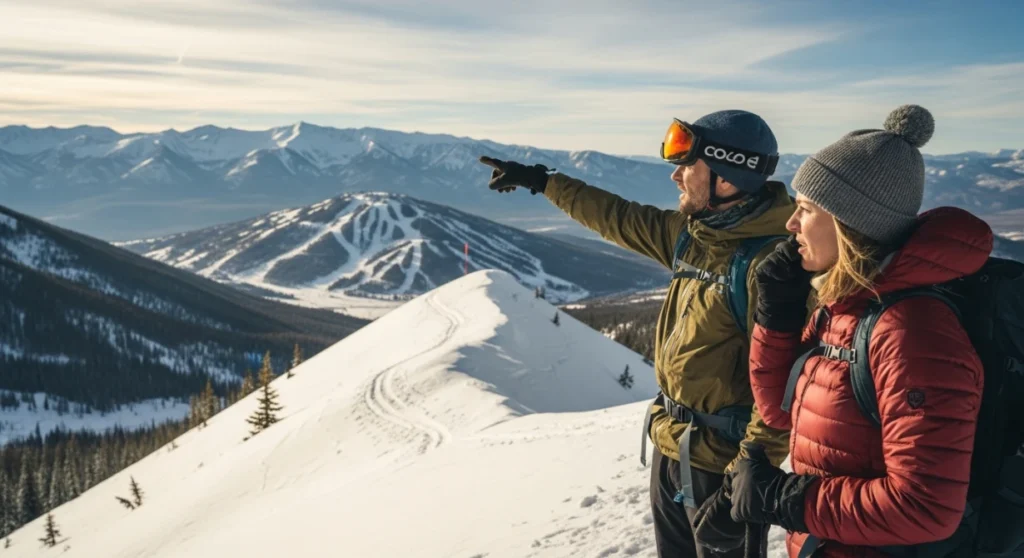
There is no low-risk DIY beginner backcountry near Park City. Most visitors will have a better, safer winter day staying in resort boundaries and saving guided or educational options for later.
The dream is easy to understand: fresh snow, open space, and a quiet line beyond Park City’s lifts. The reality is that terrain outside resort boundaries is unmarked, unpatrolled, and unmaintained, which makes “beginner-friendly backcountry ski routes near Park City with avalanche basics” a much more serious decision than a blue-run skier may expect.
This is a resort-versus-backcountry planning question for visitors with one or two winter days, limited local knowledge, and curiosity about skiing beyond groomers. Our practical recommendation is to protect those short vacation days by matching the terrain to the skills, training, energy, and logistics you actually have.
What is the difference between in-bounds skiing, sidecountry, and true backcountry?
In-bounds terrain is managed by the resort, while sidecountry and backcountry beyond the boundary are uncontrolled mountain environments. Crossing a rope or leaving through a gate does not create a casual extension of the ski area; it transfers responsibility for route choice, snow stability, navigation, and rescue to you and your group.
In-bounds resort terrain
Resort skiing takes place on marked runs and within a managed operating area. It still carries normal snow-sport risks, but it gives newer skiers and visiting groups a defined trail system, lift access, and a straightforward way to choose terrain that fits their confidence.
Park City Mountain Resort has designated slow-skiing areas and substantial beginner terrain. Its roughly 3.5-mile Home Run is among Utah’s longest green trails, giving first-timers and cautious intermediates room to practice turns, pacing, and confidence without needing to solve a backcountry route problem.
Sidecountry beyond the boundary
Sidecountry can look deceptively accessible because it may begin near a lift or resort edge. It is still backcountry once you leave the managed area, with no assumption of patrol coverage, marking, maintenance, or controlled avalanche conditions.
Tracks from other skiers do not change that status. They only show that someone traveled there earlier, under unknown conditions and with unknown training, judgment, or route plan.
True backcountry
True backcountry is terrain accessed away from resort operations, often involving travel uphill, route finding, changing weather, and a longer commitment to self-reliance. The distinction matters because a strong resort skier can still lack the avalanche judgment, navigation, rescue practice, and decision-making needed outside the boundary.
Are the common “easy backcountry” claims around Park City true?
No. The most common claims confuse proximity to a resort with low consequence, when the actual risk is determined by uncontrolled terrain, changing snow, and the group’s ability to make sound decisions.
These myths persist because the transition from a lift-served slope to an open hillside can look physically close. In practice, the safety system changes immediately once you leave resort operations.
Myth: Sidecountry is basically a blue run with powder
Fact: A blue rating describes a resort trail within a managed system, not avalanche exposure or the complexity of traveling outside boundaries. A mellow-looking slope can still involve hazards that are not obvious to a visitor.
Choose in-bounds powder, trees, and ungroomed areas that match your skill level instead. You can explore a more natural snow experience while retaining the clarity of resort boundaries and lift access.
Myth: Following existing tracks makes a route safe
Fact: Existing tracks cannot tell you whether current snow is stable, whether the people ahead had proper training, or whether their route remains appropriate later in the day. Conditions and consequences do not disappear because someone else went first.
If you cannot independently evaluate the day, the terrain, and your group’s response options, do not use another party’s tracks as your plan. Keep the day within the resort or seek a professionally guided experience only after confirming that you meet the guide service’s prerequisites.
Myth: Carrying avalanche gear makes a beginner ready
Fact: A beacon, shovel, and probe are rescue tools, not permission to enter avalanche terrain. They require formal instruction, repeated practice, and a partner group that can use them effectively under pressure.
Gear also does not replace route planning, terrain recognition, weather awareness, communication, or the discipline to turn around. For a short Utah visit, it is usually more rewarding to build resort skills rather than buy equipment and assume it closes the readiness gap.
Myth: Strong blue or black skiing equals backcountry readiness
Fact: Skiing ability is one part of the equation, but avalanche education, snow assessment, rescue competence, navigation, and group decision-making are separate skills. Resort skiing alone does not routinely require those competencies.
A capable skier who has not completed avalanche education or practiced rescue should view that as a clear boundary, not a minor detail. Good judgment means recognizing that fitness and technical turns do not substitute for mountain-safety training.
You found a hidden promo code!
Use code WOWBLOG at checkout and get 10% OFF any tour!
Limited time offer. Book now and save!
Browse ToursHow can you honestly assess whether you are ready to leave the resort?
You are not ready for self-planned backcountry travel if any essential skill, training element, partner requirement, or equipment competency is missing. This checklist is not a certification standard; it is a practical filter that should steer most first-time visitors toward resort skiing.
Before even considering an educational or guided option, ask whether every person in the group can answer yes to the core readiness questions below.
- Formal avalanche education: Have you completed an appropriate avalanche course rather than relying on videos, social media, or general ski experience?
- Rescue practice: Can you use a beacon, shovel, and probe efficiently, and have you practiced with your partners rather than merely carrying the equipment?
- Terrain judgment: Can you identify when a route may expose the group to avalanche terrain and decide not to continue?
- Route planning: Can you plan travel, turnaround decisions, navigation, timing, and contingencies without copying a route from another skier?
- Reliable partners: Are you traveling with people who have comparable training, communicate clearly, and will not pressure the group into a poor decision?
- Backcountry fitness and skiing: Can you manage variable snow, changing weather, fatigue, transitions, and a longer day without your technique or judgment falling apart?
One missing answer is enough to change the plan. If you are traveling with a mixed-ability group, are adjusting to altitude, have only a day or two, or simply want a relaxed holiday, the resort is the better default.
What avalanche basics should influence a Park City trip decision?
Avalanche safety begins with recognizing that snow conditions and terrain can change, and that decisions outside resort boundaries carry serious consequences. A forecast and a class are essential inputs, but neither replaces sound judgment, partner competence, and a conservative plan.
Avalanche terrain is not defined by whether a slope looks dramatic or whether it is close to a chairlift. The practical issue for a visitor is that unpatrolled mountain terrain requires you to assess hazards that resort guests normally do not have to evaluate for every run.
- Forecasts matter: Check the local avalanche forecast before any backcountry plan, then understand that it informs decisions rather than guaranteeing a safe route.
- Conditions evolve: Snow, wind, visibility, temperature, and recent weather can change the character of a day and the choices a responsible group makes.
- Terrain choices matter: Exposure can be created by where you travel, what lies above you, and how the group moves through an area.
- Rescue is not prevention: Rescue gear helps only after something has gone wrong, which is why education emphasizes avoiding exposure in the first place.
- Training is essential: This article can help you decide not to overreach, but it cannot teach you to lead a backcountry trip safely.
For newcomers, local guidance strongly favors hiring a professional guide because guides can provide safety instruction, equipment guidance, and route planning. That is a separate, purpose-built experience, not an add-on to an impulsive afternoon beyond the resort boundary.
When is a Park City resort day the smarter and more enjoyable choice?
A resort day is the smarter choice for nearly every visitor without avalanche training and practiced rescue skills, especially when the trip is short or the group has mixed abilities. It offers more usable skiing time and fewer logistical variables than trying to turn a vacation day into an uncontrolled-terrain mission.
| Your situation | Best choice | Why it fits |
|---|---|---|
| You are new to skiing or snowboarding | Beginner resort terrain | Marked green runs and slow-skiing areas support confidence-building without avalanche-route decisions. |
| You ski blues or blacks but have no avalanche course | Resort day | Technical skiing does not supply rescue, terrain assessment, or route-planning skills. |
| You have one or two days in Utah | Resort day with organized transport | You preserve time for skiing instead of managing winter driving, parking, equipment questions, and uncertain plans. |
| Your group includes different ability levels | Resort day | Each person can select suitable marked terrain while still sharing lifts, breaks, and the overall day. |
| You have training, practiced partners, and appropriate prerequisites | Consider a certified guide service | A professional guide can structure a backcountry experience around current conditions and group capability. |
Park City’s long green and varied intermediate terrain can keep a day interesting without forcing anyone into a bigger objective. A thoughtful resort plan can include long continuous runs, different zones, and in-bounds ungroomed snow where appropriate, while letting less confident companions move at their own pace.
Uphill access at Park City Mountain Resort is also tightly controlled, not a daytime beginner backcountry practice area. Winter uphill travel is limited to a specified portion of Homerun and restricted to 6:00 PM through 8:00 AM, which underscores that resort access policies are narrow and do not replace backcountry training.
How should visitors plan one or two winter days near Park City?
Start by assigning your limited days according to what you can safely enjoy now, not the most ambitious idea on your itinerary. For most backcountry-curious visitors, that means making the ski day an in-bounds resort day and treating avalanche education or guided travel as a future goal.
- State your real ability level: Describe the runs you comfortably ski in changing conditions, rather than the hardest run you completed once.
- Account for trip constraints: Include jet lag, altitude adjustment, winter driving comfort, available daylight, and the least experienced person in your group.
- Choose the right day type: Pick resort skiing if you lack the full backcountry readiness checklist; reserve guided or educational options for a day when prerequisites are genuinely in place.
- Protect your time on snow: Arrange transport and resort logistics before the morning so parking, canyon roads, and orientation do not consume the day.
At Matei Travel, we organize Utah ski resort day trips for visitors who prefer to leave winter driving, parking pressure, and local resort logistics to a local operator. Our Utah Ski Resort Day Trips include round-trip transport between Salt Lake City and the resort, flexible slope time, and practical guidance on where to begin based on ability level and conditions.
This approach is particularly useful for couples, friends, and families who want to share a mountain day without everyone being pushed into the same terrain. You retain freedom to ski at your own pace within the resort while starting with a plan that reflects your actual energy and experience.
What should a backcountry-curious beginner do instead of improvising?
Build curiosity into a progression: enjoy the resort now, pursue formal avalanche education before independent travel, and consider a certified guide only when you meet the necessary prerequisites. That sequence is more realistic than trying to compress advanced mountain judgment into a single vacation day.
A productive first step is to use Park City’s beginner and intermediate terrain to become more consistent in varied in-bounds snow. Then, on a future trip, make education its own objective rather than treating it as a quick hurdle before an unplanned descent.
If weather or energy makes a ski day less appealing, Utah still offers other ways to use a limited itinerary without forcing a mountain objective. Our Utah Day Tours can provide a lower-commitment alternative for a non-skiing day, while keeping the overall trip realistic.
Make the decision that protects the trip
Untouched snow near Park City is not a beginner product simply because it is close to a resort. If you do not have formal avalanche training, practiced rescue skills, capable partners, and route-planning experience, choose marked resort terrain instead.
A resort day gives most visitors more confidence, more time actually skiing, and a better way to keep mixed groups together. Save independent backcountry travel for after education and experience have made it a responsible option.
For a low-stress ski day built around your group’s actual level and schedule, explore Matei Travel’s Utah Ski Tours and use the enquiry form to match a Park City or nearby resort day to your plans.
Can I ski beyond a Park City resort rope if I am an advanced skier?
Advanced resort technique alone is not enough. Travel beyond the boundary requires avalanche education, rescue competence, suitable equipment, capable partners, and sound route decisions.
Is sidecountry patrolled by the resort?
No. Once you leave the managed resort area, you should treat the terrain as uncontrolled backcountry rather than as an extension of lift-served skiing.
Does a beacon, shovel, and probe make a backcountry outing suitable for beginners?
No. Those tools require training and practice, and they do not prevent poor terrain or route decisions.
Why is Home Run useful for newer skiers at Park City?
Its long green-run format allows beginners to spend more time practicing controlled skiing and building confidence without needing to enter unmanaged terrain.
Can I use resort uphill access as a daytime backcountry introduction?
No. Park City’s winter uphill allowance is restricted to a specific Homerun segment during overnight and early-morning hours. It is not a substitute for avalanche training or an open invitation to explore beyond boundaries.
What is the best plan for a mixed-skill family or friend group?
A resort gives each person access to marked terrain suited to their ability while allowing the group to coordinate lifts, breaks, and meeting points more easily.
What should I do if I have only one ski day in Utah?
Prioritize a straightforward resort day. Organized transportation and a realistic terrain choice help you spend the limited day skiing rather than solving unfamiliar winter logistics.

 Bonneville Salt Flats – Sunset Adventure of the White Desert
 Antelope Island – Wild Heart of the Great Salt Lake Adventure
 Bonneville Salt Flats – Journey to the Edge of the World
 Antelope Island Sunset Wildlife Expedition – Great Salt Lake Odyssey
 Salt Lake City – The City of Zion. Historical Interactive Walking Tour