
Backcountry Park City access guide: lifts, shuttles, and safe skinning routes
Mar 2, 2026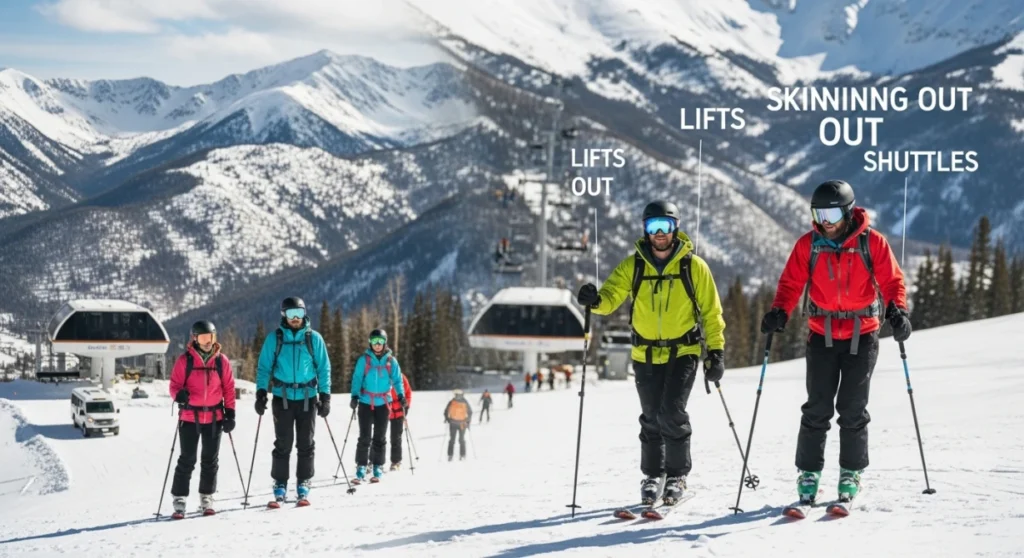
Understand Park City’s uphill rules, boundary exits, and shuttle options so you can choose safe, efficient backcountry access and combine ski days with well-planned Utah sightseeing.
Many strong skiers show up in Park City assuming the backcountry starts the moment they duck a rope off the nearest chair. Then they find closed gates, uphill restrictions, or realize too late that “easy” sidecountry still has real consequences. The resort’s rules around uphill travel and exits change how you plan your morning, your gear, and even where you park.
If you want efficient access with minimal guesswork, you need to understand how lifts, shuttles, and skinning actually work together around the ski area, and where the resort’s responsibility ends. Once you’re outside the boundary, it is on you to bring the skills and equipment for unmarked, unpatrolled terrain. Let’s break down the practical ways to reach the backcountry from Park City and how to choose between them.
How Park City backcountry access works in real life
On the snow, access breaks into three main modes: lift-served exits from the ski area, shuttle-based approaches from town or nearby canyons, and uphill skinning on the one permitted route inside the resort. Each option shapes your day differently, from start time to how tired you are for the descent.
At Park City Mountain Resort, uphill travel is only allowed on the Homerun trail from the base of the First Time lift up to the Angle Station at the top of Town Lift, and only between 6:00 PM and 8:30 AM during the winter operating season. That single detail dictates when and how you can reasonably “earn your turns” from the base, rather than expecting to skin anywhere you like.
Backcountry access also exists through marked exit points along the boundary. These lead out of managed terrain into slopes that are not marked, controlled, or maintained. There are no regular patrol checks, so you must treat every run as fully wild terrain, despite starting from a groomed resort run only minutes earlier.
Comparing the main access methods
| Access method | When it works best | Key constraints |
|---|---|---|
| Lift-served boundary exits | Days with stable conditions when you want fast laps and short approaches | Terrain beyond exits is unpatrolled and unmaintained, requires full backcountry kit and decision making |
| Shuttles from town or nearby areas | Groups without rental cars or those who prefer not to drive winter canyon roads | Fixed pick-up/return times and meeting points, need to plan route to match shuttle schedule |
| Skinning Homerun uphill route | Early-morning fitness laps or setting up longer tours that start from the Angle Station | Allowed only 6:00 PM–8:30 AM, must stay on Homerun and avoid grooming and snowmaking operations |
Where skiers misinterpret “backcountry Park City” access
The phrase backcountry park city often gets used for everything from mellow tree shots just outside a rope to full-day tours beyond the resort. That blurs critical differences between controlled inbounds terrain, sidecountry reached by exits, and true remote touring that depends on your navigation and risk assessment.
A frequent misunderstanding is thinking that if you leave through an official exit, patrol still has some responsibility for you. They do not. Those exits are simply doors to unmaintained terrain. Routes beyond are not marked and not checked, so you need training, partners, and equipment appropriate for independent travel.
Another point of confusion is uphill access. Many visitors expect to skin anywhere on the mountain before lifts open. At Park City, uphill travel is restricted to Homerun between First Time and the Angle Station, and only during the posted hours. Trying to skin other routes, or continuing after 8:30 AM, puts you in direct conflict with grooming machines and snowmaking equipment.
People also assume the resort allows the same uphill access in spring or fall. During the off-season, uphill travel and backcountry access from the ski area are prohibited because of maintenance and summer preparations. Planning “shoulder season” tours from the resort base will not work under these rules.
What uphill travel really requires from you
Uphill travelers must make themselves visible and predictable. Bright clothing and a headlamp are not optional when grooming machines are moving and visibility is low. Staying strictly on Homerun and steering clear of any snowmaking or winch cat work is both a safety requirement and a courtesy to the crews who keep the ski surface in shape.
This means your window for pre-work laps or dawn tours is narrow and structured. You need your transitions dialed, your clothing and lighting sorted, and a clear plan for when you turn around so that you are off the uphill route before normal operations begin.
You found a hidden promo code!
Use code WOWBLOG at checkout and get 10% OFF any tour!
Limited time offer. Book now and save!
Browse ToursDecision scenarios: when to use lifts, shuttles, or skinning
Choosing your access method is less about personal style and more about logistics, group ability, and time. Below are realistic scenarios that mirror how experienced visitors and locals think through their options.
Scenario 1: Strong skiers, limited time, powder morning
You have a small group of confident riders and only one free morning. The snow is fresh and you want maximum vertical, not long approaches. In this case, lift-served exits from the resort boundary often make sense if conditions are appropriate and everyone is prepared for unmanaged terrain.
You ride lifts to the boundary, exit through designated points, and plan one or two high-quality runs before needing to be back in town. Because exits lead straight into terrain without patrol oversight, each person carries proper gear, and you all agree on a conservative turn-around point and a hard back-to-resort time.
Scenario 2: Visiting without a rental car
You are staying in Salt Lake City for work and want to add a ski day without driving mountain roads or dealing with parking at the resorts. Guided Utah ski resort day trips that include round-trip transport and on-the-way guidance about where to start on the hill can remove most of the friction while still leaving you free to ski independently once you arrive.
On these day trips, a driver-guide meets you at a central downtown point, handles the winter driving, and helps you think through lift tickets, rentals, and where to begin based on conditions and your level. You then build any backcountry or off-piste plans around a clear return time to meet the vehicle back to the city.
Scenario 3: Early-morning fitness tour from the base
You want to start before sunrise, get a controlled workout, and be at your desk by mid-morning. In that case, uphill travel on Homerun between 6:00 PM and 8:30 AM is the structured option. You skin from the base of First Time up to the Angle Station, staying on the designated trail.
Because you are sharing the slope with grooming and snowmaking operations, you wear a headlamp and high-visibility clothing and keep your line tight to Homerun. You plan to transition and descend in time to be fully off the route before the public day begins.
Scenario 4: Multi-day Utah visit with mixed priorities
Your group has a mix of skiers and non-skiers and wants both national parks and resort time without organizing a complex road trip. Here, combining full-service scenic excursions with a separate ski day can work well. Guided Utah national park itineraries often start from Salt Lake City with transport, viewpoints, and light hiking handled, while day-trip ski services focus purely on maximizing your time on snow.
You might spend one day seeing desert viewpoints and short hikes, then use a later free day for a resort-focused outing. Because transport, walking level, and schedules are clearly described in advance, you can match each day to the group members who will enjoy it most.
Common mistakes with Park City backcountry access
Many problems around Park City access are avoidable with better planning. The most frequent errors come from treating resort-adjacent terrain like an extension of the groomed runs and from overlooking the resort’s specific uphill rules.
- Assuming patrol coverage beyond exits: Once you pass through a boundary exit, the terrain is neither controlled nor maintained. Plan as if you will not see another party or any patrol all day.
- Ignoring uphill travel hours: Arriving to skin from the base in the mid-morning or during off-season conflicts directly with resort policies and with active machinery on the hill.
- Lack of visibility gear at dawn or dusk: Moving uphill without bright clothing and a headlamp makes you hard to see for operators driving grooming or snowmaking equipment.
- No fixed turnaround times: Groups often push “one more lap” without a set cut-off. That can lead to missed shuttles or rushing through decision-making in complex terrain.
Park City also attracts a lot of strong resort skiers who are new to true backcountry decision-making. They may carry good fitness but limited experience interpreting terrain without markers. Being honest about that gap is key when leaving the boundaries.
Misreading sidecountry as “low-risk”
Sidecountry accessed by lifts feels familiar because you start on groomed runs with crowds around. That psychological comfort can lead people to step into complex slopes more quickly than they would from a remote trailhead. The terrain does not care how you got there; exiting via lift does not change the nature of the snow or the consequences of a mistake.
Backcountry access from Park City Mountain Resort is available through designated exit points; however, these areas are unmarked, unpatrolled, and not maintained, requiring users to have proper training and equipment.
Treat this statement as the baseline when choosing partners and objectives outside the resort. If your group is not prepared for that level of independence, scale the plan back to inbounds off-piste or groomers.
Using shuttles and guided logistics to simplify your day
Transport can quietly make or break a Park City or Salt Lake ski day. Parking and winter canyon driving add stress, especially for visitors. Shuttle-based offerings help remove that friction while leaving the on-snow choices in your hands.
Some services focus on day skiing from Salt Lake City, with a driver-guide meeting you at a central location, sharing condition insights on the way, and then giving you freedom to roam once at the resort. You learn how the mountain is laid out and where to start based on your level and the current snow, without studying maps the night before.
Other excursions in Utah focus on sightseeing rather than skiing, but use the same principle. For example, small-group walking tours in downtown Salt Lake City rely on local guides who lead you through historic areas and hidden corners, with time to ask questions in compact groups. That same model of local knowledge plus clear logistics is what makes organized ski or snow trips feel efficient rather than stressful.
| Aspect | Resort ski day trip | Downtown walking tour |
|---|---|---|
| Main goal | Maximize time on snow at a nearby ski area | Understand the city’s history, layout, and development |
| Transport | Round-trip between Salt Lake City and resort included | Meet at a central city point, walk to sights on foot |
| Guide role | Share resort layout tips, snow insights, and logistics | Explain architecture, planning, and local stories |
| Physical effort | Full ski or snowboard day | Light to moderate urban walking |
The takeaway is that when someone else handles the driving and core logistics, you can concentrate on the experience itself, whether that is carving turns or exploring a historic district.

Actionable guidelines for safe, efficient Park City access
To move from theory to concrete behavior, anchor your planning around a short list of non-negotiables. These are practical behaviors you can check off, not vague attitudes about “being careful.”
- Match your plan to resort rules: If uphill travel is key to your day, build your schedule around the 6:00 PM–8:30 AM Homerun window and avoid the off-season entirely for resort-based tours.
- Keep visibility gear with your skins: Store a headlamp and a high-visibility layer in the same bag as your uphill setup, so you never start a dawn lap without them.
- Decide exits before you ride: Pick which boundary exit you will use and your approximate turn-around time before you load the first lift. This reduces in-the-moment pressure at the rope line.
- Use shuttles when driving adds stress: If icy canyon roads or parking rules are outside your comfort zone, default to shuttle-based ski days to preserve energy and attention for decisions on snow.
- Separate touring goals from sightseeing days: Plan national park excursions or city walking tours on non-ski days so you can focus fully on route-finding and conditions when you do step into the backcountry.
How national park and ski tours complement a Park City trip
Many visitors want to combine ski days with broader exploration of Utah. Well-structured Utah ski tours and scenic park trips help you do that without stretching your planning capacity. They make it easier to experience both mountain and desert environments in a short window.
Guided excursions to the major parks typically offer round-trip transportation from Salt Lake City, scenic drives to classic viewpoints, and optional short hikes to overlooks or canyon rims. Walking levels and schedules are clearly stated, so you can choose days that fit your group’s fitness and interests.
If you are looking for the best tours of utah national parks, focus on small-group options where guides share geology, history, and local stories instead of just dropping you at viewpoints. That style pairs well with ski-focused days where local driver-guides handle transport and resort logistics while you concentrate on snow.
Companies like MateiTravel specialize in organizing this mix of experiences throughout Utah, from city walking routes that reveal how Salt Lake was planned and built, to longer road itineraries that reach iconic parks without you needing to manage every detail alone.
Priority checklist for planning a Park City backcountry day
Use this short checklist the evening before your outing. It keeps your attention on the factors that matter most for a safe, smooth day around the resort.
- Clarify your access style: Decide whether you are relying on lifts, shuttles, uphill travel on Homerun, or some combination, and confirm that each piece is permitted at your planned time.
- Align with resort rules: Verify that your plan respects the 6:00 PM–8:30 AM uphill window and that you are not relying on any off-season resort access.
- Pack visibility and safety basics: Place a headlamp and bright outer layer with your uphill gear, and ensure each person in the group carries their own essential equipment for unpatrolled terrain.
- Set a hard turn-around time: Choose a time when you will begin heading back toward the resort or your shuttle pick-up, and communicate it clearly to everyone.
- Confirm transport and meeting points: If you are on a shuttle or guided trip, recheck the meeting location, time, and planned return so your route lines up with the schedule.
- Choose the right day for sightseeing: Slot any MateiTravel city walks or park excursions on separate days, so you can give full attention to decision-making when you are outside resort boundaries.
Keeping this checklist short and specific makes it realistic to follow, even when you arrive tired or excited about new snow.
Smart Park City backcountry access is less about secret stashes and more about understanding how lifts, shuttles, and the single uphill route fit together under the resort’s rules. Once you leave the boundary, you are in unmarked and unpatrolled terrain, so your gear, training, and group decisions matter as much as your line choice. Aligning your plan with the Homerun uphill window, visibility requirements, and off-season restrictions will keep you away from grooming operations and policy conflicts. Combining shuttle-based ski days with well-planned sightseeing or walking tours lets you make the most of a short Utah visit without overloading your logistics. For visitors who want that balance of efficient planning and rich experiences, MateiTravel can help tie the ski and non-ski pieces into a single, coherent trip.
Can I skin anywhere at Park City before the lifts open?
No. Uphill travel is only allowed on the Homerun trail between the base of First Time and the Angle Station, and only from 6:00 PM to 8:30 AM during the winter season.
Is terrain beyond Park City’s exit gates patrolled?
No. Once you pass through a designated exit, you are in unmarked, unpatrolled, and unmaintained terrain and must be fully self-reliant.
Can I tour from the resort base in the off-season?
No. During the off-season, uphill travel and backcountry access from the ski area are prohibited because of maintenance and summer preparations.
Why do I need a headlamp for early-morning skinning?
A headlamp and bright clothing make you visible to operators running grooming and snowmaking equipment while you travel uphill in low light.
How do ski day trips from Salt Lake City help visitors?
They provide round-trip transport, local insight on where to start skiing, and tips on lift tickets, rentals, and food, so you can focus on your time on snow.
Are small-group walking tours in Salt Lake City strenuous?
No. They involve light to moderate walking through downtown, with frequent stops at historic buildings and lesser-known spots.
Can I combine national park sightseeing with a Park City ski day?
Yes. Many visitors schedule park or city tours on separate days from skiing so they can concentrate fully on backcountry decisions when on snow.
Do guided services decide my backcountry objectives?
No. Transport and resort-focused services handle logistics and share local knowledge, but your group remains responsible for any decisions beyond the ski area boundary.

 Antelope Island – Wild Heart of the Great Salt Lake Adventure
 Bonneville Salt Flats – Journey to the Edge of the World
 Salt Lake City – The City of Zion. Historical Interactive Walking Tour
 Bonneville Salt Flats – Sunset Adventure of the White Desert
 Antelope Island Sunset Wildlife Expedition – Great Salt Lake Odyssey