
Arches Night-Sky Photography Class: Is One Day Enough?
Jun 13, 2026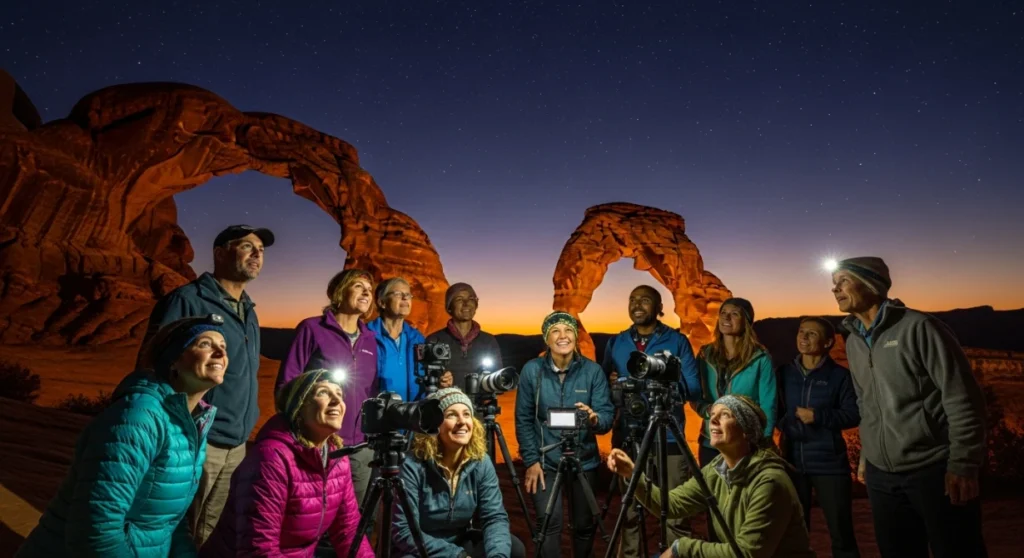
One day is enough if you already know your camera, want guided help at one or two locations, and can accept weather risk. It is not enough if you are a true beginner, want multiple night spots, or need a backup night.
The mistake we see most often is not choosing the wrong class. It is building the whole Utah trip around one fragile night, then realizing too late that drive time, fatigue, moon phase, and weather matter as much as the instruction itself.
An Arches night-sky class is a very specific travel decision, not just a photography purchase. It matters most for visitors with limited time near Moab, people folding Arches into a larger Utah loop, and travelers trying to decide whether a single evening can justify the effort and cost.
From our side as a Utah tour organizer, the real question is practical: under what conditions does one night produce a worthwhile experience, and when should you give yourself more time nearby? That is the difference between a focused plan and an overpacked itinerary.
Who is a one-day Arches night session actually for?
A single day and night is enough for travelers with a narrow goal, realistic expectations, and at least basic camera confidence. It is a weak fit for people who want broad instruction, multiple iconic locations, or insurance against bad conditions.
The best candidates are visitors who already know how to change settings in the dark, can work from a tripod without fumbling through menus, and do not expect to “cover Arches” in one evening. In practice, one night works when the class is there to accelerate decision-making, composition, and field confidence rather than teach every photography basic from scratch.
- Good fit: You have one spare night near Moab, want guidance at one or two locations, and mainly need help with execution.
- Borderline fit: You understand manual mode in daylight but have very little experience after dark.
- Poor fit: You are a complete beginner, want a portfolio-level variety of shots, or would be very disappointed if clouds wipe out the session.
- Best expectation: Leave with a clearer process, stronger confidence at night, and a few solid frames rather than a comprehensive workshop outcome.
If your bigger issue is how to fit Arches into a short vacation at all, our Utah National Parks Tours are designed around realistic transfers from Salt Lake City, key viewpoints, and time-efficient park sequencing. That matters because a night shoot only pays off when the daytime logistics are handled cleanly.
Why do many serious night-sky workshops in Arches run for several days?
They run longer because more nights solve three hard problems at once: weather risk, location variety, and repeated practice. What you lose with a one-day format is not just time. You lose flexibility.
Established workshops in Arches have often been structured as multi-day programs, including formats that stretch to five days. That longer window gives instructors room for classroom teaching, scouting, multiple field sessions, and the chance to adjust when one night does not cooperate.
Arches has several iconic night subjects, including Delicate Arch, Balanced Rock, and The Windows. Even without adding much walking, moving among those locations thoughtfully usually takes more than one evening, especially if sunset scouting, darkness, and return logistics all have to fit together.
Extended formats also help with iterative learning. Night photography skills such as precise focusing in the dark, exposure decisions, light painting, and stacking tend to improve after a first attempt, not before it. A multi-day class lets you make mistakes on night one and apply the lesson on night two.
- More locations: You can prioritize different foregrounds instead of forcing every hope into one stop.
- Weather resilience: A cloudy or windy evening does not automatically ruin the whole investment.
- Deeper instruction: There is more time for troubleshooting and follow-up, not just fast field coaching.
- Lower pressure: You are less likely to rush from travel straight into a late-night shoot while already tired.
That does not make a short class pointless. It simply means a one-night option should be judged against a narrower goal: useful guidance within a constrained trip, not parity with a longer workshop.
You found a hidden promo code!
Use code WOWBLOG at checkout and get 10% OFF any tour!
Limited time offer. Book now and save!
Browse ToursWhen does one day make sense despite the trade-offs?
One day makes sense when your goal is focused, your skill level is not zero, and you can accept that weather may beat your plan. In that situation, a short intensive can still be worth the money and effort.
The strongest case is the traveler who already knows their camera basics and wants field-specific help. If you can already work in manual mode, understand your lens choices, and move quickly on setup, one evening in Arches can deliver real value through location guidance, dark-environment workflow, and help avoiding common mistakes.
A one-day intensive Arches night-sky photography class focused on light pollution reduction is also more sensible when your goal is specific rather than broad. For example, maybe you want to learn how to choose cleaner shooting angles away from Moab’s glow, or you want one guided night to build confidence before shooting solo elsewhere in Utah.
It is much less sensible when the class has to do too many jobs at once. If you need basic camera education, composition theory, dark-sky technique, post-processing understanding, and a full park experience, one evening gets stretched thin very fast.
- Say yes to one night if you already handle your camera comfortably and would be happy with one main location.
- Add another night nearby if you can operate the camera but weather disappointment would sting.
- Choose a longer format or more self-guided time if you are still learning manual photography itself.
- Skip the class and simplify the trip if the travel day is already so long that you would reach the park exhausted and drive back half-asleep.
Is light pollution around Arches and Moab a deal-breaker?
No. There is some glow near town, but careful site choice, timing, and direction still make the area worthwhile for dark-sky photography. The issue is real, yet manageable enough that smart planning matters more than panic.
Visitors sometimes imagine two extremes: either perfect black skies everywhere, or light pollution so strong that a short class is pointless. The reality sits in the middle. Moab is a developed gateway town, so some light dome is part of the visual environment, but Arches and the nearby region remain useful places to shoot if you plan around where that glow is least intrusive in your composition.
This is one reason many photographers eventually pair Arches with nearby darker opportunities rather than relying on the park alone. A broader Utah route can create better odds of varied sky conditions and cleaner horizons. That is where structured trip planning helps more than squeezing in extra miles at the last minute.
- Minimize town glow: Avoid assuming every direction is equal. Foreground angle matters.
- Use daylight scouting: Spot where parking, walking distance, and horizon direction line up before dark.
- Watch the moon phase: Even a good class cannot undo a bright sky if your timing works against you.
- Keep nearby alternatives in mind: Extra time around Moab and Canyonlands can provide another chance if one area is compromised.
If reducing sky glow is part of your goal, one guided evening can still be valuable. You just need to treat it as a location-and-technique session, not as a promise of the darkest possible conditions everywhere around Arches.
Which choice fits your situation best?
The right answer changes a lot by traveler type. For some people, one night is the only realistic option and still a good one. For others, it is a setup for frustration.
| Traveler scenario | Best choice | Why |
|---|---|---|
| Visiting photographer with one free night in Moab | One guided evening is reasonable | If you already know your camera, using that limited window at one or two spots can be more productive than improvising alone. |
| Road-tripper coming from Salt Lake City and fitting Arches into a longer loop | One night only if you also stay overnight nearby | The drive is long enough that a same-day out-and-back night shoot becomes a fatigue problem, not a smart shortcut. |
| Complete beginner hoping to learn manual photography and night work at once | More time is better | Beginners usually need repetition, slower coaching, and at least another dark-sky attempt to lock in the basics. |
| Traveler highly concerned about clouds or bad luck | Build in a backup night | Multi-night plans reduce the chance that one bad forecast wipes out the whole experience. |
| Person mainly interested in one classic foreground and a guided workflow | One night can be enough | A focused objective matches the limits of a short class. |
Three common personas come up again and again in trip planning:
- The spare-night visitor: Choose one evening if you can keep the daytime easy, nap if needed, and avoid trying to stack too many hikes around it.
- The Salt Lake City road-tripper: Do not treat Arches as a casual late-night detour. Fold it into a broader route and sleep near Moab instead of forcing the return.
- The true beginner: Practice manual settings before arrival, then decide whether one night is a test run or whether you need extra nights in the region.
Some travelers also ask about building a weekend astrophotography intensive near Canyonlands combining field shots and post-processing classes. As a concept, that is often stronger than one isolated Arches evening because it spreads risk across more than one dark-sky opportunity, even if the actual instruction comes from a third party and the travel framework comes from your Utah itinerary.
How should you structure the day if you only have one night?
The day should be built backward from the night session, not forward from a sightseeing wish list. If you arrive drained, skip scouting, and rush dinner, even a good class starts from a weak position.
From Moab, the practical goal is simple: keep the day light enough that you are still sharp after sunset. Use late afternoon for rest, battery charging, food, and a short scout if access and timing allow. Save your energy for the hours that matter.
From Salt Lake City, the margin is much thinner. A same-day drive to Arches, followed by sunset, night shooting, and an immediate return, is a grueling plan and not one we would treat as the smart default. A more realistic version is to use one of our broader Utah day tours or multi-park routes as the logistics backbone before or after an overnight stay near Moab, rather than trying to force the whole experience into one enormous out-and-back.
A realistic one-night structure from Moab
- Morning: Keep activity modest. Do not stack major hikes if the night session is the priority.
- Midday: Rest, organize gear, eat early, and confirm meeting details.
- Late afternoon: Scout parking, walking distances, and compositions if possible.
- Sunset to night: Let the session focus on one area or a very short list of setups.
- After the shoot: Sleep nearby. Do not add a long transfer unless absolutely necessary.
A realistic one-night structure from Salt Lake City
- Day 1: Travel toward the Moab area with overnight lodging planned.
- Day 2: Keep the daylight schedule controlled so the evening class is still usable.
- Day 3: Continue to the next Utah park or return with proper rest.
That pacing is exactly why we emphasize clear schedules, walking levels, and route design in our Utah itineraries. Visitors unfamiliar with Utah often underestimate how much distance alone can erode the quality of a night shoot.
What are the main strengths, limits, and alternatives to a one-night class?
A one-night class is strongest as a focused accelerator and weakest as a complete learning solution. The best alternative depends on whether your main risk is skill, weather, or travel fatigue.
The biggest strength is efficiency. If you already have baseline skills, guided help at night can save a lot of trial and error, especially in an unfamiliar park with limited time. You may also spend less of your vacation on instruction and more on the rest of your Utah route.
The biggest limitation is fragility. One evening has no built-in recovery for clouds, wind, exhaustion, poor moon timing, or the simple reality that night techniques often click only after repetition.
- Choose one night: Best for focused goals, limited time, and travelers with some camera fluency.
- Choose two nights near Moab: Best for anyone who wants weather backup without committing to a full workshop.
- Choose a longer workshop format: Best for beginners or photographers who want multiple locations and repeated feedback.
- Choose a broader Utah route with more dark-sky chances: Best when Arches is just one stop in a photography-centered trip and you want more than one bite at the apple.
Our verdict is straightforward. One day is not a waste when it is used for a narrow objective inside a smart itinerary. It becomes poor value when travelers expect it to replace multiple nights of practice, instruction, and weather flexibility.
Final verdict: is one day enough for your Arches night-sky goal?
Yes, one day is enough for a targeted experience. No, it is not enough for every traveler or every goal. The honest dividing line is skill, flexibility, and how much disappointment you can absorb if conditions turn against you.
If you already know your camera, can stay near Moab, and want one well-chosen evening with realistic expectations, a single class can be worthwhile. If you are new to manual shooting, want several famous locations, or need a backup for weather, add more time around Arches and nearby parks instead of hoping one night solves everything.
That planning step is where the trip either works or starts to unravel. Explore Utah national parks itineraries from Salt Lake City and line up your Arches timing with the night session or self-guided shooting window you actually want.
Is one night in Arches enough for a beginner?
Usually not if you are starting from zero in manual mode. Beginners tend to get more value from pre-trip practice or an extra night nearby.
Should I skip a class if I only have one free evening in Moab?
Not necessarily. If you already know your camera basics, one guided night can be a smart use of limited time.
What is the biggest downside of a one-day format?
Weather risk is the main problem. With only one night, clouds or poor conditions can erase your only shooting window.
Can I do an Arches night shoot as a same-day round trip from Salt Lake City?
It is possible on paper but harsh in practice. The long drive plus late-night shooting creates a fatigue and safety issue, so an overnight near Moab is the better plan.
Does light pollution from Moab ruin short night sessions in Arches?
No, but it does affect some views more than others. Direction, foreground choice, and timing still make a meaningful difference.
Why do multi-day workshops have an advantage?
They can spread instruction across several nights, cover more locations, and survive one bad weather window. They also allow you to improve after a first attempt.
If I only care about one iconic composition, is a short class a good fit?
Yes, that is one of the strongest reasons to choose a single evening. A narrow goal matches the limits of a short session much better than a broad wish list.

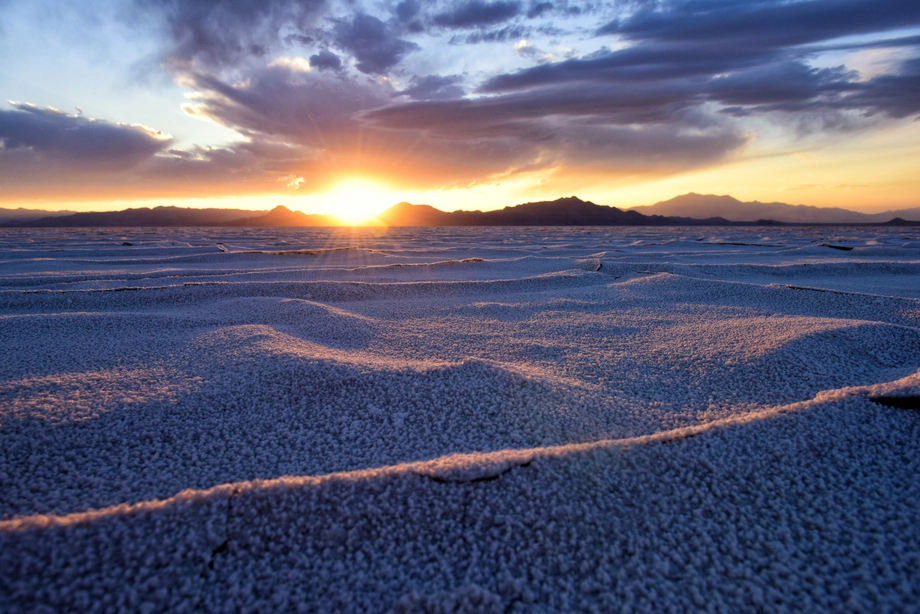 Bonneville Salt Flats – Sunset Adventure of the White Desert
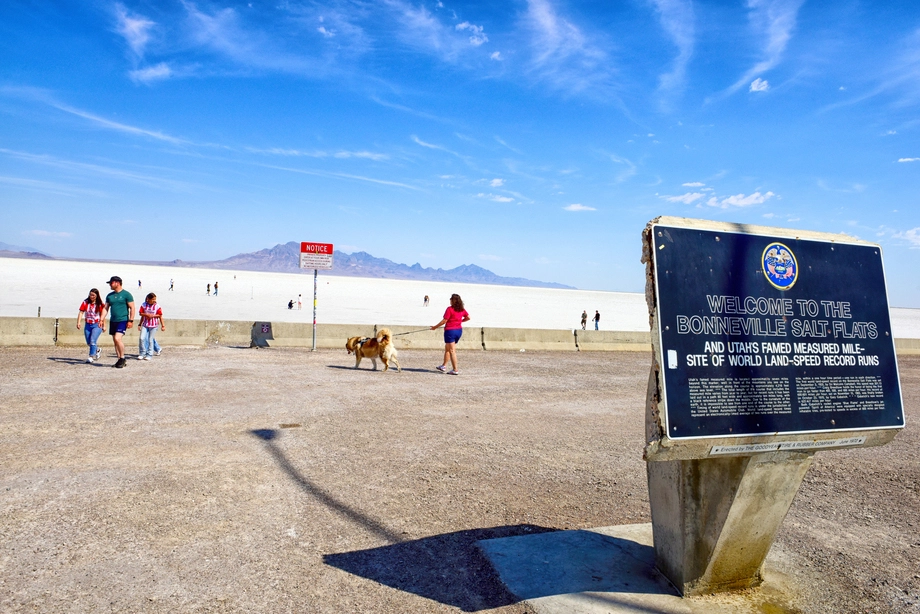 Bonneville Salt Flats – Journey to the Edge of the World
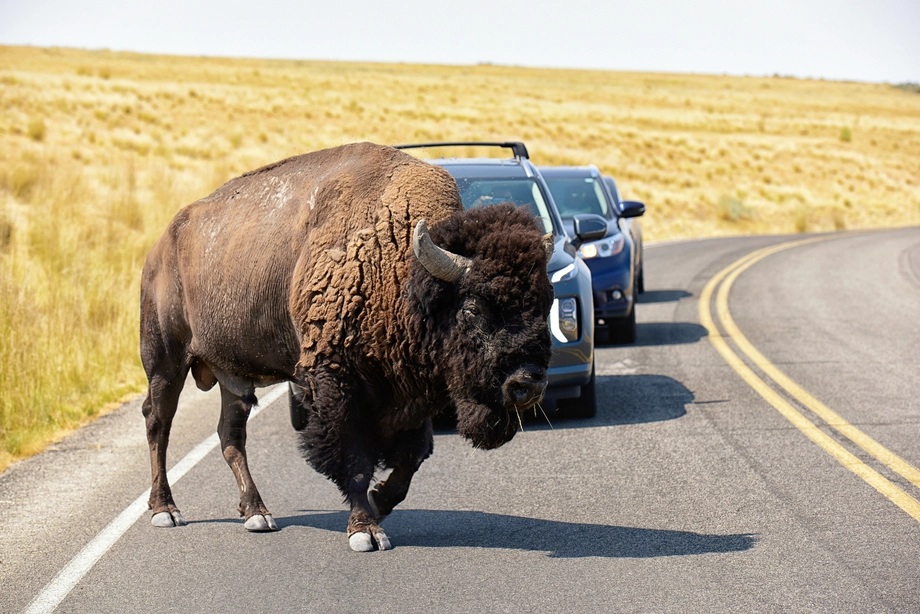 Antelope Island – Wild Heart of the Great Salt Lake Adventure
 Antelope Island Sunset Wildlife Expedition – Great Salt Lake Odyssey
 Salt Lake City – The City of Zion. Historical Interactive Walking Tour