
Las Vegas to Zion by Helicopter
May 28, 2026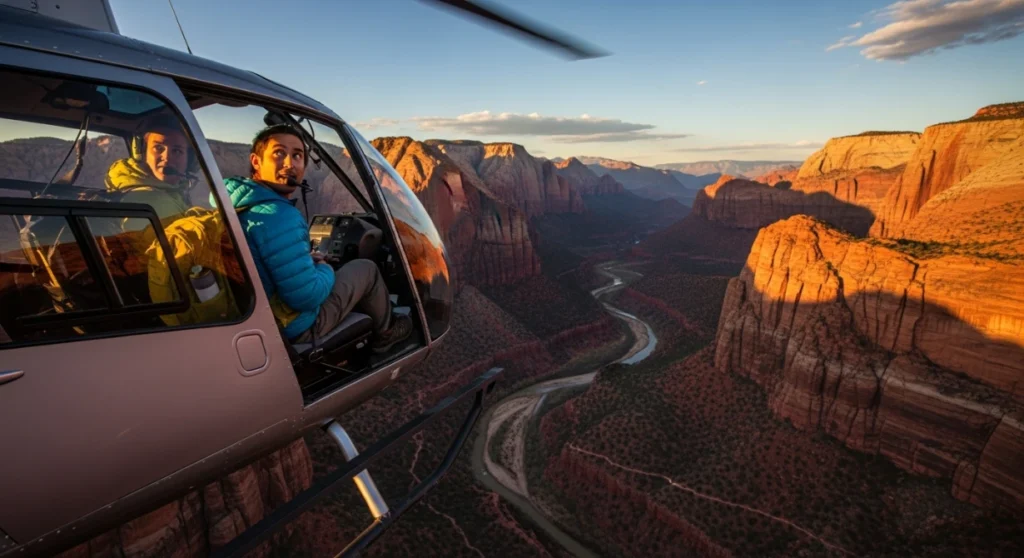
Pay for the guided hike if your Zion time is short and your group needs structure, context, or help in heat. Skip it if you can self-guide frontcountry trails and would rather save budget for more ground time.
The expensive mistake here is assuming the aircraft is the main Zion experience. For most travelers weighing a helicopter transfer from Las Vegas to Zion with guided hike options, the real decision is how to use a short, regulation-limited block of ground time inside the park.
That matters because the classic Zion feeling, towering canyon walls, shuttle stops, river corridor walks, and easy-to-miss route choices, happens on foot, not from a low scenic loop above the main canyon. We organize ground-based Utah park days with local guides, small groups, and clear route information, so this is exactly the kind of time-versus-value decision we help travelers make.
What do people imagine this day looks like, and what does it actually include?
Most people picture a low, immersive flight over Zion Canyon followed by a substantial hike. In reality, a Las Vegas helicopter day to Zion is usually a full-day logistics chain, and the meaningful Zion part is the limited time you get on the ground.
The helicopter can shorten the long drive from Las Vegas, but it does not replace being inside the park. Flight restrictions mean the day is not a substitute for a full hiking-focused Zion itinerary, especially if your goal is to understand the landscape rather than just arrive quickly.
In practical terms, many Las Vegas tour companies build these products around three moving parts: the flight segment, ground transfer or park entry logistics, and a few hours available for walking. Once you look at the day that way, the guided-hike fee becomes easier to judge. It either turns those few hours into a structured park visit, or it becomes an unnecessary extra.
Can helicopters actually fly low over Zion Canyon, and can guides take you anywhere in the park?
No. Helicopter sightseeing is not the same as flying low through Zion’s interior, and a guided-hike add-on does not unlock the whole park.
The key limitation is airspace and park management. Helicopter routes generally operate around the park perimeter rather than providing low-altitude touring directly over Zion’s interior canyon, so the iconic enclosed-canyon perspective still requires time on the ground inside the park.
The second limitation is what a commercial guide can legally do. According to Zion National Park wilderness regulations, structured or commercially facilitated guided activities are authorized only on frontcountry trails. That means a guided add-on is helpful for accessible route choice, pacing, interpretation, and safety coaching, but it is not a legal backdoor to off-trail, wilderness, or automatically permit-heavy objectives.
This is why the add-on should be judged as a frontcountry efficiency tool. It can make a short visit smarter and calmer. It cannot change the park rules or transform a quick drop-in into a deep wilderness day.
How much of the day is really available for hiking inside the park?
Usually, less than first-time buyers expect. A helicopter-plus-hike outing tends to consume most of the day, which means your actual walking window is valuable and finite.
Because the day includes aviation timing, transfer steps, and park access realities, the few hours you have inside Zion are the scarce resource. That is the main reason a guide sometimes pays for itself. When the hiking block is short, poor trail selection or slow orientation wastes a larger share of the visit.
Think of the day as a time budget, not a sightseeing promise. If your group needs help choosing one or two good frontcountry routes, managing heat, and keeping everyone moving together, guided support changes the day more than the helicopter itself does.
- Flight segment: Saves ground travel time, but does not create extra park access beyond the hours built into the itinerary.
- Arrival logistics: Transfers, check-in patterns, and park entry reduce the usable walking window.
- Ground time: This is where you actually experience Zion’s interior, viewpoints, river corridor, and trail texture.
- Return deadline: Fixed return timing limits spontaneity, especially if weather or crowds slow the day.
You found a hidden promo code!
Use code WOWBLOG at checkout and get 10% OFF any tour!
Limited time offer. Book now and save!
Browse ToursQuick verdict: when does the guided-hike add-on win, and when should you skip it?
Pay for the add-on when your Zion time is short and your group benefits from structure, interpretation, and efficient route choice. Skip it when you are comfortable self-guiding on standard frontcountry trails and would rather keep the budget for a longer ground-based park day.
The strongest cases for paying extra are first-time national park visitors, families with mixed abilities, and travelers for whom this is the only Zion day. In those situations, a guide helps you avoid spending a premium travel day figuring out shuttle flow, trail options, distance tolerance, and heat pacing.
The weakest cases are confident hikers who already know how to visit Zion National Park, are comfortable with maps and shuttle systems, and are visiting in milder conditions. If you can self-manage a short frontcountry outing efficiently, the helicopter already solved the transport problem, and the guide may add less than the fee suggests.
| Decision factor | Helicopter day without hike guide | Helicopter day with hike guide |
|---|---|---|
| Use of limited park hours | Good if you arrive prepared and move independently | Best when you need fast orientation and a fixed plan |
| Trail selection | Self-directed on standard frontcountry routes | Matched more carefully to pace, terrain, and group ability |
| Learning and context | Minimal unless you research in advance | Better geology, history, and on-the-ground interpretation |
| Family or mixed-ability coordination | Can be inefficient and stressful | Often the clearest value case |
| Experienced hiker value | Often sufficient in mild seasons | Moderate unless you want interpretation or tight logistics help |
| Budget impact | Lower total spend | Higher total spend because guide rates stack onto flight cost |
| Access to restricted or permit-heavy routes | No special access | No special access |
| Weather risk on a fixed day | Still exposed to disruptions | Still exposed, though better managed on the ground |
What the guided-hike add-on really changes, and what doesn’t it change?
It improves the quality of your ground time, not the scope of what Zion legally allows. A good guided add-on can make a short visit more coherent, but it does not create secret access, erase weather risk, or turn a quick stop into a full park immersion.
Where guides genuinely help is in the small but important decisions that shape a compressed day. With only a few hours, route choice, pace, rest timing, and realistic expectations matter more than people think. We use that same logic on our Utah park itineraries by stating route duration, walking level, and terrain clearly so travelers know what kind of day they are buying into before they commit.
- Logistics help: Less time wasted deciding where to start and how far to go.
- Trail matching: Better fit for families, mixed fitness, first-timers, and visitors unfamiliar with desert conditions.
- Safety coaching: Useful reminders on heat, hydration, pacing, footwear, and turnaround judgment.
- Interpretation: The landscape becomes more meaningful when someone explains geology, park history, and what you are actually seeing.
- Group management: Helpful when one traveler wants photos, another wants a short walk, and a third is worried about effort.
What it does not change is just as important:
- Frontcountry-only reality: Commercial guided activity is still limited to the park’s frontcountry trail system.
- No guaranteed bucket-list route: Permit-sensitive or technically demanding goals are not something to assume is included.
- No weather immunity: Heat, storms, and operational changes can still shorten or cancel parts of the day.
- No hidden shortcut to “seeing all of Zion”: You are still working within a brief visit window.
How expensive is the add-on, and when does that extra spend make sense?
It is a meaningful extra cost, not a minor upgrade. Private guided hikes in Zion generally run about $200 to $600 per day, so adding one on top of helicopter pricing needs a clear reason.
That reason is usually efficiency or confidence. If the hike is the only part of the day where you will actually feel inside Zion, paying more can be rational for travelers who want those hours handled well instead of improvising them under time pressure.
It makes less sense if your group is budget-conscious and capable of self-guiding on straightforward walks. In that case, the better value may be to keep the helicopter day simple and reserve your money for a deeper Utah segment later, especially if your real goal is multiple hikes, more photo time, or a richer park experience beyond a quick in-and-out.
- Good value: This is your only Zion day, your group needs structure, and you would lose time or confidence without a guide.
- Borderline value: You are fit and organized, but you want interpretation and someone else handling decisions.
- Poor value: You already self-guide comfortably on national park frontcountry trails and mainly need transport, not on-trail support.
Which traveler profiles get the most value from paying extra?
The best candidates are first-time U.S. national park visitors, time-starved Las Vegas travelers, and families or mixed-ability groups. The least compelling cases are experienced hikers who can confidently self-guide standard routes.
First-time national park visitors
For this group, the add-on often pays. Park systems, trail grading, desert conditions, and realistic turnaround points are not always intuitive, so guided help can turn uncertainty into a smooth first visit.
Las Vegas visitors with only one Utah day
If Zion is a one-shot detour from a Vegas trip, guided support usually adds real value. When your entire park impression depends on a short ground block, better structure matters more than on a longer road trip.
Families and mixed-ability groups
This is one of the strongest yes cases. A guide can keep the day moving, choose frontcountry walks that fit the slowest member, and stop the common problem where half the group overcommits early and fades in the heat.
Experienced hikers
This group often does not need the add-on, especially in cooler months. If you are comfortable reading trail conditions, managing water and effort, and using park orientation tools, you can usually self-guide a short frontcountry visit effectively.
Photographers
The answer depends on your style. If you want efficient positioning, timing, and a sensible route under a fixed schedule, a guide may help. If you prefer slow, independent lingering at viewpoints, guided pacing can feel restrictive.
How does season change the value equation?
Summer is the hardest season to justify blindly paying extra. Long daylight helps, but extreme heat and monsoon weather can reduce both the quality and reliability of a tightly scheduled helicopter-and-hike day.
Peak summer conditions in Zion regularly exceed 100 degrees Fahrenheit, and the July to September monsoon period can bring thunderstorms and flash-flood risk. On a fixed itinerary, that creates two problems at once. Flights and hikes are both more exposed to disruption, and the short ground window can become less comfortable or less usable.
In spring and fall, the add-on tends to offer cleaner value because walking conditions are often friendlier and route choice matters more than survival pacing. In the hottest part of the year, some travelers are better off skipping the premium layer unless they clearly need guided oversight for safety and efficiency.
- Summer: Hardest conditions, highest weather volatility, strongest case for conservative route planning.
- Shoulder seasons: Better balance for short guided walks and photo stops.
- If conditions look unstable: The more expensive the day, the more important it is to have realistic cancellation and fallback expectations.
What are the hidden trade-offs most buyers miss?
The biggest hidden trade-off is that you may be paying helicopter-level money for a park visit that still feels rushed on the ground. The second is that a guide improves execution, but not access.
Another overlooked issue is expectation mismatch. Travelers sometimes assume that adding a guided hike means they will get a marquee, permit-sensitive, or semi-technical outing. On this type of day, the legal and time constraints usually point the opposite way. The most realistic guided walks are frontcountry routes that are short enough to fit the schedule and safe enough for a commercial product.
The final trade-off is opportunity cost. If your real dream is multiple Utah parks, longer hikes, or a more complete Zion and Bryce experience, the same budget can often work harder in a ground-based itinerary. That is why we often point travelers toward our Utah National Parks Tours when they want the actual park experience, with transport, local guiding, clear walking levels, and time structured around viewpoints and short hikes rather than a fast aerial transfer.
What should you do instead if your real goal is quality hiking time in Zion?
If hiking quality matters more than fast arrival, choose a ground-focused Utah itinerary instead of layering costs onto a rushed helicopter day. The deeper the hiking goal, the weaker the helicopter option becomes as a value play.
That does not mean the flight is always wrong. It means you should treat it as a transport-and-novelty choice, not as the best way to experience Zion itself. If your broader trip allows it, a Utah-side plan gives you better control over trail timing, energy, and park combinations.
We build our park days around exactly those constraints: small groups, local guides, and route descriptions that spell out duration, terrain, and effort in advance. If you are comparing a rushed premium day against something more complete, our Utah day tours and longer park itineraries show what a realistic, ground-first Utah experience looks like from the planning side.
This is also where travelers often discover that the best national parks near Salt Lake City make more sense as a connected Utah segment than as a single expensive dash from Las Vegas. Zion, Bryce Canyon, Arches, Canyonlands, and Capitol Reef reward time on the road and on foot, not just time in the air.
Final decision checklist: should you pay for the guided-hike add-on?
Pay for it if your short park window needs expert structure to become worthwhile. Skip it if you can self-guide efficiently on frontcountry trails and would rather put the money toward more Utah ground time.
- Pay extra if: This is your only Zion visit, you are a first-time park traveler, your group includes kids or mixed abilities, or summer conditions make efficient route choice more important.
- Skip it if: You hike independently, understand trail pacing, are comfortable with basic park logistics, and do not need interpretation or group management.
- Rethink the whole plan if: What you really want is a rich hiking day, multiple trails, or a broader Utah park trip. In that case, a ground-based itinerary is usually the better fit.
- Ask before booking anything: How many hours are truly on the ground, what kind of frontcountry walk is envisioned, and what happens if heat or storms compress the day.
For most travelers, the right answer is not “always add the guide” or “never add the guide.” It is whether that fee turns a short, expensive transfer into a coherent Zion visit for your specific group and season.
If you want help designing the Utah side of your trip, review MateiTravel’s Utah park tours and contact us with your dates, group type, and whether you are already committed to a Vegas helicopter.
Will a helicopter show me the classic Zion Canyon experience from above?
No. The interior canyon experience people picture is still something you mainly get from being on the ground inside the park.
Does a guided-hike add-on mean I can do any trail I want?
No. Commercially guided activity is limited to frontcountry trails, so the add-on does not open unrestricted access across Zion.
Is the guided option mainly about safety or sightseeing?
It is mostly about making limited ground time more efficient through route choice, pacing, and on-trail coaching. It helps manage risk, but it does not remove weather or heat hazards.
How much should I expect the guide to add to the total cost?
Private guided hikes in Zion commonly add roughly $200 to $600 per day. That is why the fee needs a clear benefit for your group, not just curiosity.
If I am an experienced hiker, is self-guiding reasonable?
Yes, often. If you are comfortable with frontcountry navigation, heat management, and short-visit planning, you may not gain enough from a guide to justify the extra spend.
Is summer the best season because the days are longer?
Not automatically. Summer brings extreme heat and monsoon instability, which can make a fixed schedule less comfortable and less reliable.
What is the best alternative if I care more about hiking than flying?
A ground-based Utah itinerary is usually better. It gives you more meaningful time on trails and a more complete park experience.
 How to Plan a Utah Day Tour During a Short Salt Lake City Stay
 Guided vs. Self-Drive Canyon Country Days: When Each Works
 Guided Geology Walks Near Capitol Reef for Homeschool Groups With Curriculum Links
 What Happens When Snow Delays Your Ski Resort Transfer? Things to Do Near Salt Lake City
 Day Tour Pickup Points in Salt Lake City: What to Confirm Before Scenic Drives
 Things to Do Near Salt Lake City When Rain Disrupts a Walking Tour

I would highly recommend touring with Dima! He was so knowledgeable and personable, and very open...
Read more →Experience was fabulous!!! We saw spectacular views of the flats, bison and prong horn. Mateo travel...
Read more →I truly recommend this experience. Dima was the best guide! He’s Full of energy and great...
Read more →We booked a trip having read the wonderful reviews and it did not disappoint. Dima our...
Read more →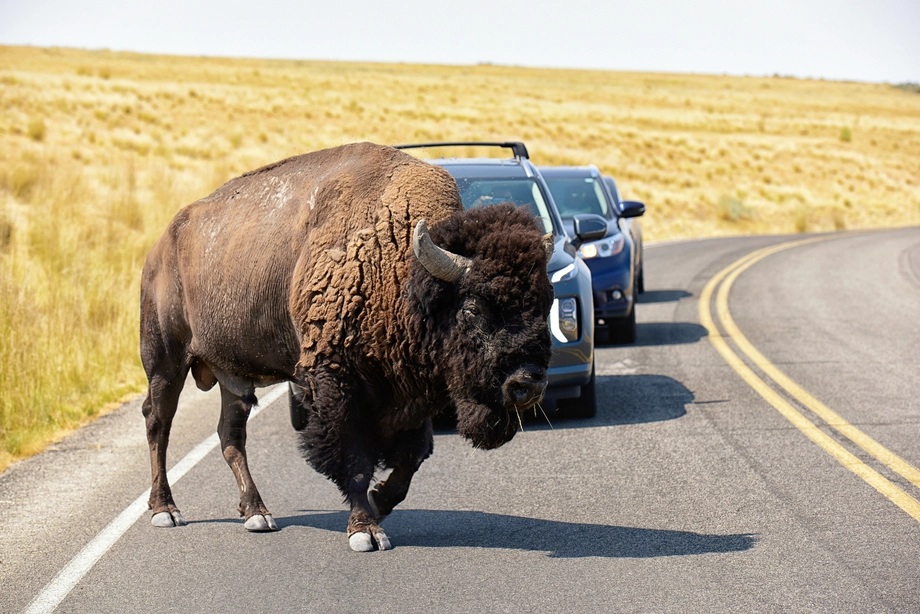 Antelope Island – Wild Heart of the Great Salt Lake Adventure
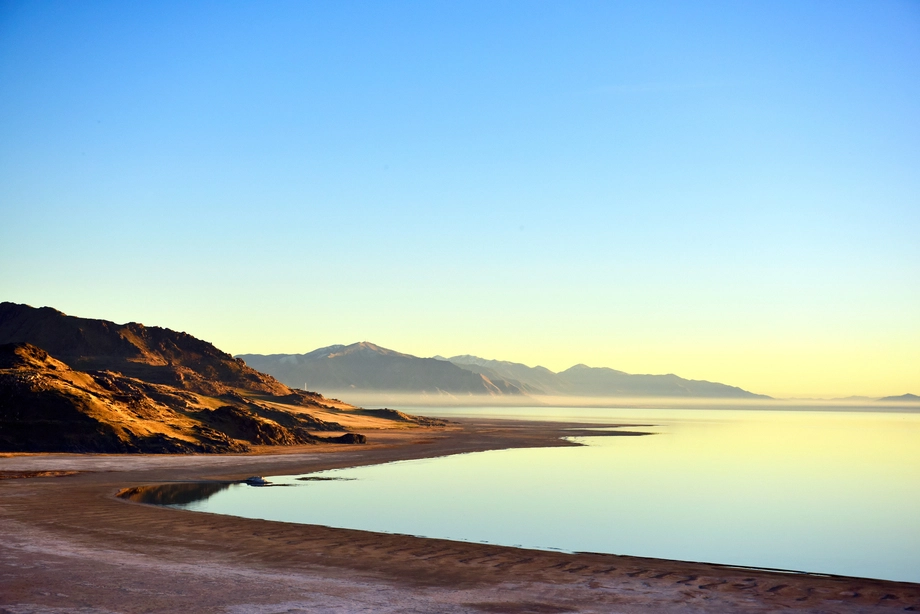 Antelope Island Sunset Wildlife Expedition – Great Salt Lake Odyssey
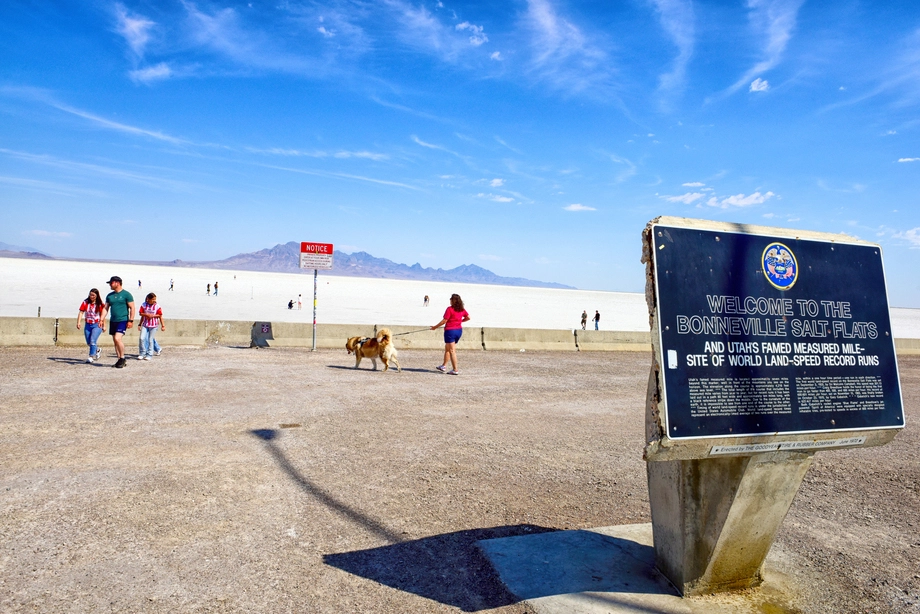 Bonneville Salt Flats – Journey to the Edge of the World
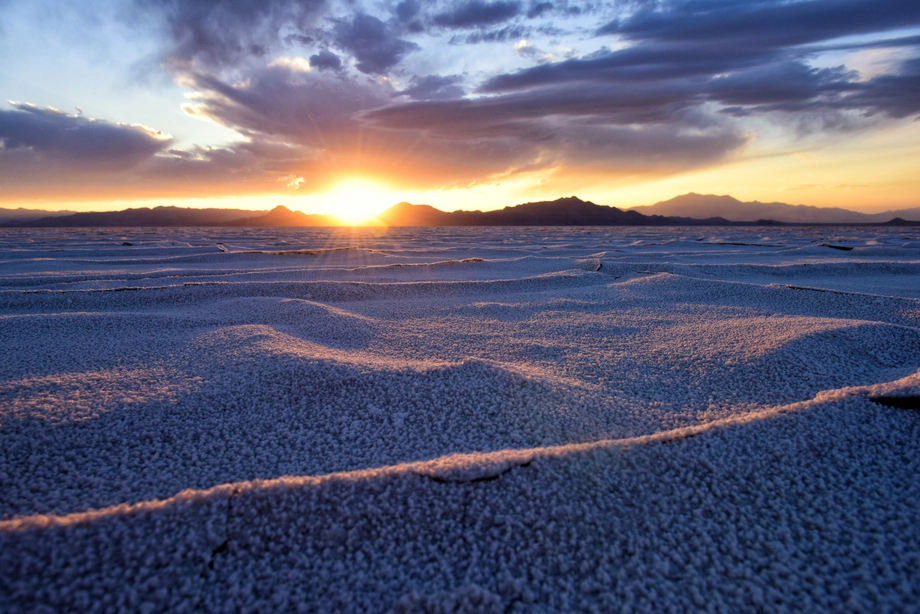 Bonneville Salt Flats – Sunset Adventure of the White Desert