
Half-Day Sunrise Delicate Arch Photography Tour From Moab
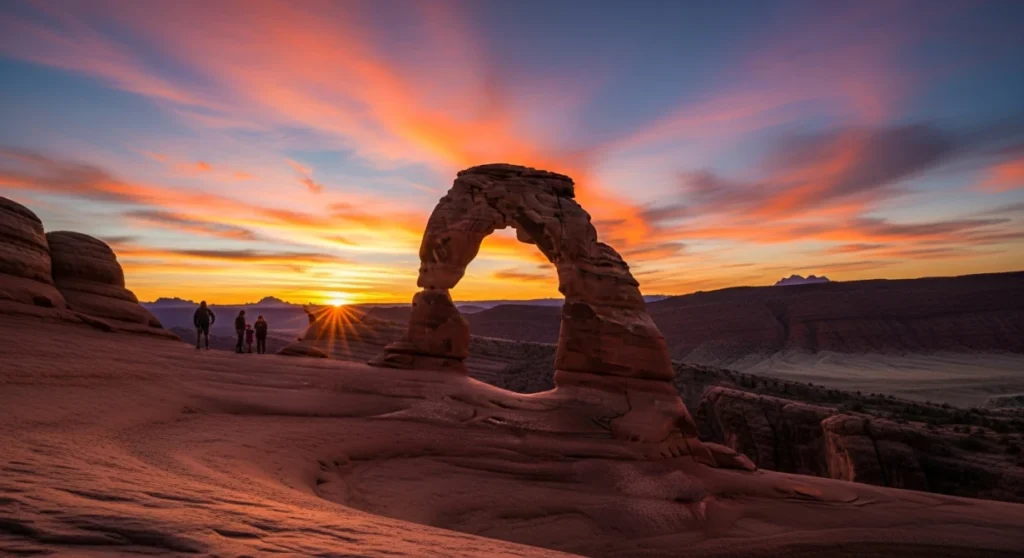
Yes, a half-day sunrise trip to Delicate Arch from Moab is realistic if you leave very early and pace the hike honestly. Most groups need to start hiking 65 to 90 minutes before sunrise and leave Moab close to two hours earlier.
The mistake we see most often is treating Delicate Arch like a casual dawn stroll because the trail looks short on paper. At 3 miles round trip with about 480 feet of climbing, it is absolutely doable for many travelers, but sunrise only works smoothly when you build the morning backward from first light instead of forward from your hotel alarm.
This is a practical planning guide for travelers trying to decide whether a half-day pre-dawn outing from Moab fits their group, energy level, and photo goals. The real question is not whether Delicate Arch is famous or worth seeing. It is whether you can reach it at the right time, at the right pace, without turning the morning into a rushed hike in the dark.
Is a half-day sunrise outing to Delicate Arch from Moab actually realistic?
Yes, a half-day sunrise trip from Moab is realistic for many travelers, but only if you accept an early departure and a purposeful pace. In practice, the morning usually works best for hikers who can handle a sustained uphill walk before dawn and who want to be back in town by late morning rather than spend all day in the park.
The hidden pressure is simple. To be at the arch by sunrise, most groups need to start hiking roughly 65 to 90 minutes before sunrise, and that pushes your departure from Moab to around 1 hour 45 minutes to 2 hours 15 minutes before sunrise once you add driving, parking, and getting organized at the trailhead.
That sounds harsh until you compare it with the payoff. You usually get cooler temperatures than midday, fewer people than sunset, and light that is often kinder for photos. When we organize Utah touring days, we use the same method we apply across our walking and national park itineraries: start from objective route facts, add honest buffers, and pace for real people instead of a fantasy schedule.
What time do you really need to leave Moab if you want sunrise at the arch?
You usually need to leave Moab well before most visitors expect, often close to two hours before sunrise. A good rule of thumb is to begin hiking 65 to 90 minutes before sunrise, then add enough time for the drive into Arches, parking at Wolfe Ranch, and headlamp prep.
Here is the practical logic. Sunrise time is fixed for your date, but everything else has some friction: getting out the door, the drive, finding a place to park, lacing up, switching on headlamps, and settling into an uphill rhythm on slickrock. If any one of those steps runs long, your photo time at the arch shrinks first.
| Stage | 6:00 am sunrise example | What can change it |
|---|---|---|
| Leave Moab | About 3:45 to 4:15 am | Season, hotel location, group readiness, park entry flow |
| Arrive at Wolfe Ranch area | About 4:30 to 4:50 am | Traffic, parking, need for overflow parking |
| Start hiking | About 4:30 to 4:55 am | Group pace, footwear changes, headlamp setup |
| Reach the arch | About 5:45 to 5:58 am | Fitness, dark navigation, pauses on uphill sections |
| Photo time after sunrise | Roughly 20 to 45 minutes | How early you arrived and how quickly the group descends |
| Back to trailhead | Often 7:15 to 8:15 am | Time spent shooting, caution on descent, crowding |
| Return to Moab | Usually by late morning | Parking distance, rest stops, whether the morning continues inside Arches |
If the main Wolfe Ranch lot is full, the plan changes fast. On busy days, visitors may have to use the Delicate Arch Viewpoint lot and walk about an extra mile each way along the road, which is exactly why a sunrise plan needs buffer rather than wishful thinking.
For independent hikers, this is the make-or-break point. For guided planning, it is where good timing helps most because the day is built from actual sunrise, expected group speed, and parking risk rather than a generic departure hour.
You found a hidden promo code!
Use code WOWBLOG at checkout and get 10% OFF any tour!
Limited time offer. Book now and save!
Browse ToursHow hard is the Delicate Arch trail before sunrise, and how does pace change in the dark?
The trail is moderate for many active travelers, but it feels harder before dawn than it does on a sunny late-morning walk. The same 3-mile round trip and roughly 480 feet of elevation gain can take more care, more stops, and more concentration when you are climbing uphill over slickrock in low light.
The National Park Service lists the hike at about 2 to 3 hours total. That range matters. A fit pair of hikers moving steadily with headlamps may land near the quicker end, while mixed-ability families, older adults, or anyone cautious on uneven rock can stretch the timing enough to erase most of the sunrise buffer.
The trail is not technical, but it is not flat. You deal with steady climbing, rock surface underfoot, and a low-light setting where route-finding is slower than it looks in daytime photos. The cooler temperatures at dawn are a real advantage, especially in warmer months, yet the comfort gain does not remove the need for steady effort.
- Fast pace: Works for strong hikers who are comfortable walking uphill in the dark with few long stops.
- Moderate pace: Best for most visitors who want to arrive composed enough to enjoy sunrise rather than breathing hard and checking the clock.
- Cautious pace: Better for mixed-age groups, but it increases the chance that you need a much earlier start or should choose a different morning plan.
Our planning standard is simple. We pace to the slowest guest who still wants the summit experience, not to the strongest hiker in the party. That is one reason small groups matter. They make it easier to adjust the tempo without turning the hike into a race.
What actually happens on a guided half-day sunrise morning from Moab?
A guided sunrise morning is less about adding complexity and more about controlling it. The core sequence is pickup, drive, trailhead prep, ascent, sunrise and photo time, descent, and return to Moab, with each stage timed to protect the one thing people care about most: arriving without panic and having enough time at the arch.
The organizer’s responsibility starts before anyone gets in the vehicle. We work backward from that day’s sunrise, estimate hiking time for the specific group, and build in a parking and setup buffer. The guest’s responsibility is to be ready on time with appropriate clothing, water, and realistic expectations about walking uphill before dawn.
Typical stage flow and who owns what
The morning usually begins with an early pickup or agreed meeting arrangement in Moab, followed by the drive toward Arches and the Wolfe Ranch trailhead. Once there, the few minutes that matter most are the ones people often underestimate: final restroom stop if available, headlamps on, layers adjusted, and a quick check that everyone understands the route and pace.
On the trail, a guide’s job is not to drag the group uphill. It is to keep the pace steady, manage breaks so they help rather than derail timing, and reduce bad decisions that happen when people rush on dark slickrock. Your job is to speak up early if the pace feels wrong, because small adjustments early are easier than emergency catches later.
At the arch itself, the useful deliverable is time, not just arrival. A well-built half-day should leave enough margin to watch the light change, take photos, and absorb the setting before beginning the descent. After that, the guide manages the return so the downhill section stays controlled and the rest of the day still works.
What counts as a successful morning
For us, the quality check is straightforward. The outing has worked if the group reaches the arch before or around sunrise without sprinting, feels informed about distance and terrain before the hike starts, and returns on a schedule that still makes sense for the rest of the day.
That is also why we see a Delicate Arch sunrise as either a standalone morning or a sunrise segment inside a broader park day. If you want that larger framework, our Utah National Parks Tours page shows how we structure park days around realistic drive times, viewpoints, short hikes, and photo stops rather than stacking too much into one rushed plan.
How much time do you really get at Delicate Arch for photography?
Most visitors get a usable photo window, but the length of that window depends almost entirely on how early they reached the arch. If your timing is good, you may have roughly 20 to 45 minutes to shoot around sunrise; if your start runs late, that can shrink to a quick look and a few frames before descent pressure starts.
For photographers, the key misunderstanding is thinking that “arrive by sunrise” and “have sunrise photo time” mean the same thing. They do not. If you arrive right as the sun is breaking, you have reached the location on time, but you have not bought yourself setup time, composition choices, or breathing room for the light to evolve.
What the light and group size change
Early light tends to be softer and the setting is often quieter than it is at sunset, though it is never guaranteed to be empty. That can make sunrise friendlier for people who want space to compose shots without constant foot traffic through the frame.
Group size affects photography more than many travelers realize. In a large group, each extra minute spent gathering people, adjusting pace, or waiting for stragglers eats into the shooting window. In a small group, there is more room to pause briefly on the approach, arrive less flustered, and stay at the arch long enough to make deliberate images instead of rushed ones.
- If photos are the priority: Aim to arrive before the official sunrise minute, not exactly at it.
- If you are hiking with mixed abilities: Build in a longer ascent estimate and accept a much earlier departure.
- If you only want a quick look: You can use a tighter schedule, but that is very different from a photography-focused morning.
Is going with a guide worth it, or should you hike Delicate Arch at sunrise on your own?
Many competent hikers can absolutely do this on their own. A guide becomes most valuable when you care about timing precision, have a mixed-ability party, want a calmer experience in the dark, or need the sunrise hike to fit cleanly into a larger Utah day rather than consume all your planning energy.
Self-guided hiking gives you full independence. You choose your departure, your stops, and how long you stay. That freedom works well for confident early risers who are comfortable navigating in low light, understand the trail’s effort level, and can absorb the consequences if parking is full or the group turns out to be slower than expected.
Guided planning solves a different set of problems. It helps with departure timing for your exact date, keeps the group from starting too late, manages expectations before the uphill begins, and provides a contingency mindset if Wolfe Ranch parking becomes an issue. It also reduces the classic sunrise mistake of either walking too slowly and missing the light or walking too hard and arriving spent.
| Decision factor | Self-guided | Guided planning |
|---|---|---|
| Dark route confidence | Best if you are comfortable on slickrock before dawn | Better if you want support with pacing and low-light route flow |
| Mixed-ability group | Harder to manage without tension | Easier to set a realistic pace for the slowest hiker |
| Parking contingency | You handle delays and overflow consequences | Morning is planned with contingency in mind, though parking can never be guaranteed |
| Photography focus | Flexible, but fully on you to time correctly | More controlled if the schedule is built around shooting time |
| Integration with a larger day | More DIY coordination afterward | Easier to fold into a broader Arches or Utah park day |
If you are deciding between a standalone sunrise hike and a wider park plan, our Utah day tours page gives a good sense of how we think about road time, walking time, and what a realistic day looks like when travelers want scenery and structure without micromanaging every leg themselves.
Who is this sunrise plan right for, and when should you choose something easier?
This sunrise plan is a good fit for travelers who can manage a moderate uphill hike, tolerate a very early wake-up, and value cooler temperatures and better morning atmosphere enough to earn them. It is a weaker fit for anyone unsure about footing in the dark, very young children who may stall on the climb, or groups that want an easy scenic morning with minimal effort.
Older adults can absolutely enjoy the hike if they are steady walkers and the group plans honestly. The issue is not age by itself. It is whether the uphill, the dark start, and the return timing match the slowest person’s comfort level. If they do not, a viewpoint stop or a later-morning Arches segment is often the better call.
Here is the simplest decision test.
- Say yes to sunrise if your group can walk 3 miles with a sustained climb and wants the quieter, cooler morning feel.
- Choose a modified plan if one or two people are uncertain in low light but still want some Arch-area scenery.
- Skip the pre-dawn hike if the thought of leaving Moab nearly two hours before sunrise already feels miserable, because that feeling usually gets worse at 4:00 am, not better.
That last point matters. Sunrise is not morally superior to every other option. It is just the better tool when your goals are softer light, smaller crowds than sunset, and a half-day that leaves the rest of the day open.
How do we plan the morning so it does not feel rushed or vague?
We plan it by assigning responsibilities clearly and by defining success before the day starts. We handle route logic, sunrise-based timing, and the structure of the morning. You provide accurate information about fitness, ages, and priorities so the hiking pace and photo window are built around the right version of the group.
This is the same practical planning logic behind our Utah-focused touring more broadly. Local guides, small groups, and clear route descriptions matter in cities and in national parks for the same reason: people enjoy the day more when they know the distance, terrain, and timing before they commit.
Before we recommend a sunrise departure range, we need a few inputs from you.
- Your travel date: Sunrise time changes, so timing must be date-specific.
- Your group makeup: Adults only, kids, older walkers, and mixed fitness all change the ascent estimate.
- Your goal: Quick sunrise experience, serious photography, or a sunrise segment inside a larger Arches day.
- Your tolerance for early starts: Some groups would rather trade sunrise for an easier later visit, and that is a valid choice.
- Any limitations: Knee issues, uncertainty on uneven rock, or concerns about hiking in the dark should be surfaced early.
Once those basics are clear, it becomes much easier to tell whether a half-day outing is the right fit as planned, needs an earlier start than expected, or should be replaced with a different morning shape.
What should you bring and prepare the night before?
Preparation is simple but non-negotiable: be ready to walk uphill in the dark without turning the trailhead into your gear-sorting station. The smoother the start, the more likely you are to keep the margin that protects your sunrise time.
- Headlamp or reliable light: Low-light travel is the core safety issue before dawn.
- Water: Cool morning air helps, but the trail still climbs.
- Good walking shoes: Slickrock demands secure footing.
- Layer for pre-dawn temperatures: The start can feel much cooler than the return.
- Camera ready to go: Batteries, memory cards, and settings should be handled the night before.
- Honest sleep plan: If you stay out late in Moab, the departure will feel much harder than it needs to.
If you are traveling as a family or multigenerational group, do one more thing: decide in advance whether everyone truly needs to hike to the arch. The easiest way to wreck a sunrise morning is to discover halfway up that one person never wanted the climb in the first place.
A half-day Delicate Arch sunrise from Moab works best when the timing is built backward from sunrise, the hike is paced for the slowest guest, and the group accepts that “short trail” does not mean “easy morning.” The payoff is real: cooler temperatures, a calmer atmosphere than sunset often brings, and enough time to be back in town by late morning if the plan is honest from the start.
If your group wants this as a standalone morning or folded into a broader Arches or Utah parks day, use our Utah National Parks section to review how we structure park days, then send a brief inquiry noting that you want a Delicate Arch sunrise component so we can recommend the right departure range and pace for your dates.
How early is “early” for a sunrise hike to Delicate Arch?
Expect to leave Moab roughly 1 hour 45 minutes to 2 hours 15 minutes before sunrise in many cases. The hike itself usually needs to start about 65 to 90 minutes before sunrise.
How long does the Delicate Arch hike usually take?
The National Park Service lists it at about 2 to 3 hours round trip. Pre-dawn hiking can push groups toward the slower end because the climb and slickrock feel different in low light.
Is sunrise better than sunset for photos?
Sunrise often gives softer light and fewer people than sunset, which many photographers prefer. It is still not guaranteed to be empty or perfectly clear.
What happens if the Wolfe Ranch parking lot is full?
You may need to park at the Delicate Arch Viewpoint area and add about an extra mile each way along the road. That is why sunrise plans need built-in buffer time.
Is this hike suitable for kids or older adults?
It can be, but the key factor is comfort with a moderate uphill walk in the dark, not age alone. If one person is uncertain on uneven rock, a different morning plan may be smarter.
Will a guided group feel rushed at the arch?
It should not if the outing is planned around realistic hiking times and a small-group pace. The best schedules protect time at the arch instead of assuming everyone hikes at the same speed.
Can I do this on my own instead of booking help?
Yes, many capable hikers do. Guidance is most useful when you want help with exact timing, dark-start pacing, mixed-ability group management, or fitting the sunrise hike into a larger Utah itinerary.
 Should You Cancel a Utah Outdoor Day Because of Wildfire Smoke?
 When Should a Utah Park Day Trip From Salt Lake City Become an Overnight?
 Your First Evening in Salt Lake City: A Low-Pressure Orientation Plan
 Bonneville Salt Flats Photography Etiquette: How to Protect the Surface and Share the View
 How to Plan an Antelope Island Birdwatching Visit
 Why Are There So Many Brine Flies on Antelope Island?

I booked the Bonneville Salt Flats tour w Matei bc the owners are Ukrainian. I’m so...
Read more →This experience is a must-do! Dima explains the history of the area as well as the...
Read more →I had never been on a guided tour before, but Dima made it the best experience...
Read more →This was a great tour, it was nice to get picked up from our hotel. It...
Read more → Antelope Island – Wild Heart of the Great Salt Lake Adventure
 Antelope Island Sunset Wildlife Expedition – Great Salt Lake Odyssey
 Bonneville Salt Flats – Journey to the Edge of the World
 Bonneville Salt Flats – Sunset Adventure of the White Desert